
24 Unmissable Things to Do in Ordu on Türkiye’s Black Sea
When looking for things to do in Ordu, you’ll quickly realize that this Black Sea port city is full of surprises. It has the feel of a relaxed coastal town yet still offers enough neighborhoods, attractions, and sea-view cafés to keep visitors engaged.
Known as Türkiye’s hazelnut capital, the city supplies much of the world’s favorite nut, which you’ll find everywhere—from ice cream and cookies to spreads and souvenirs.
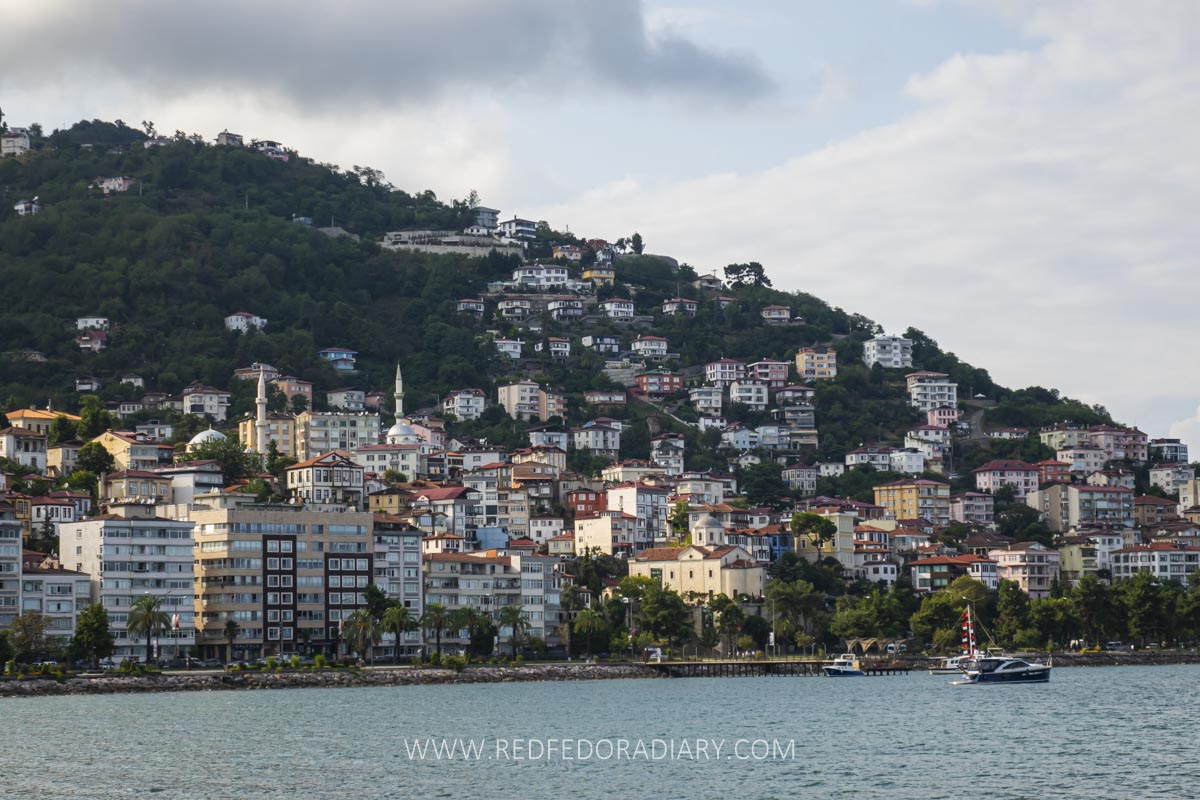
Beyond its agricultural fame, Ordu offers plenty to explore. Its downtown is easy to navigate on foot, while the surrounding landscapes show off that classic Black Sea contrast—deep blue waves against lush, green hillsides. Its location also ties it closely to neighboring Georgia: just a few hours’ drive from Batumi, it makes for an easy cross-border getaway.
Ordu was even listed by Lonely Planet, alongside neighboring Giresun, as one of the Best in Travel 2025 destinations, a recognition that highlights its growing appeal among both domestic and international travelers.

For me, Ordu is more than a travel destination. It’s where my husband Oto spent much of his childhood, and we return almost every summer to unwind, recharge, and escape the chaos of Tbilisi.
Over the years, I’ve watched the city change and grow, and this time I finally found enough experiences—both in town and across the province—that truly deserve a dedicated guide.

Below, you’ll find my favorite activities, from cultural stops to food experiences, along with practical tips on when to visit, how to get around, and where to stay to make the most of your trip.
Disclaimer: Some of the links in this post are affiliate links, which means I may earn a small commission if you buy something through them—at no extra cost to you. It helps support my blog and lets me share real, first-hand travel tips. Learn more
Why visit Ordu?
Ordu, known in antiquity as Cotyora, has a history that stretches back to the 5th century BCE. Founded by Greek colonists from Sinope, it was the resting point for Xenophon’s famous Ten Thousand mercenaries as they made their way home across the Black Sea.


Ancient sources called the city Cytora or Kotyora, and some scholars suggest the name comes from a Kartvelian root (koto, meaning pottery), reflecting the cultural and linguistic ties between this region, the Laz, and neighboring Georgia.
Centuries later, the city became part of the Danishmend and Seljuk domains, then passed to the Empire of Trebizond before being incorporated into the Ottoman Empire in 1461. The modern name Ordu, meaning “army camp” in Ottoman Turkish, dates to this period, when the town grew around a military outpost.

By the late 19th century, Ordu had developed into a diverse settlement with Greek schools and Armenian and Greek Christian communities. However, demographic shifts in the early 20th century transformed the city’s cultural landscape.
Today, Ordu is the capital of Ordu Province, a rugged and green slice of Türkiye’s central Black Sea coast, bordered by Samsun, Tokat, Sivas, and Giresun. The region is divided into 19 districts, with Ordu (locally known as Altınordu) at its heart, forming an urban hub of more than 235,000 people within its 91 neighborhoods.

While the city itself is compact and coastal, the area is known for its humid climate, forested hills, and fertile valleys.
Ordu’s identity is closely tied to its role as Türkiye’s hazelnut capital. The crop dominates the landscape, covering nearly 88% of the region’s farmland and accounting for around 30% of Turkey’s total production—making Ordu one of the world’s single most critical hazelnut-producing regions.

Beyond it, Ordu is also known for beekeeping (responsible for nearly 13% of Turkey’s honey), kiwi production, and traditional foods that highlight its agricultural abundance.
Though the majority of the population today is Turkish, the region still reflects the influence of Laz and Georgian culture, as well as the legacies of Pontic Greek and Armenian communities. This mix of history, agriculture, and cross-cultural influences makes Ordu worth spending a few days.
24 things to do in Ordu
Wander through the Taşbaşı neighborhood
One of the most atmospheric things to do in Ordu is wandering through the hillside streets of Taşbaşı (pronounced Tashbashi). This is the city’s oldest neighborhood, where rows of Ottoman-era houses, now restored and repainted, line the narrow cobblestone lanes.

Recognizable by their timber-framed façades, wide eaves, and bay windows, the area gives it a historic feel. Walking here is like stepping back in time when families lived in compact houses clustered along steep, sea-view streets.
Although Taşbaşı remains a residential area, it has a few inviting spots, such as a Turkish wine shop, a handful of cafés, and cozy coffee shops.
Visit the former Orthodox church in Taşbaşı
Another highlight of the neighborhood is its impressive Orthodox church, built in 1853 by the local Greek community. Constructed entirely of cut stone, the basilica-style building features a rectangular east–west layout, a large central apse with two smaller ones on either side, and a roof supported by stone pillars and arches.

While the original dome has not survived, much of the structure remains intact, making it one of the most notable examples of 19th-century ecclesiastical architecture on the Black Sea coast.
After the compulsory relocation of the region’s Greek Orthodox communities to Greece in 1923, the building fell into new uses, serving as a prison between 1937 and 1977, and was later restored and repurposed as a cultural center.

In recent years, another extensive restoration brought the space back to life, and today it serves as an art gallery under the Taşbaşı Art Area project, showcasing exhibitions and cultural events.
- Opening hours: daily from 9 am to 6 pm; lunch break from 1 pm to 2 pm.
- Entrance fee: FREE
Taste hazelnut ice cream at the oldest parlor
Since almost everything in Ordu revolves around hazelnuts—or fındık in Turkish—it’s no surprise that one of the city’s sweetest traditions is tied to them.
While you’ll find hazelnut spreads, chocolates, cookies, and even oil throughout the province, one of the most unique things to do in Ordu is sampling hazelnut ice cream.

The best place to try it is at Denizciler Dondurma, the city’s oldest ice cream parlor, which has been serving locals and visitors since 1948. Their signature hazelnut flavor has a distinctive nutty richness, though some might find it a little on the sweet side.
If hazelnut isn’t your favorite, the shop also offers a variety of other options—from classic chocolate and vanilla to refreshing fruit-based flavors.
Stroll along Sırrı Paşa Street and its colorful houses
For an authentic taste of local life, head to Sırrı Paşa Caddesi, one of the liveliest parts of Ordu.
This pedestrian-only street is lined with rows of renovated, brightly painted houses, many of which now host cafés with outdoor tables, casual eateries, pastry shops, and small boutiques selling jewelry, clothes, and accessories.


It’s more than just a shopping street—it’s one of the city’s oldest hubs of daily life. Here, you’ll see locals chatting over tea, families enjoying ice cream, and vendors selling everything from seasonal fruit and vegetables to handmade crafts.
Don’t just stick to the main drag. The back and parallel streets are equally worth exploring, with their own mix of shops and hidden cafés.
Discover a few murals
A few years ago, three large-scale murals appeared across the city, and I hoped this would grow into a broader movement. Unfortunately, the project never expanded, but the murals that remain are worth spotting.


- The first one is hard to miss at the entrance to the center, painted on the side of Kuğu Pastanesi, right at the corner of Uygunluk Sk. and Süleyman Felek Cd.
- Another mural overlooks the courtyard of one of Ordu’s oldest schools, 19 Eylül İlköğretim Okulu, at the start of Sırrı Paşa Cd.
- And finally, a mural of a man with a sheep covers the side wall of a building at the corner of Sırrı Paşa Cd. and Uygunluk Sk., directly across from the English Home shop.

Hunting them down doesn’t require much of a detour, as they are just on your way as you walk through the city center.
Snack on hazelnut cookies at HacıZade pastry shop
No visit to Ordu is complete without indulging in its famous hazelnut-based sweets. One of the best places to sample them is HacıZade, a pastry shop that’s been part of the city since 1962.

Here you’ll find the full spread of Turkish pastries, cookies, and snacks, but the standout is their signature hazelnut cracker-like treat. It’s made of two crisp discs sandwiched with a creamy filling and topped with crushed hazelnuts—sold in neat little packs you can take away. Perfect for snacking on the go, or as a sweet souvenir to bring back home.
Step back in time at Paşaoğlu Mansion & Ethnography Museum
Among the most impressive attractions in Ordu is visiting the Paşaoğlu Mansion & Ethnography Museum, set inside a grand 19th-century mansion.

Built in 1896 by Paşaoğlu Hüseyin Efendi, a Georgian family of the Katamadze surname, who emigrated from Batumi during the Russo-Turkish War, the three-story stone-and-wood residence is a fine example of late Ottoman residential architecture on the Black Sea.
Materials were sourced from near and far—stone from Ünye, timber from Romania, and craftsmanship from Istanbul—reflecting the wealth of its owner.

During 1915, when the Ottoman authorities were expelling Armenians, the family gave refuge to around 40 women and children. They were concealed for more than two years in the mansion’s kitchen and pantry areas before eventually emigrating to Argentina.
Today, the mansion’s rooms have been restored to showcase a wide array of ethnographic artifacts. On the first floor, you’ll find displays of jewelry, costumes, musical instruments, and everyday items, including pipes, radios, gramophones, and oil lamps.


Weapons collections and embroidery—including a sand-needle portrait of Atatürk, who visited in 1924—add to the variety.
One of the highlights is the replica of the 14th-century Eskipazar Bayram Bey Mosque Gate, with the original preserved in Ankara’s Ethnography Museum.
The second floor recreates domestic life, with a guest room, bedroom, and family living areas arranged around a central hall, decorated with a painted ceiling. Outside, the museum garden features Ottoman-era tombstones.
- Opening hours: daily from 8 am to 5 pm
- Entrance fee: FREE
Explore the Kahraman Sağra Hazelnut Museum
If there’s one place that captures the essence of Ordu, it’s the Kahraman Sağra Hazelnut Museum—likely the first museum in the world dedicated entirely to hazelnuts.

Housed in a beautifully restored three-story mansion, the museum offers a surprisingly engaging look at the nut that defines the region’s economy and identity.
The exhibits are laid out across two floors, with clear explanations in both Turkish and English. The story begins with the Sağra family, who played a significant role in Ordu’s hazelnut trade.


Then it unfolds into a detailed timeline: how hazelnuts were introduced to the Black Sea, their spread across Ordu and neighboring Giresun, and the evolution of cultivation methods over the centuries.
Inside, you’ll find archival photos, books, and even quirky memorabilia like lottery tickets and mock-ups of Turkish lira featuring hazelnut designs. Displays explain the varieties of hazelnuts, their nutritional value, global distribution, and the labor-intensive process of harvesting them.

Tools, machinery, and household items used in hazelnut farming bring the story to life, making the museum one of the most unique attractions in Ordu.
- Opening hours: daily from 9 am to 6 pm; lunch break from 1 pm to 2 pm
- Entrance fee: FREE
Ride the Boztepe cable car for panoramic views
The most popular activity here is heading up to Boztepe, the city’s highest viewpoint, located at approximately 550 meters above sea level. A scenic cable car (teleferik in Turkish) whisks you from the coast to the top in about six minutes, gliding over the rooftops and offering spectacular aerial views along the way.

At the summit, cobblestone paths are lined with vendors selling hazelnuts, snacks, and souvenirs. Several terrace cafés and restaurants make this a perfect spot to linger, especially at sunset, when the entire city and Black Sea coastline glow in warm colors.
For those seeking more adrenaline, Boztepe is also the launch point for paragliding flights that take you soaring back down to the shore.
- Opening hours: daily from 9 am to 11 pm
- Entrance fee: Turkish citizens – 250 TL round trip; foreigners 700 TL
Feel the rush on the mountain coaster
For something a little different, ride the mountain coaster—the first of its kind in the Black Sea region and located right under the cable car.
This rail-based ride seats two people per sled and allows you to control your own speed with brakes, reaching speeds of up to 40 km/h as you wind down the hillside.

Built with a significant investment to boost local tourism, the coaster features automatic distance control for safety, allowing you to focus on the thrill of the ride without worrying about crashes.
- Opening hours: daily from 10 am to 9 pm
- Entrance fee: Turkish citizens aged 3 to 7 are 150 TL, and for those aged 8 and above is 250 TL. Foreigners aged 3 to 7 – 300 TL, and above 8 – 500 TL.
Climb aboard the Rüsumat No. 4 warship museum
History buffs will enjoy visiting the Rüsumat No. 4, a replica of the cargo ship that played a heroic role during the Turkish War of Independence.

Originally built in Britain in 1891 as a trawler, the vessel was later purchased by the Ottomans and used as a minesweeper and coastguard ship. After the Ottoman defeat in WWI, it was seized by Turkish nationalists and repurposed for secretly transporting ammunition from Batumi to the front lines.
In 1921, the Rüsumat No. 4 was pursued by Greek naval forces and even attacked near Ordu. To save its cargo, the captain deliberately beached and set the ship on fire as a diversion, allowing locals to unload its ammunition safely.

The Greeks, believing the munitions had exploded, retreated. The vessel was later refloated, repaired, and continued its mission until it was finally sunk near Giresun.
Today, the replica stands in Ordu as a small museum with artifacts and displays recounting its dramatic history. While there’s almost no English signage, the vessel itself offers an interesting glimpse into the wartime struggles.
- Opening hours: daily from 9 am to 6 pm; lunch break from 1 pm to 2 pm.
- Entrance fee: FREE
Have fun at the Upside Down House
If you’re looking for family-friendly things to do in Ordu, consider visiting the quirky Ters Ev, also known as the Upside Down House. Built by the Ordu Metropolitan Municipality in 2019, this 150-square-meter, two-story structure is sitting on its roof, complete with a car “parked” upside down out front.


Inside, everything is flipped—furniture, décor, even the kitchen sink—creating fun photo opportunities and plenty of laughs for kids and adults.
- Opening hours: daily from 9 am to 10:30 pm
- Entrance fee: Turkish citizens – 150 TL; foreigners 500 TL
Savor the famous Ordu Tost
A little outside the city center, you’ll find Kahraman Tost, a small shop that has been serving Ordu residents and visitors for more than 60 years. It’s the place to try the city’s most beloved bite: the Ordu tost.


This hearty sandwich is made with thick slices of bread filled with cheese and a spread of sucuk—a spicy, garlicky Turkish sausage paste seasoned with paprika, cumin, and other spices. It’s then grilled until golden and crisp.
Browse the fresh produce bazaar
If you’re in town on a Monday or Wednesday, don’t miss the lively fresh produce bazaar from Stadyum Caddesi near Orta Cami.
On these mornings, several streets transform into an open-air market where farmers from surrounding villages bring in seasonal fruit, vegetables, homemade cheeses, dairy products, and other local specialties.

Prices can sometimes match what you’d find in supermarkets, especially for fruit, but the freshness and variety here are unbeatable. For me, it’s not just about shopping—it’s about soaking up the atmosphere, watching locals haggle over produce, and getting a feel for the region through its food culture.
Indulge in handmade nougat candy
One of the sweetest local treats you can find in Ordu is its homemade nougat candy, a specialty that’s been prepared in the nearby Çambaşı (Chambashi) pastures for decades.


I first tasted it thanks to Oto’s family, who have a summer house there, and although I’m usually not much of a nougat fan, this one completely won me over. It has since become my go-to snack whenever we’re in Ordu—and I often bring some back to Tbilisi.
The good news is you don’t have to travel up to the pastures to try it. The candy-maker, who has been perfecting his recipe for more than 70 years, sells it from a tiny stand in Ordu’s city center (find pin in the map).
On bazaar days (Monday and Wednesday), you can usually spot him right at the entrance to the market on Stadyum Caddesi.
Relax on the sandy shores of Kumbaşı beach
If you’re visiting in summer, spend a day at Kumbaşı beach, located just 5 km from the city center.

This sandy stretch is well set up for swimmers, with changing booths, showers, lifeguards, and a clearly marked swimming area along the shallow shoreline. Of course, you can also venture beyond the designated zone if you prefer.
The neighborhood is easily accessible even without a car—hop on dolmuş minibus No. 54 from the city center (exact pin location in my map), and you’ll be there in 15-20 minutes.
Dine on Black Sea fish
While Ordu may not be overflowing with seafood restaurants, the city does take pride in serving up Black Sea fish straight from the water to your plate. The region’s cuisine is hearty and flavorful, often highlighting seasonal herbs, pickled vegetables, and the day’s catch.
In autumn and winter, you’ll likely find hamsi (anchovies), lightly battered and fried—a staple of Black Sea dining. For something different, try a bowl of iskorpit (scorpion fish) stew, cooked in a tomato and pepper base that warms you from the inside out.
One of the best spots to sample these dishes is Derin Balık, a casual, great-value fish restaurant in Ordu. You’ll see the fish displayed right next to the entrance, a reminder that what lands on your table was caught only hours before.
Sip Ordu’s own gazoz soda
No trip to Türkiye is complete without trying gazoz, the country’s beloved old-school soda. Lightly carbonated and sweet, it comes in different regional varieties and has been a nostalgic favorite for generations.

In Ordu, you’ll find the locally produced brand Ufuk Gazoz, first bottled in 1952. It comes in two flavors—the classic lemony version and an orange twist—and you can spot the glass bottles in almost every shop across the city.
Take a scenic cruise on the Black Sea
For a different perspective of the city, hop on a boat tour along Ordu’s coast. Introduced by the municipality a few years ago, the 45-minute ride takes you out across the sea, offering a refreshing way to see the shoreline and the city skyline from the water.

The service runs year-round, though schedules vary—boats depart frequently in summer but only twice per day in the quieter winter months.
On a clear day, try to time it around sunset; the golden light over the Black Sea makes it an unforgettable experience.
- Schedule: Winter at 2 pm and 4 pm; in summer from 2-8 pm every 2 hours
- Price: adults 95.40 TL paid by credit/debit card only
Try Black Sea–style Pide
Pide is a long, boat-shaped flatbread filled with a variety of toppings before being baked in a wood-fired oven.
On Türkiye’s Black Sea coast, Pide is a close cousin of Georgia’s Adjaruli khachapuri. Both share the signature open-boat shape, but Pide tends to be longer and slimmer, with more variety in fillings.

Cheese and minced meat versions are staples, though you’ll also find options with eggs, vegetables, or a mix of ingredients.
While I personally lean toward lahmacun (a thinner flatbread topped with spiced meat), trying Pide in Ordu is a must. For the best local experience, head to İspirli Pide or Meşhur Pide, two eateries beloved by residents for their authentic flavors.
Stock up on hazelnut products
Since Ordu is the hazelnut capital of the country, one of the essentials is browsing the city’s many specialty shops dedicated to this iconic crop.

You’ll find everything from plain and cocoa-infused spreads to vacuum-sealed bags of roasted hazelnuts, chocolate-coated varieties, cookies, and other sweet treats.
One of the most prominent local producers is Gürsoy, whose shops are easy to spot around the city and are a reliable place to stock up on quality products.
Explore Cape Jason and its historic church
Just 30 km northwest of Ordu, Cape Jason (Yason Burnu) is one of the region’s most atmospheric spots. This windswept peninsula, now a protected natural and archaeological site, juts into the Black Sea and has been tied to legends and faith for centuries.

The cape takes its name from Jason of the Argonauts, who, according to Greek mythology, stopped here with his crew, Medea, and the stolen Golden Fleece from Georgia (back then, the Kingdom of Colkhis) on their way back home. Long after those tales, locals built a temple on the cape to protect sailors from the unpredictable waters of the Black Sea.
In 1868, a stone Greek Orthodox church replaced the temple, built by Georgians and Greeks of the region.

Beyond the history, Cape Jason is simply a beautiful place to wander. Locals often would come for picnics and mussel gathering, but now it’s a popular spot for a quick visit and even wedding photo shoots. A few souvenir stalls and a small café have also opened in recent years.
Spot seabirds at Hoynat Islet
On the way to Cape Jason along the old Ordu–Samsun coastal highway, make time for a quick stop at Hoynat Islet (Hoynat Adası). Just a stone’s throw from the shore—less than 100 meters away—this small rocky outcrop once served as a hideout and storage place for sailors navigating the Black Sea.

Today, the islet is uninhabited and better known as one of Türkiye’s most important breeding grounds for European shags, a type of seabird. From the roadside viewpoint, you can admire the rugged scenery and often spot the birds nesting or circling overhead.
Escape to Ulugöl Nature Park
For a refreshing break from the coast, take a drive into the mountains to Ulugöl Nature Park, home to Ordu Province’s largest lake.

Sitting at 1,200 meters above sea level, this tranquil landslide-dammed lake is surrounded by dense forests of beech, alder, hornbeam, and maple—making it especially stunning in autumn when the leaves turn fiery shades of red and gold.
The park, declared a protected area in 2009, spans more than 26 hectares and actually contains three lakes, with Ulugöl being the largest.
Walking paths circle the water, and there are plenty of picnic tables and observation decks, making it a popular spot for both locals and visitors.
Ordu attractions with the map
For a more comfortable way of exploring the city, here is the Google Maps list of all the things to do in Ordu to save and use. You would not need the data to access the spots if you download the area for offline use.
Practical travel tips for visiting Ordu
Before planning your trip, it’s helpful to know a few practical details about getting around, where to stay, and when to visit. While Ordu is compact and easy to explore on foot, the province itself is large, and some planning will make your journey smoother. Below are some essentials to keep in mind.

Quick essentials to know
- Walkable city center – Ordu’s downtown is easy to explore, with most attractions close together, though some streets are quite hilly.
- Public transport – The city runs minibuses known as dolmuş. To ride, you’ll need an Ordu Kart (around 100 TL), which can be topped up with Turkish lira. The machine for purchasing and topping up the card is located near Yali Cami (exact pin can be found on my map). Look for an ATM-like machine that says Dolum Noktasi.
- Alcohol availability – Not all venues sell alcohol, since serving requires a special license. A few pubs, such as Köşk Pub, do offer it. For purchases, look for Tekel shops or larger supermarkets such as Carrefour and Migros. Remember, you can’t buy alcohol after 10 pm.
- Language – English is not widely spoken, so learning a few basic Turkish phrases will go a long way.
- Parking – Street parking is discouraged and can be challenging to find. Use the designated paid lots, but note that availability may be limited during busy times, with charges calculated on an hourly basis.
- Exploring the province – To venture beyond the city, renting a car (I use DiscoverCars) is highly recommended for flexibility. While minibuses connect Ordu with nearby towns, they’re geared toward locals rather than tourists, with irregular schedules and little English spoken.
Best time to visit Ordu
Ordu has a humid subtropical climate, typical of Türkiye’s central Black Sea coast. Summers are warm and moist, with daytime temperatures typically in the mid-20s °C but occasionally reaching the 30s (77–95°F).


This is also the busiest season, as travelers from across the country and the Middle East flock here to escape the heat. The hazelnut harvest in August attracts even more people to the area, especially those seeking short-term seasonal farm work. If it feels too hot, you can retreat to the cooler highland pastures (yaylalar).
Spring and autumn are arguably the most comfortable times to visit. The weather is mild, making it ideal for sightseeing and exploring Ordu’s coastal towns. Autumn is lovely, with colorful foliage around Ulugöl Lake and other mountain areas.

Winter is the least favorable season for travel, as it tends to be rainy and chilly along the coast, with average lows dipping to single digits.
In the mountains, snow often blankets the roads and can make some yaylalar inaccessible. Snowfall usually occurs between December and March, lasting for a week or two at a time. Ordu and Kumbasi beach occasionally gets a snow cover.
How to get to Ordu
Reaching Ordu is straightforward thanks to its airport, highway connections, and frequent bus routes.
By air
The Ordu–Giresun Airport (OGU) is uniquely built on reclaimed land in the Black Sea, located about 18 km east of Ordu. It has multiple daily flights from both Istanbul airports (IST and SAW), plus regular services from Ankara and Izmir.
Upon arrival, you can take the Havaş shuttle bus (30–45 minutes, timed with flight schedules) into town—the eski otogar (old bus station) stop is closest to the city center. Taxis and car rentals are also available.

By road
Ordu sits on the D010 coastal highway, 150 km east of Samsun and 180 km west of Trabzon, making it an easy stop on a Black Sea road trip. The Ordu Bus Terminal is on the southern edge of town, 3-5 km from the center, with dolmuşes and taxis connecting passengers to downtown.
By bus
From Istanbul and Ankara, long-distance buses depart every couple of hours. I usually buy my tickets either on Omio or 12Go. International routes also link Ordu with Georgia—buses run daily from Tbilisi, Kutaisi, and Batumi with Metro Georgia and Lüks Karadeniz.
Where to stay in Ordu
Ordu offers a range of accommodation, from beachfront to centrally located city hotels. Whether you want to be close to the seaside, in the heart of downtown, or in a quieter area with views, there’s something for every traveler. Here are some of the best hotels in Ordu:
Ramada Plaza by Wyndham Ordu: A 5-star hotel with modern rooms, a fitness center, indoor pool, sauna, and spa facilities. The on-site restaurant offers a selection of both Turkish and international dishes, while the breakfast buffet consistently earns strong reviews. Located just outside the city center, it’s a good pick if you want space and full-service amenities.
The Wyspy Hotel: A 4-star stay with comfortable rooms, a terrace restaurant, and a fitness center. Guests appreciate the modern amenities and attentive staff. Conveniently located within walking distance of the heart of Ordu and the museums, this hotel works well if you want to be central but slightly away from the busiest streets.
Anemon Kent Ordu Otel: Ideal for beach lovers, this hotel provides direct access to the seaside, along with a seasonal outdoor pool and garden. Rooms come with balconies and sea views, while the restaurant features Turkish and vegetarian-friendly dishes. It’s a little outside the core center, ideal if you want a quieter, beachfront setting.
Ottoman Şükrü Efendi Hotel: This boutique-style hotel offers cozy rooms, a garden, and even a spa bath in some units. Staff are praised for their hospitality, and its central location makes it easy to reach Ordu’s main sights on foot.
Sinema Hotel Ordu: Located right in the heart of Ordu and steps from the seaside, Sinema Hotel features elegant rooms with balconies and sea or mountain views. The rooftop terrace restaurant is a highlight, serving meals with panoramic views of the coast.
→ Looking for more options? Browse more Ordu hotels to find the best deals and availability for your trip.