
10 Best Museums in Warsaw for Every Type of Traveler
Warsaw has no shortage of museums — whether you’re into history, art, science, or something completely unexpected. The museums in Warsaw reflect the city’s complex past and creative spirit, from royal palaces and wartime stories to neon art and vodka tastings.
They’re well-organized, engaging, and full of details that help you understand how Warsaw became the city it is today. Some are compact and easy to explore in an hour, while others can easily fill half a day, so it’s worth planning your visits based on your interests and available time.
Disclaimer: Some of the links in this post are affiliate links, which means I may earn a small commission if you buy something through them—at no extra cost to you. It helps support my blog and lets me share real, first-hand travel tips. Learn more
→ Download this guide as a mobile app
Practical Tips for Visiting Museums in Warsaw (FAQ)
What day are museums closed?
Most Warsaw museums are closed on Mondays, so plan your visit for another day of the week. Weekends are often the busiest, while weekdays tend to be quieter.
Are museums in Warsaw free or have free entry days?
Yes! Many offer free admission once a week on weekdays, usually on Tuesdays or Thursdays, depending on the institution. It’s best to double-check on their official websites before you go. The pages are provided under each museum below.
What are typical museum opening hours in Warsaw?
Most museums open around 10:00 am and close between 5:00 and 7:00 pm, though hours vary by season and day.
How many days do I need to visit the main museums in Warsaw?
This depends on which Warsaw museum you’d want to visit. In my experience, most of the major ones require anywhere from 1:30 to 2 hrs, while smaller ones can be done in around an hour or 1:30.
Plan Your Trip Like A Pro
Best museums in Warsaw you shouldn’t miss
Museum of Warsaw
This is one of the most insightful museums in Warsaw, offering a unique glimpse into the city’s and its people’s evolution over the centuries.
The Museum of Warsaw tells the story of the capital through everyday objects, personal items, and historical artifacts that reflect the lives of locals and the events that shaped the city into what it is today.
The core exhibition is divided into three main parts. “Things of Warsaw” showcases 7,352 original items — from household tools and works of art to keepsakes tied to specific people or events — displayed across 21 themed rooms.
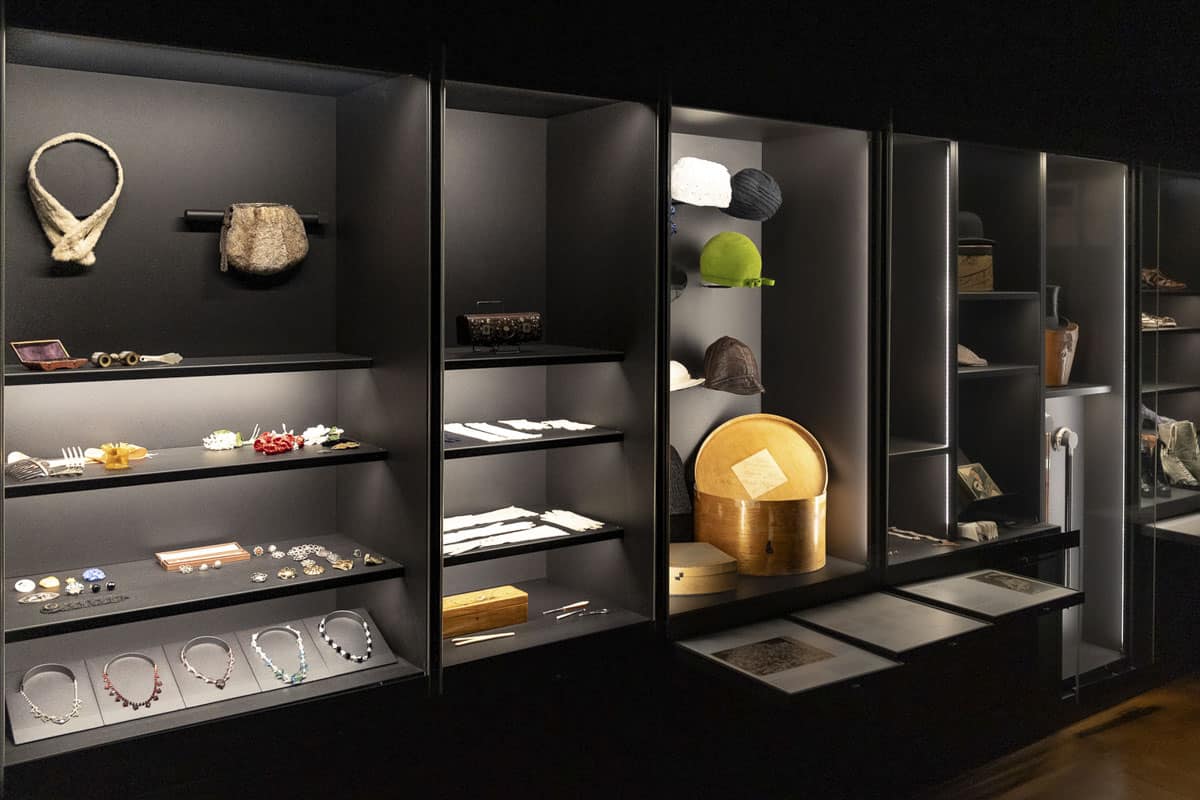
The museum recommends paying attention to the highlighted pieces and their detailed descriptions to grasp the layers of Warsaw’s complex past truly.
In “Warsaw Data,” you’ll explore the city through maps, infographics, and archival materials that visualize its growth and character — from how its borders expanded to who its residents are today.
This section helps explain both the myths and the realities about Warsaw and its people.
Finally, the “History of Old Town Houses” exhibit showcases architectural fragments and decorative details salvaged from the city’s rebuilt Old Town, providing a glimpse into how Warsaw emerged from the ruins after World War II.
- Opening hours: Varies by day of the week.
- Entrance fee: Adults – 25 PLN. Additionally, offer combo tickets for both core and temporary exhibitions. All detailed info here
Wilanów Palace Museum and Park
The Wilanów Palace Museum is one of the most elegant establishments, offering a glimpse into the lives of Polish royalty in the past.
Remarkably, the palace survived both World Wars almost untouched, preserving its original interiors and priceless artifacts.

Often called the “Polish Versailles,” the King Jan III Palace Museum combines a lavish royal residence with a 45-hectare park. Opened to visitors in 1805, it’s among the oldest art museums in Warsaw, showcasing a fascinating mix of European art, portraits, antique furniture, and royal memorabilia.
Inside, the palace impresses with richly decorated halls, intricate ceiling frescoes, and furniture that once belonged to Polish monarchs.
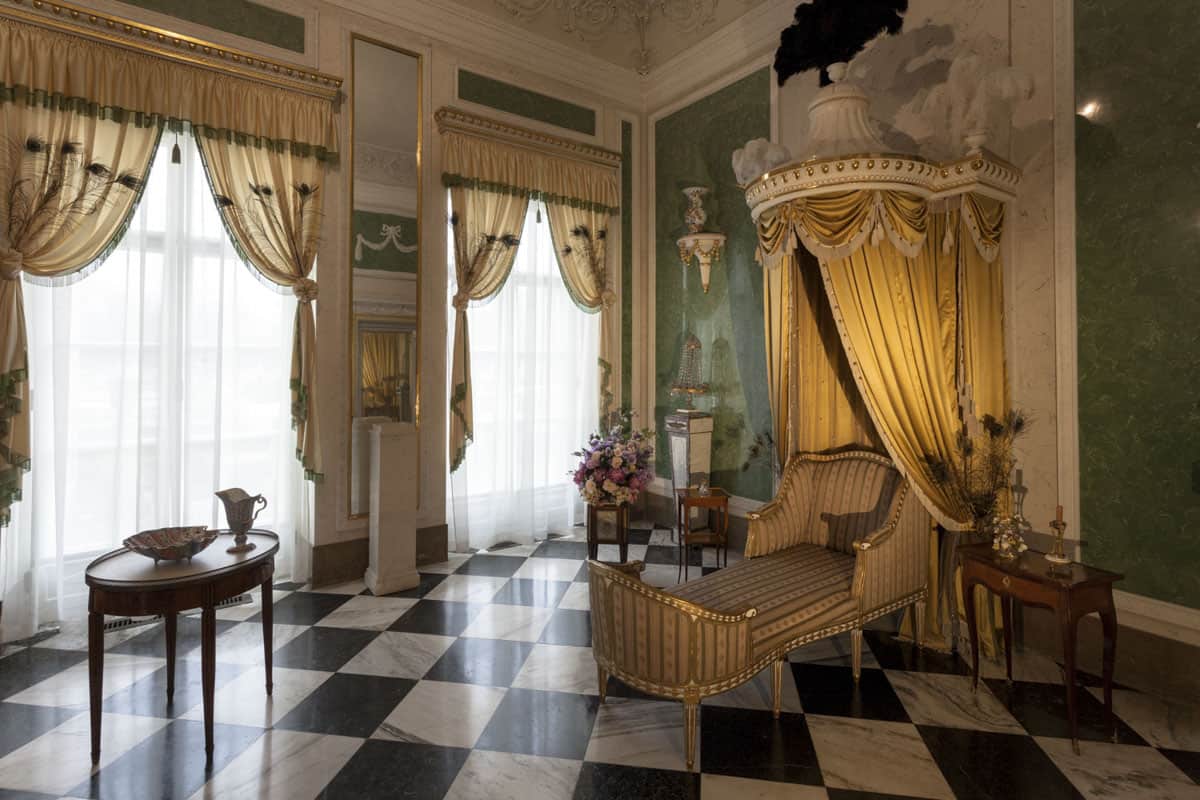
After exploring the museum, stroll through its sprawling park filled with beautifully designed gardens — including Baroque, neo-Renaissance, English, and Chinese-English styles — each offering a distinct atmosphere.
If you’re visiting Warsaw in winter, don’t miss the Royal Garden of Light, when the palace grounds transform into a glowing wonderland of illuminated sculptures synchronized to classical music.
- Opening hours: Palace – Wednesday to Monday, 10 am – 4 pm. Closed on Tuesdays and public holidays. | Park – daily year-round, but closing time changes according to the season. More info
- Entrance fee: Palace – 50 PLN for adults | Park – 10 PLN for adults | FREE on Thursdays for both the Park and the Palace, but tickets are limited and must be reserved online. Get your tickets here
Recommended by Bea from PackYourBags
Neon Museum
If you’re after something quirky and offbeat, this is one of the most unique museums in Warsaw to visit. Neon Museum Warsaw preserves Poland’s post-war neon heritage through an eye-catching collection of restored signs once seen across Warsaw and other Polish cities.
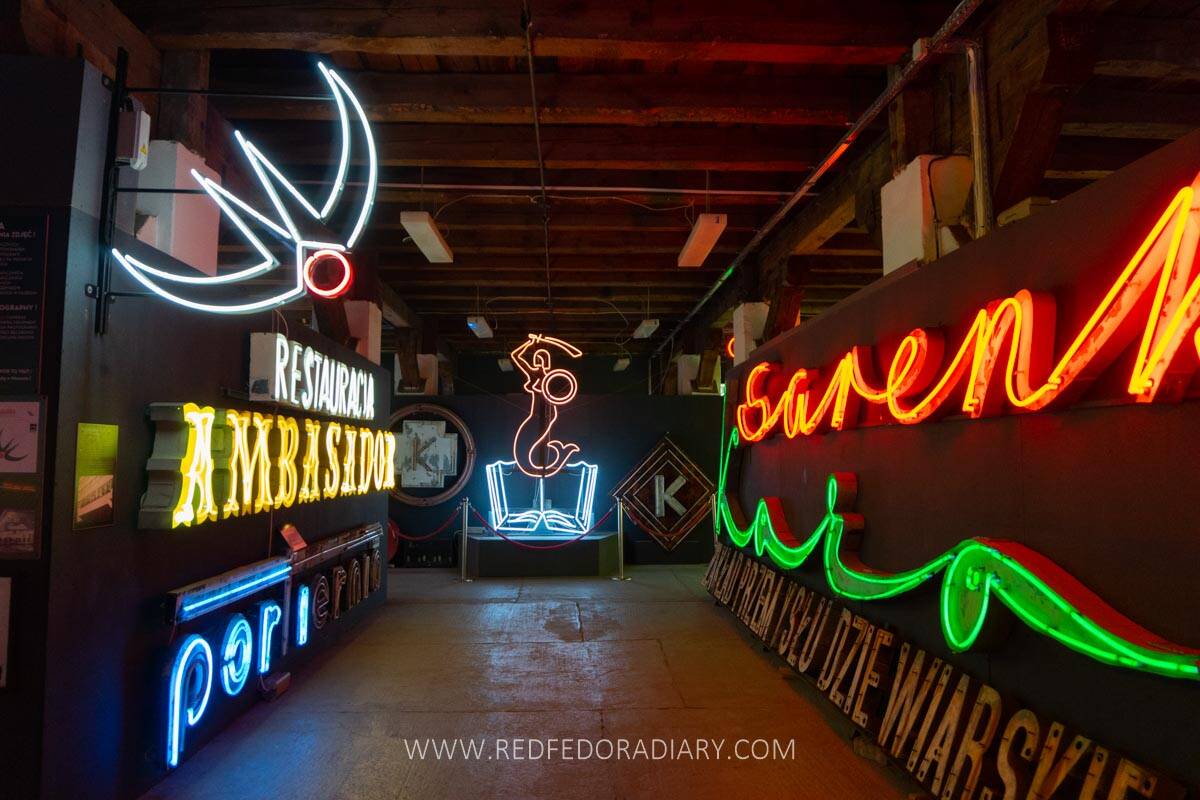
Before diving into the glowing displays, start with the large information boards that trace the history of neon — from its 1890s discovery by British chemists to its rise as a symbol of progress in Cold War-era Warsaw.
The city’s first illuminated sign appeared in 1926, known as the “Philips neon,” and by the late 1930s, nearly 70 more brightened Warsaw’s streets.
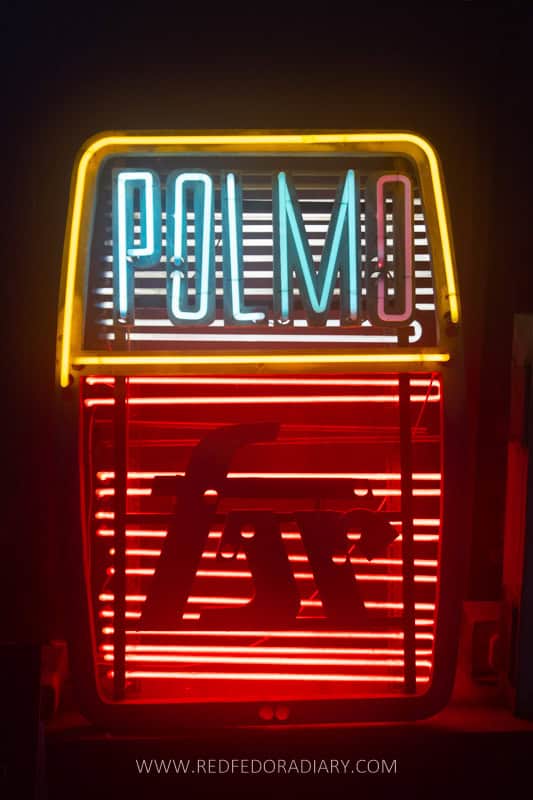
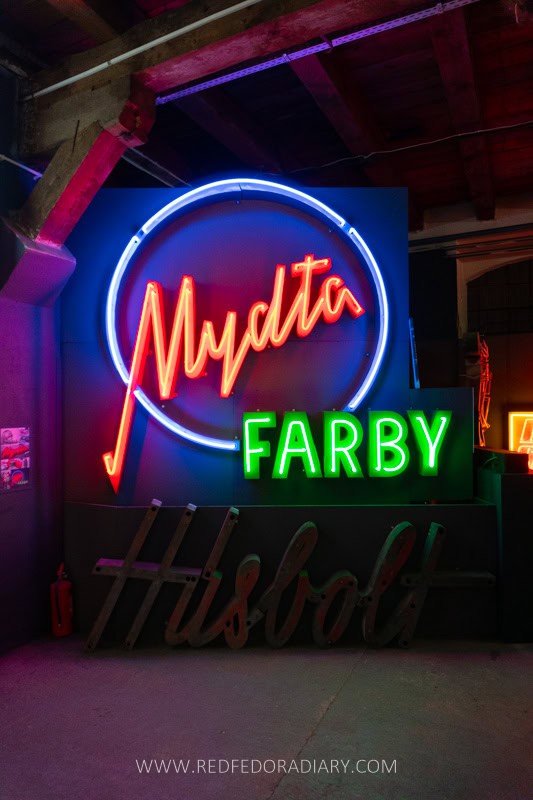
Neon signs and their design flourished after Stalin died in 1953, when Polish artists and architects embraced the medium as a blend of art, advertising, and subtle social commentary. These weren’t just commercial signs — they reflected optimism and creative freedom during a period of strict control.
Today, the museum showcases dozens of glowing signs, each accompanied by a short description of its original location, meaning, and restoration process.
- Opening hours: Sun-Mon, from 11 am to 6 pm; Fri-Sat, from 11 am to 7 pm.
- Entrance fee: Adults – 25 PLN.
Polish Vodka Museum
The Polish Vodka Museum is one of the most entertaining, where you can combine learning with a bit of tasting fun.
Housed inside the revitalized Koneser Vodka Factory in the Praga district, the museum goes beyond showcasing Poland’s signature spirit — it dives into the cultural and historical importance of vodka in Polish society.
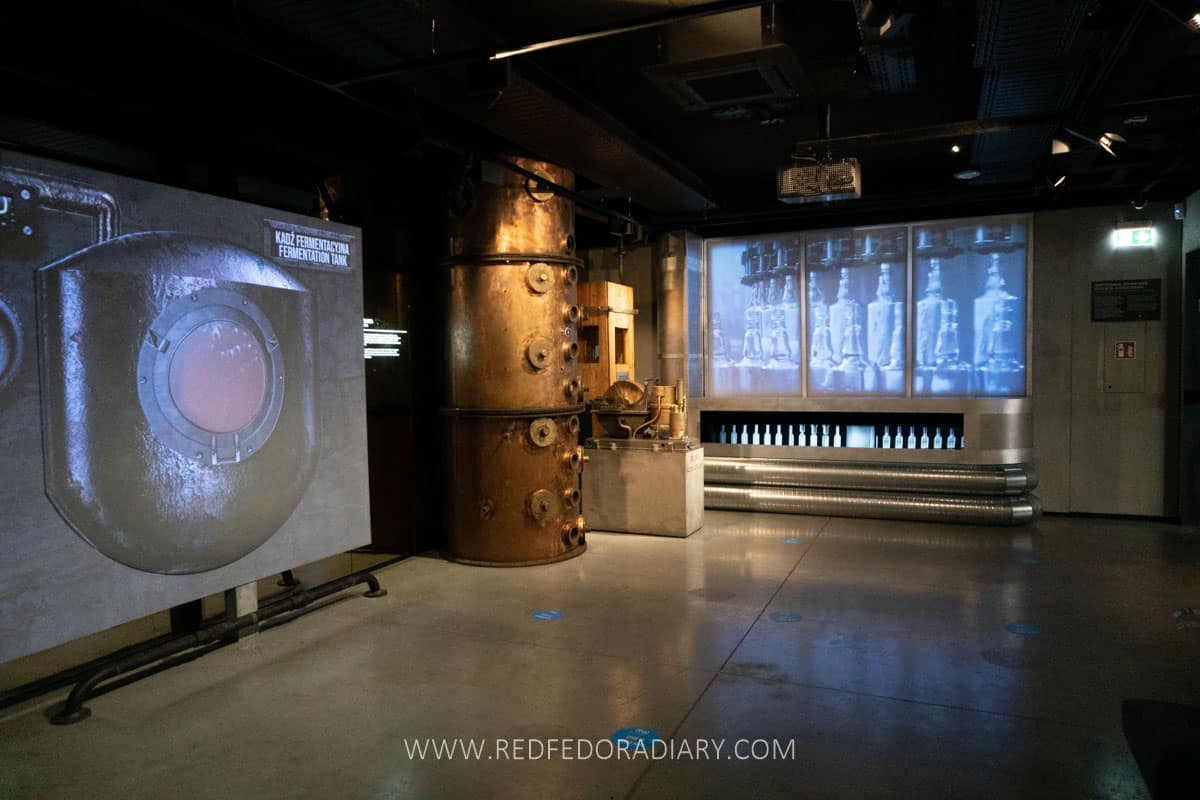
Spread across several floors, the exhibition utilizes interactive displays, videos, and digital installations to showcase how Polish vodka is produced, what distinguishes it from other countries’ versions, and why it plays a pivotal role in local tradition.
You’ll also learn about the country’s most famous brands, including Wyborowa and Luksusowa, both of which were initially produced here until the early 2000s.
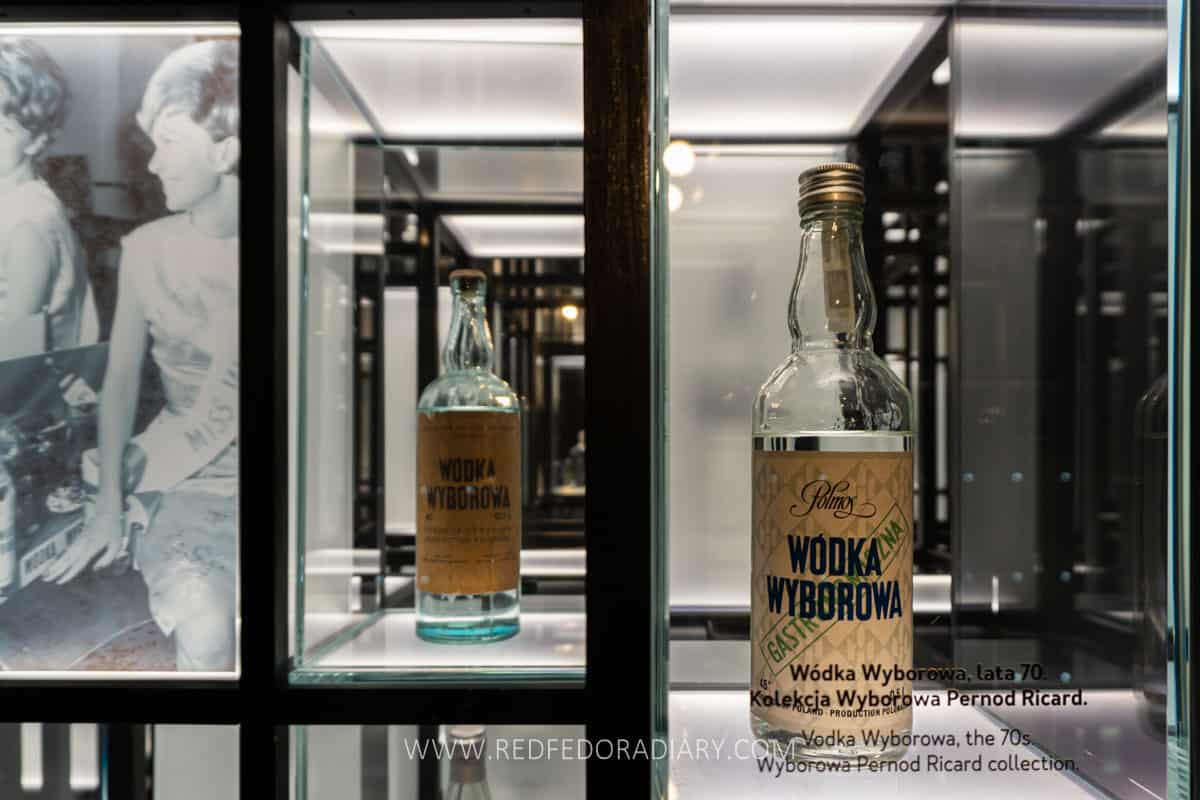
Entry is only possible with a guided tour, which lasts approximately 70 minutes and concludes with a tasting session where you can sample several varieties.
It’s an excellent stop for anyone curious about Polish culture — or simply looking for a fun evening activity in Warsaw.
- Opening hours: Tue-Thur and Sun 12 pm – 8 pm; Fri-Sat 12 pm – 9 pm. Closed on Mondays.
- Entrance fee: starts from 70 PLN, depending on the package. Buy tickets in advance at GetYourGuide or Tiqets, which include tastings.
Museum of Life Under Communism
The Museum of Life Under Communism is one of those venues that instantly transports you back in time. It’s a must-visit for those curious about how everyday life in Poland looked during the Soviet era.
Even if you grew up in another post-Communist country (like I did in Tbilisi, Georgia), you’ll spot plenty of familiar things from childhood here.
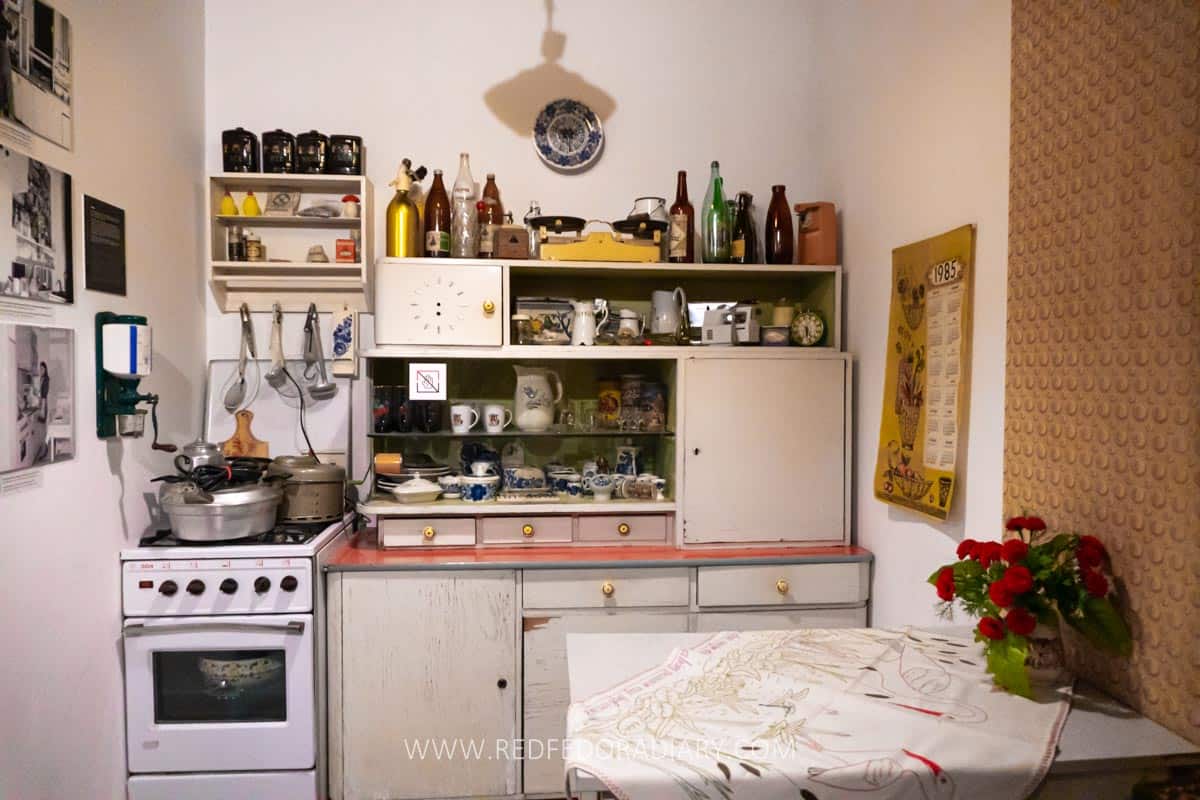
The museum’s concept is simple but incredibly engaging — it shows visitors what daily life was like under Communist rule. You’ll see everything from household appliances and school supplies to fashion pieces and gym equipment, as well as magazines and family photos from that time.
One of the highlights is the full-size reconstruction of a typical 1970s apartment, complete with vintage furniture, a small kitchen, and a flickering TV.
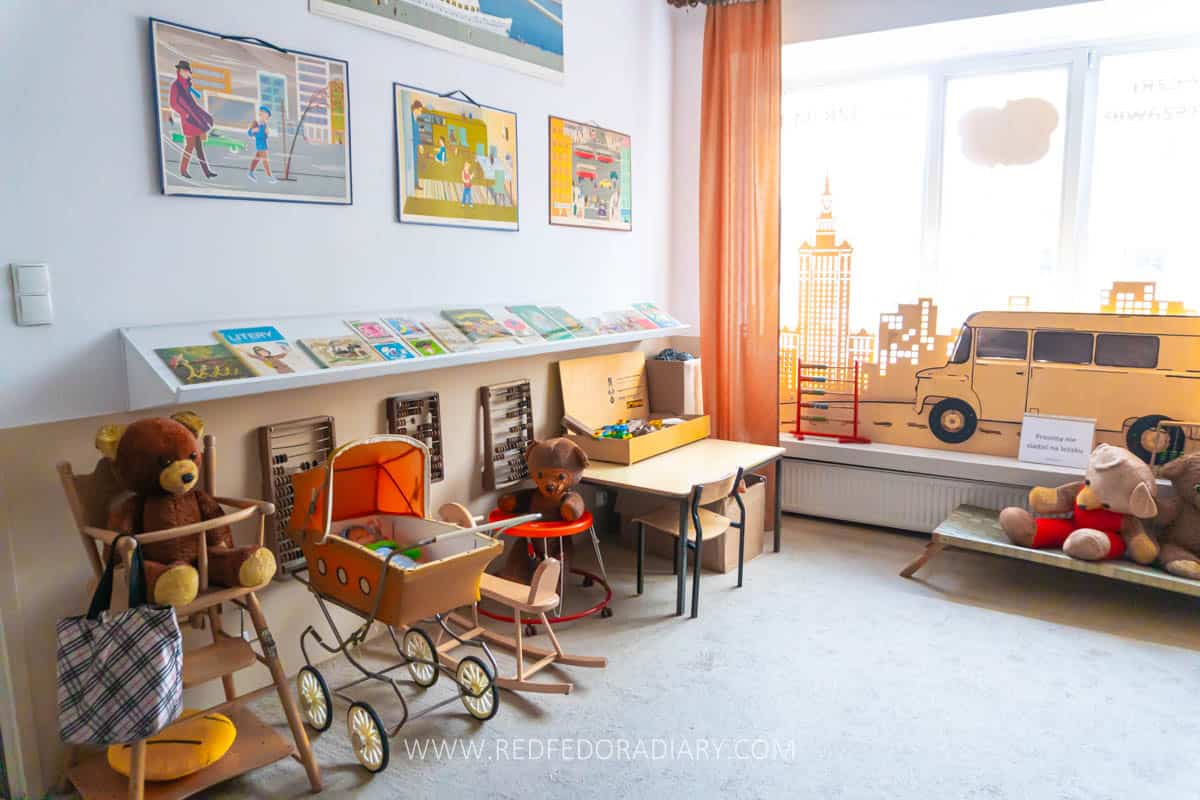
There’s also a replica of a kindergarten room and an old-school café where you can actually sit down for a coffee surrounded by nostalgic décor.
And of course, no display of Communist-era Poland would be complete without the iconic yellow Polski Fiat 126p, proudly parked inside the museum.
- Opening hours: Mon-Thur, from 10 am to 6 pm; Fri from 12 pm – 8 pm. Sat-Sun, from 10 am to 6 pm.
- Entrance fee: Adults – 30 PLN. All the info here
POLIN Museum of the History of Polish Jews
One of the best museums in Warsaw and a place you simply shouldn’t skip, the POLIN Museum offers a powerful and moving look at the thousand-year history of Jewish life in Poland.

Located on the site of the former Warsaw Ghetto, the museum’s modern glass and copper building is just as striking as the story it tells inside. The word Polin means “rest here” in Hebrew, referring to the legend of Jews finding a safe haven in Poland centuries ago.
Awarded the title of European Museum of the Year in 2016, POLIN Museum Warsaw takes you on a chronological journey — from the first Jewish settlements and their vibrant cultural life to the devastation of the Holocaust and the community’s rebirth in modern Poland.
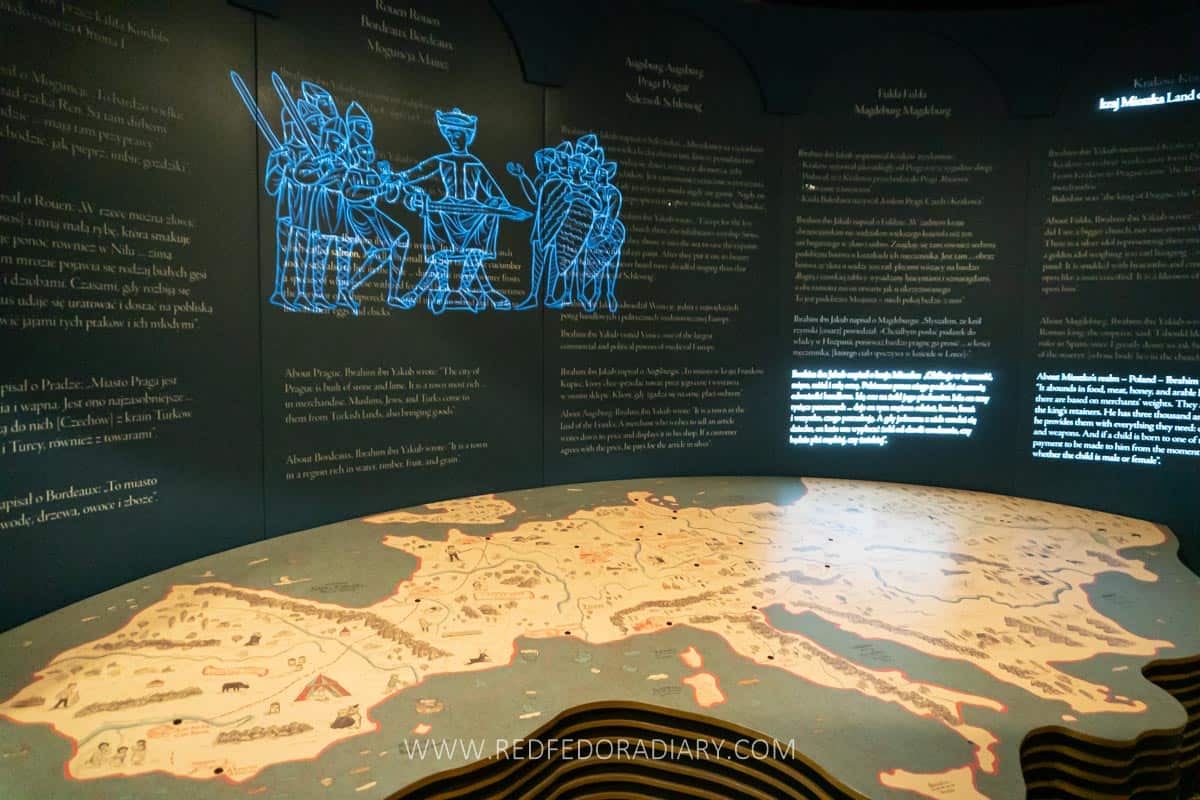
Multimedia installations, soundscapes, and interactive exhibits help you process an enormous amount of information without feeling overwhelmed.
Plan to spend at least two hours here; there’s a lot to absorb, and the layout makes it easy to follow the timeline with clear signs and resting areas along the way.
- Opening hours: Sun-Mon, from 10 am to 6 pm. Closed on Tuesdays. NOTE: The last entrance to the main exhibition is 2 hours before closing.
- Entrance fee: Adults – 45 PLN | Free on Thursdays. Buy tickets here
The Maria Skłodowska-Curie Museum
The Maria Skłodowska-Curie Museum is a small yet fascinating spot on Freta Street, situated in the tranquil heart of Warsaw’s New Town.
Housed inside an 18th-century townhouse — the birthplace of the two-time Nobel Prize winner — the museum offers an intimate look into the life and achievements of one of the world’s most outstanding scientists.
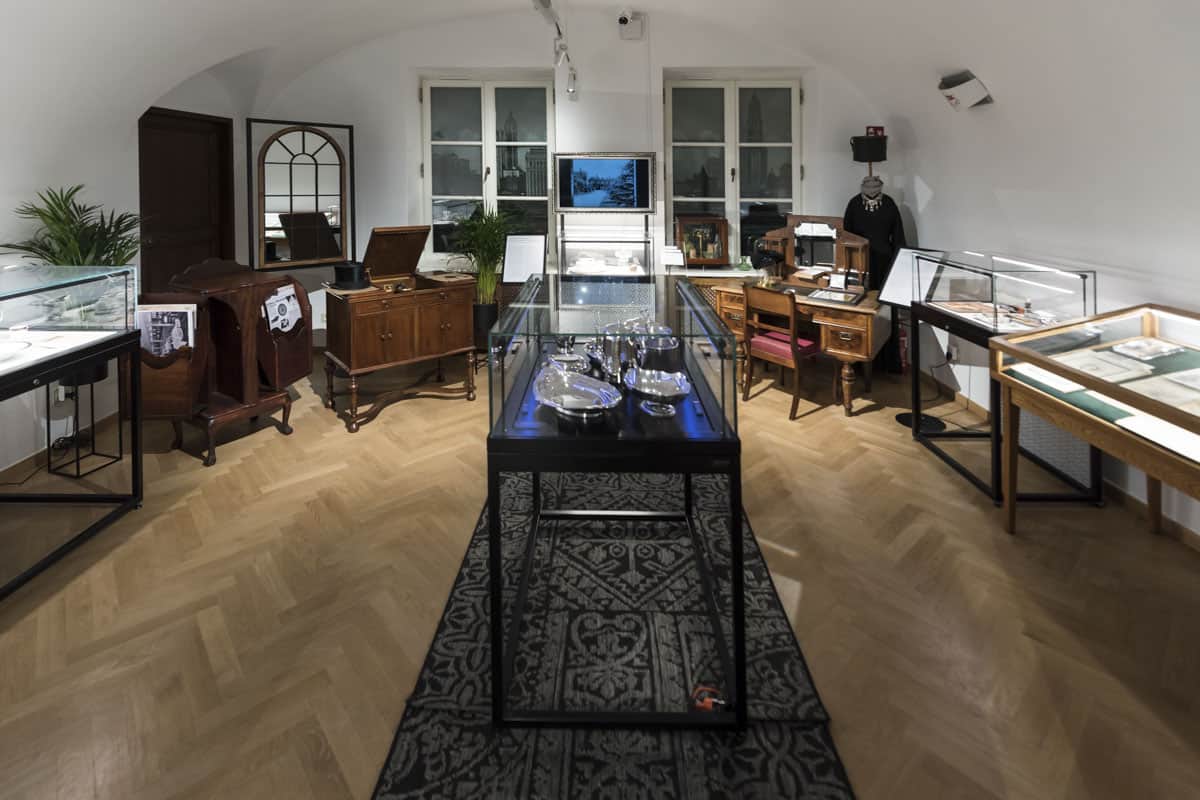
Inside, you’ll find letters, family documents, and personal items that shed light on Curie’s early years in Warsaw and her groundbreaking research in Paris.
There’s also a recreated version of her Paris laboratory, complete with scientific instruments and excerpts from her original notes and studies on radioactivity.
Though modest in size, it’s one of those museums for anyone interested in science, medicine, or the story of a woman who forever changed modern physics and chemistry.
- Opening hours: Tue-Fri from 12 pm to 6 pm; Sat-Sun from 11 am to 6 pm. Closed on Mondays. More info here.
- Entrance Fees: Adults – 15 PLN; FREE on Tuesdays
Recommended by Meandering Wild
The Royal Łazienki Museum
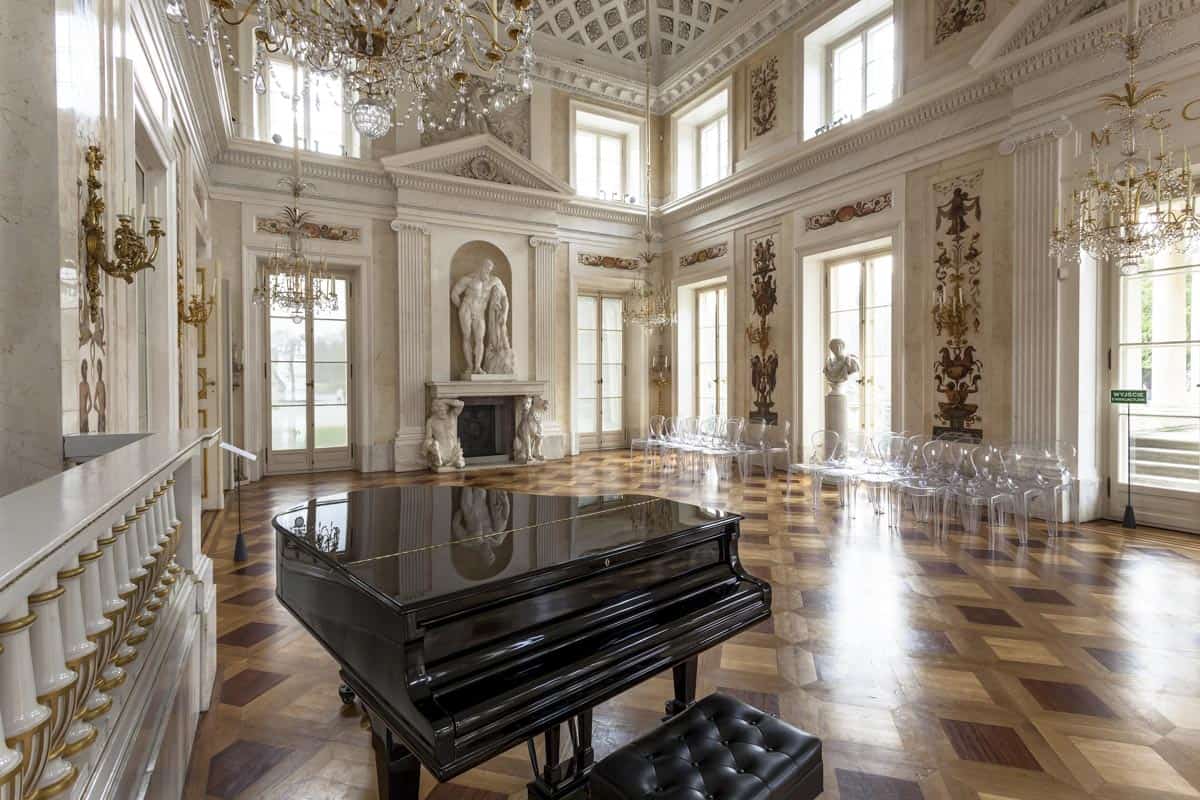
Set within the vast Łazienki Park, the Royal Łazienki Museum is one of the most beautiful museums in Warsaw, seamlessly blending art, history, and nature in a single location.
Originally built as a royal summer residence, it features elegant neoclassical palaces surrounded by ponds, sculptures, and landscaped gardens.

The 76-hectare park — the largest in the capital — is perfect for a peaceful stroll among squirrels, peacocks, and shady tree-lined paths. Inside the museum, you’ll find an impressive art collection gathered by the last king of Poland, Stanisław August Poniatowski.
Wander through its richly decorated rooms filled with 18th-century furniture, marble sculptures, and ornate details. The Bathing Room, Bacchus Room, and Picture Gallery are especially worth a look.
If you’re visiting between May and September, stay for the free Chopin piano recitals held every Sunday by the Fryderyk Chopin Monument — one of Warsaw’s most charming local traditions.
- Opening hours: Gardens – Mon to Sun from 6 am to 9 pm | Museums within the gardens vary by building and season. More info
- Entrance fee: Gardens – FREE | Adults – 50-60 PLN for a combo ticket to various buildings | FREE on Fridays, no reservations needed for individual visits. More info here, but it’s in Polish, so use a translator.
Chopin Museum
The Fryderyk Chopin Museum, dedicated to the life and work of Poland’s most beloved composer, combines classic architecture with modern, interactive exhibits that bring Chopin’s story to life.
Located inside the elegant Ostrogski Palace and founded in 1954, it houses a remarkable collection of personal items and memorabilia — from Chopin’s Pleyel piano, letters, and manuscripts to his gold watch, hand cast, and even a lock of his hair.
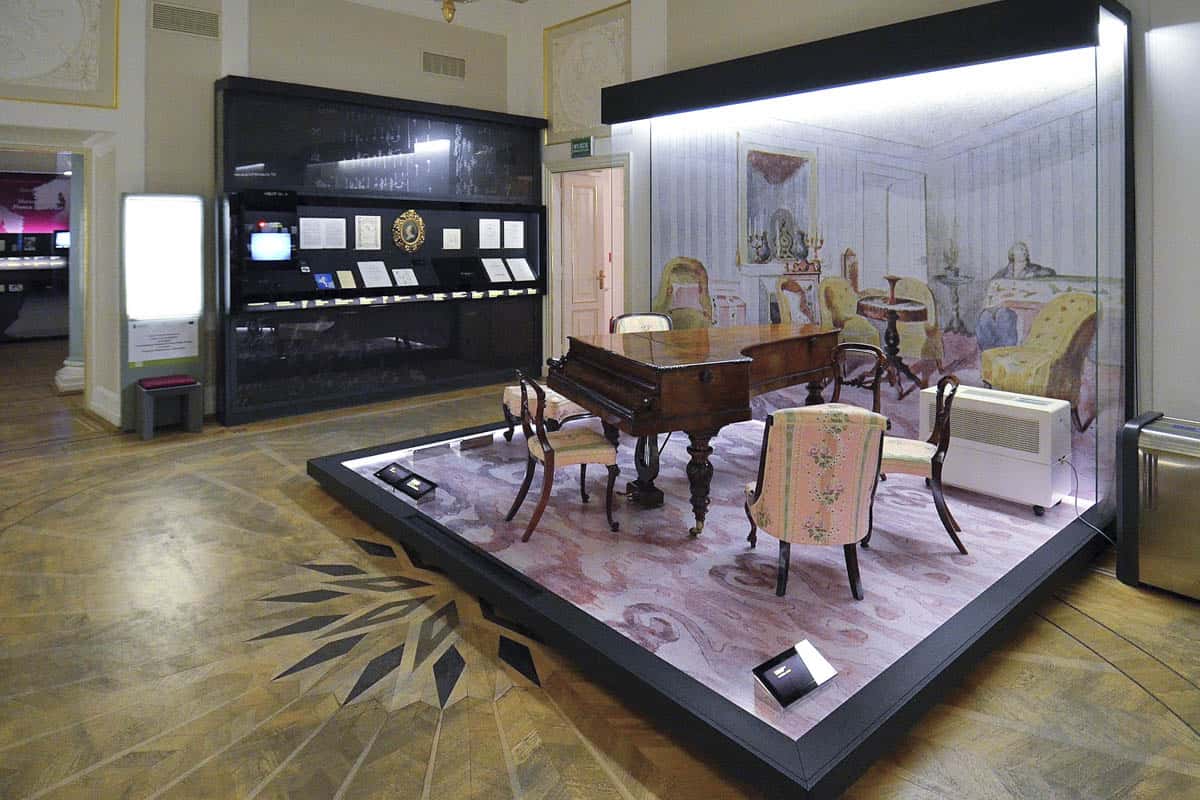
You’ll also see family portraits, dedications, and early photographs that trace his life from childhood to his final years in Paris.
What makes this museum particularly special is its use of sound and technology. Visitors can listen to Chopin’s music in dedicated rooms, hear excerpts from his letters, and even mix their own sound experience through touch screens.
- Opening hours: Tue-Sun from 10 am to 6 pm. Closed on Mondays. More info
- Entrance fee: Adults – 30 PLN| FREE on Wednesdays, tickets must be collected at the ticket office.
Recommended by A Rai of Light
Warsaw Rising Museum
The Warsaw Rising Museum, dedicated to the 1944 uprising — one of the most significant events in the city’s modern history — is another must-visit if you are interested in a deep dive into Warsaw’s history.
Located in the Wola district, the museum commemorates the bravery and sacrifice of those who fought to liberate Warsaw from German occupation.
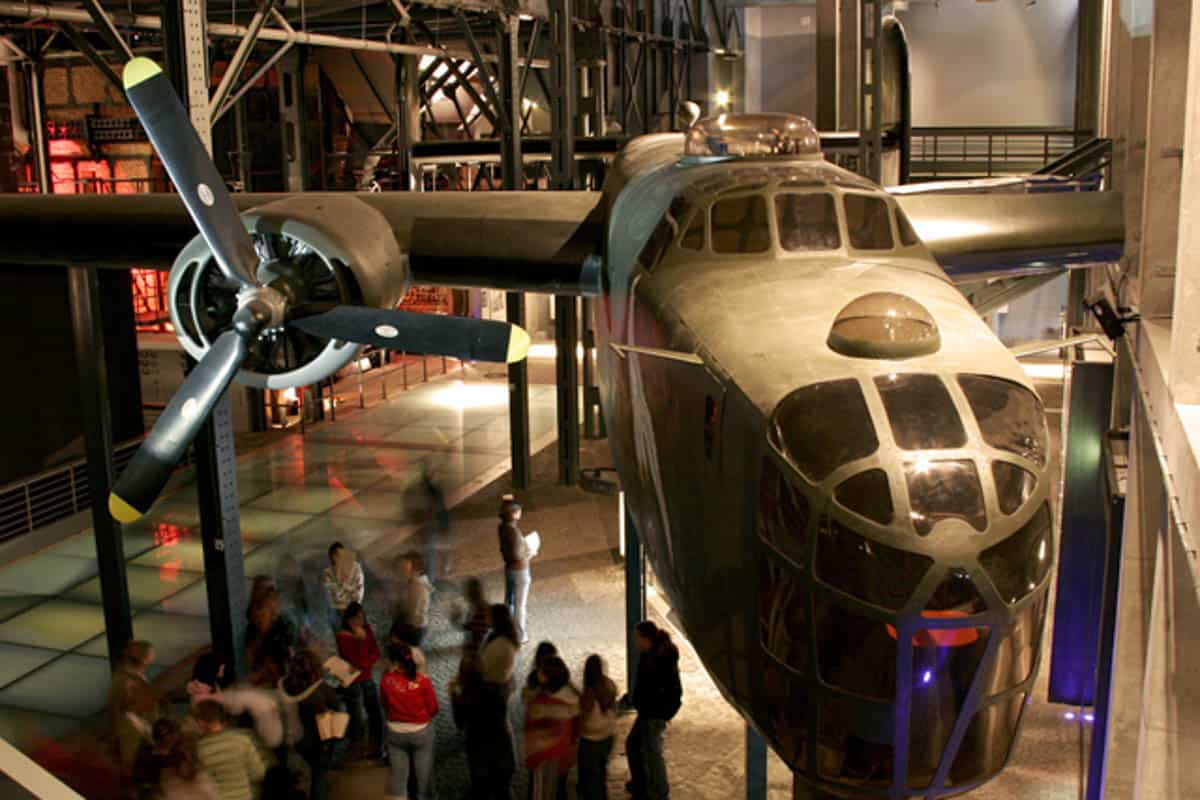
The uprising began in the summer of 1944, when members of the Polish underground resistance — the largest in occupied Europe — launched an operation to free the city as German forces retreated before the advancing Soviets.
The battle lasted 63 days, with little outside support, making it the most prolonged and most extensive resistance effort in World War II.
Spread across multiple floors, the museum presents the story through immersive exhibits, including original weapons, personal letters, photographs, and multimedia installations.
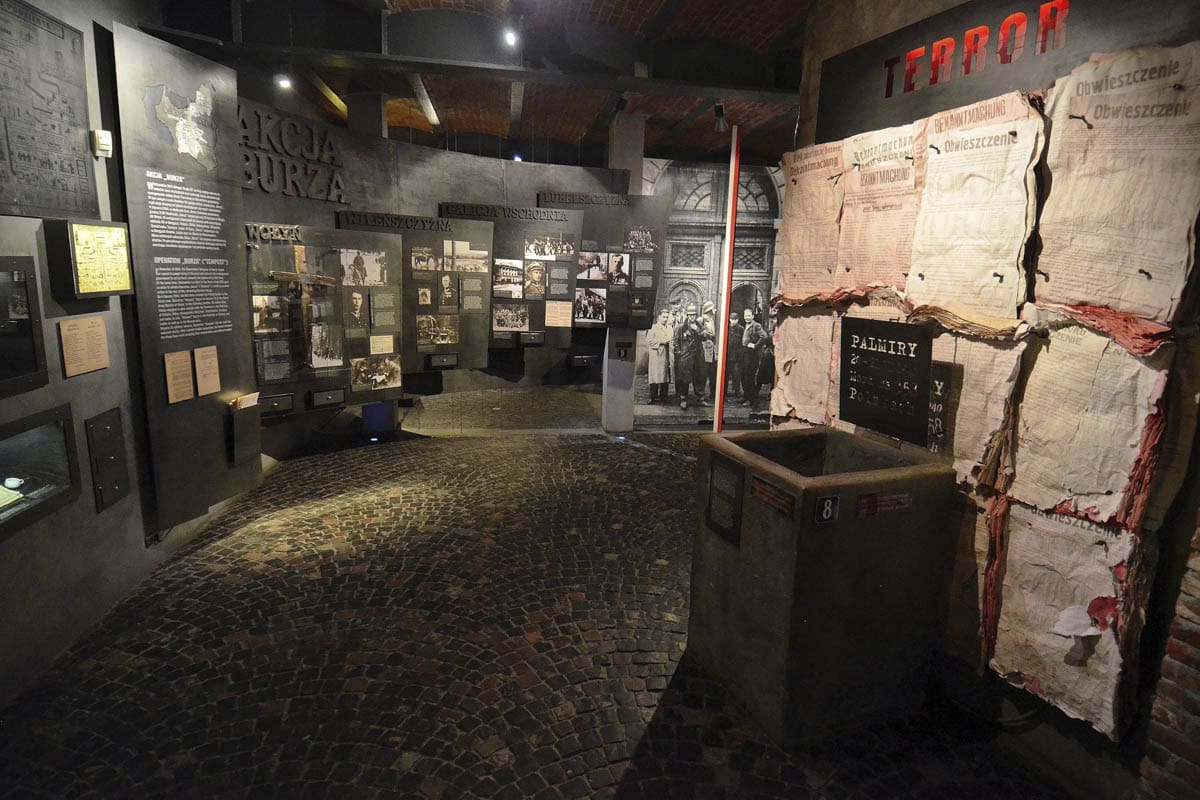
You’ll move through recreated scenes that show daily life under occupation, moments of uprising, and the grim aftermath.
There’s also a section on post-war Poland under Stalin’s rule, offering context for what followed the city’s destruction.
Some displays and short films at the Warsaw Uprising Museum are emotionally intense — but they’re an essential part of understanding Warsaw’s resilience and the courage of its people.
- Opening Hours: Wed-Mon from 10 am to 6 pm. Closed on Tuesdays. More info
- Entrance Fee: Adults – 35 PLN | FREE on Thursdays
Wilanów is so gorgeous! I was pleasantly surprised by the stunning gardens. It really is the Versailles of Poland. So glad we made the trip.