
Shaori Fortress Hike Guide – Insights to Megalithic Complex
One of the mystical sites that Samtskhe-Javakheti hides in its landscapes is the Cyclopean Shaori Fortress atop Shaori Mountain near Paravani Lake. It is a Bronze Age megalithic structure that has yet to be researched, adding even more mysticism and charm to the place.
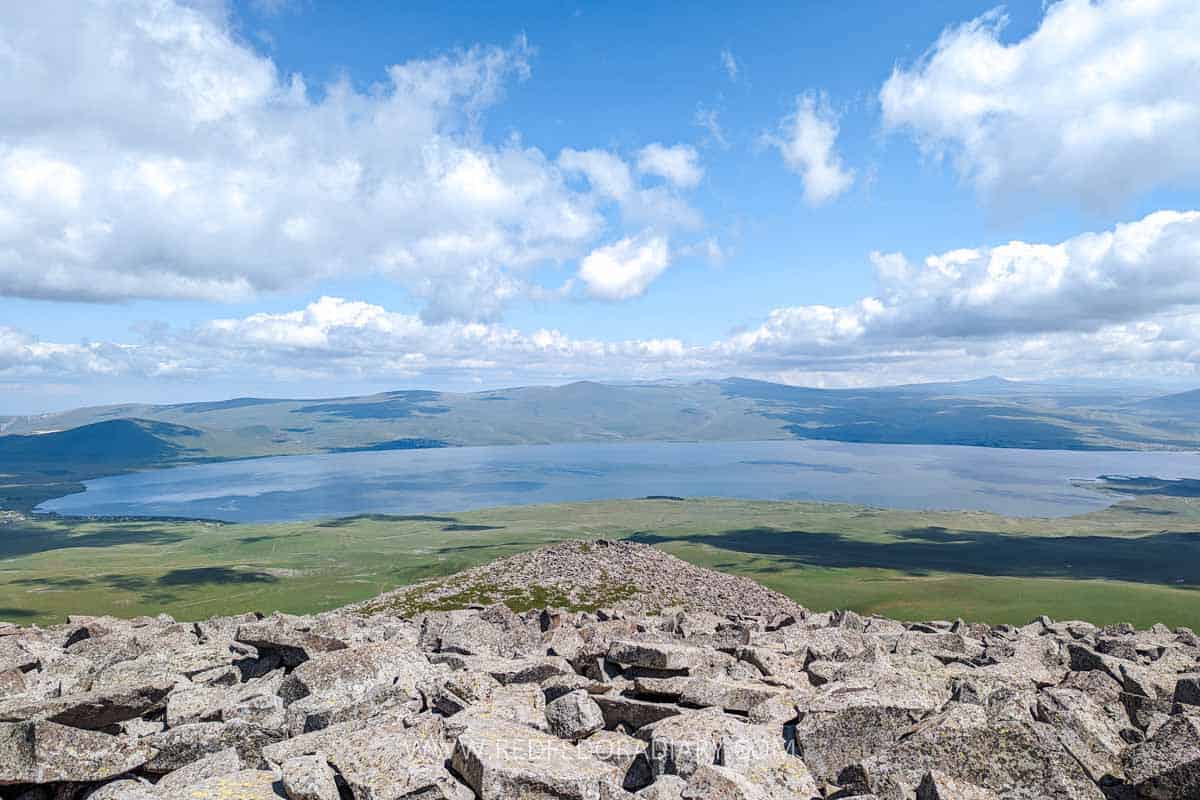
Standing majestically at an elevation of 2,735 meters above sea level, Shaori Mountain is an absolute gem that offers the most spectacular panoramic views of Paravani Lake, which is considered Georgia’s largest lake by surface area.
The mysterious Shaori Fortress and a similar one on the nearby Abuli Mountain stand as one of the region’s most significant historical and cultural monuments.
The journey to the fortress and reach the mountain’s peak also presents a unique opportunity to visit the charming sleepy village of Tambovka, once a lively settlement of Doukhobors. However, the traces of their typical blue-shuttered houses adorned with sod roofs are still there.
The Shaori Fortress hike, incorporating elements of culture, history, and breathtaking natural landscapes, can be easily classified as one of the best you can do in Georgia.
You can finish the shortened 1.2 km version hike in about four hours both ways. However, the hike is definitely challenging. Once you start the ascent and later the descent, you’ll navigate the rugged terrain of unstable and uneven rocks. You must take utmost care at every step to avoid injury.
According to experienced hikers, this Shaori Fortress hike is moderate, but for those who are inexperienced, it can be pretty tiring and heavy on your knees and ankles. However, the spectacular scenery everywhere you look cancels it out.
At some point, I started humming tunes from the opera Karmen at one point, which helped me navigate through high rocks by following the melody. The hike gets easier with stairs-like stone flat tiles leading to the final ascent to the fortress.
While specialized equipment or extraordinary physical fitness aren’t prerequisites, completing this hike requires good mobility and balance.
This straightforward guide to the Shaori Fortress hike is based on my personal journey and includes tips for planning and completing the trek.
My Travel Essentials
Get an eVisa: Check if you need one at iVisa and fill out the form to get your eVisa easily.
Book a flight: I use Skyscanner or WayAway. The latter offers cashback with a Plus membership.
Airport transfers: Avoid the hassle of public transport and pre-book a transfer with Gotrip.
Reserve a hotel: My go-to platform for hotels or apartments is Booking.com.
Wine tours: Eat This! Tours offer premium wine tours. Use code RFD5 to get 5% OFF.
Hiking & culture tours: WT Georgia is the best for unique trips. Email them Red Fedora & get 10% OFF.
Find best-suited tours: For other tours, entrance tickets, and activities, I use Viator or Get Your Guide.
Rent a car: With affordable prices, Local Rent is one of the best car rental platforms.
Hire a driver: GoTrip is ideal for long-distance private transfers at very reasonable prices.
Debit card: I have Wise (an alternative to Revolut) for local money withdrawals without hidden fees or high exchange rates.
eSIM: To avoid heavy roaming fees, use Airalo or Saily. Compare prices and GB packages. Use BAIA2592 on Airalo and BAIAIR6152 on Saily to get 3 USD on both.
Travel insurance: SafetyWing covers health insurance and has add-ons for adventure sports and electronics theft coverage.
Disclaimer: Some of the links in this post are affiliate links, which means I may earn a small commission if you buy something through them—at no extra cost to you. It helps support my blog and lets me share real, first-hand travel tips. Learn more
Why do a Shaori Fortress hike
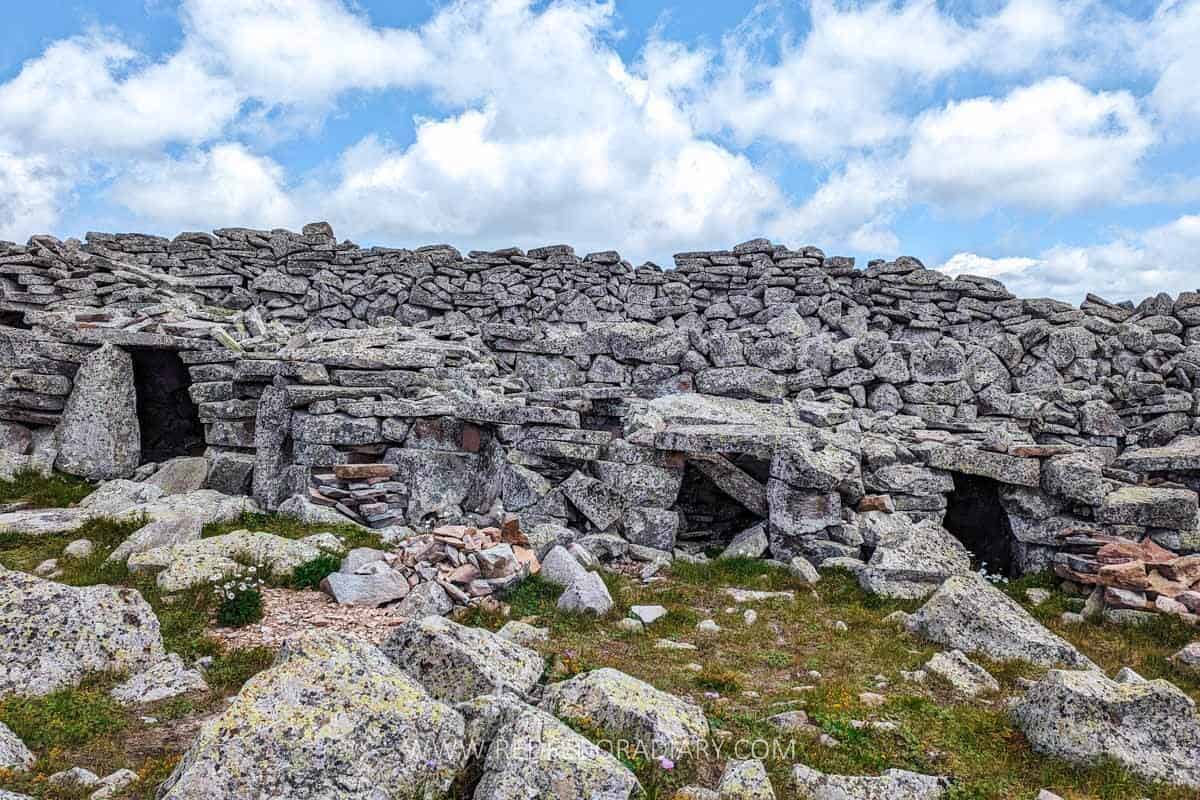
Perched atop the summit of Shaori Mountain, the mysterious Shaori Fortress is a captivating site skillfully constructed using the ancient Cyclopean dry masonry technique. This method, involving the assembly of colossal basalt blocks without the aid of mortar, attests to the remarkable engineering mastery of its builders.
Despite its commanding presence, the Shaori Fortress has never undergone organized study, with no archaeological excavations to illustrate its history. Thus, the structure’s origins, creators’ identities, and intended purpose remain mysterious.
Scholars speculate that the two-part structure, consisting of an upper and lower fortress, likely emerged during the 2nd millennium BC, coinciding with the flourishing Trialeti-Vanadzor culture in this region. Nearby, specifically in Tsalka, you can discover burial mounds and petroglyphs from this era.
Even though we call it a fortress, it is also undecided whether the site was used as a fortification. Diminutive chambers within suggest alternative uses, possibly as burial sites rather than defensive hideaways. The meticulous alignment of the main entrance with the Solstice sun further deepens the mystery, raising the possible theory that it held spiritual significance, serving as a temple or a place of worship.
Discovered by shepherds, the remarkable Shaori Fortress has endured the ravages of time and nature; its robust condition proves its resilience in the region’s unforgiving winters and relentless winds.
While its grandeur may not rival that of Abuli Fortress, another megalithic wonder in the Samtskhe-Javakheti region accessible by foot, Shaori Fortress is genuinely a fascinating landmark to explore.
Best time to hike Shaori Fortress
The Javakheti region, lodged at an average elevation of 1,800 meters, unfolds a landscape characterized by its harsh, lengthy winters juxtaposed with mild summers. This climatic contradiction shapes the very essence of the region.
I don’t advise embarking on a hike to Shaori Fortress in winter. Generally, the summer months, late June to early September, is the hiking season in Georgia, so you need to plan your Shaori Fortress hike for this period.

During winter, a heavy blanket of snow covers the entire area, including hiking trails, making them nearly unnoticeable. Navigating through this wintry landscape without clear visibility poses a dangerous risk, with the potential for tripping and suffering injuries or worse.
Regardless of the season you choose for your expedition, it is crucial to remain aware that the weather in Javakheti can undergo dramatic shifts at a moment’s notice. Thus, you must equip yourself with the appropriate gear and attire to confront the impulsive characteristics that define this captivating yet unpredictable region (see ‘what to pack’ section below)
Quick info guide of Shaori Fortress hike
The Shaori Fortress hike entails starting a trek from the mountain’s western side and concluding with a descent down its southern slopes. The trek is a loop and well-marked, starting and finishing at approximately the same spot.
Distance: You can choose a shorter 1.2 km route or a more extensive 7 km trek if you start your hike from the picturesque Tambovka village.
Time: Plan for approximately 1:30-2 hours for the ascent, followed by an additional 1:30 hours for the descent. In total, expect a minimum of 4 hours to complete the loop. If you are walking from Tambovka, add another 3 hours to your itinerary.
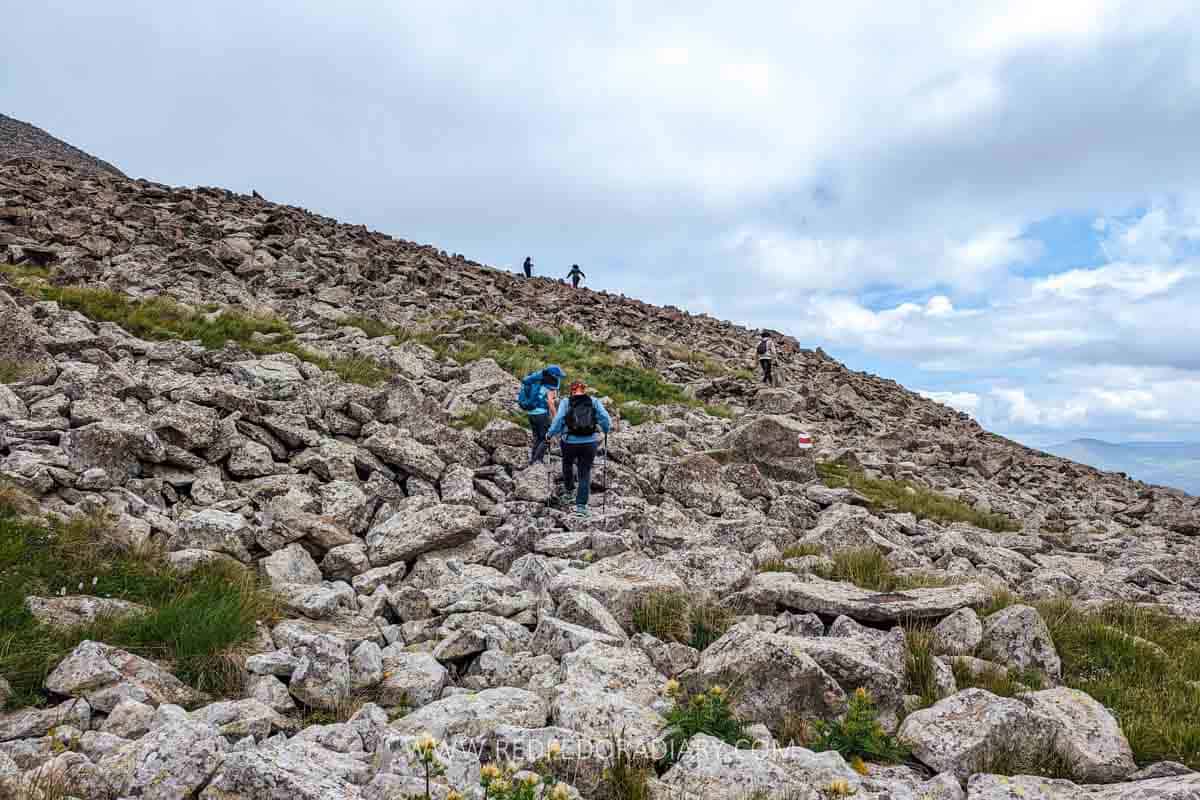
Difficulty level: This hike falls into the category of medium difficulty, demanding moderate physical fitness, excellent mobility, and a keen sense of balance to navigate the rugged terrain.
Guide necessity: Hiking Shaori Fortress on your own is possible, as the trek has clear marks with a combination of painted flags, signs, and stone markers. That being said, some parts of the trail require a certain level of intuition and navigation. Stay within the trek, and don’t wander off, though!
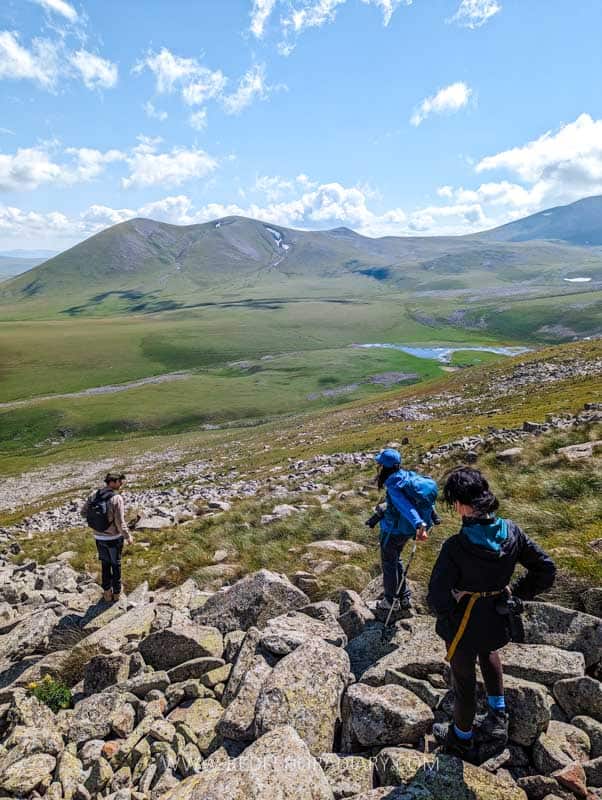
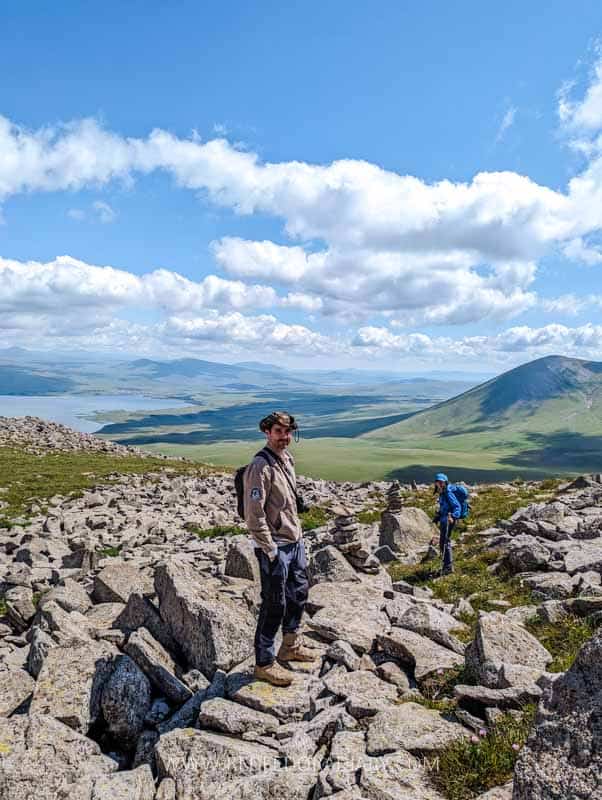
My Shaori Fortress hike was part of the press trip with Samtskhe-Javakheti DMO. Their Tourism Development and Project Manager, Nino, was our trek guide, who has hiked to the fortress several times and even helped with the marking.
Map: Even though the trail is marked, having a map gives extra comfort and assurance. Samtskhe-Javakheti DMO has created the trek on Wikiloc that starts from Tambovka and ventures further into Levani Lake (more on below). The map works offline, but it’s always a good idea to have a local SIM card (I have both Magti and Silknet, and both worked just fine) or have an international eSIM like Airalo app. (Get 3 USD with code: BAIA2592).
Getting to Tambovka: The starting point for this remarkable hike lies in the tranquil village of Tambovka, lodged along the northwestern fringes of Paravani Lake. Accessible by car, Tambovka stands approximately 3 hours away from Tbilisi and Akhaltsikhe and a mere 50-minute drive from the closest city of Ninotsminda.
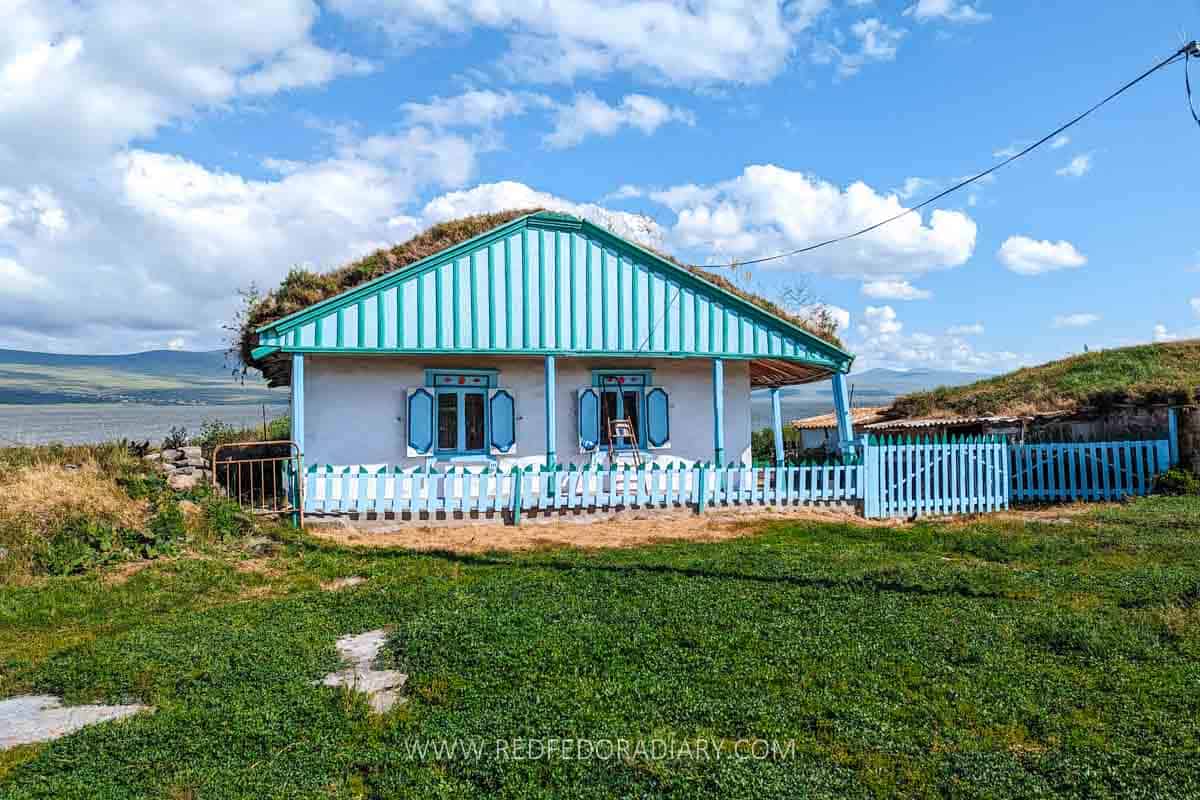
If you decide to drive there on your own, enter the village via the primary highway that goes through Poka and Paravani village. The road to Tambovka is unpaved but passable even in a sedan.
Accommodation options: Unfortunately, there are no hotels or guesthouses in Tambovka, so you’ll need to stay in nearby villages or cities. For instance, there is Hotel Sonya in Ninotsminda or Family Corner in Gamdzani (35 minutes drive away).
A detailed explanation of the Shaori Fortress hike
As I mentioned, the hike to Shaori Fortress officially starts from Tambovka village. As you follow the path, you’ll notice the first yellow sign with names and distances here, close to the ‘Fisherman’s House,’ a relic from the Soviet era, once a collective fish warehouse and distribution center.
To shorten the walk by approximately 4-5 kilometers, you can organize a ride via your guesthouse for a small fee (Family Corner in Gamdzani can help) to reach the second trail marker yellow sign (here).
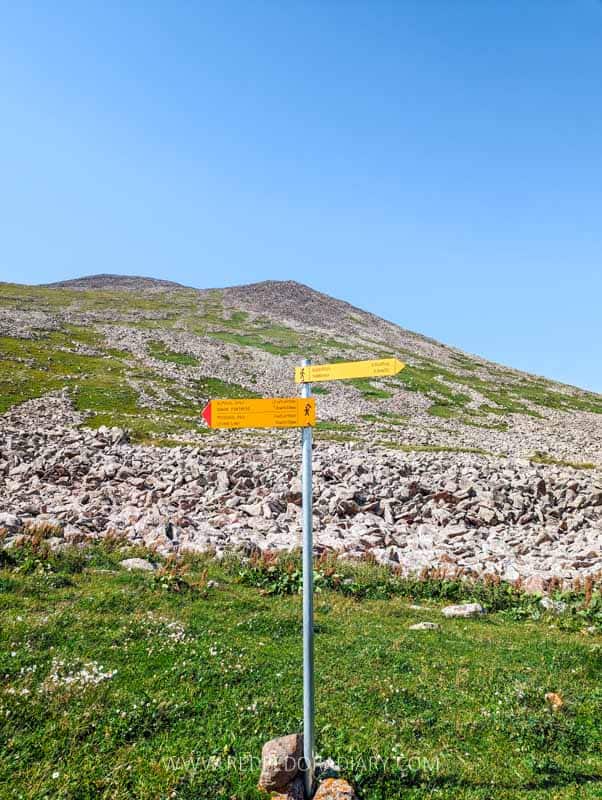
Just because the road from the village to any of these yellow signs is not particularly interesting, I recommend organizing a ride to save energy and time for the hike. On your way back, you can walk around the Tambovka village to see the Doukhobor houses.
Ideally, shorten the hike even further by starting at this point near the spring as we did. On the Wikiloc map, the Flag mark indicates the same spring water near the mountain’s base.
This off-road is quite bumpy, so if you consider driving yourself, you’ll need a 4WD and skill in steering dirt roads.

The hike, starting from the second trail marker, is easy as you meander through the open field and slowly ascend the western side of Shaori Mountain. On this part, you can easily avoid the occasional volcanic rocks spread across the flat areas.
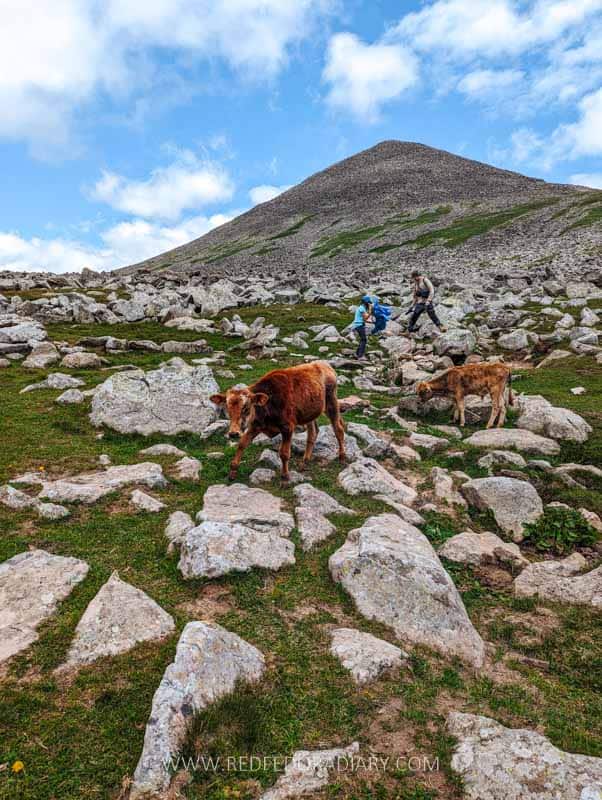
After roughly 20-25 minutes, you’ll notice a shepherd’s settlement on your left spread on the hills. Families come here in late May and stay till September to let their sheep graze in the nearby fields.
Now, this is important: shepherds have dogs, and herd/shepherd dogs are very protective and aggressive. Therefore, expect the possibility of them barking at you and even coming quite close. At first, I was not quite worried as they seemed to be far, but they ran pretty fast, so at one point, three dogs were around 5 -7 steps away from our group.
In that case, you must remain calm (yes, I know it’s a hard ask), and if you are with a group, get close to each other and move slowly and cautiously. And if they come as close as they did in our case, call out for help, and someone from the settlement will call them back. They will immediately run back to the camp. By no means run or do any impulsive movements.
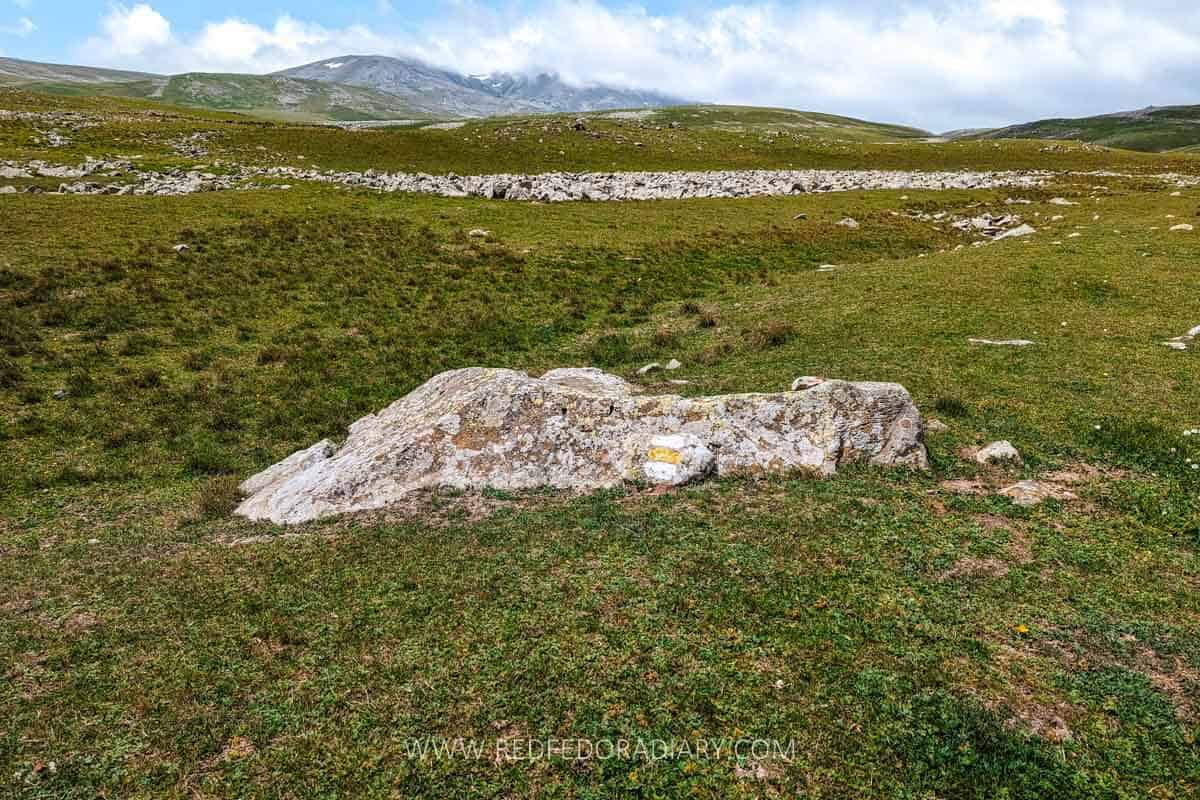
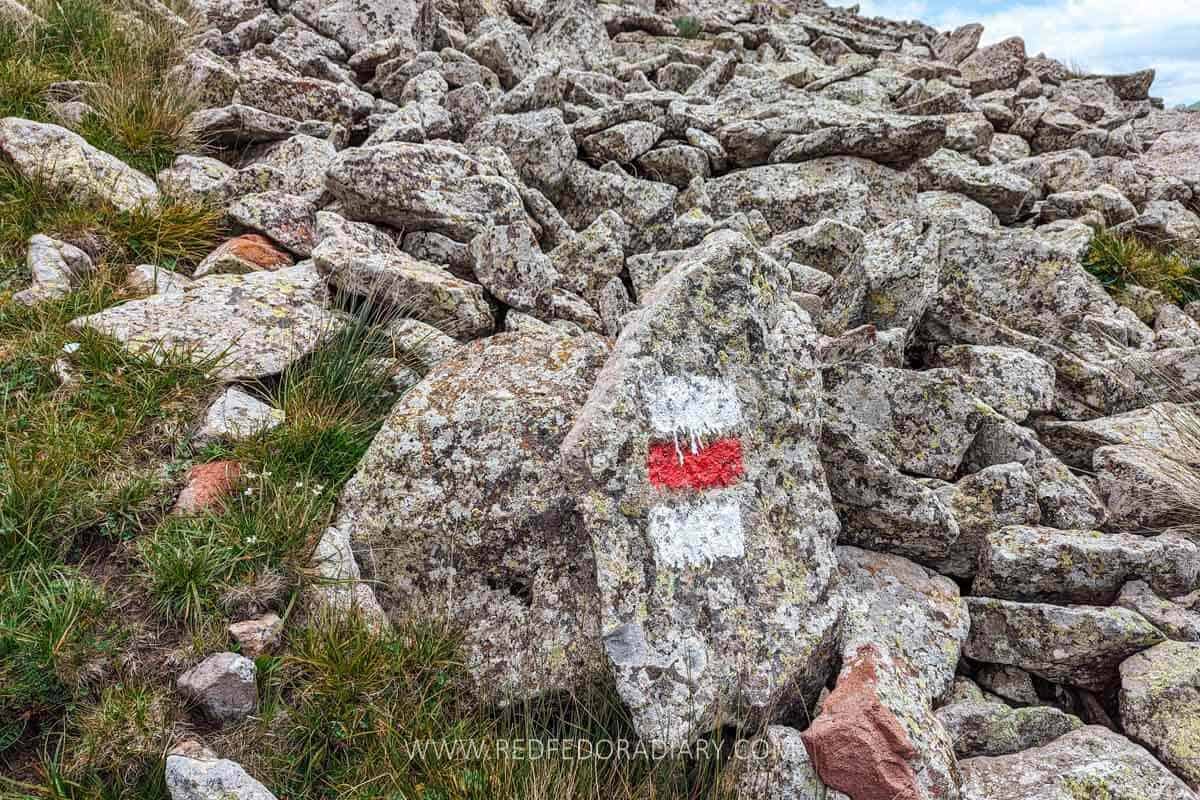
A few meters past that camp, there is a spring I mentioned above (here). Unfortunately, on our visit in mid-July, the spring was dry, so don’t rely on it. Have your own water.
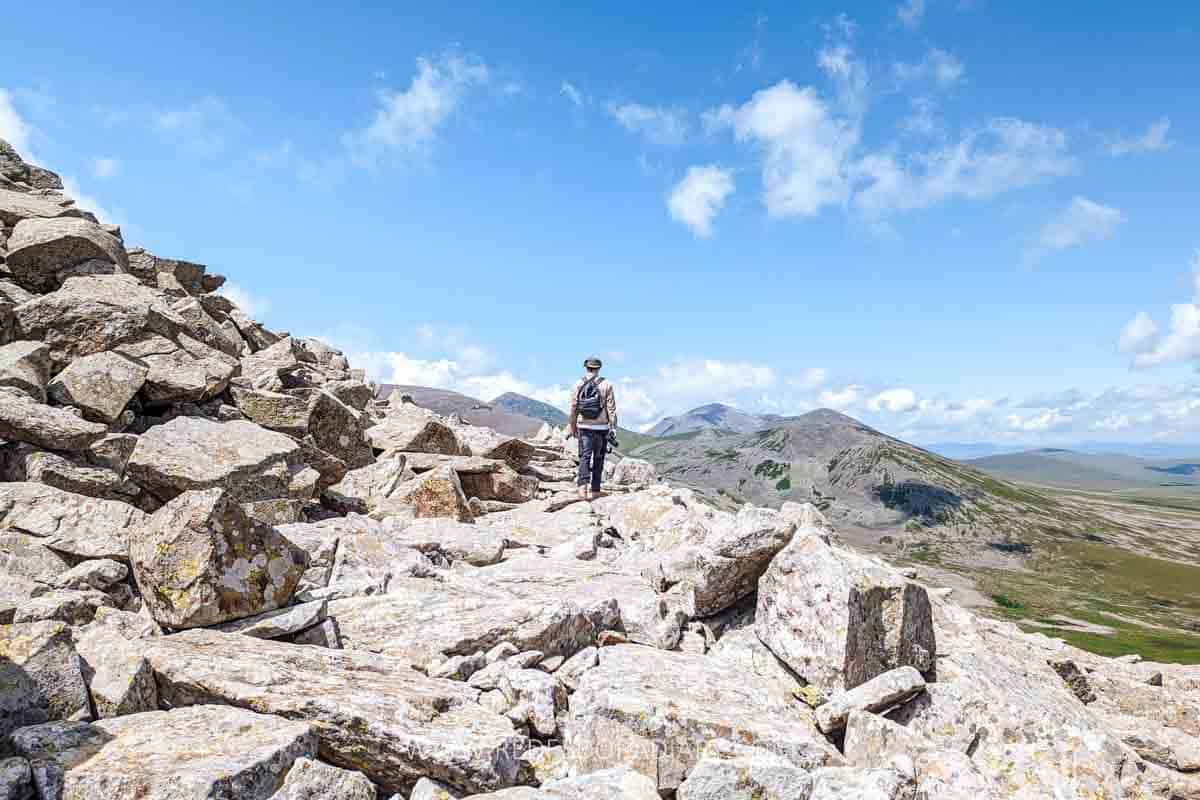
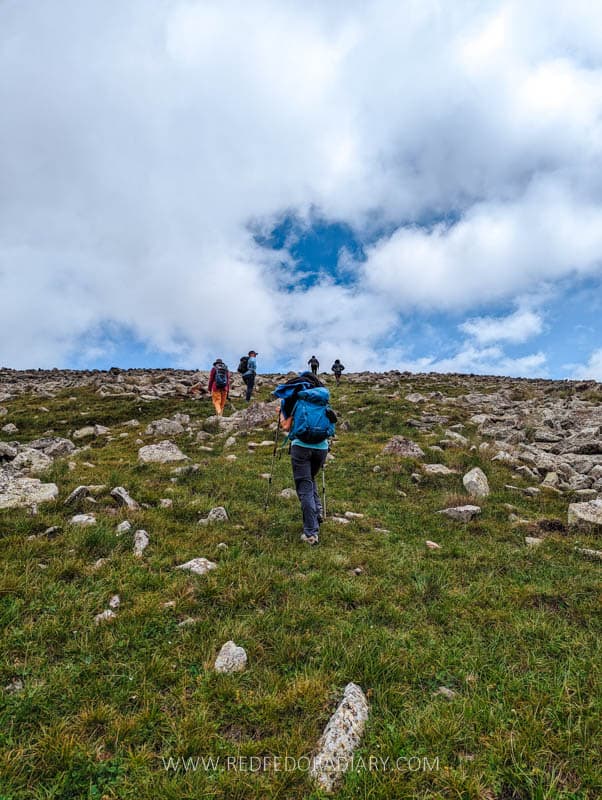
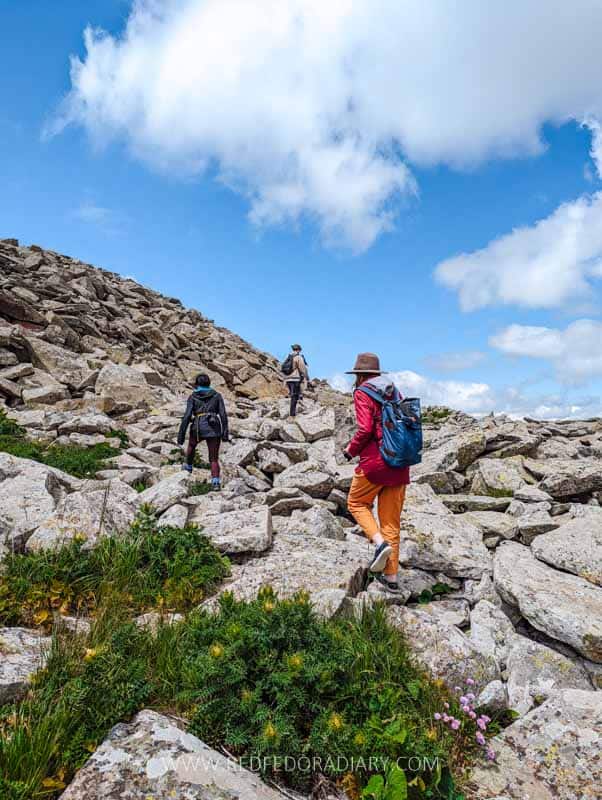
From here, you begin the first steady climb toward the plateau. This portion of the trail has red and white or yellow and white flags painted on the stones. The terrain transforms into a sea of rocks, stacked in layers, with each stone having different sizes and shapes; some even wobble. So be mindful of where you step or aim for more giant rocks.
As you ascend and go around the mountain, your reward gradually unfolds in enhancing views of Paravani Lake.
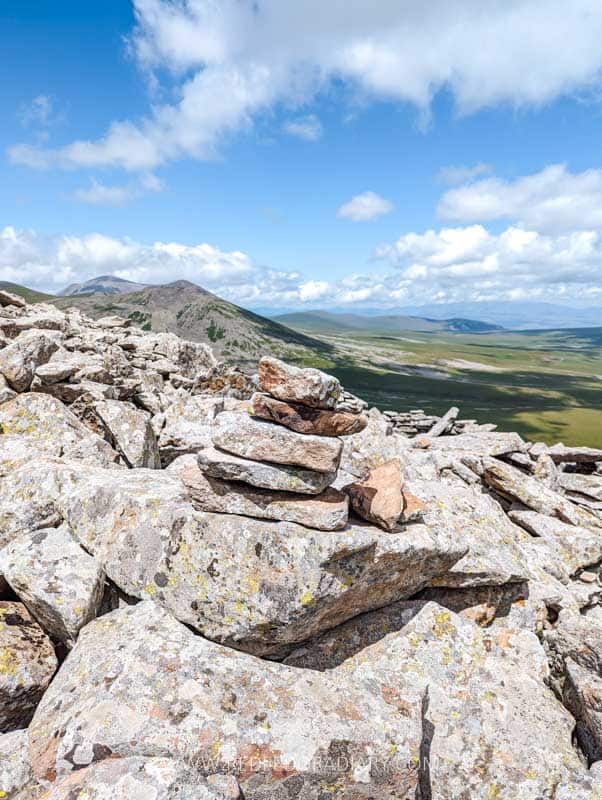
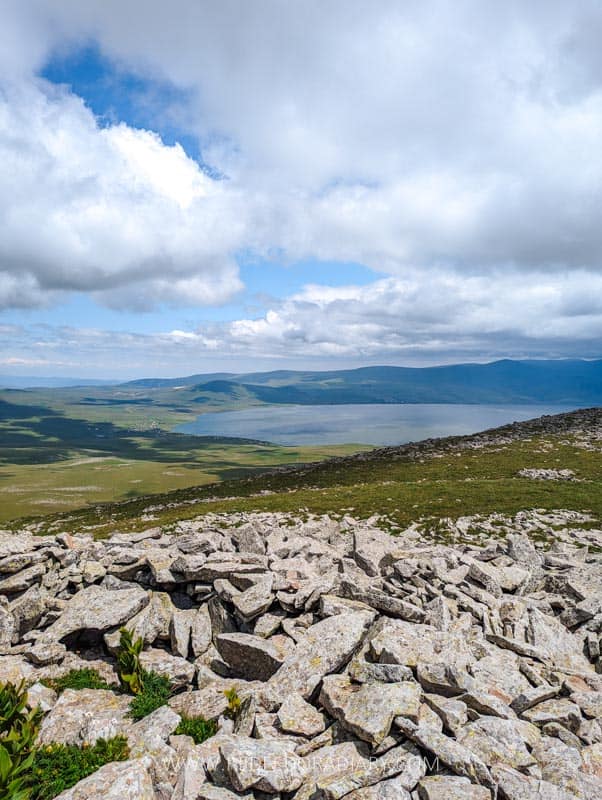
However, the challenge of navigating the sea of volcanic rocks continues with a steeper section of the hike. Although it gradually levels out, some of the people from our group decided to stop and return.
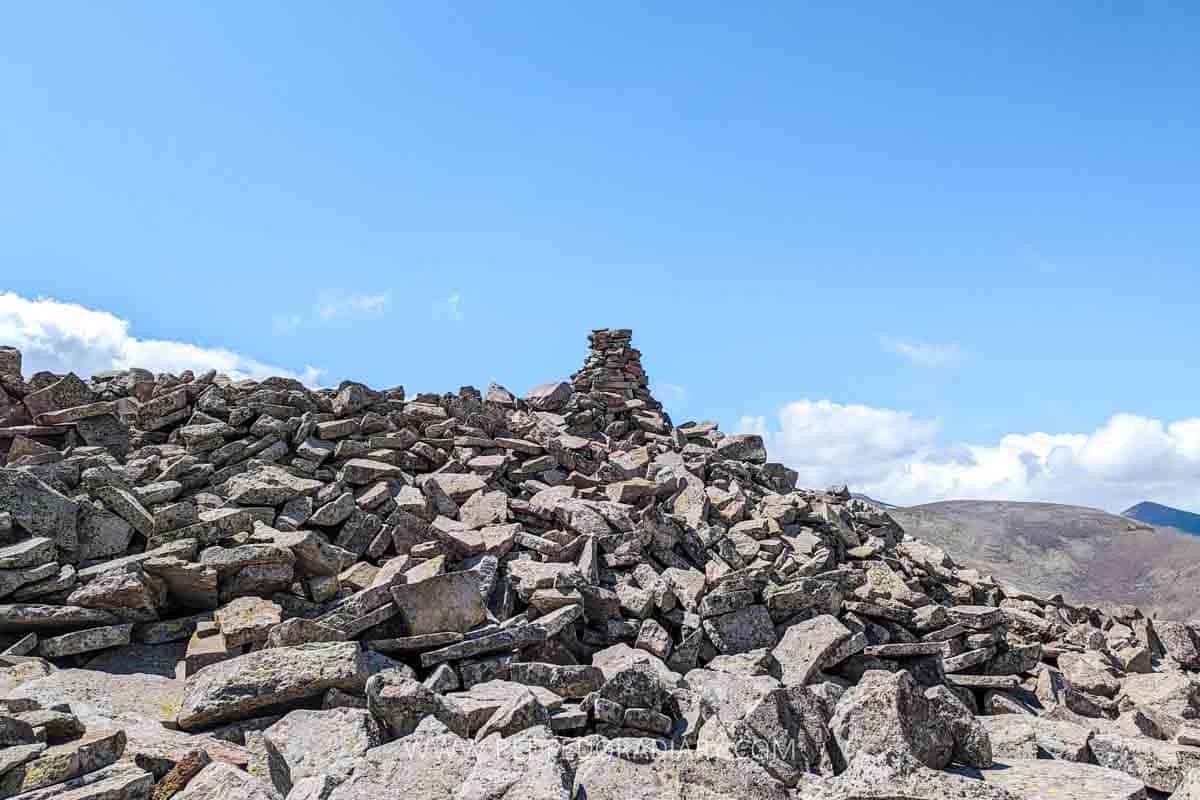
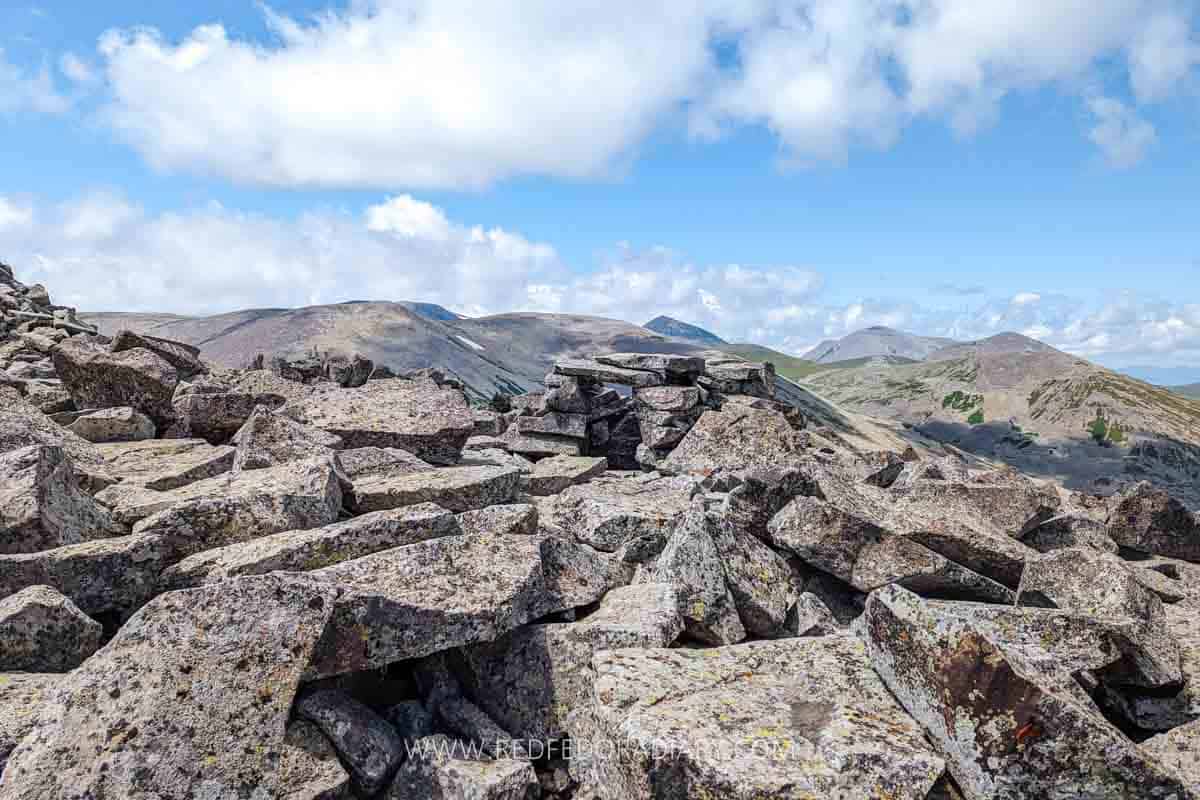
The final part of the hike takes you to the mountain peak where Shaori Fortress is. There are no painted markers anymore. Instead, follow pyramid-shaped stone piles specially erected to direct hikers along this path. Adhering to these stone piles is critical to avoid unintentionally walking over the roofs and hidden chambers.
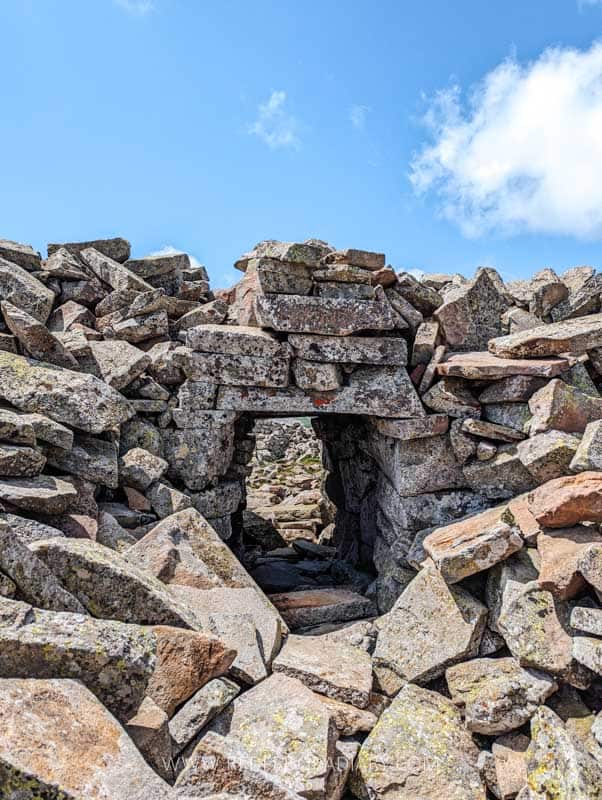
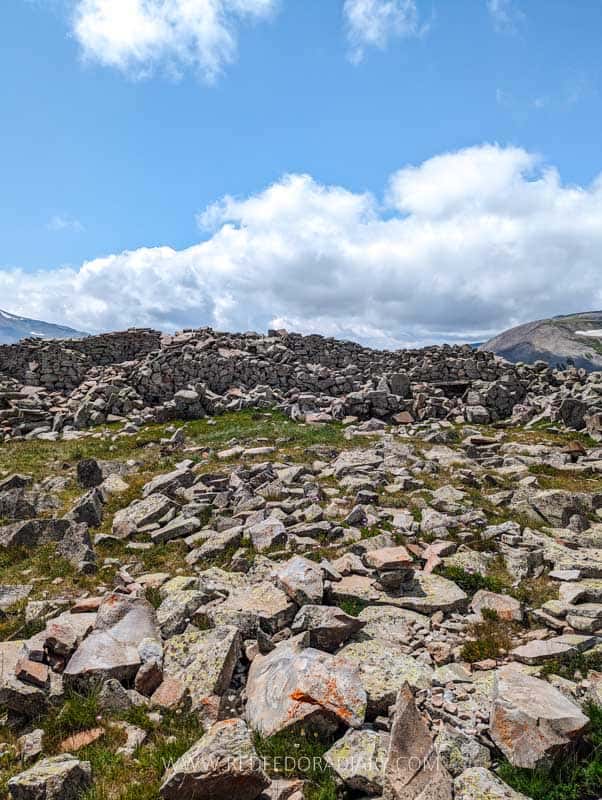
This final part of even more uneven and giant boulders was the hardest for me to navigate. This is where I started humming tunes from the opera Karmen to help me follow the rhythm and concentrate on something else.
Almost at the top, the trek levels out entirely, guiding you across flat stone slabs that form a meticulously arranged “path” leading to the entrance of the Shaori Fortress.
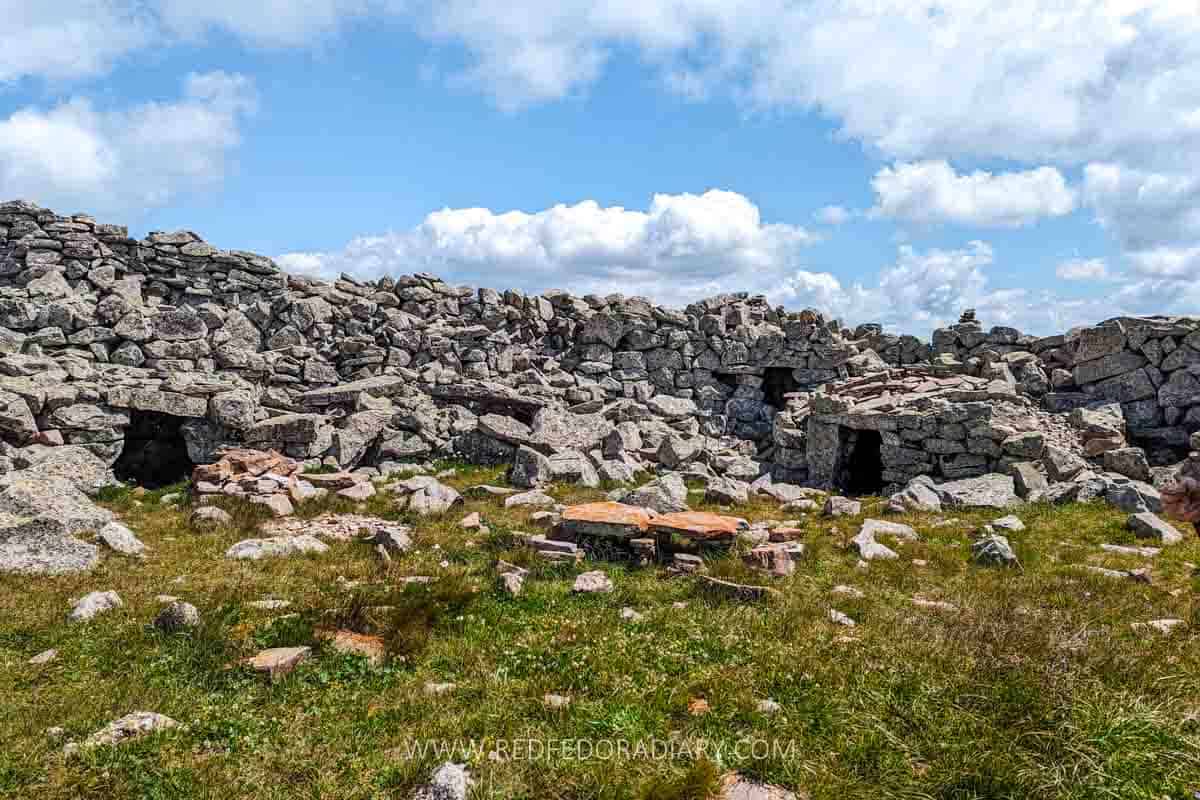
Upon arriving at the fortress, access it through the opening ‘entrance’ (see the picture). The fortress’s interior features an open grassy field encircled by the walls. You can walk around and look inside the structures. However, refrain from climbing the walls or flat surfaces, and don’t move anything.
There’s a stone picnic table where you can sit down and enjoy lunch or a snack. Do not litter, and bring your garbage back with you, including the organic waste.
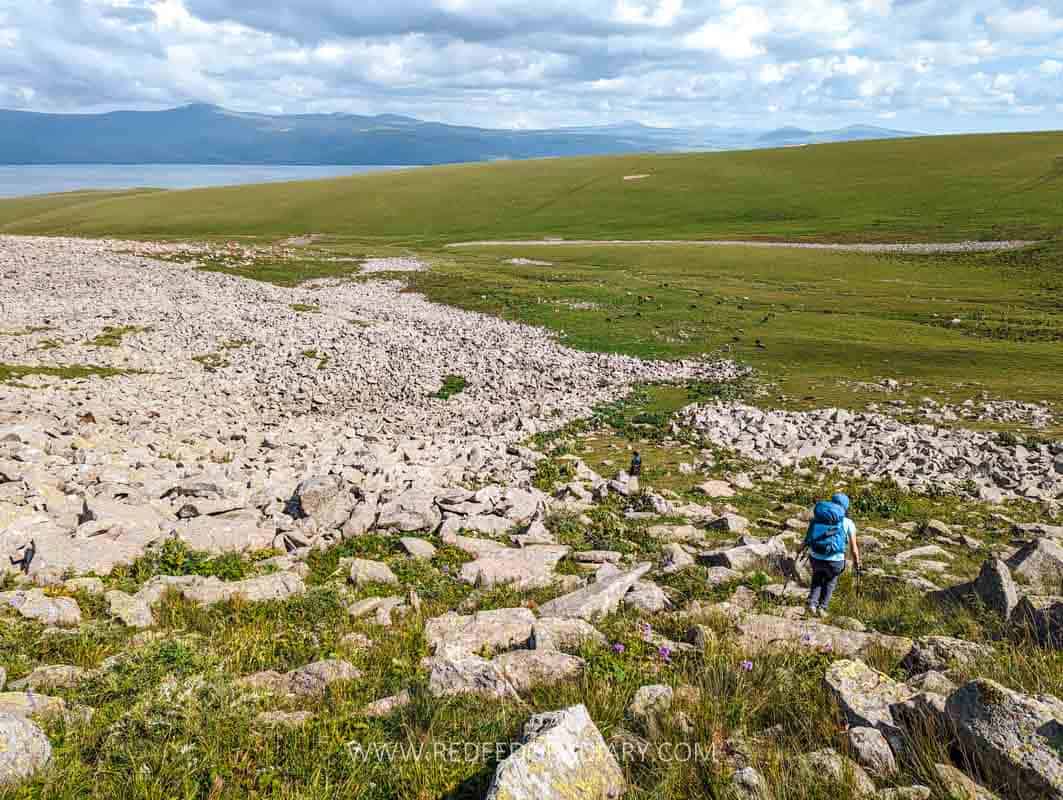
When ready to descend, backtrack your path down the mountain. Instead of returning to the spring, continue walking down the hill. The downhill is quite steep and comprised mainly of similar rocks you just walked through on the ascent, so take your time and do it slowly. This way, you’ll arrive at the trail sign.
It took us around 80-90 minutes to return from the Shaori Fortress. We had transportation back to Tambovka waiting for us. The drive took about 20-25 minutes. Alternatively, you can walk and follow the road back into the village.
An optional further hike to Lake Levani
For those seeking an extended adventure in the stunning landscapes of Samtskhe-Javakheti, the Shaori Fortress hike can be extended westward to the picturesque Lake Levani, locally known as Levanis Tba. This add-on extends the hike’s total distance to 15 kilometers, needing approximately 11 to 12 hours for a round-trip.
If you are up for camping, you can do so on Levani Lake. But you need to pack and carry all the camping gear with you.
What to wear and pack for the hike
Proper attire and equipment are essential for this hike, regardless of the season. Even during my July visit, I needed to layer up. I underestimated the hike and didn’t have a warm pullover or hoodie. I had just a thin raincoat with me and a scarf.
Since the area is exposed without trees, it gets pretty windy, so having a windbreaker is ideal. My quick-dry Turkish cotton towel, which I sometimes use as a scarf, was enough for me to shield my face and neck from the wind and sun, but I still got sunburned even though it was pretty cloudy most of our hike. Thus, pack sunscreen, too.

Footwear choice is crucial. I didn’t wear my hiking shoes and opted for my Reebok sneakers. I felt wearing something lightweight gave my feet a break. However, I won’t advise sandals, though.
Nino, our guide, offered us trekking poles. I didn’t use them, but a few members of our group did, and they said later that it helped them navigate the rocky terrain and steep hills.
Bring enough water, and don’t rely on that one spring along the way. And remember to pack lunch to enjoy at the picnic table within the grounds of the Shaori Fortress.
Map of Shaori Fortress Hike
Even though I posted the link to the map of the hike, I am putting it at the end as well; maybe you’ve missed it. You might find several maps, but I suggest following the one created by Samtskhe-Javakheti DMO on Wikiloc. We followed this exact map with Nino. If you want to hike to Levani Lake, it provides the entire Tambovka – Shaori Fortress – Levani Lake hike map.
My Favorite Travel Resources
To ease your travel planning, check out all the posts about Georgia travel. Additionally, here are some of the websites and services I use when preparing for my next adventure anywhere in the world.
✈ Book affordable flights on Skyscanner, a platform that shows the best flight deals.
🚫 Get compensation for up to 700$ with Airhelp if your flight was canceled or delayed within the last 3 years.
🚗 Rent a car at Local Rent for affordable prices and convenient service.
❣ Pre-book a private car transfer with GoTrip from Tbilisi Airport to your hotel or any other city across Georgia.
💻 Get a VPN from Surfshark to protect your devices from hackers when using public Wi-Fi when traveling.
📱 Install the Airalo app, which provides local eSIMs for a more affordable internet connection when traveling. Get 3 USD with code: BAIA2592.
💸 Use Wise to withdraw money in local currency without hidden fees and avoid high exchange rates. On top, you might get a Visa or Mastercard debit card.
🍷 For some of the best, expat-designed wine tours check out Eat!ThisTours. Get a 5% discount with code RFD5.
🏨 Find budget-friendly deals on all sorts of accommodation types on Booking.com.
🩺 Buy the most flexible and budget-friendly travel insurance, SafetyWing, covering COVID.
☀ Book in advance some of the best city walks, cultural experiences, and day tours to maximize your stay and experience here.