
Armenia Day Trip from Tbilisi: Complete Travel Guide
Taking an Armenia day trip from Tbilisi is one of the easiest ways to explore another country while visiting Georgia. In just one day, you can cross the border into northern Armenia, discover centuries-old monasteries, take in the scenery of the Debed Canyon, and learn about the shared history of these two neighboring countries.
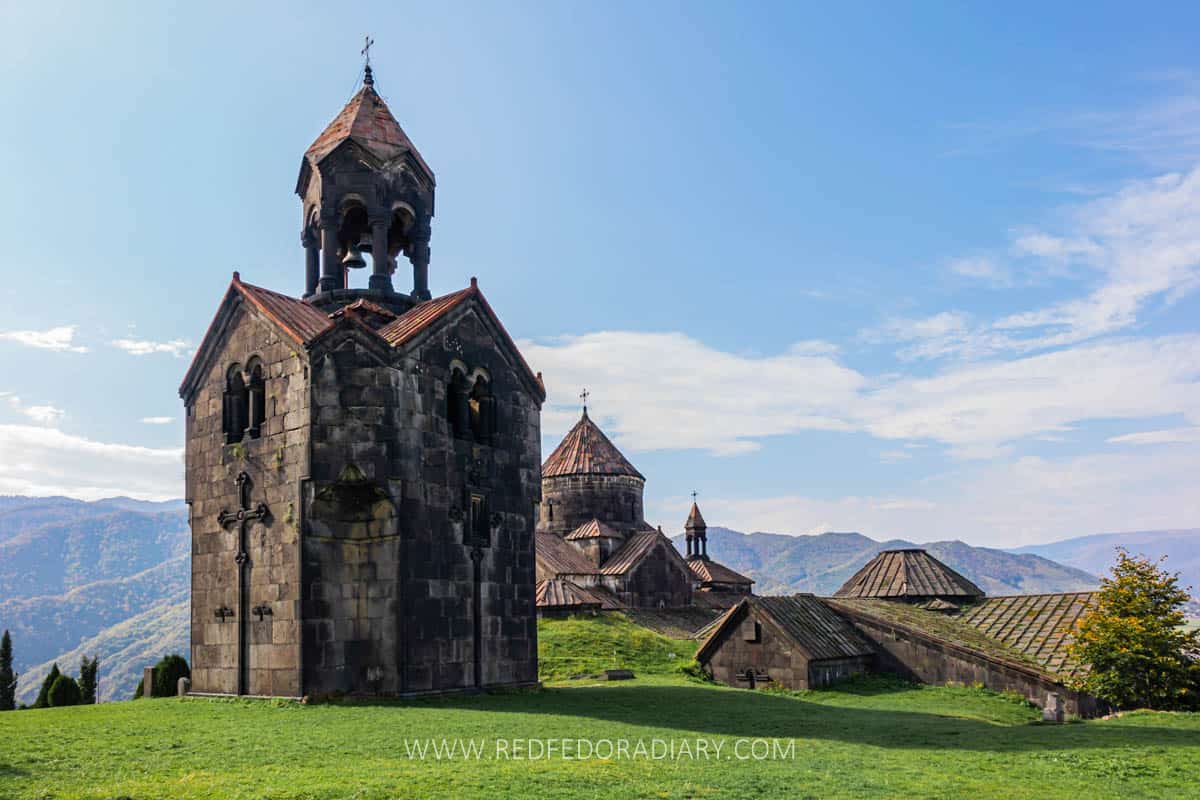
I recently led an Armenia day tour with WT Georgia. We explored Lori Province and visited three well-known monasteries: Haghpat, Sanahin, and Akhtala. We also stopped at an old Soviet cable car station to take in the views over Alaverdi, an industrial town.
An organized tour helps with transportation and border crossings, but it’s still a long day with lots of time on the road. You’ll see some great places, but one day isn’t enough to experience everything the country offers.
Is a day trip from Tbilisi to Armenia worth it? What should you know about visas, border crossings, transportation, and other important details before you book?
In this guide, I’ll explain what to expect on an organized Armenia day trip, where you’ll visit, and share tips from my own experience. I’ll also talk about other tour options and how to plan a flexible trip with a private driver.
Disclaimer: Some of the links in this post are affiliate links, which means I may earn a small commission if you buy something through them—at no extra cost to you. It helps support my blog and lets me share real, first-hand travel tips. Learn more
Quick Facts about a day trip to Armenia from Tbilisi
- Main attractions: Haghpat, Sanahin, and Akhtala monasteries
- Additional stops: Stops vary by tour
- Tour duration: Approximately 10–12 hours
- Driving time: Around 4–5 hours total, excluding border formalities and sightseeing
- Border crossing: Sadakhlo(Georgia)–Bagratashen(Armenia)
- Armenia day trip cost: From approximately 150 GEL per person for a group tour
- Transportation: Organized group tour, private guided tour, or private driver
- Lunch: Usually not included; varies by operator
- Currency: Armenian dram (AMD)
- Travel documents: Valid passport or eligible national ID; Armenian visa if required
- Best time to visit: Spring through autumn, especially May–June and September–October
Note: Prices depend on the tour operator, travel date, and what’s included. Private tours usually cost more, and lunch or visa fees might not be included. Always check the latest prices before you book.
Is an Armenia day trip from Tbilisi worth it?
I think Tbilisi day trip to Armenia is worth it, especially if you don’t have much time and want to see a bit of the country while you’re nearby. It’s also a chance to visit another country and get a new stamp in your passport.
Lori Province gives you a different experience than the usual day trips from Tbilisi. Armenia and Georgia have a long shared history, but Armenian monasteries have unique architecture that’s interesting to see, especially if you’ve already visited some Georgian churches.
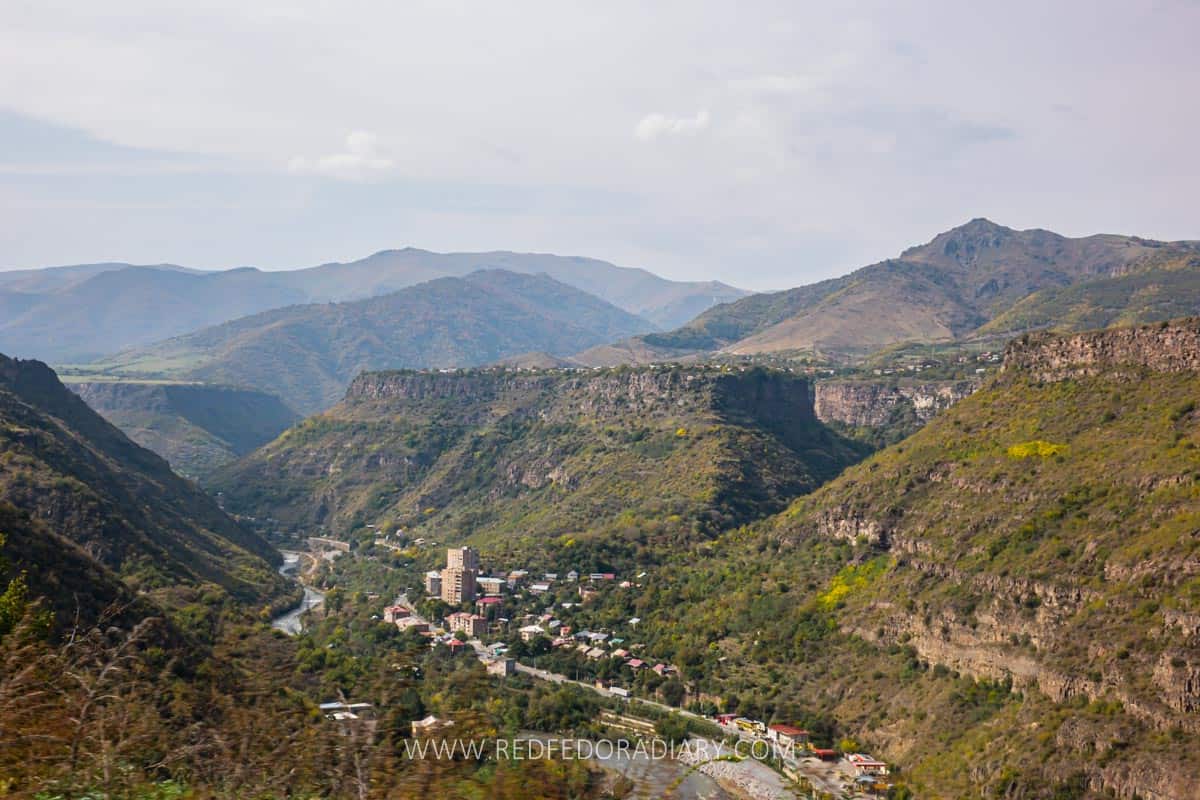
Driving through the Debed Canyon is another highlight, with winding roads, steep mountains, rocky cliffs, and small villages along the route. Some towns look almost deserted, with old Soviet buildings and abandoned factories, similar to rural areas in Georgia. I found these places fascinating and a bit sad, as they show the region’s industrial past and how things have changed since the Soviet Union ended.
Remember, this trip means a long day with lots of driving and two border crossings. You’ll only see a small part of northern Armenia, so it won’t give you the full picture of the country. If you like history, architecture, and exploring less-visited places, I think it’s worth booking. But if you prefer slow travel or want to see more of Armenia, consider a longer trip.
What to expect on an organized Armenia day tour from Tbilisi
Most tours have a similar plan, visiting key medieval monasteries in northern Armenia and making a few extra stops. The exact route, length, and sights depend on the tour company, so check the itinerary before you book.
How long does the Armenia day trip take?
Most trips last about 10 to 12 hours, including travel, border crossings, sightseeing, and a lunch break. They usually leave Tbilisi early in the morning and come back in the evening.
It takes about 1 to 1:30 hours to drive from Tbilisi to the Sadakhlo–Bagratashen border. After crossing, you’ll head into Lori Province and follow the Debed Canyon to the monasteries. You’ll spend about 4 to 5 hours driving in total, since the monasteries are fairly close together.
Crossing the Georgia–Armenia border can take extra time, especially when it’s busy. Since you’ll cross twice—going into Armenia and coming back—it’s a good idea not to schedule anything right after the tour.
What’s included in an organized tour?
These tours include round-trip transport from Tbilisi by minivan, minibus, or private car, depending on group size. You’ll usually have an English-speaking guide who shares the history of each place and helps with border crossings.
The main attractions on a typical Tbilisi to Armenia day trip are Haghpat, Sanahin, and Akhtala monasteries, though not every company includes all three.
Some tours add extra stops, like the medieval Sanahin Bridge, the Mikoyan Brothers Museum, viewpoints over the Debed Canyon, or other historic sites. On the WT Georgia tour I led, we also visited an old Soviet cable car station with great views of Alaverdi.
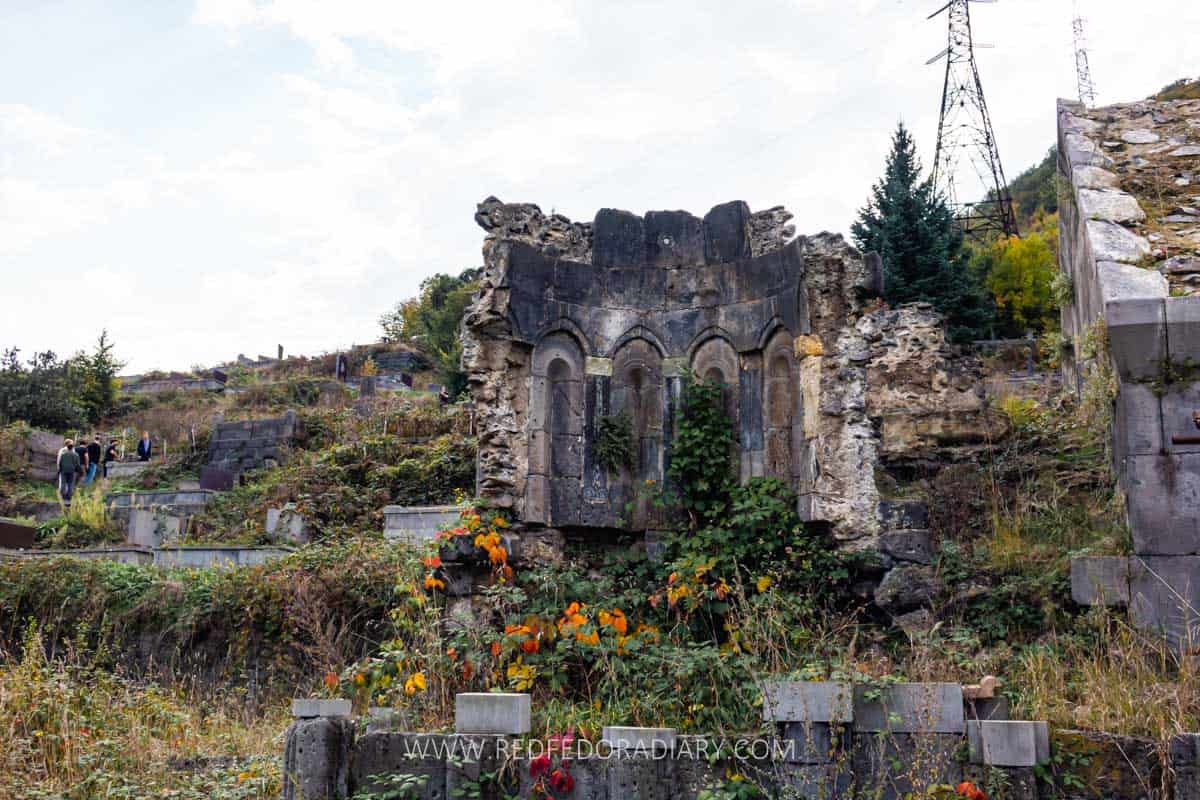
Lunch is something to keep in mind. Most group tours don’t include meals, but they stop at a local restaurant where you can buy your own food. Some tours do include lunch, so check what’s covered before you book.
Check if the tour includes hotel pickup or leaves from a meeting point in Tbilisi, and whether it covers any entrance fees. Monasteries are free to enter.
How much time do you spend at each monastery?
Typically, the companies give you about 30 to 50 minutes at each monastery, depending on how big the site is and the day’s schedule.
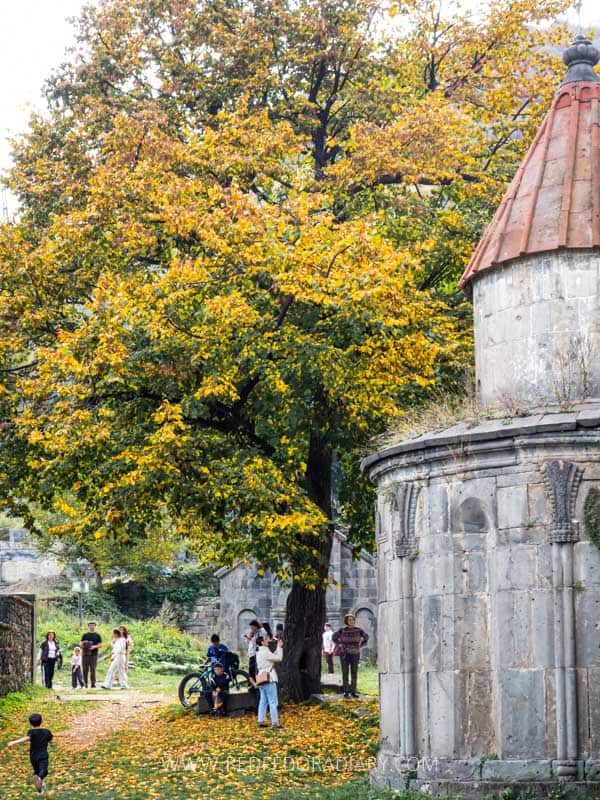
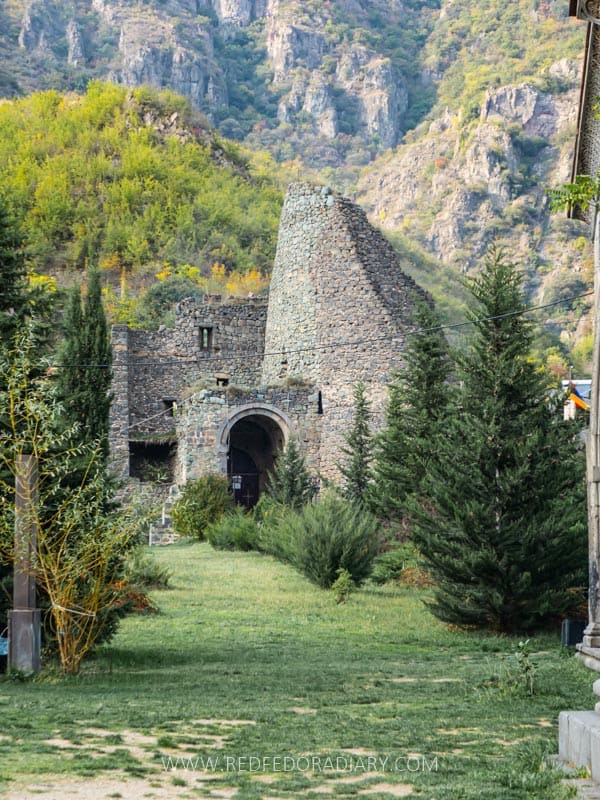
You’ll spend some time listening to your guide, then have free time to look around and take photos on your own.
If you’re especially interested in architecture or photography, think about booking a private tour or hiring a driver, since group tours stick to a set schedule.
Best organized Armenia day tours from Tbilisi
WT Georgia’s Armenia day tour
WT Georgia is a local tour company run by friends and partners of mine. Sometimes I help guide their cultural tours, and I’ve also joined a few as a paying guest.
I recently led their Tbilisi day trip to Armenia, which included the three monasteries and a stop at an old Soviet cable car station with views over Alaverdi.
WT Georgia doesn’t offer this trip regularly, so the dates might not fit your plans. You can contact them to ask about upcoming group tours or to arrange a private Armenia day trip.
→ Check upcoming departures or contact them directly about a private tour.
Other Armenia day tours from Tbilisi
If WT Georgia’s schedule doesn’t work for you, other companies offer similar tours. Here are three other options to consider.
Day trip to Armenia Including homemade lunch
This tour also visits the same three main monasteries. The main difference is that it includes a homemade Armenian lunch with a local family, so you can experience Armenian hospitality and traditional food along with the sights.
→ Check prices and availability on Viator or compare the same experience on GetYourGuide.
From Tbilisi to Armenia: Akhtala, Haghpat & Sanahin day trip
Another tour mixes visits to medieval monasteries with a look at the region’s Soviet industrial history.
This tour goes through Alaverdi, a former copper-mining town in the Debed Canyon, and adds a stop at the Mikoyan Brothers Museum. The museum is dedicated to Anastas and Artem Mikoyan, two important Soviet figures, and is especially interesting because of its link to the MiG fighter aircraft.
→ Check the tour’s availability and prices
Experience Armenia – Private Day Trip from Tbilisi
If you like to explore at your own pace, this private tour is a good choice. It includes all three monasteries and a visit to the Mikoyan Brothers Museum.
Unlike group tours, this option gives you a private guide, transport with pickup and drop-off in Tbilisi, and lunch. You can choose a homemade meal with a local family or eat at a restaurant.
→ Check prices and availability
Can you visit Armenia from Tbilisi without an organized tour?
Yes! Taking a day trip from Tbilisi to Armenia with a private driver is a great alternative to a group tour, especially if you want to explore on your own and don’t want to rent a car or drive across the border yourself.
With this option, you can plan your own itinerary, spend more time at places you like, and visit extra attractions that group tours might miss. But keep in mind, you’ll be exploring the monasteries on your own, without a guide to explain their history and architecture.
Taking a private transfer with GoTrip
GoTrip is a private transfer service I sometimes use for longer trips in Georgia. You can book a car with a driver, pick your departure time, and plan your route with sightseeing stops.
You can visit the monasteries and also add stops like Sanahin Bridge, the Mikoyan Brothers Museum, Kobayr Monastery, Odzun Church, or towns such as Alaverdi.
A nice feature is that you can pick your driver and vehicle before booking, see the total price in advance, and plan sightseeing stops without sticking to a group schedule. The driver will wait while you explore, but you’ll need to track your time to fit everything into one day.
Remember, GoTrip is a transport service, not a guided tour, so it’s best for independent travelers who like to visit historical sites at their own pace.
→ Take a look at my GoTrip Armenia day trip from Tbilisi itinerary that covers the main monasteries. You can change the route and add or remove stops as you like.
Armenia day trip itinerary: What to see in Lori Province
This itinerary lists the stops from the guided tour I took with WT Georgia, in the order we visited them. Other tour operators might use a different route or include other attractions.
Lori Province and its historical connections with Georgia
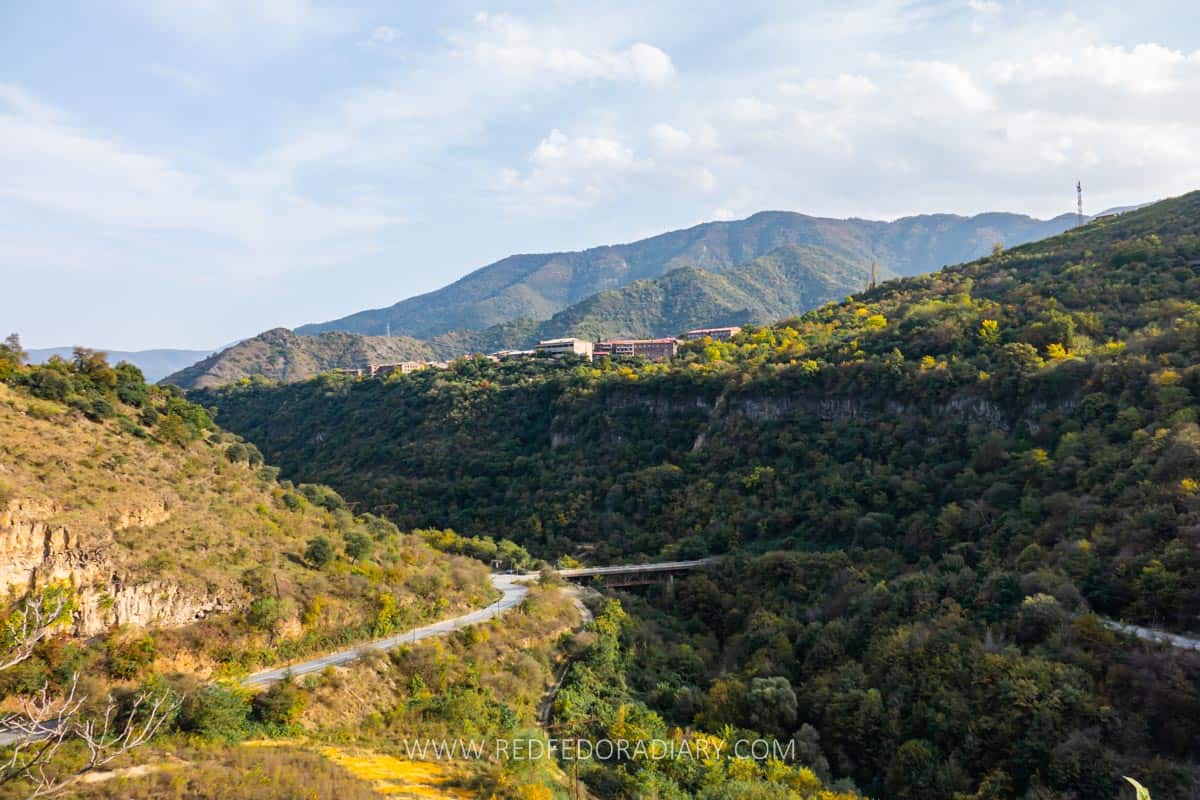
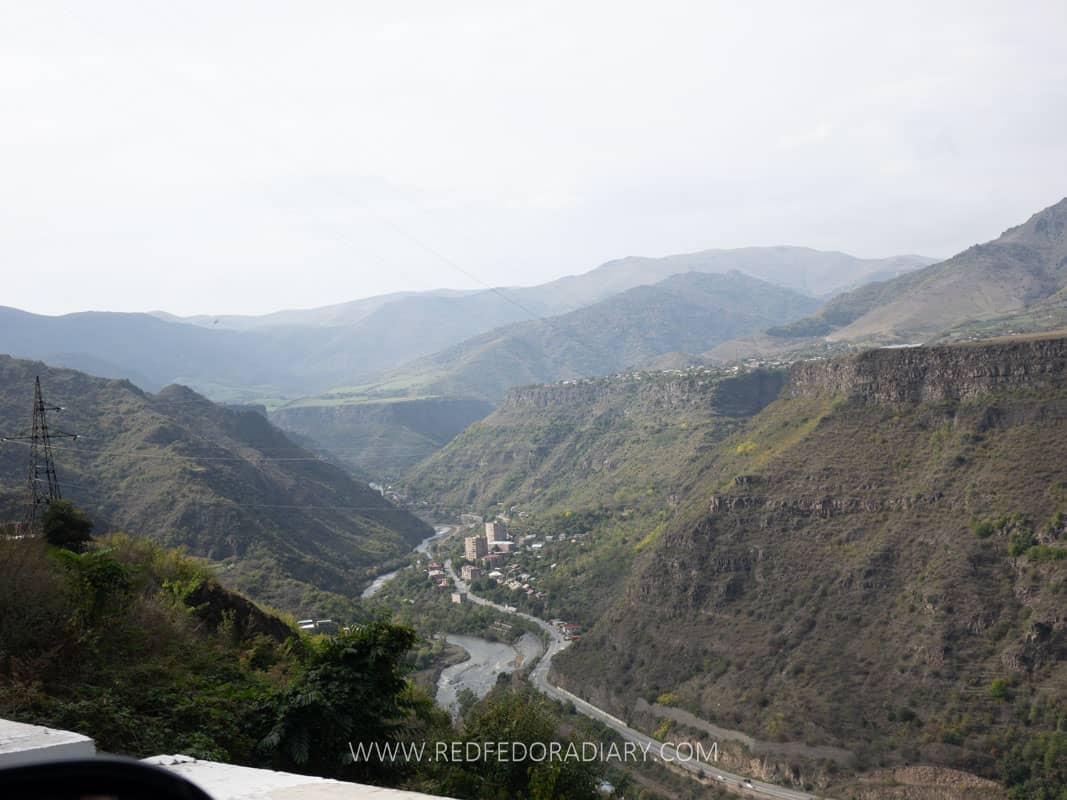
Lori Province borders Georgia and is one of Armenia’s most beautiful areas, with forested mountains, deep valleys, and medieval monasteries. The Debed River runs through the region, forming a striking canyon that has been a key travel and trade route between Armenia and Georgia for centuries.
Besides its natural beauty, Lori has an interesting history linked to both countries. In the 10th century, it became part of the Armenian Kingdom of Tashir-Dzoraget, ruled by the Bagratid dynasty. Over the centuries, control of the region changed hands several times.
In 1118, Georgian King David IV, also called David the Builder or Aghmashenebeli, brought Lori under Georgian rule. Later, during King Tamar’s reign (1184–1213), the Zakarian brothers, Zakare and Ivane—Armenian nobles—managed the region and held key roles in the Georgian Kingdom.
The Zakarians played an important role in northern Armenia’s medieval history, helping build and restore churches and monasteries. Their impact is especially clear at Akhtala Monastery, which became linked to Georgian Orthodox traditions under Ivane Zakarian.
Haghpat Monastery – UNESCO-listed medieval architecture
Haghpat was my favorite of the three monasteries we visited. The complex is large, with tall churches, impressive stonework, and detailed architecture that make it a great place to explore.
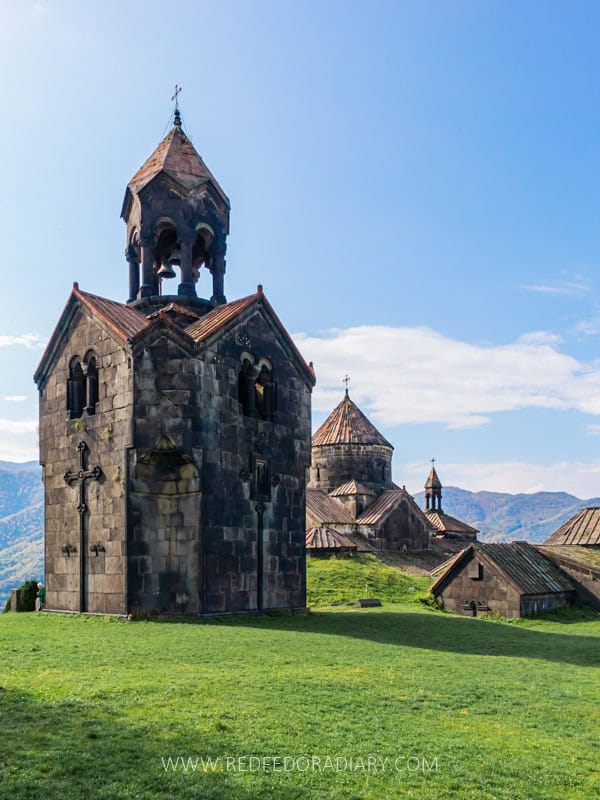
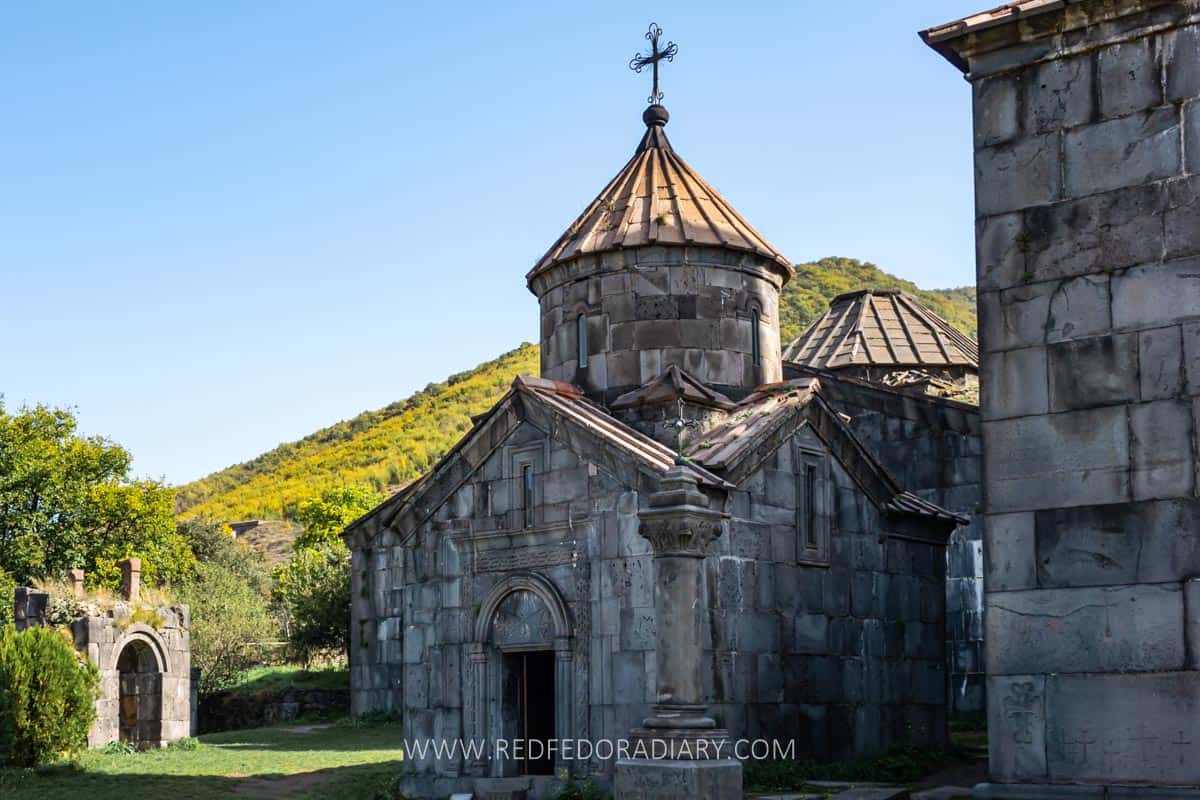
Founded in the 10th century under the patronage of the Armenian Bagratid royal family, Haghpat Monastery became an important religious, educational, and cultural center in medieval Armenia. Its main church, St. Nshan (Holy Sign), was built between 976 and 991, while additional buildings were added over the following centuries. UNESCO inscribed the monastery on its World Heritage List in 1996.
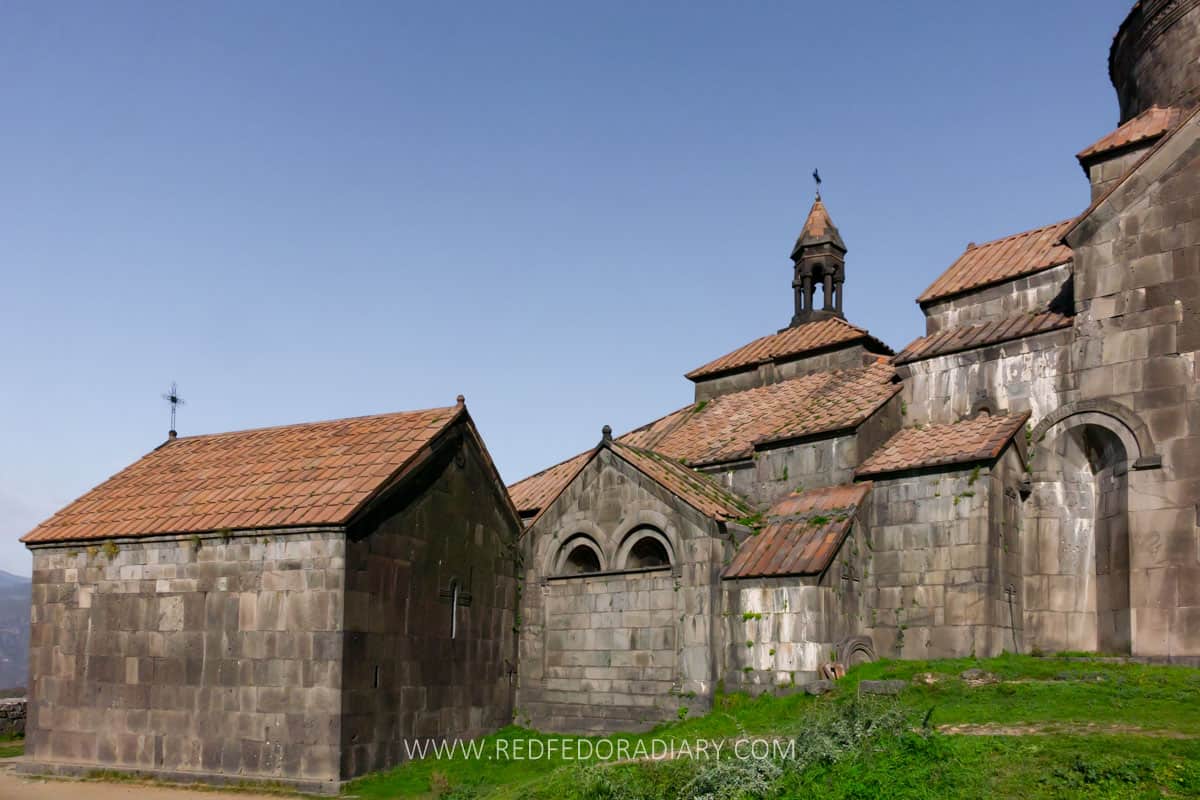
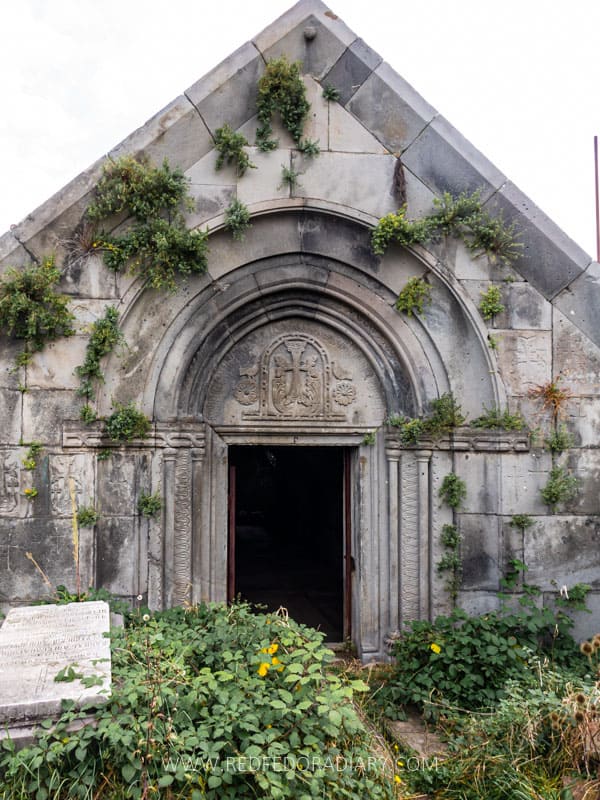
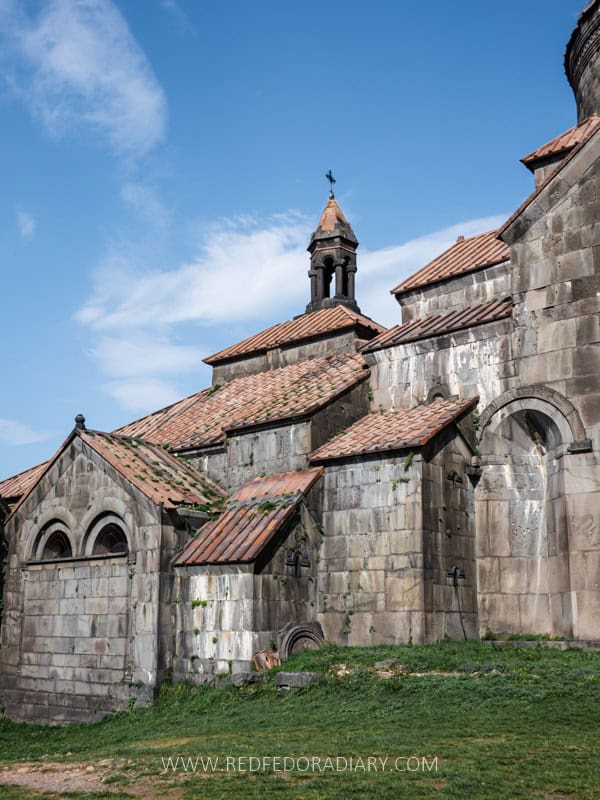
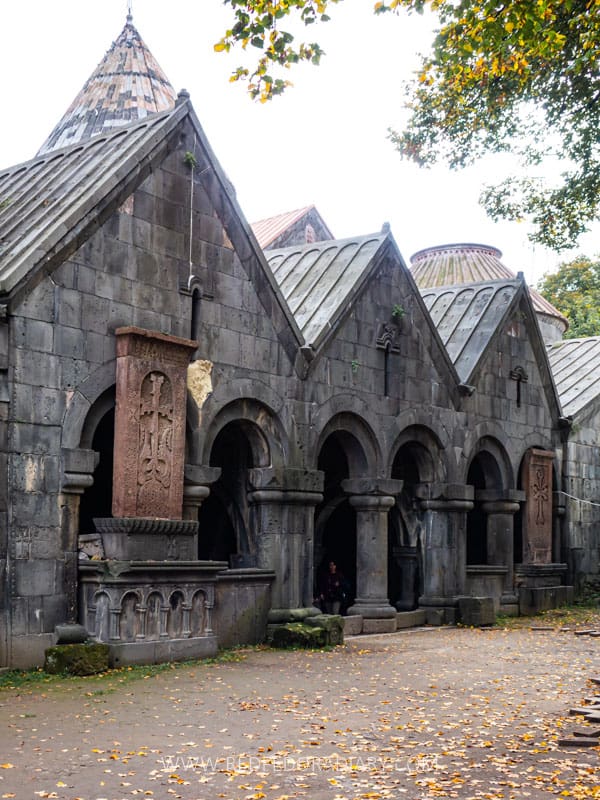
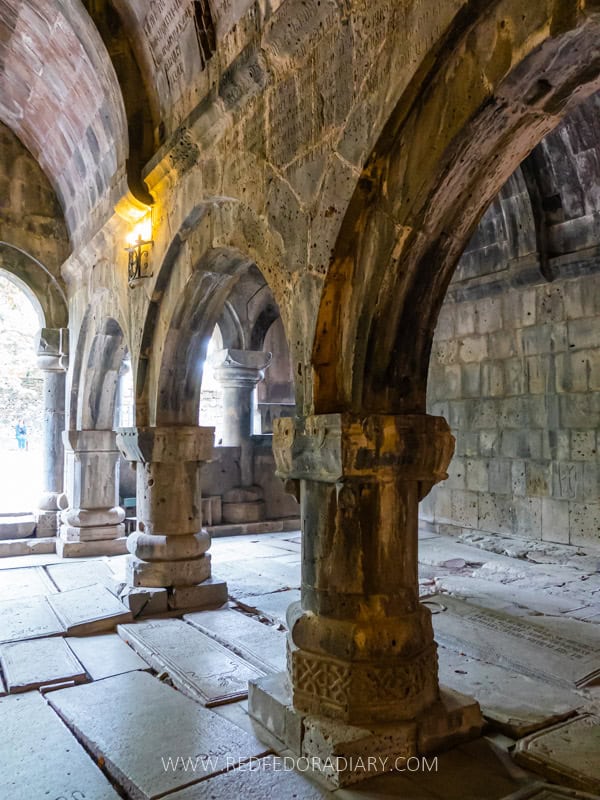
Haghpat stands out for its group of connected medieval buildings. Along with the main church, you can see several gavits (entrance halls for gatherings and religious events), a separate bell tower, a refectory, and smaller chapels.
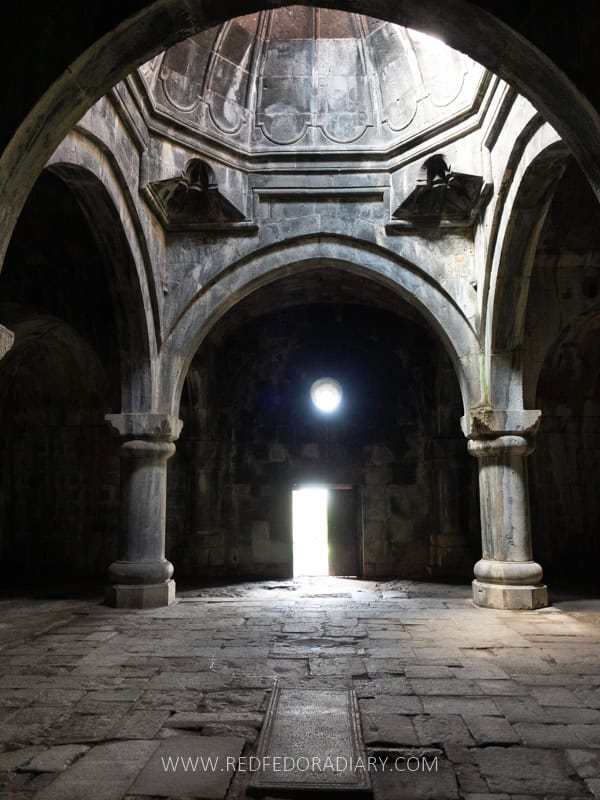
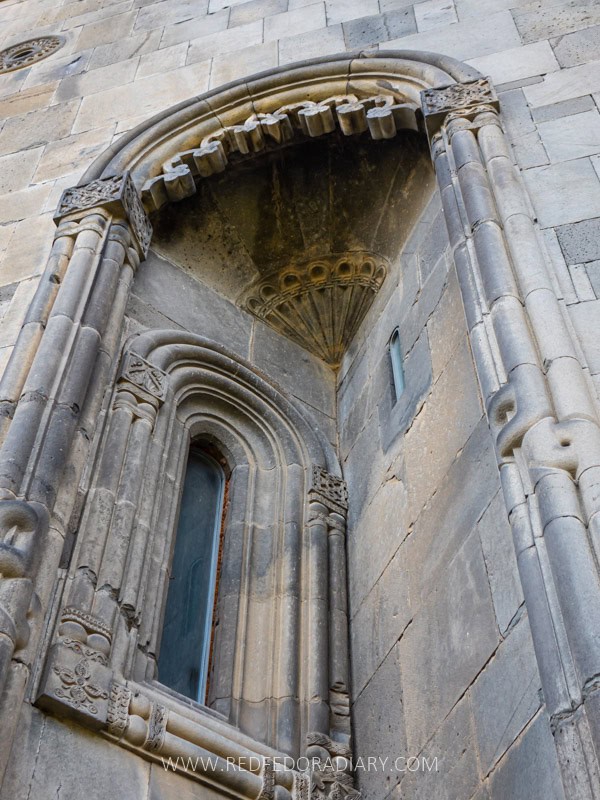
The thick stone walls, vaulted ceilings, carved columns, and decorations are great examples of medieval Armenian architecture.
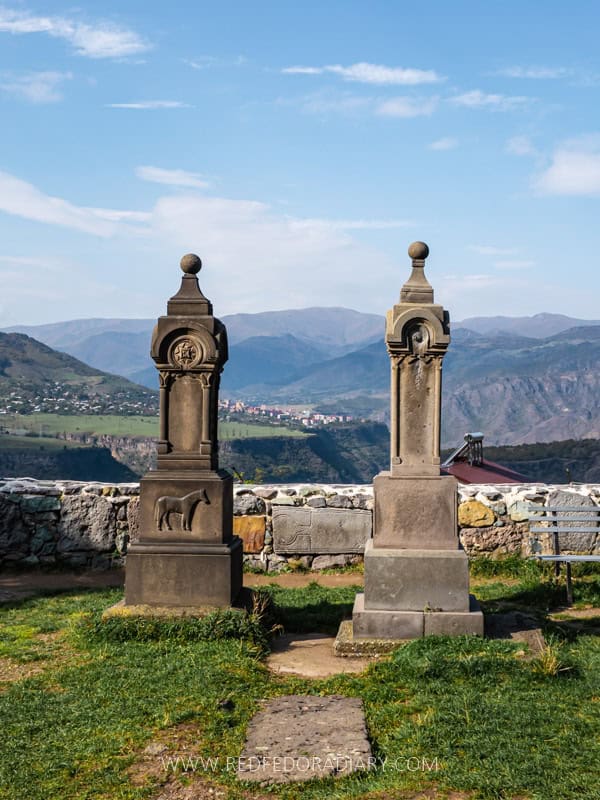
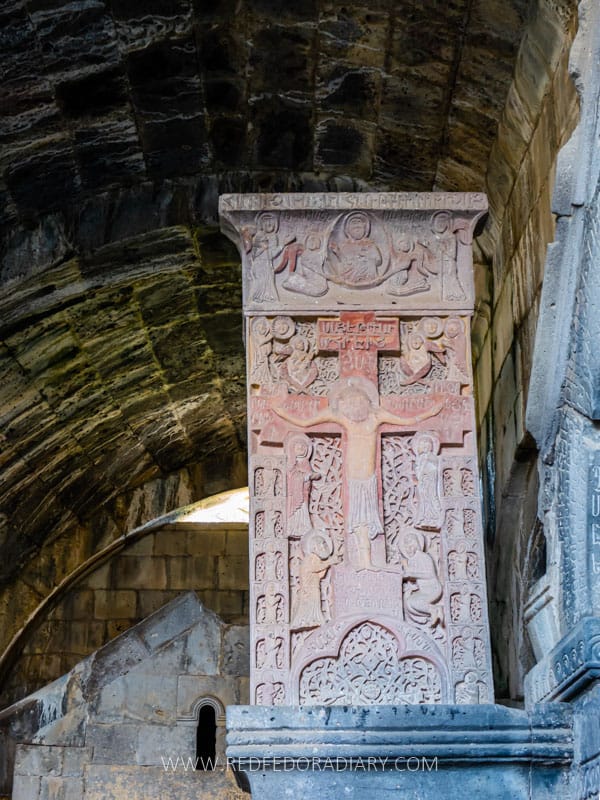
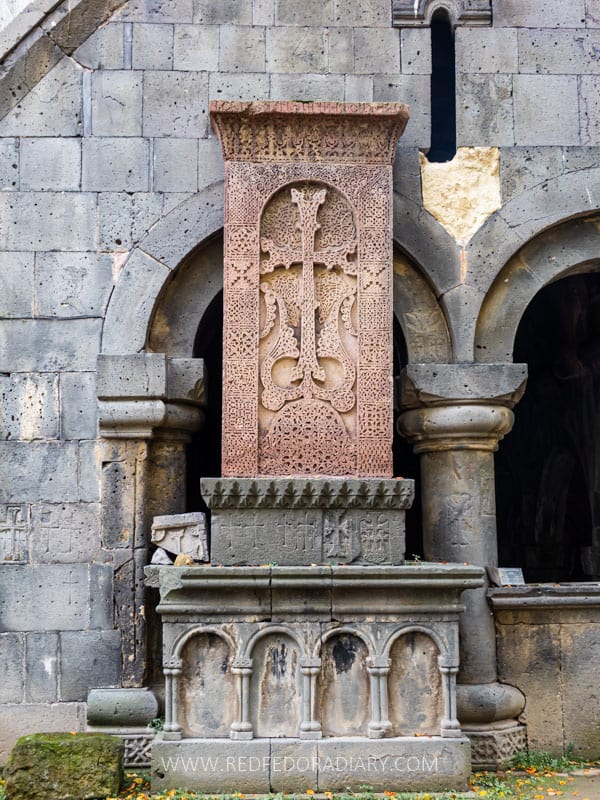
Be sure to see the Amenaprkich (All-Savior) khachkar from 1273. Khachkars are Armenian cross-stones with detailed carvings, often showing geometric and floral designs. This one is special because it shows Christ on the cross.
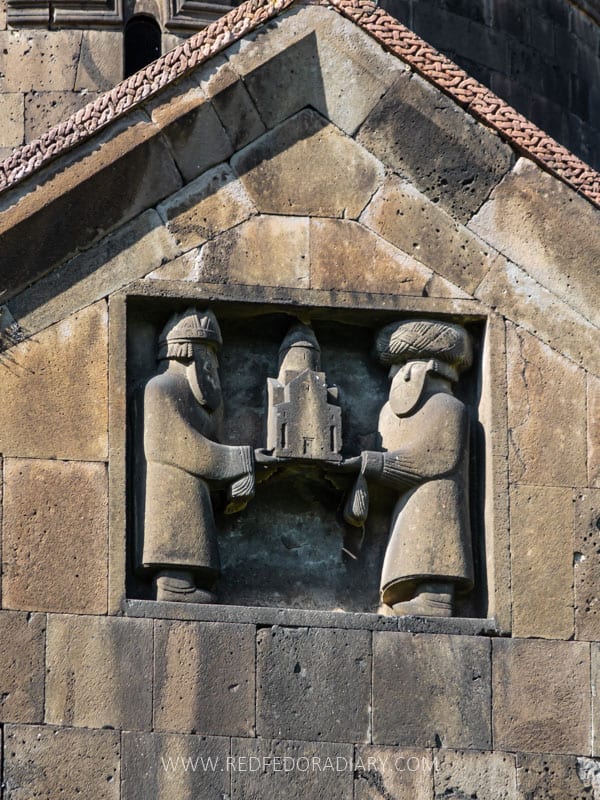
Also, look for the carved royal relief on the east side of St. Nshan Church. It shows Smbat and Gurgen (Kyurike), sons of King Ashot III, holding a model of the church. This carving is a good example of medieval Armenian royal portraits and shows how the Bagratid dynasty supported the monastery.
Sanahin Monastery – a medieval center of learning
Sanahin Monastery dates back to the 10th century and, like Haghpat, is a UNESCO World Heritage Site. It was added to the list in 2000.
Haghpat feels big and grand, but Sanahin is smaller, with its churches and other buildings close together. When we visited, several local schools were there on field trips, so the monastery felt a bit crowded.
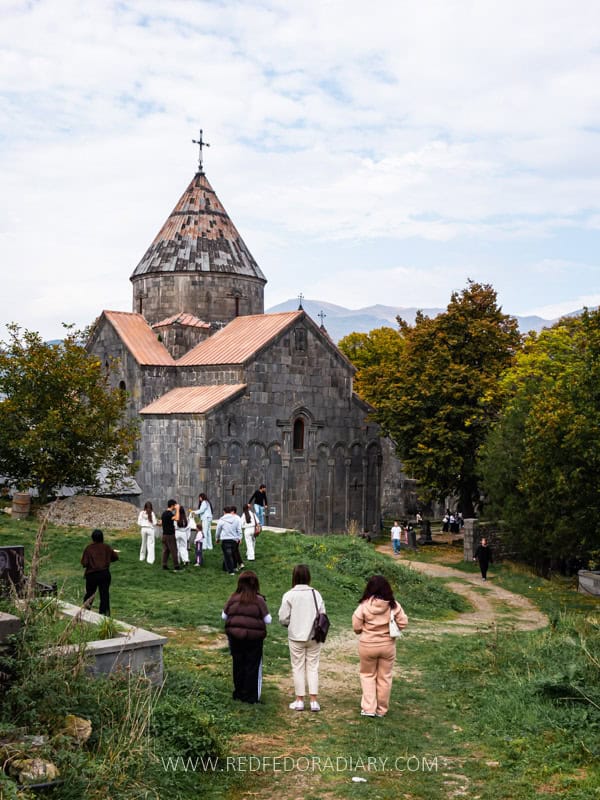
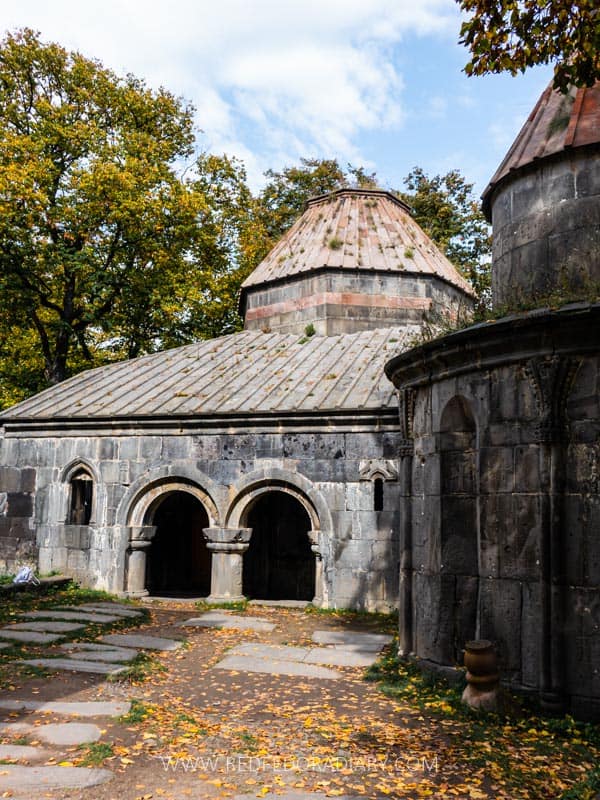
Sanahin was a key center for education and learning in medieval Armenia. It was known for making manuscripts and teaching subjects like theology, philosophy, and science.
The monastery complex includes the 10th-century Church of the Holy Mother of God and the larger Church of the Holy Redeemer (Amenaprkich), completed in 966. One of its most interesting features is a relief showing two royal figures holding a model of the church, like at Haghpat. They are usually identified as the sons of King Ashot III.
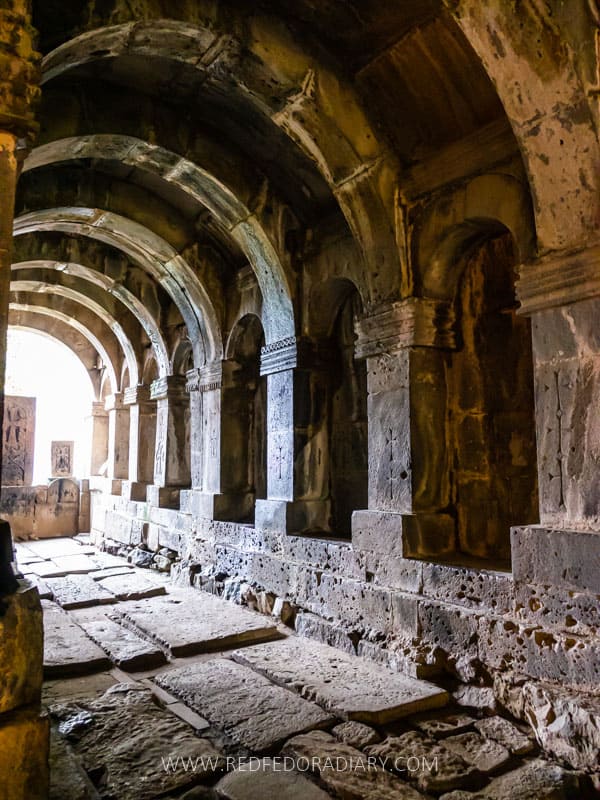
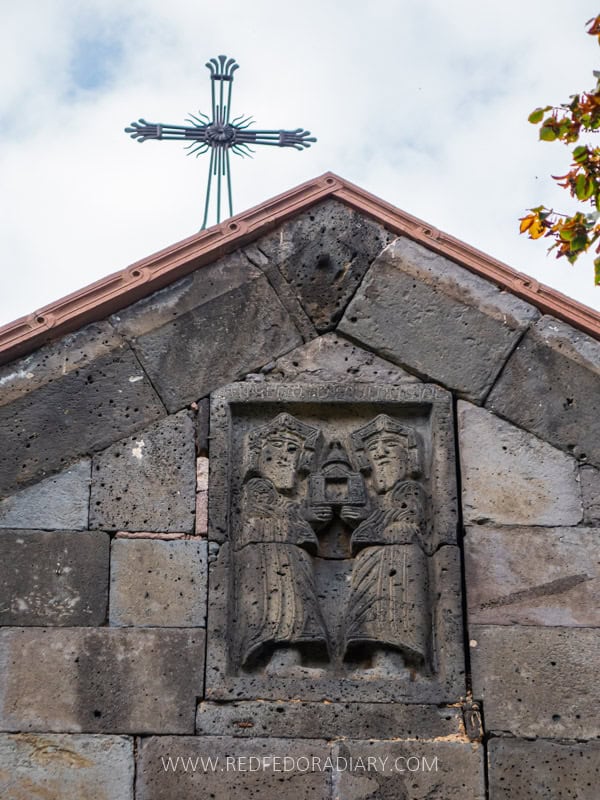
Other highlights are the gavits with carved columns and vaulted ceilings, a medieval library with niches for storing manuscripts, and a separate bell tower.
Locals often say that Sanahin means “this one is older than that one,” referring to nearby Haghpat Monastery. While this is more of a traditional story than a proven fact, it highlights the historical link between these two important religious sites.
Abandoned Soviet cable car station overlooking Alaverdi
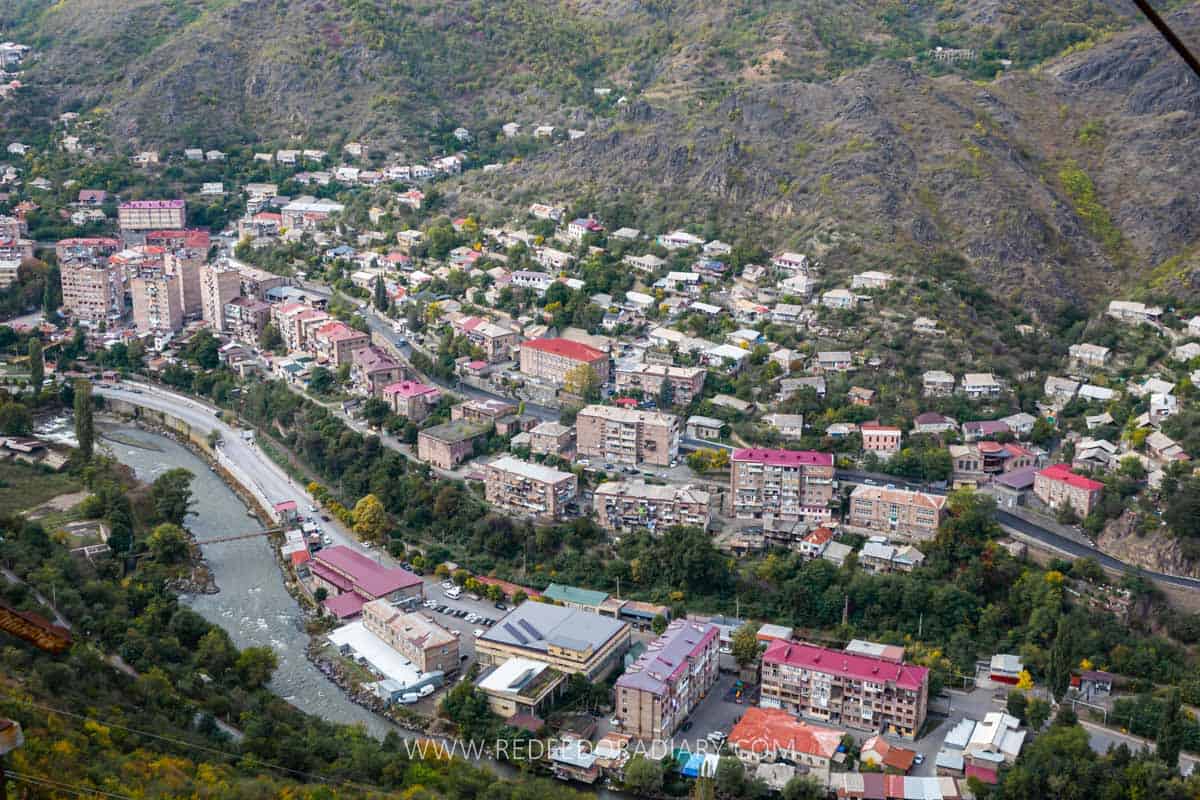
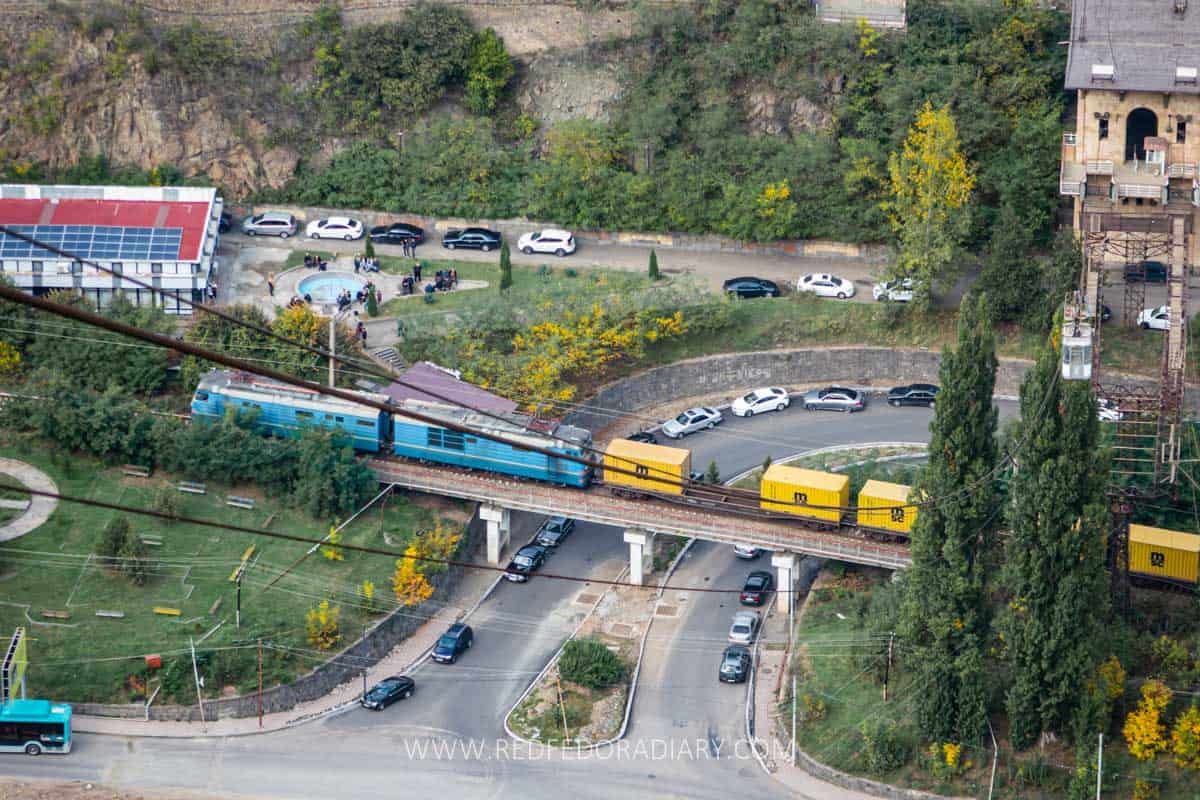
One of the more unusual stops on our trip was an abandoned Soviet-era cable car station near Sanahin. It offers wide views over Alaverdi and the Debed Canyon.
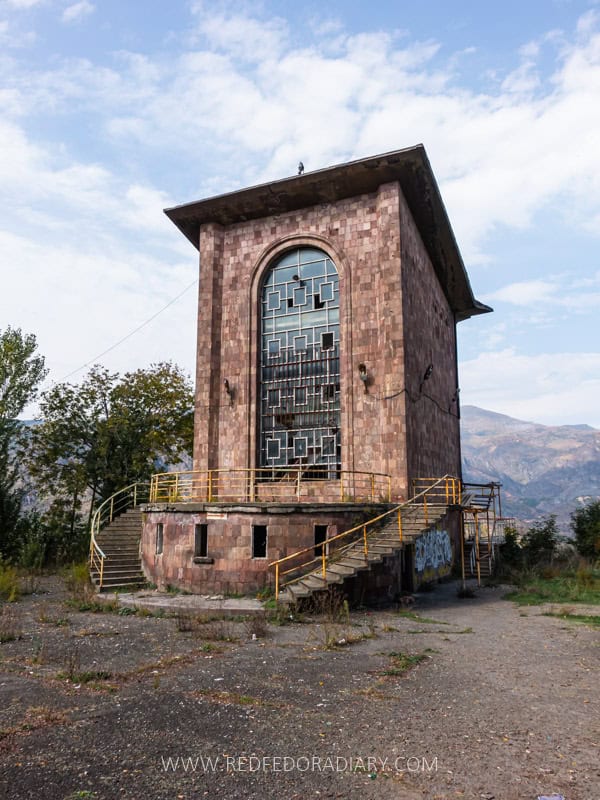
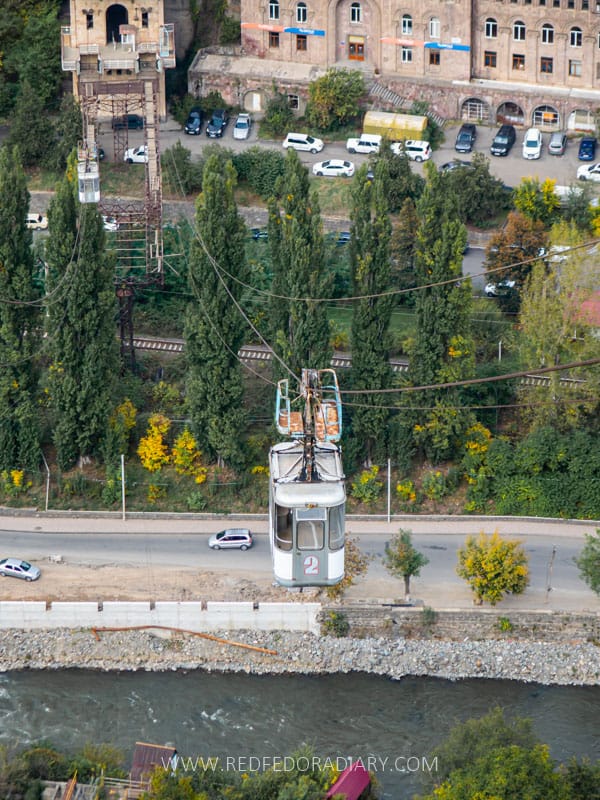
The cable car once connected the industrial town of Alaverdi in the valley with the Sanahin neighborhood on the hillside above. It was an important way for locals to travel between the two places without using the winding mountain roads.
From the viewpoint, you can see Alaverdi along the Debed River, with steep mountains, old apartment buildings, and the remains of its copper-smelting industry.
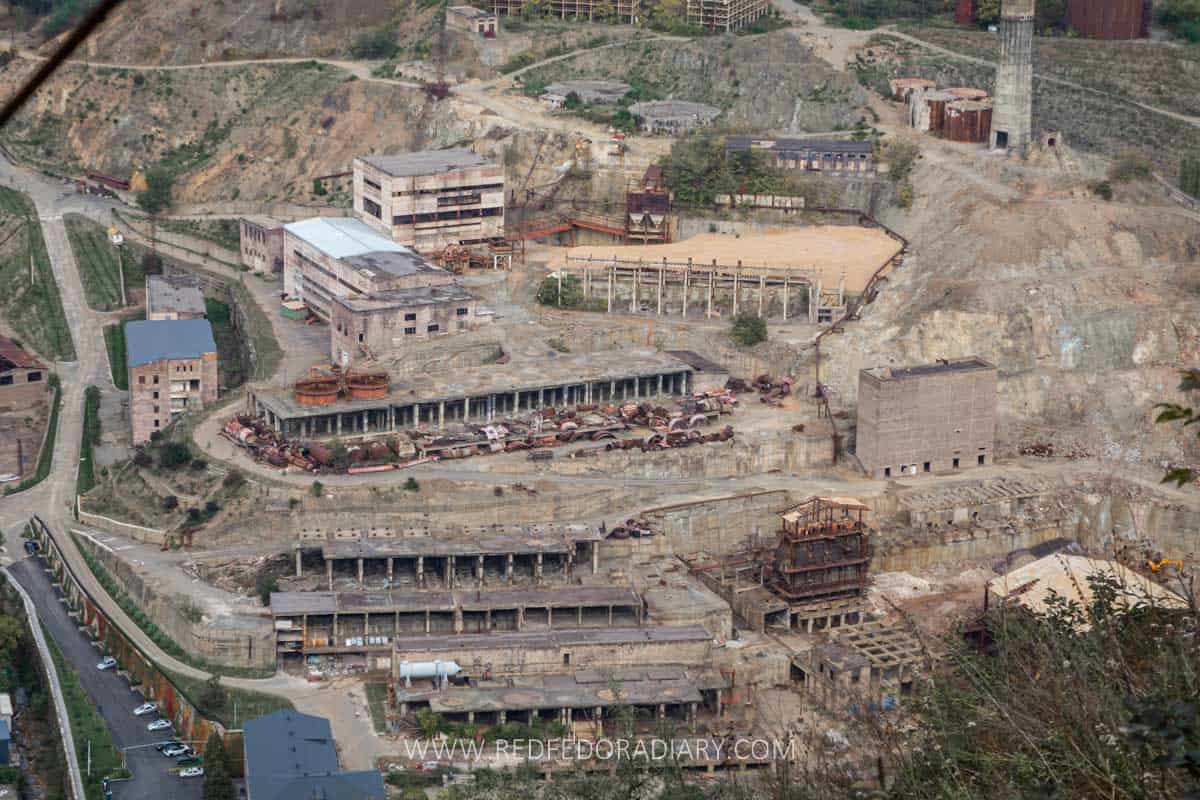
I found this stop especially interesting because I’m fascinated by Soviet-era infrastructure and architecture.
Not every Armenia day tour includes this viewpoint, so check the itinerary if you want to visit.
Lunch break beside the Debed River
We stopped for lunch at a roadside restaurant by the Debed River and tried some traditional Armenian food.
A dish you should try in Armenia is dolma, which is grape leaves or vegetables stuffed with meat, rice, and herbs. We also had Lori Borani, a lamb stew that was more soupy than I expected, but the lamb was cooked very well.
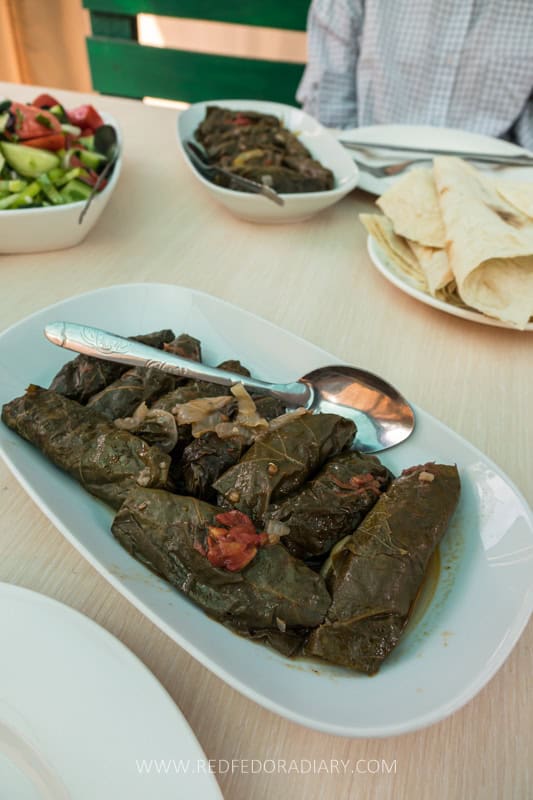
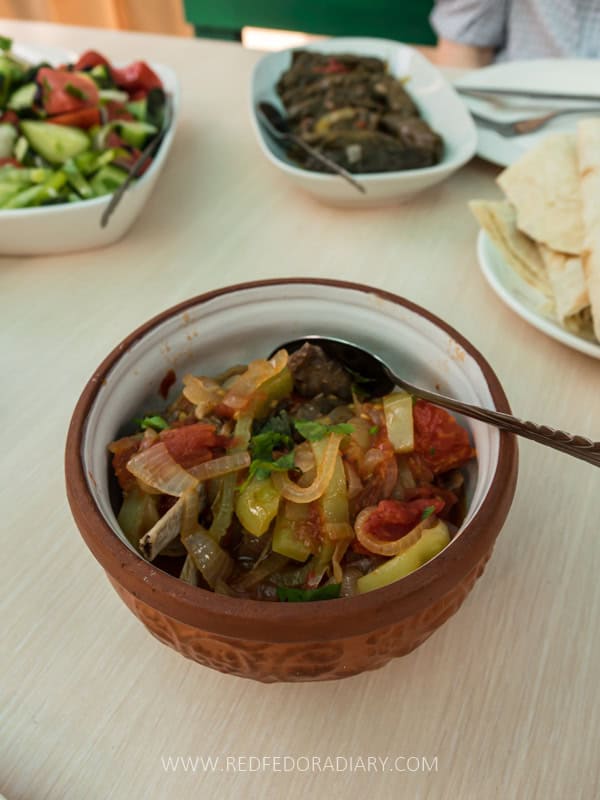
The menu also had other options, like BBQ, salads, soups, and vegetarian options. I recommend learning a bit about Armenian food before your trip.
Lunch wasn’t included in our WT Georgia tour, so everyone ordered and paid for their own food. This is common on tours, though some operators include lunch or set up a homemade meal with a local family.
Akhtala Monastery – colorful frescoes and Georgian connections
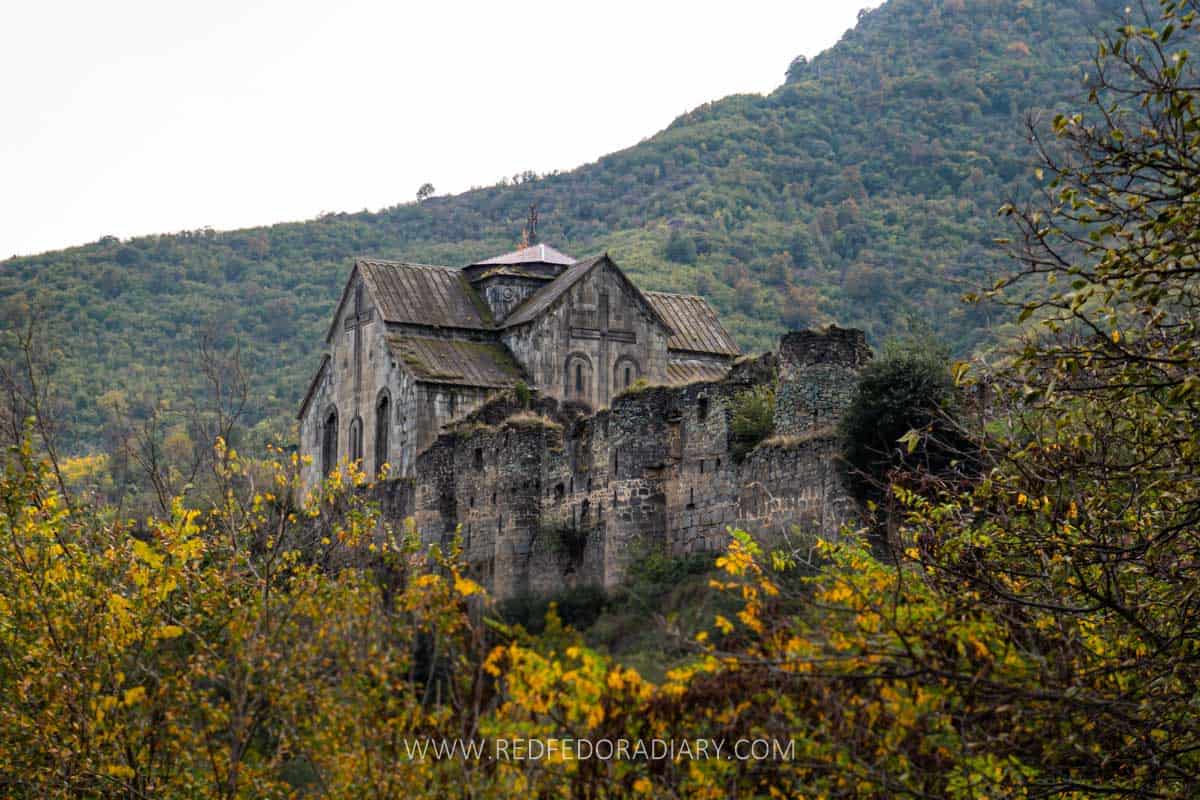
Our last stop was Akhtala Monastery, a medieval fortress known for its colorful frescoes and its historical ties to Georgia.
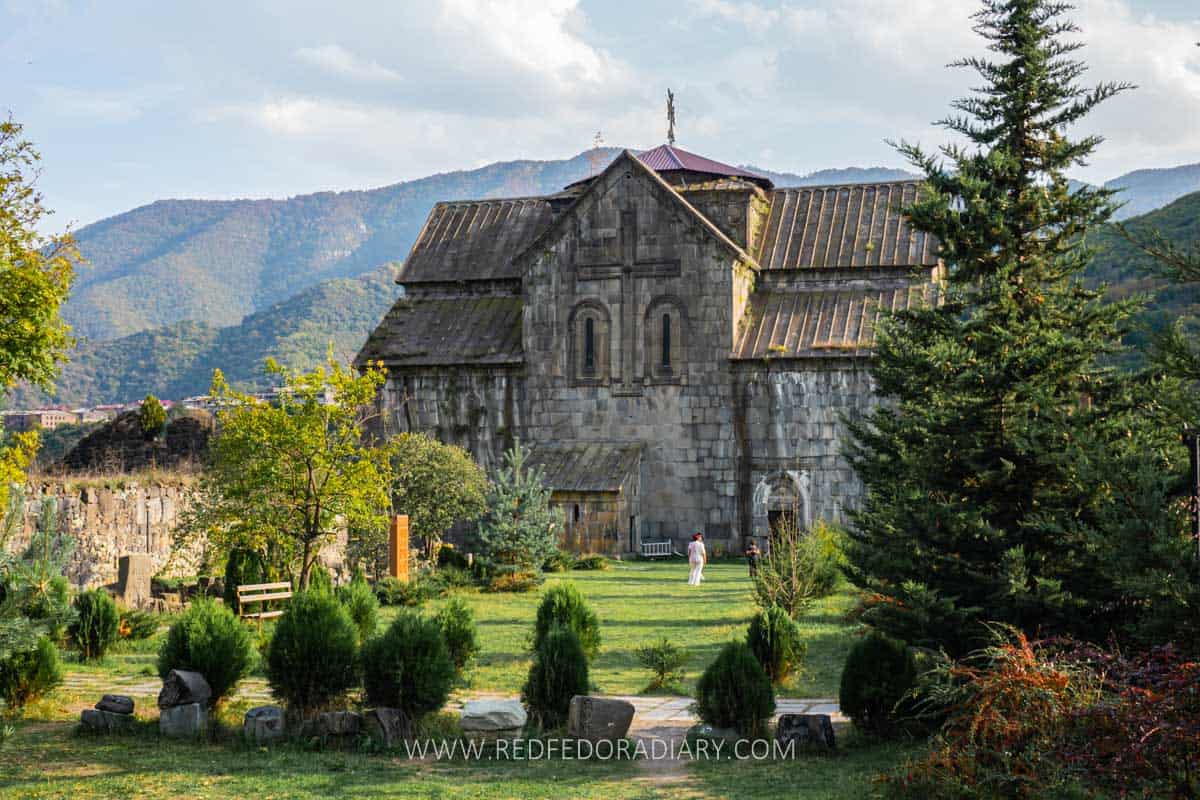
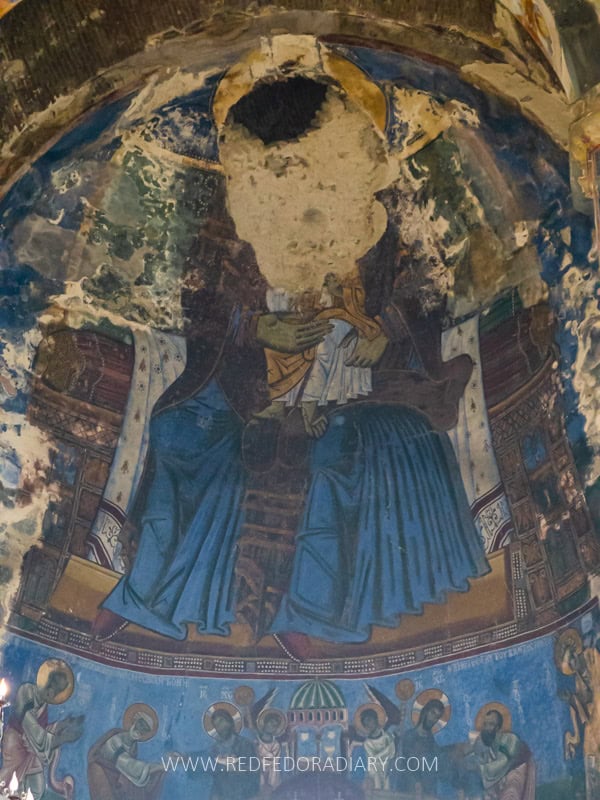
While Haghpat and Sanahin are known for their stone buildings, Akhtala stands out for its well-preserved wall paintings inside the main church, dedicated to the Holy Mother of God.
Most of the frescoes date to the early 13th century and cover much of the church’s interior. They show scenes from the lives of Christ and the Virgin Mary, saints, and other religious figures. The bright colors, detailed designs, and mix of Byzantine and Georgian styles make Akhtala a standout example of medieval religious art in Armenia.
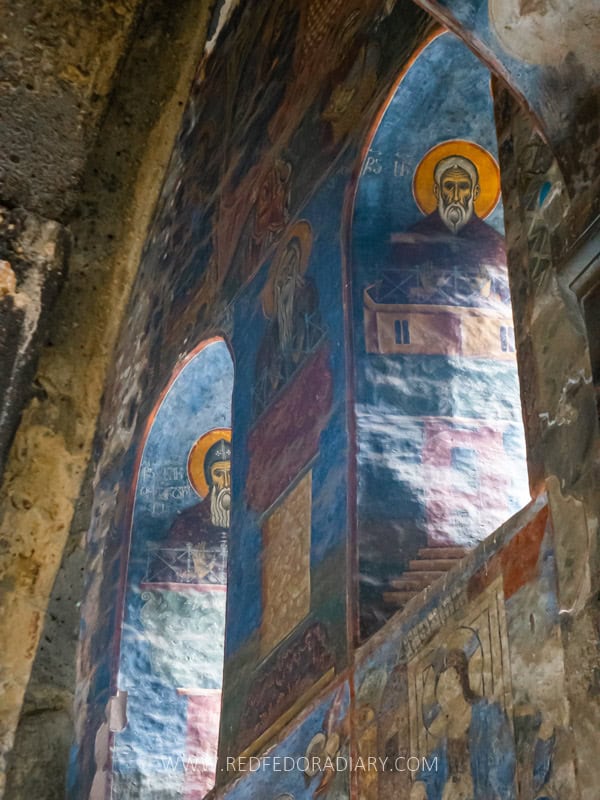
Akhtala’s links to Georgia are especially interesting. In the late 12th and early 13th centuries, the monastery was connected to Ivane Zakarian, an Armenian noble who served the Georgian Kingdom under King Tamar. Unlike his brother Zakare, who stayed with the Armenian Apostolic Church, Ivane became a follower of Chalcedonian Christianity, which is linked to the Georgian Orthodox Church.
With his support, Akhtala became an important center for Chalcedonian Christianity. The frescoes show the close cultural and religious ties between medieval Armenia and Georgia.
Besides the church, make sure to see the remains of the fortress walls and defenses around the complex. Akhtala’s fortified location sets it apart from the other monasteries on this trip.
How Armenian churches differ from Georgian churches
During the tour, I was especially interested in the differences between Armenian and Georgian medieval churches. Although the two countries share a long history and Christian traditions, their church architecture developed differently.
The biggest difference is their religious backgrounds. Armenia became a Christian state in the early 4th century and is often seen as the first country to do so.
The Armenian Apostolic Church is part of the Oriental Orthodox family, while the Georgian Orthodox Church is part of Eastern Orthodoxy. Their main theological differences, especially over the nature of Christ, date back to disagreements in the 5th century.
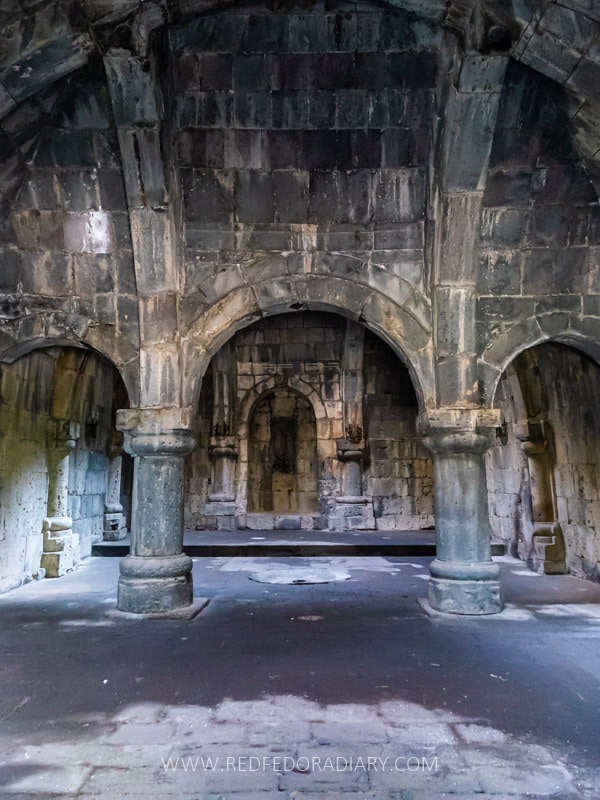
Both countries are known for stone churches, domes, and cross-shaped layouts, but a few details help you tell them apart.
In Armenian monasteries, I especially noticed the gavit and the khachkar. You’ll see them throughout monastery complexes, either standing alone or built into church walls.
Georgian medieval churches often stand out for their detailed stone carvings, decorative arches, and large façades. Interior frescoes are also a key part of Georgian religious art, especially in churches like Gelati near Kutaisi, Barakoni and Nikortsminda in Racha, Shiomghvime near Mtskheta, and Bodbe near Sighnaghi monasteries, to name a few.
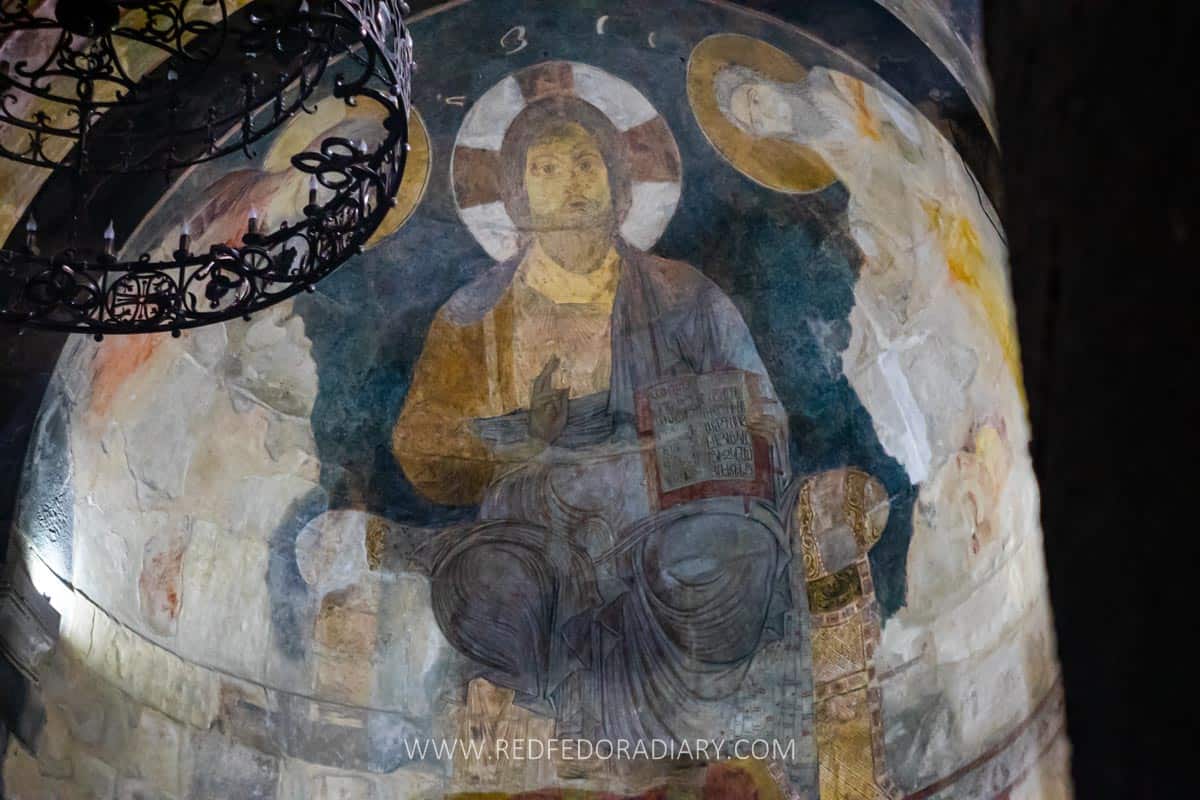
But these aren’t hard rules. Armenian churches can also have exterior carvings and frescoes, and Georgian monasteries have entrance halls and carved stone crosses too. Over the centuries, both traditions influenced each other, especially near the borders. Akhtala Monastery is a great example of this shared heritage.
If you’ve already seen a few churches in Georgia, visiting these three monasteries is a great way to compare the two traditions and learn more about their shared history.
Practical information for a Tbilisi to Armenia day trip
Because you’ll be crossing an international border, a day trip to Armenia from Tbilisi needs a bit more planning than a regular trip within Georgia. Here’s what to know about documents, border checks, money, and staying connected.
Do you need a visa to visit Armenia from Georgia?
Whether you need a visa for Armenia depends on your nationality, not where you’re coming from. Many people, including citizens of Georgia, EU countries, the UK, and the US, can visit Armenia visa-free for short trips. Others need to get a visa in advance.
Before you book, check the latest rules on the Armenian Ministry of Foreign Affairs website, and make sure you also meet Georgia’s re-entry requirements.
If you need a visa for Armenia, see if you can get an e-visa and apply before your trip through the official e-visa portal or a third-party service like iVisa.
Georgian citizens can use a biometric national ID card instead of a passport to enter Armenia. I used my Georgian ID since my passport was about to expire, and I had no trouble crossing the border.
Most other nationalities need a valid passport. If you use one, you’ll usually get entry and exit stamps.
Some tours don’t accept travelers who need a visa on arrival, so check with the operator before you book.
Crossing the Georgia–Armenia border
Most tours use the Sadakhlo–Bagratashen border crossing, which is one of the main road links between Georgia and Armenia.
When we went to Armenia, the border crossing was easy. Everything went quickly on both sides, and we didn’t have any big delays.
Here’s what the process looked like on our tour:
- At the Georgian checkpoint, we got out of the car with our bags and went through border control.
- After finishing the Georgian exit steps, we waited for our driver to pick us up and take us to the Armenian checkpoint.
- We got out again with our things, went through Armenian entry control, and waited for the driver before continuing our trip.
The process was similar on the way back, but our return wasn’t as smooth. A small issue delayed us getting to the border by about two hours, and when we got to the Georgian side, there was a line, so we had to wait longer.
My advice: Don’t plan anything important in Tbilisi right after the tour. Border wait times can be unpredictable, even if the morning goes smoothly.
Armenian currency and exchanging money
Armenia uses the Armenian dram (AMD). Some restaurants and shops take cards, but I suggest carrying cash for meals, snacks, souvenirs, and other small expenses.

You can exchange money in Tbilisi or after you cross into Armenia. On our tour, we exchanged about 50 GEL per person at a supermarket just after the Armenian border and got a good rate.
If you have Armenian drams left at the end of the day, ask your driver if you can stop at an exchange office on the way back or exchange them in Tbilisi.
Mobile internet and staying connected
Your Georgian mobile plan might not include data roaming in Armenia, so check with your provider before you go. You can get an international roaming package or buy an eSIM for Armenia.
I suggest comparing Airalo and Saily, depending on your data needs and travel plans. And if you are looking for other providers, check my best eSIMs for travel post.
If you already use an eSIM in Georgia, check if your plan also covers Armenia. Some regional packages include both countries, but most country-specific plans don’t.
I also recommend downloading offline Google Maps before you leave, especially if you want to follow the route through Lori Province.
What to bring on an Armenia day trip
- Travel documents: Valid passport or eligible biometric ID card, plus an Armenian visa or e-visa approval if required.
- Cash: Armenian drams or money to exchange after crossing the border.
- Comfortable shoes: Monastery courtyards and rocky pathways can be uneven.
- Season-appropriate clothing: Bring an extra layer or a rain jacket, especially in spring and autumn. Dress respectfully for church visits, though I found the monasteries less strict about clothing than most Georgian churches.
- Water and snacks: Bring something to eat during the long drive.
- Power bank: Useful for keeping your phone charged throughout the day.
- Mobile internet or offline maps: Arrange your connection before leaving Tbilisi.
On our tour, we stopped at a supermarket just after crossing the Armenian border to buy drinks and food for the trip. Depending on your schedule, this might be your only easy shopping stop before lunch or even for the rest of the day.
I suggest bringing snacks from Tbilisi or stocking up at this supermarket. It’s also a good idea to ask your tour operator if they include a supermarket stop before you book.
Best time to take an Armenia day trip from Tbilisi
The best time for the tour is from late spring to autumn, especially May to October, when the weather is usually good for exploring monasteries and enjoying the Debed Canyon scenery.
Spring (April–May) brings green landscapes, blooming trees, and comfortable temperatures. The weather can be unpredictable, with some rain and cooler mountain air. May is usually better if you want to spend more time outside.
Summer (June–August) has long daylight hours, so you get more time to enjoy the scenery. Tbilisi can be very hot, but Lori’s mountains are usually cooler. Still, afternoons are warm, so bring sun protection.
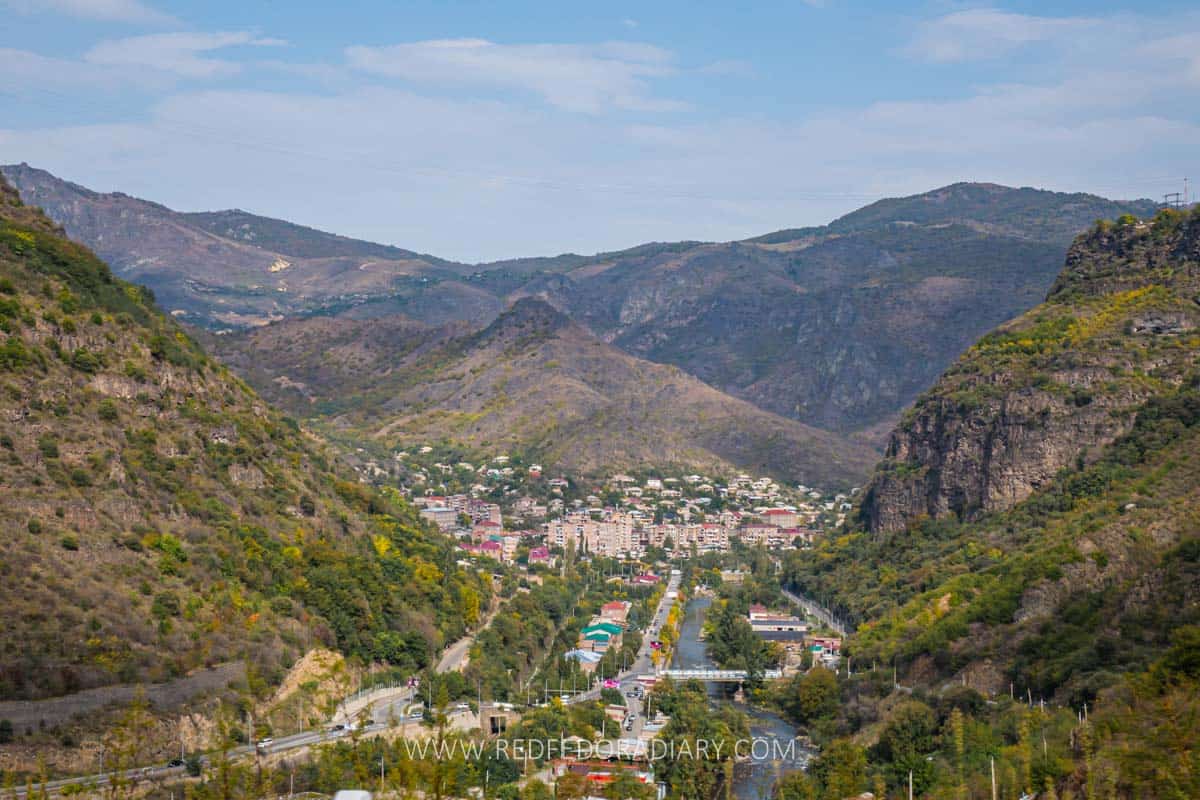
Autumn (September–October) is also a great time to visit. I led our Armenia day tour in mid-October, and the scenery was especially beautiful, with the mountains showing fall colors.
We had good road conditions and little traffic, which made the drive pleasant. Of course, this can change depending on the day and weather.
Winter (November–March) isn’t the best time for this trip because of shorter days, cold weather, and possible snow or icy roads. Some tours still run, but check with the operator about availability and road conditions before you book.
Other options for Tbilisi to Armenia day trip
While I recommend visiting Lori Province for a day trip, many Armenia tour packages also include Lake Sevan, Dilijan, and even Yerevan, the capital.
However, I’d be careful with these itineraries. Many last 15 hours or more, so you’ll spend a lot of time in the vehicle and only have short stops at each place. With two border crossings, the day can get pretty tiring.
Personally, I think Yerevan and Lake Sevan deserve more time than just a quick stop on a busy day. If you can, I recommend spending at least one night in Armenia instead of trying to fit everything into one day.
That said, if you don’t have much time and want to see some of the country’s top landmarks outside Lori Province, here are a few tours to consider.
Armenia Day Trip from Tbilisi: UNESCO Haghpat, Sevan & Yerevan
This group tour includes medieval architecture, mountain views, and a brief introduction to Armenia’s capital.
The tour takes you to the UNESCO-listed Haghpat Monastery, Dilijan and its old town, and Lake Sevan, where you might have the chance to enjoy lunch by the water. In Yerevan, you’ll see the Cascade Complex for city views and visit Republic Square.
→ Check prices and availability
Discover Armenia in One Day: Haghpat, Dilijan, Sevan & Yerevan
Another choice is a group tour that covers several major attractions in northern and central Armenia.
The tour itinerary features stops around Lake Sevan, such as Sevanavank Monastery, and sightseeing in Yerevan. It also includes Etchmiadzin, a key religious center for the Armenian Apostolic Church.
You’ll travel in an air-conditioned vehicle with Wi-Fi, and the group size is limited to 15 people. Hotel transfers might be available if you ask.
→ Check prices and availability
You’ll also find similar tours on GetYourGuide, such as Daily Armenia Tour – Sevan, Dilijan & Yerevan and Tbilisi: Armenia Tour – Yerevan, Sevan & Dilijan, Pickup.
Some tour operators let you end your trip in Yerevan instead of going back to Tbilisi. If you want to keep exploring Armenia, this is a good option. You’ll skip the long drive back and have more time to enjoy the capital on your own.
Before you book any of these tours, check the total duration, departure and return times, sightseeing stops, and whether the itinerary includes a return transfer to Georgia.
Plan Your Trip Like A Pro