
18 Best Food in Spain: A Foodie’s Guide to Spanish Cuisine
Spanish cuisine is all about making the most of the best local products, from delicious tapas to excellent seafood, from classic roasts to delectable desserts. Planning a trip there and want to know what to eat in Spain? This complete guide to the best food in Spain covers the staples I have tried in various cities.
Regarding culinary treats, a few countries boast the diversity, flavors, and history that Spanish cuisine offers. Like Georgian cuisine, traditional food in Spain is deeply rooted in its history, the influence of many cultures that once ruled this territory, or the Spanish empires dominating and discovering new worlds.

Olive oil is the prime ingredient of Spanish cuisine brought from the Roman Empire, while the exotic blend of spices, nuts, and fruits comes from the Moorish influence, forever changing the flavor profile of Spanish foods.
My adventures in the country brought me to explore the traditional Spanish food in Barcelona, Madrid, Alicante, and Bilbao, where I got to try some of the tastiest regional meals. Therefore, this best Spanish food list contains my personal favorites and must-tries on your next trip.
Understanding Spanish food culture
Before talking about the best foods in Spain to try, it is essential to understand Spanish food culture. They have slightly different rules and customs when it comes to food. Thus, when traveling across the country, it is important to know them.
Spanish meal times are entirely different from what you might be used to, making it essential to consider when planning your itineraries. Extremely touristy cities like Barcelona and Madrid might not adhere to these rules but if you go to less crowded and small towns you need to adjust your meal times.

Unlike many European countries, Spain food culture pays minor importance to breakfast (desayuno). Many Spaniards skip it, drink only coffee (sometimes café con leche, or coffee with milk), or eat something very simple and light like a toast or a croissant from around 10 am to noon.
This makes lunch (el almuerzo or la comida) the most significant meal of the day, which typically starts at 2 pm and includes several Spanish foods – a starter (soup or salad), a main dish (meat or fish), and a dessert. Traditionally, it’s a more substantial meal than dinner. Water, bread, and wine always accompany the lunch.
Spaniards love their leisurely lunches that also include a sobremesa. It literally means “over the table,” and refers to the conversations after a meal, another custom of Spaniards. So, instead of leaving after finishing the meal, they love staying at the table and engaging in conversations that may last for hours. Therefore, lunch can last anywhere from one to two hours.

Spain is famous for its tapas culture, so depending on where in Spain you are, some restaurants bring out tapas – appetizers to enjoy before your meal is served. It’s mostly shared with friends while socializing and enjoying each other’s company.
Siesta is not a myth in Spain. It exists everywhere, even in prominent and busy cities like Barcelona or Madrid. Siesta is a break time after the mid-day meal and commonly starts at 4 pm.
This is when shops, bars, and restaurants close for a few hours. Barcelona doesn’t adhere to this rule much (with only a handful of venues), but we’ve had some cases with restaurants in Madrid, Bilbao, and Alicante.
Because of this long break, Spaniards get off work late, making their dinner (la cena) time quite late, too – between 9 and 10 pm. Unlike lunch, dinner is much smaller and often consists of something lighter, such as a salad, a selection of tapas, or a sandwich.

Wine plays a big part in the food culture in Spain. Spaniards love sipping wine with their meals, no matter if it’s out in the restaurant or at home. Some restaurants even include a glass of wine in their lunch menus. Tinto de Verano is also a favorite choice for many.
Apart from wine, coffee is another essential beverage of food culture in Spain. Spaniards often drink several cups of coffee during the day, especially after a Spanish meal and a dessert. And if you want to know more about Spain, here’s a long list of interesting facts about Spain.
18 best food in Spain to try on your trip
Tapas
Tapas is a general term for a snack or an appetizer in Spanish cuisine and comes in dozens of variations, sizes, and forms. It can be combined to create a full meal, served cold or hot. Some of the best Spanish dishes also have smaller tapa versions too, making it the most versatile.

In some of the best restaurants in Spain, Tapas evolved into significantly refined traditional Spanish dishes.
Because of its size and form, Tapas is also one of the best street foods in Spain. In market halls all over Barcelona, Madrid, and Bilbao, for instance, you’ll find them wrapped in paper cones for easy transportation, making it one of the easy Spanish dishes to enjoy on the go. Here is a good list of the best tapas restaurants in Barcelona.
And if you ever miss tapas when back home, check out these tapas recipes from Spain that are easy to make.
Paella
Paella is the most famous food in Spain, with many variations depending on which city you eat it in. For many, it is associated with the country’s national dish, but Spaniards think of it as a regional – Valencian meal where it comes from.

Authentic paella uses rabbit or chicken in the recipe, but chefs in many Spanish cities also throw in seafood and other ingredients. This traditional rice dish gets its yellow/orange color from saffron and also uses a variation of local beans cooked on an open fire in chicken broth and olive oil.
I have only tried seafood paella in Alicante, with prawns, chicken, and mussels. But if you are traveling to Barcelona, here are some of the best paella restaurants to try in the city.
Patatas bravas
This tasty side dish or snack is one of my favorite famous Spanish food. It is simple yet quite delicious, with fried cubed potatoes with a spicy sauce whipped with ketchup and mayonnaise topped with smoked paprika.
Patatas Bravas is generally consumed as tapas and served in bars and restaurants throughout Spain.

Jamon
Jamón is a cured ham that is an integral part of Spanish cuisine. Legs of ham are salted and hung up to dry to keep them through the winter months.
It is the staple of any Spanish table. The Jamón Serrano is the most common ham from white pigs. Jamon Iberico is the more expensive one from black pigs.
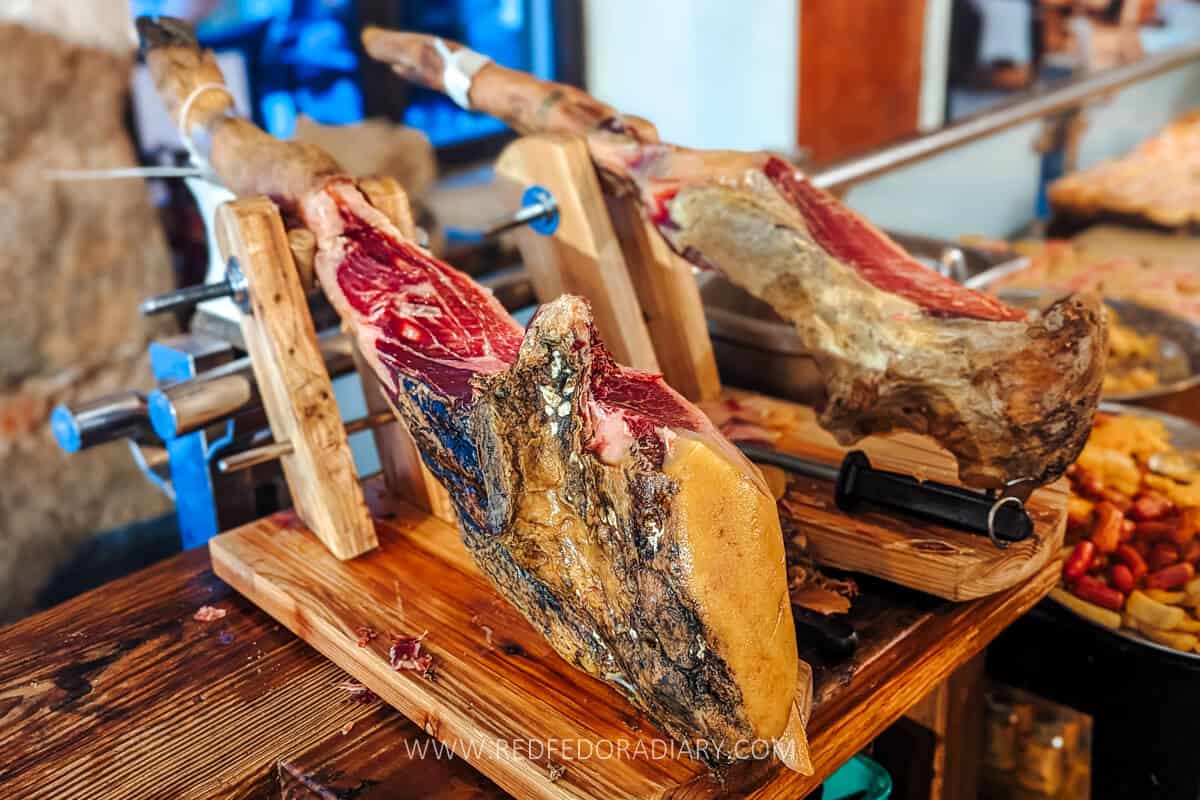
The best way to enjoy Jamon is in extremely thin slices either on its own, with bread, or used in sandwiches and toasts. Some bars in Madrid also serve jamon tapas with drinks as an appetizer, making it the best food in Spain for any occasion. Some bring out a small plate of jamon, cheese, and other meat slices.
Tortilla Española
This best food in Spain is mainly known as a Spanish omelet but uses diced potatoes as its main ingredient along with eggs. There are dozens of variations of Tortilla made with peppers, onions, and chorizo, to name just a few – however, the classic one calls for potatoes and eggs only.

Sometimes used as a tapas treat or break-time snack, Tortilla can be eaten as a main dish. One restaurant in Madrid specializes in the highest and biggest Tortilla I’ve seen.
Churros
Churro is one of the famous Spanish foods and a popular snack when craving something sweet. Made from dough cut into sausage shapes, deep fried in oil, and then sprinkled in sugar.
You can find Churros anywhere in Spain, but Chocolatería San Ginés restaurant in Madrid is one of the oldest that specializes in this sweet treat.
Croquetas
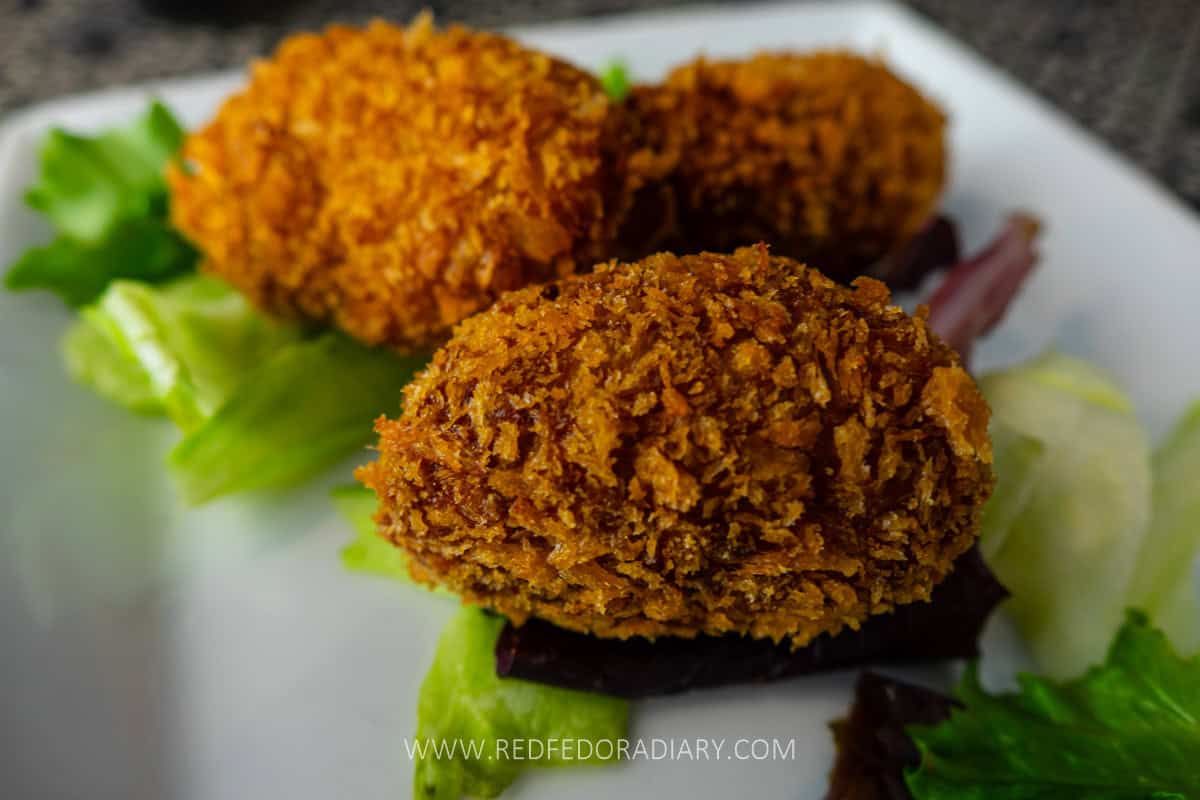
Croquetas are small balls of various fillings mixed with bechamel sauce, breaded, deep fried, and served with a sauce, making it a light snack and perfect as tapas. The filling varies, including jamon, chicken, blood sausage, or salt cod.
Gambas al ajillo
If you love seafood, particularly shrimp, you’ll love this one too. One of the crowd favorite and the best food in Spain that anyone should try is the Gambas al ajillo, or shrimp in garlic sauce.

The dish is mainly known in central and southern Spain, Madrid and Alicante being one of them. This simple yet flavorful and delicious meal is made from peeled shrimp, tons of garlic, and olive oil.
Typically cooked in a casserole and served in the same pot. It gets cold quickly, so you need to be fast to eat. It perfectly pairs with Spanish wine or beer.
Pan con tomate
The traditional Spanish food enjoyed for breakfast is the simple toast with tomato puree. Locals consume it on its own as a snack or a tapa with any meal.

This simple but delicious food is primarily popular in Catalan cuisine, but you can also find it in the rest of Spain. I tried it first in one of the restaurants in Barcelona and then in Toledo during a day trip from Madrid.
The preparation might differ depending on the region. Some may or may not toast the bread with tomato rubbed over or use a tomato puree. Nevertheless, it’s pretty tasty and perfectly goes with orange juice or coffee in the morning.
Bocadillo
The word ‘bocadillo’ or ‘bocata’ is a general term for a sandwich generally made from a local baguette or similar bread and has all sorts of fillings inside.

Bocadillo is also one of the best street foods in Spain for many locals and foreigners. This humble food has evolved and become a staple among famous Spanish dishes. It is sold everywhere, from tapas bars to cafes and even jamon shops.
Oysters
Spaniards love seafood and incorporate it into their daily diet. Ostra, in Spanish, is consumed here raw, like in many countries, with a small squirt of lemon juice. I haven’t seen many oyster bars across the country, but if you are in Bilbao, Basque Country, stop by El Puertito.

Pig ears
Oreja de Cerdo is another staple of the Spanish food menu, normally eaten as a tapas. It is commonly fried or grilled and served as a snack, but it is also boiled in several variations of stews.

The ear is chopped into cubes or strips, resulting in a crunchy and crispy appetizer that perfectly accompanies Spanish beer or any other beverage.
Bull’s tail
One of the delicacies in Spain I tried was the Rabo De Toro, which quickly became the best food in Spain for me. I first tried in Barcelona and later in Madrid. Both were absolutely delicious, but I’ve noticed slight regional differences.

This slow-cooked stew is commonly made of oxtail and is full of flavor, where meat is exceptionally tender and melts in your mouth at every bite. It has no specific taste; if no one tells you, you won’t even notice what you are eating.
Snails
Unlike Meskhetian cuisine in Georgia, snails are another popular Spanish food across the country that comes in two types – caracoles (small) and cabrillas (big).

Caracoles a la Andaluza, originally from the Andalusia region, is made from a mixture of tiny snails and a flavorful sauce of tomatoes, parsley, garlic, and sausage.
I’ve tried the Andalusian snails in Madrid, but Catalonia has its own version you should be able to find in Barcelona.
Roasted suckling pig
Cochinillo asado, in Spanish, is the best food in Spain for you to try. A traditional meal of the Castille region, the suckling pig is especially famous in Segovia.
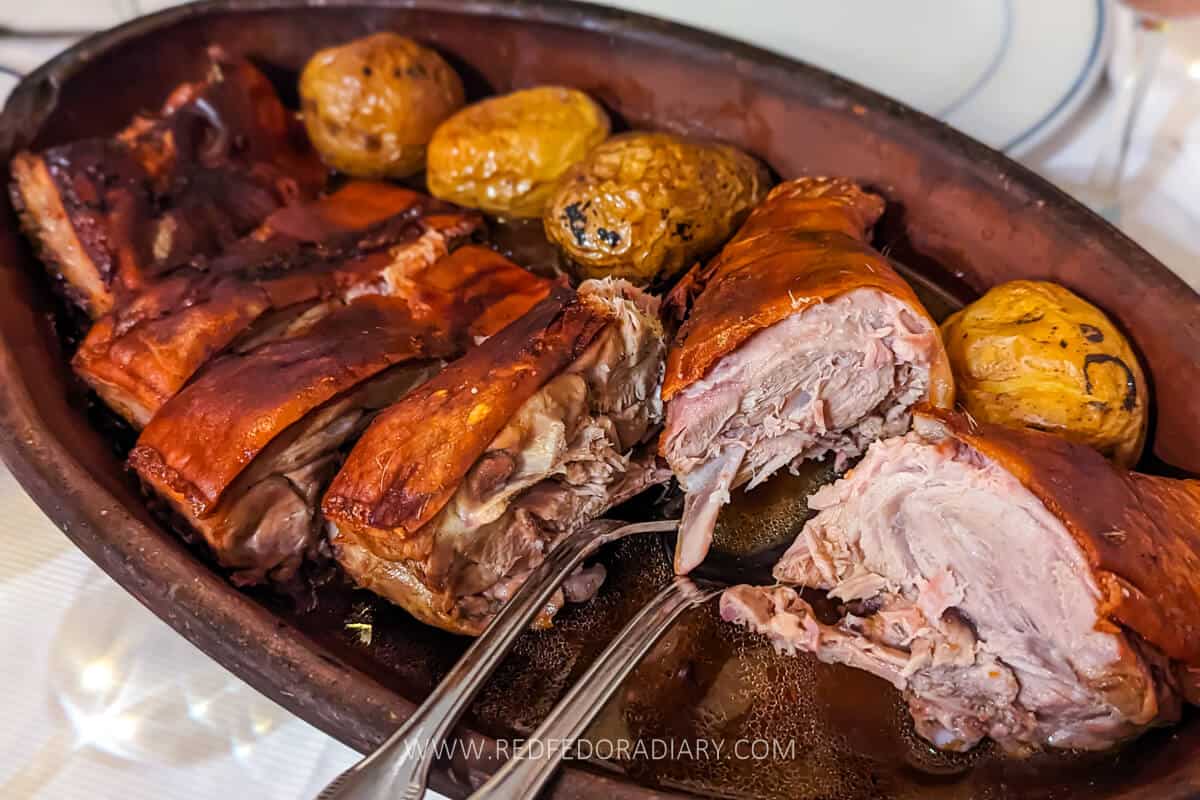
I’ve had it in Madrid’s famous restaurant Botin, which is one of the best places to eat in Spain as the world’s oldest restaurant. When cooked properly, the meat is super tender and practically falls apart, resulting in juicy meat with tender, crispy skin and a skinny layer of fat. It was top-notch and delicious at Botin.
Lamb intestines
For those who love trying everything, Zarajos should be on your list. From the city of Cuenca, this offal-based meal is one of the strangest foods from Spain I’ve tried.
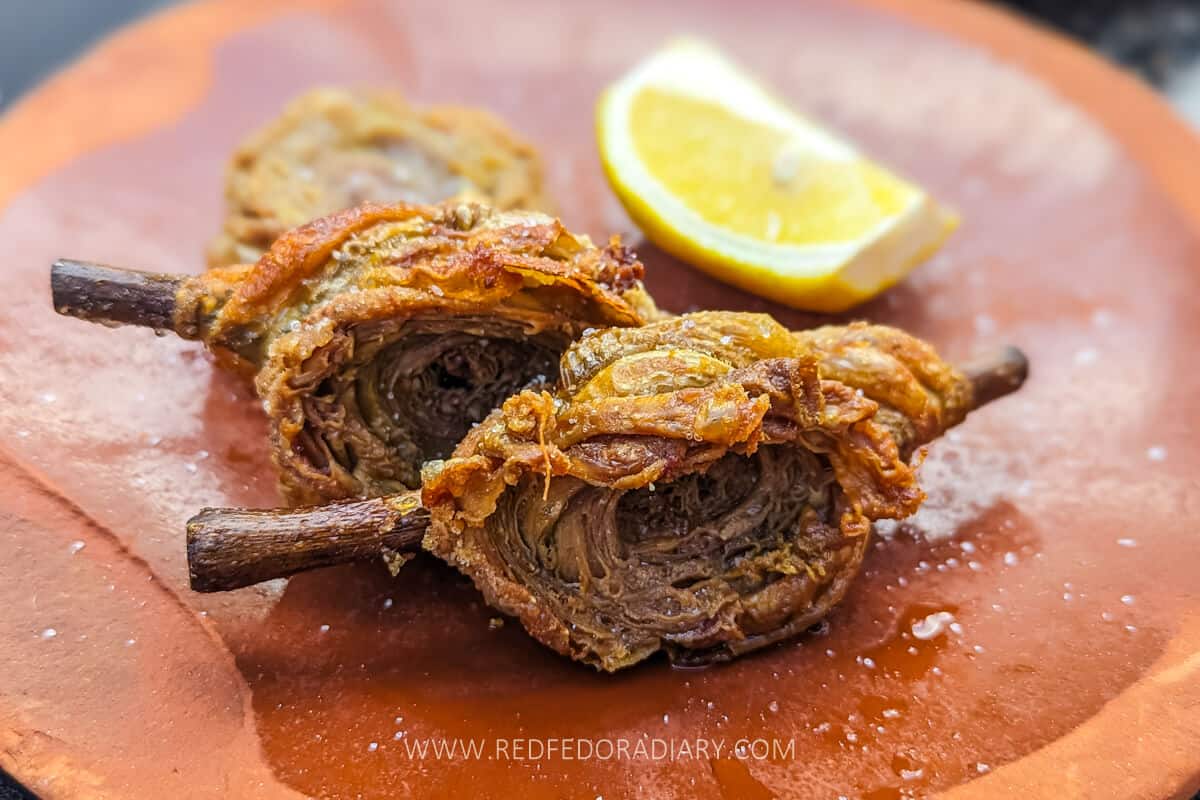
I won’t lie; it was not my favorite, and I prefer the Turkish Kokorec sandwich (also made from lamb intestines), but it got points among a few of our group members, so I decided to include it here.
It is made from the suckling lamb intestines marinated in its natural juice. When ready to prepare, it is wrapped around vine branch skewers to form a thick ball-like shape and deep fried in olive oil until golden.
Squid
Squid, or Calamar in Spanish, is another popular seafood that makes its way to many lists of Spanish foods. They are commonly cut into rings, breaded, and deep-fried to serve with lemon juice as tapa or a go-to Spanish street food at various markets.

If you are in Madrid, try the famous calamari sandwich (bocadillo de calamares) right off the main square at La Campana. Despite its prime location, the prices are pretty low.
Basque cheesecake
I am sorry, New York Cheesecake lovers, but you haven’t tried Basque cheesecake, also known as San Sebastian Cheesecake. Don’t get me wrong, I was a die-heart NY cheesecake lover, but this one converted me.

Hailing from the resort town of San Sebastian, north of Basque Country, a bit over an hour’s drive from Bilbao, this cheesecake type has become extremely popular outside of Spain.
The super tender, creamy, and crustless cheesecake is the love at first bite! After trying one piece, you would return for more, or maybe even a whole pan!
More Spain posts
My favorite travel Resources
✈ Book affordable flights on Skyscanner, a platform that shows the best flight deals.
🚫 Get compensation for up to 700$ with Airhelp if your flight was canceled or delayed within the last 3 years.
🚗 Rent a car with DiscoverCars, a trusted international car rental website.
💻 Get a VPN from Surfshark to protect your devices from hackers when using public Wi-Fi when traveling.
📱 Install the Airalo app, which provides local eSIMs for a more affordable internet connection when traveling. Get 3 USD with code: BAIA2592.
💸 Use Wise to withdraw money in local currency without hidden fees and avoid high exchange rates. On top of that, you might get a Visa or Mastercard debit card.
🏨 Find budget-friendly deals on all sorts of accommodation types on Booking.com.
❣ Pre-book a private car transfer with Welcome Pickups to your hotel.
🩺 Buy the most flexible and budget-friendly travel insurance, SafetyWing, covering COVID with add-ons for adventure sports and electronics theft.
☀ Book in advance some of the best city walks, cultural experiences, and day tours to maximize your stay and experience here.