
Things to Do in Marneuli: Mosques, Markets & Azeri Food
If you look up things to do in Marneuli, you’ll quickly notice that hardly anyone mentions it. Most travelers just pass through this part of Kvemo Kartli on their way to Armenia, often during a visa run from Tbilisi, without stopping to explore. Honestly, I get it. At first, Marneuli doesn’t seem like a typical destination full of landmarks or tourist attractions.
But that’s exactly what makes it interesting.
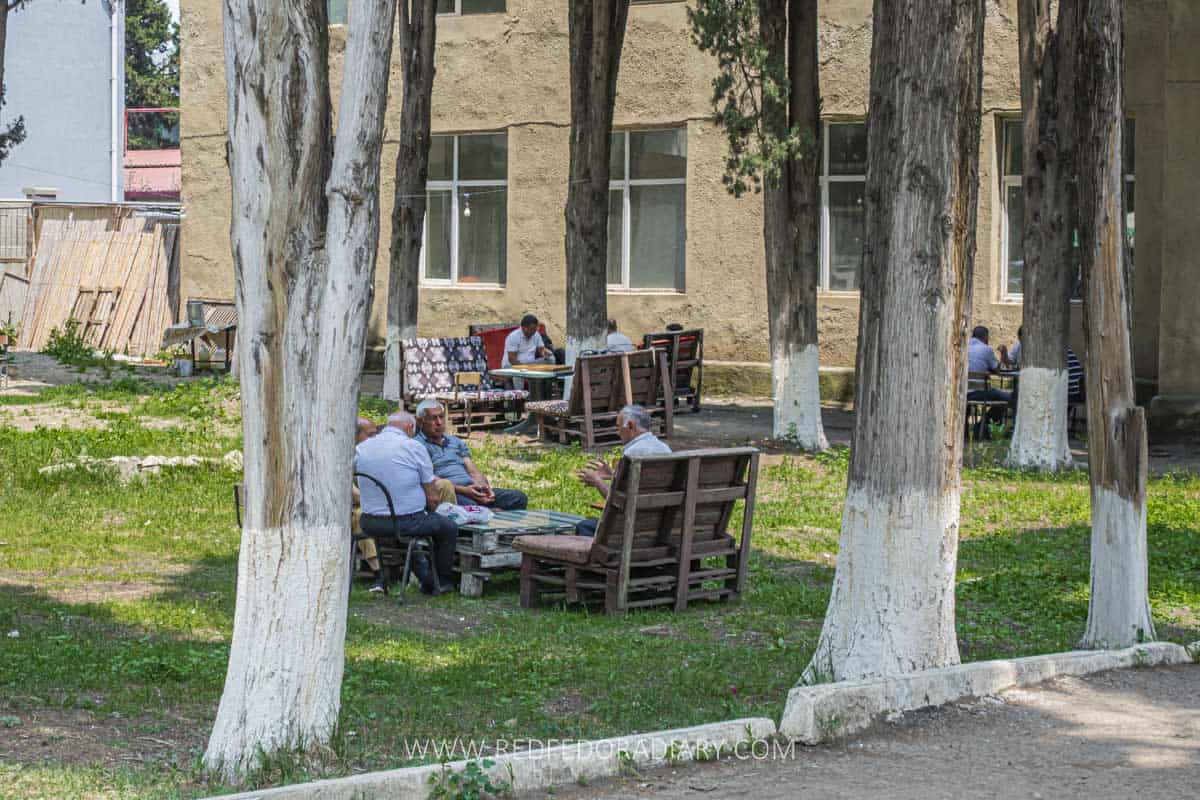
Located less than an hour from Tbilisi, it offers a completely different side of Georgia that many visitors never experience. Over 80% of the municipality’s population is Azerbaijani, so the atmosphere, food culture, language, and even the rhythm of daily life feel noticeably different from those in many other parts of the country that have been touched by tourism.
Beyond the historical landmarks, monasteries, and fortresses, the area around Marneuli Municipality is home to some of the most important Neolithic archaeological discoveries in Georgia, including evidence of the world’s earliest known winemaking and cultivated wheat.
Findings at places like Imiri Gora and Gadachrili Gora were key in research that helped Georgia gain international recognition as the birthplace of wine, with evidence dating back about 8,000 years. Even though these discoveries received worldwide attention, very few locals or travelers have heard of these sites.
So even though Marneuli doesn’t have a long list of classic attractions, it’s an affordable, relaxed, and truly unique day trip from Tbilisi. It’s a great choice if you like overlooked places, multicultural areas, and destinations that feel far from the usual tourist path.
Disclaimer: Some of the links in this post are affiliate links, which means I may earn a small commission if you buy something through them—at no extra cost to you. It helps support my blog and lets me share real, first-hand travel tips. Learn more
A short overview of Marneuli
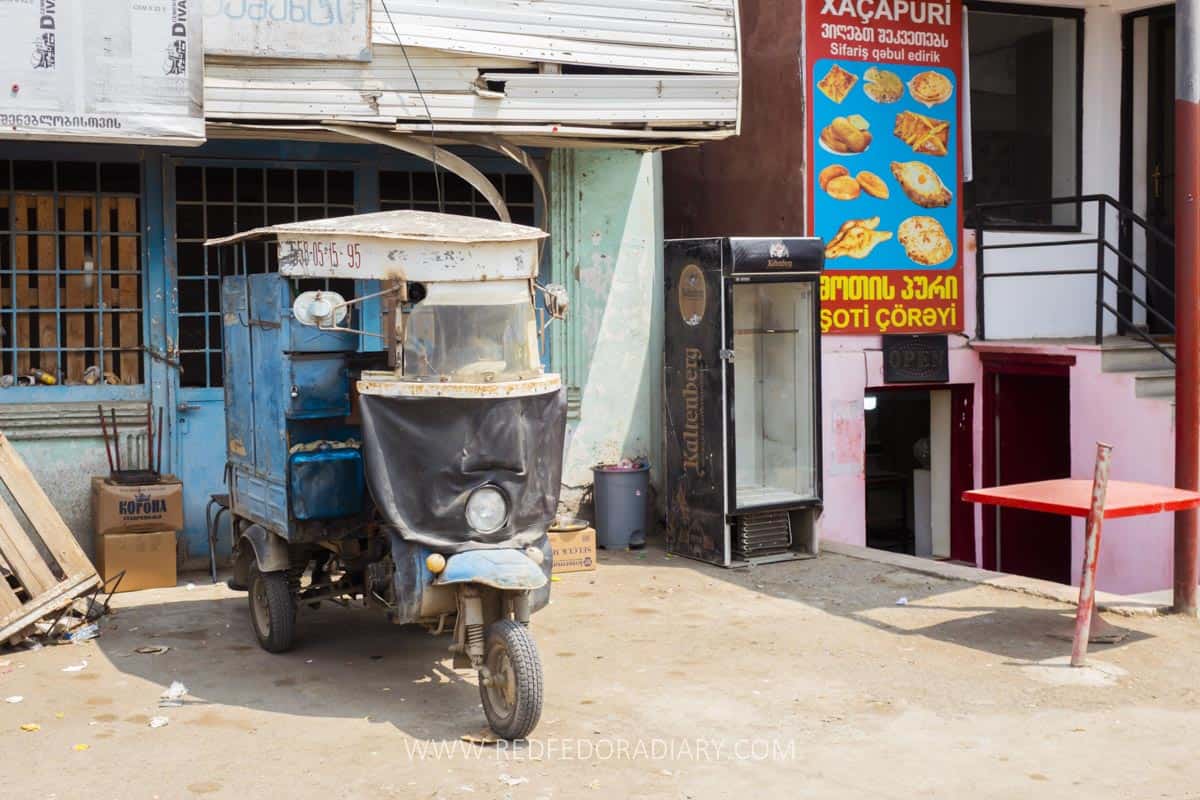
I find Marneuli interesting because its culture and customs are so different from those of the rest of Georgia. Since most people here are Azerbaijani, you’ll hear Azerbaijani spoken more often than Georgian, and local restaurants serve lots of lamb dishes, kebabs, fresh bread, and clay-pot meals instead of the usual khinkali and khachapuri.
The area’s multicultural identity dates back centuries, as it was settled by various cultures, including the Persians, Greeks, Romans, Ottomans, and Germans. The present-day city emerged as a large settlement after several villages merged together and was called Lomtagora, based on 13th-century sources. The area once marked the end of a chain of megalithic (Cyclopean) fortresses along the right bank of the Algeti River and served as an important road junction.
In the 17th century, Shah Abbas I of Iran, after conquering Georgia, forced local Georgians to leave and brought in Turkmen tribes from the village of Bozchalu (also called Borchalu) in Iran’s Hamadan Province. The city was then renamed Borchalo. The original Georgian name, Marneuli, was restored in 1947 (I couldn’t find information on when Marneuli was first used), and it became a city in 1964.
The name Marneuli itself is believed to come from the Georgian word marani, meaning a traditional wine cellar. The Azerbaijani name for the city, Sarvan, comes from the Persian word sârebân, meaning “keeper of camels.”
Today, the city serves as the administrative center of Marneuli Municipality and borders Bolnisi Municipality to the west, Gardabani Municipality to the northeast, and Tetritskaro Municipality to the north, and also extends to the borders of Armenia and Azerbaijan to the south. This location has historically made it an important crossroads for trade, transport, and cultural exchange.
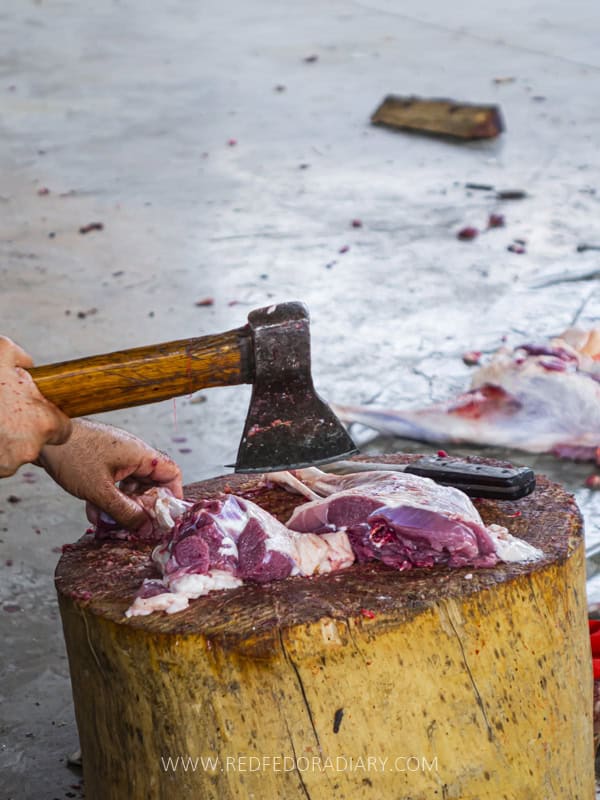
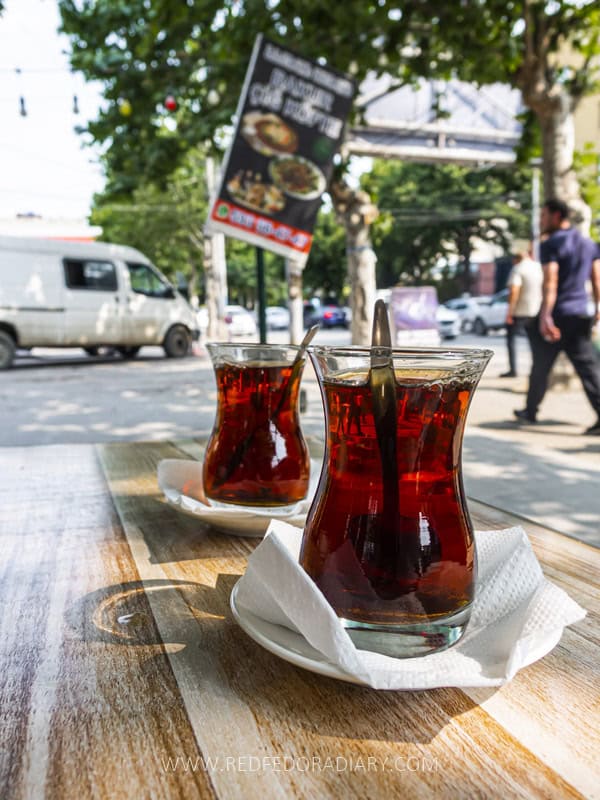
Unlike the mountains that many people picture when they think of Georgia, Marneuli mostly stretches across wide plains and semi-desert areas, with river valleys, dry hills, and farmland all around. The area has a warm steppe climate, with very hot summers, mild winters, and dry weather most of the year.
Agriculture remains one of the municipality’s most important industries, with local villages producing grains, vegetables, grapes, and livestock products. Food processing also plays a role in the economy. One of the larger employers in the area is the Marneuli company, known across Georgia for its products, including pickled vegetables and sauces such as tkemali.
Quick tips before you go
- When you arrive in Marneuli, you’ll spot a tourist information center near the main square or roundabout. But from the looks of it, it hasn’t been open for years and now seems abandoned and dusty.
- You might also see a “Solidarity Museum” marked on Google Maps. I tried to find it myself, but had no luck. The pinned spot took me to what looked like a regular residential building instead.
- Marneuli makes for a very easy day trip from Tbilisi. However, if you do want to stay overnight, accommodation options are fairly limited. At the moment, Hostel Habit and Hotel Comfort are among the few places listed on Booking.com.
Things to do in Marneuli
While Marneuli Municipality may not have a long list of polished tourist attractions, it offers a diverse mix of landscapes, religious monuments, and local cultural experiences.
Many of the region’s historical and cultural monuments date back centuries, from Neolithic settlements to medieval monasteries hidden in the hills. Sadly, a few sites are badly damaged, overgrown with vegetation, or located far from the main roads, often requiring a car and light hiking.
This guide focuses mainly on things to do in Marneuli city itself, along with a handful of interesting spots nearby if you’re exploring it by car.
Marneuli attractions with the map
Use this Google Maps list to follow all the locations in this guide to things to do in Marneuli. Save it to your phone and download the area offline so you can move around the city smoothly, even without data.
Stop at the “They will grow up again” Soviet monument
One of the first things you’ll notice when entering Marneuli from the main highway is the enormous Soviet-era monument known as “They Will Grow Up Again” or Kidevats Daizrdebian (კიდევაც დაიზრდებიან), unveiled in 1975 to mark the 30th anniversary of the Soviet victory in World War II.
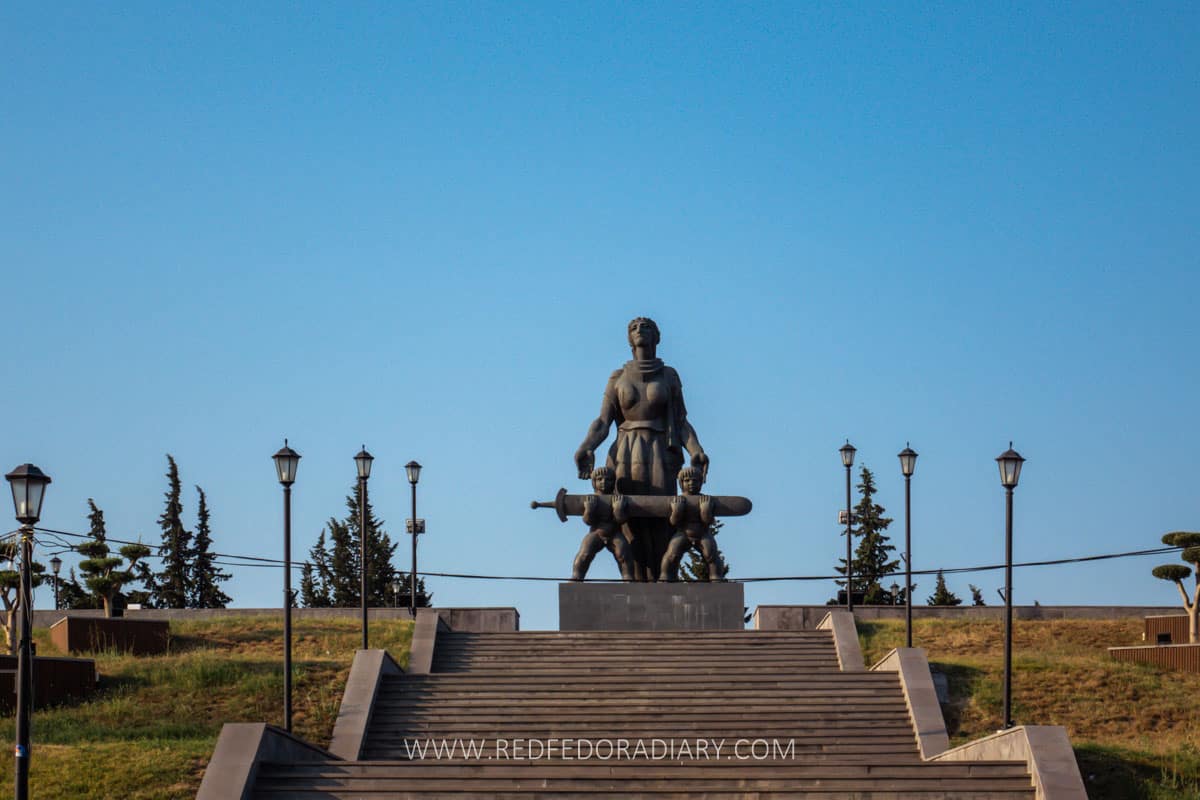
Created by Georgian sculptor Merab Berdzenishvili, the massive sculpture stands on a raised platform covered with black marble slabs and reaches over 13 meters in height, making it impossible to miss from the highway.
The three-figure composition carries a strong patriotic message. At the center stands a mother figure facing forward, while in front of her stand her two young sons holding an oversized sword. The mother symbolizes women who raise future defenders of the homeland, while the children’s posture and the sword represent their readiness to protect their country.
Even if you’re not particularly interested in Soviet monuments, it’s worth stopping briefly to see the scale of the sculpture up close.
Get a cup of coffee with a baklava
When you get to the city, either before you start exploring or later when you want a coffee break, stop by the Pakhlava (Baklava) shop along the Marneuli–Algeti–Azizkenti highway.
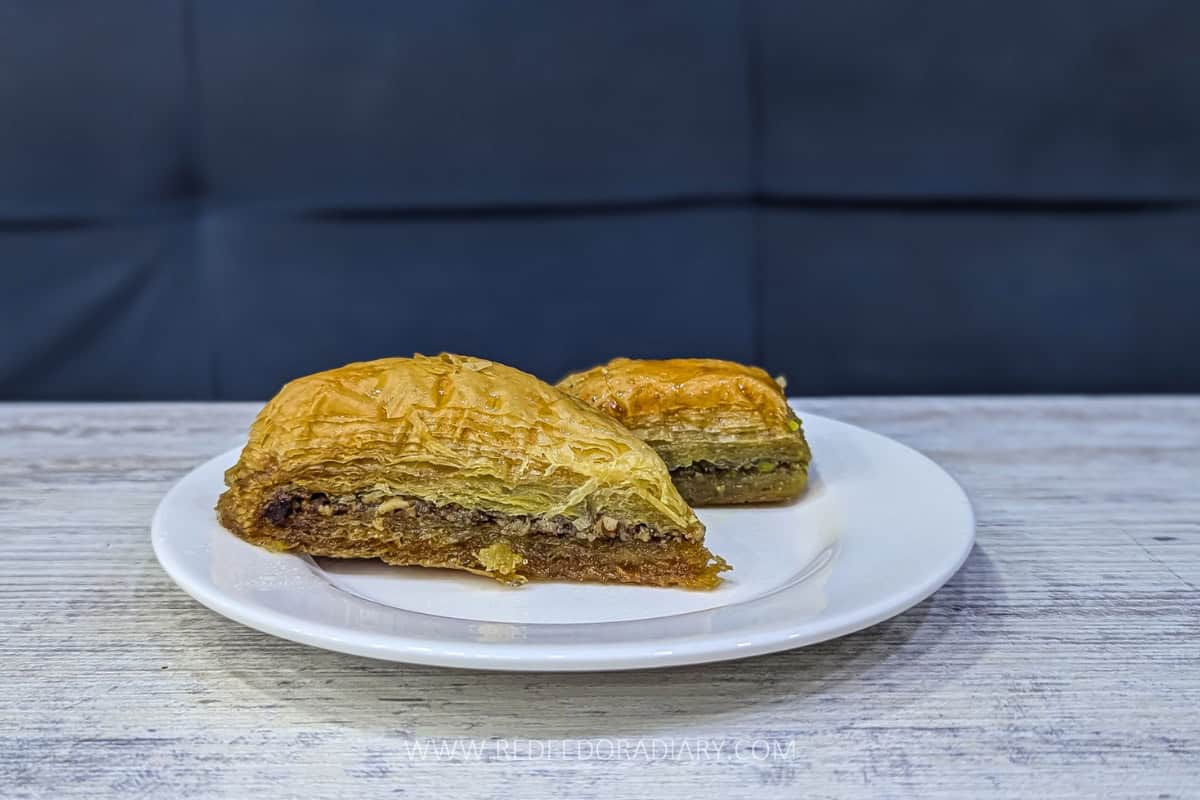
The display counter is usually filled with different types of baklava and other syrupy pastries, so simply point at whatever looks best to you and order it with a cup of coffee or tea. The baklava here is rich, sweet, and loaded with nuts, just like the kind you might have tried in Istanbul or elsewhere in Turkey, making it a perfect quick snack during the trip.
Browse local produce at the Sunday bazaar
Walking through local markets is one of my favorite things to do anywhere I travel, and Marneuli was no exception. Since the municipality is heavily agricultural, the produce here is incredibly fresh, seasonal, and often much cheaper than in Tbilisi. In fact, many fruits and vegetables sold at Samgori Bazaar in Tbilisi come from this region.
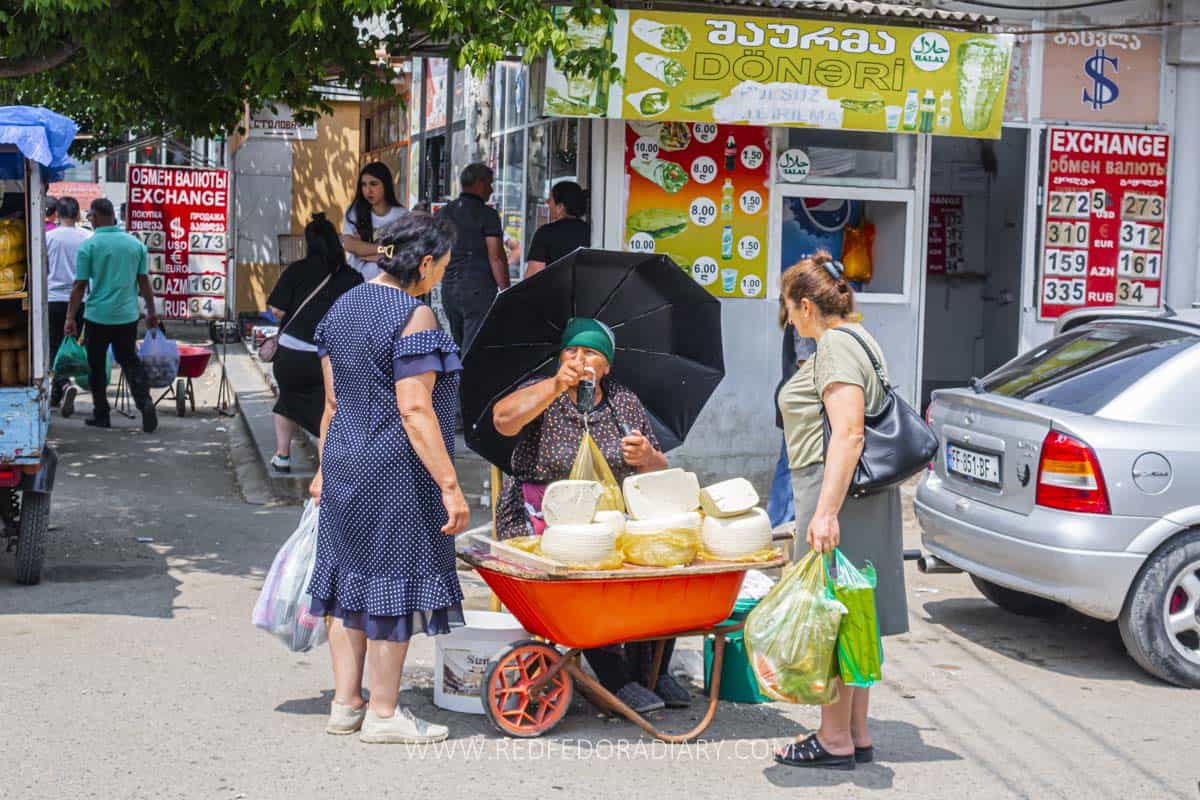
The bazaar is open throughout the week, but Sunday is by far the busiest and liveliest day to visit, with more vendors, more shoppers, and a much more energetic atmosphere. If you plan to go on a Sunday, try to arrive as early as possible.
The market stretches across a surprisingly large area. Besides stalls piled high with fresh vegetables, herbs, fruits, and spices, you’ll also find rows of shops selling beans, grains, rice, canned food, candies, hygiene products, household items, electronics, and pretty much anything locals might need for daily life.
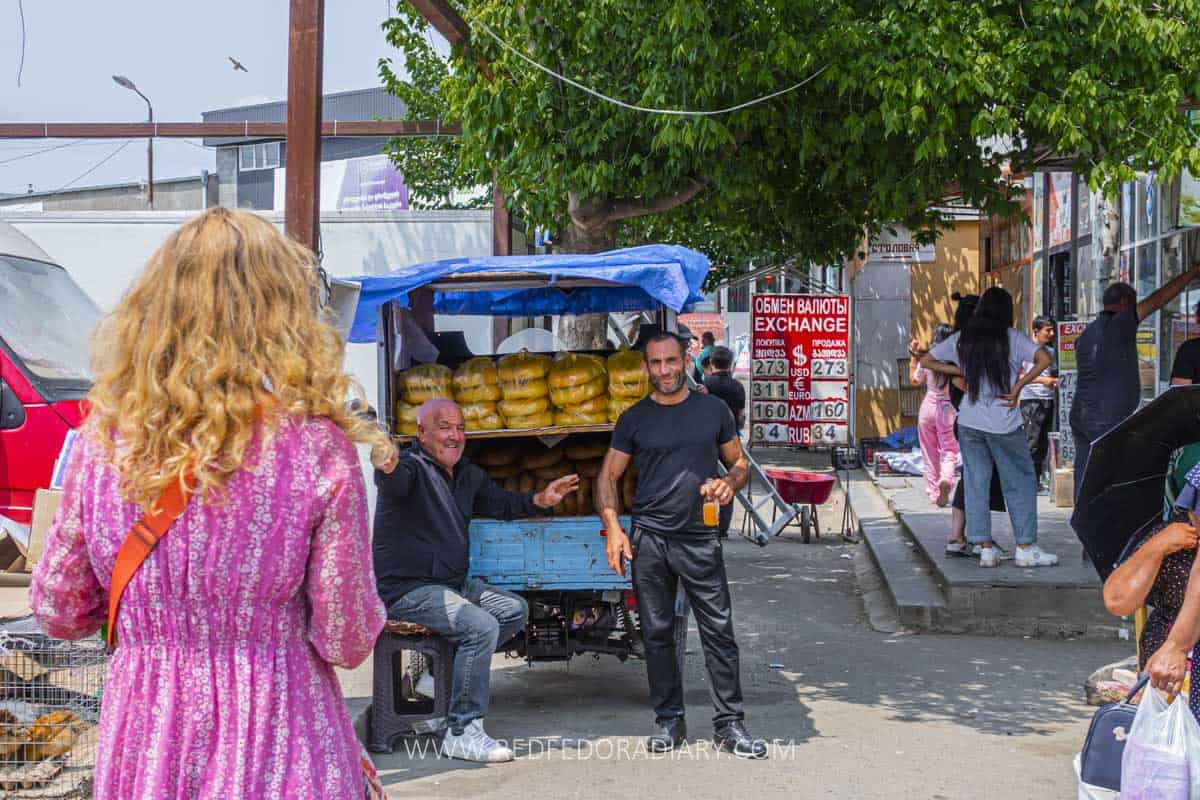
The bazaar also has sections for fresh meat and fish, clothing, slippers, shoes, and even live poultry, which makes the experience feel far more local and unfiltered than markets in Tbilisi.
Even if you’re not planning to buy anything, walking through the market is one of the most exciting things to do in Marneuli, aside from its historical sites.
Spot a Soviet mosaic
Unlike many other parts of Georgia, this area doesn’t have a large concentration of surviving Soviet mosaics and notable architecture. Several were reportedly demolished years ago, so unexpectedly coming across this one hidden inside the bazaar felt like a small discovery.
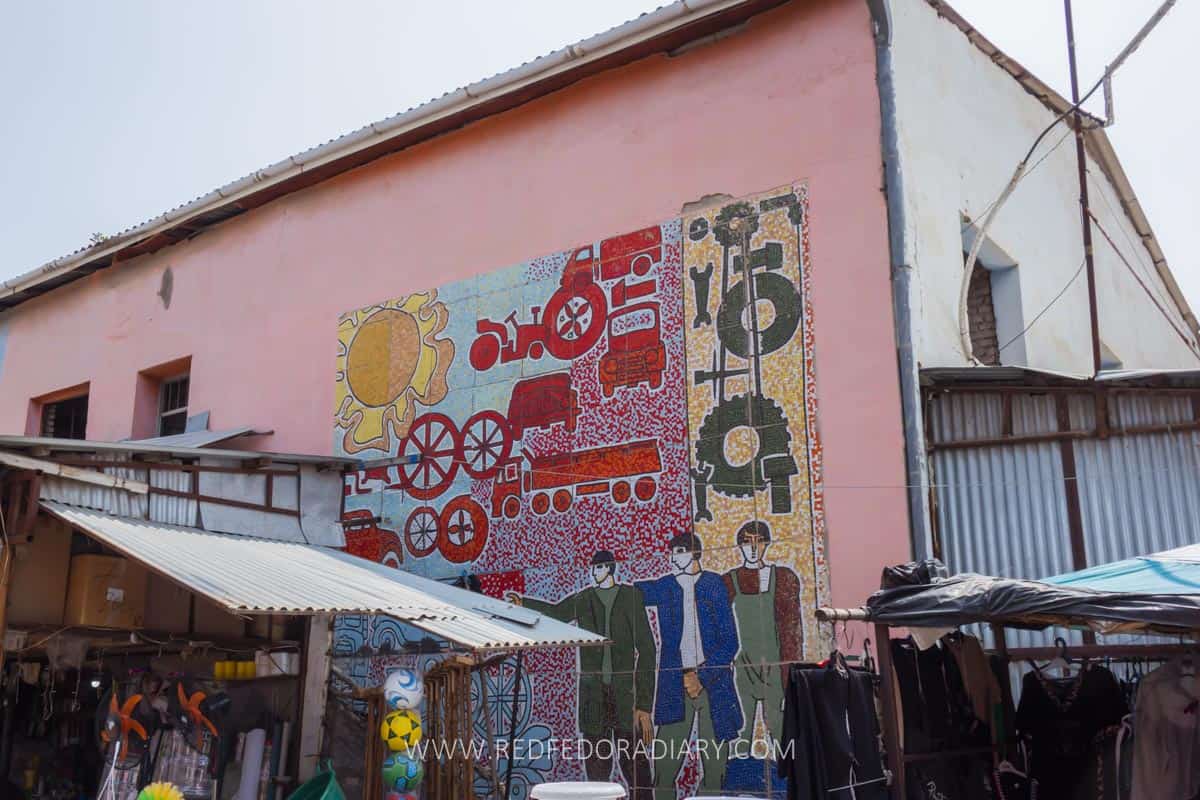
The mosaic, featuring vehicles, wheels, and tools, decorated a car repair shop, as one of the merchants explained. Slightly tucked away between market stalls, it’s easy to miss if you don’t know where to look. I almost walked past it myself as it blends into the busy market surroundings; therefore, I included the exact pin location on my Marneuli map above.
Visit the Imam Ali Mosque
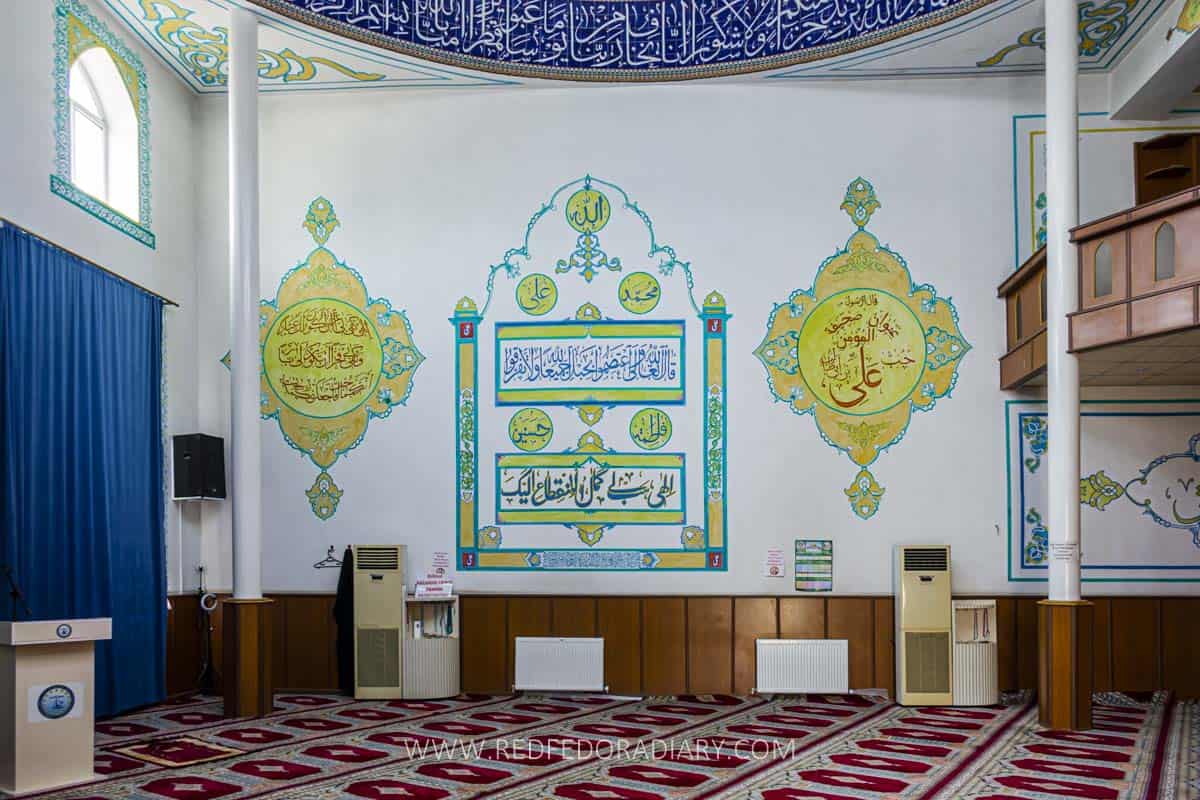
The Imam Ali Mosque was originally constructed in 1739. During the Soviet years, the building lost its religious function and was used for various other purposes before eventually being destroyed. In the late 1990s, the local community restored the mosque through their own initiative and funding, and religious services resumed here in 2000.
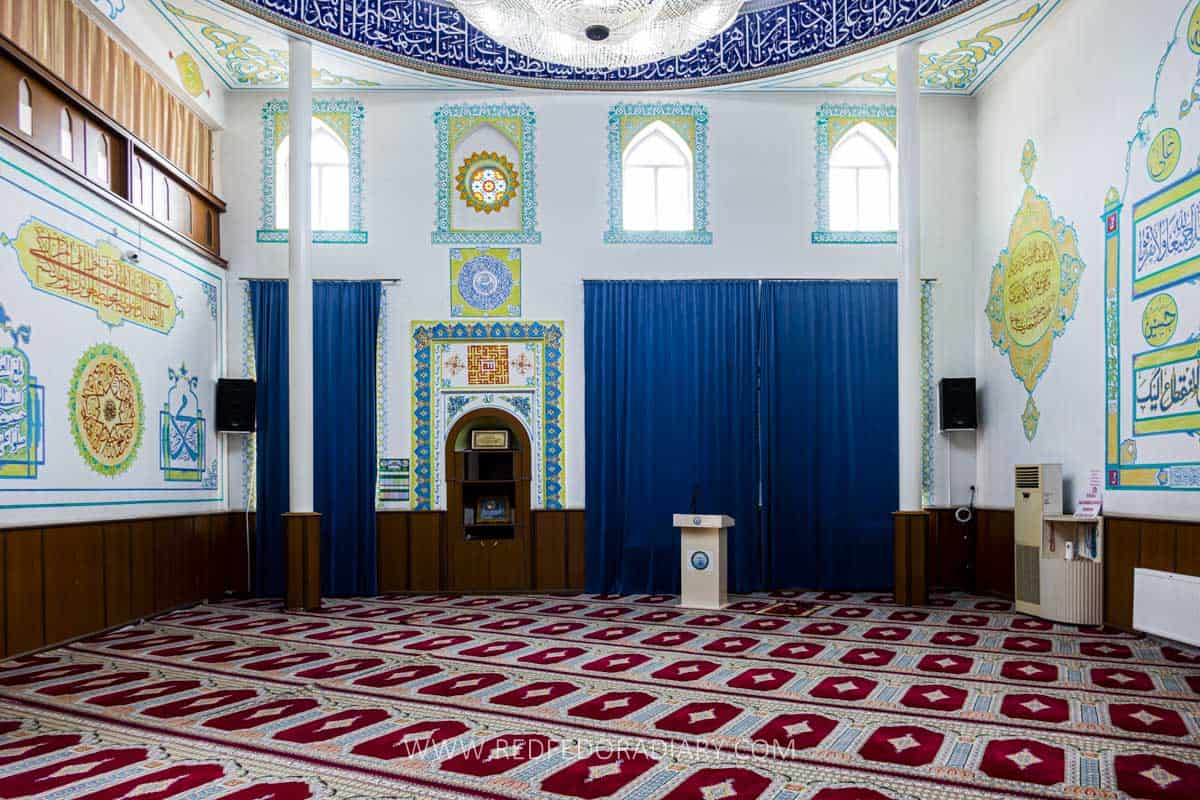
From the outside, the mosque looks relatively modest, with a brick-built exterior that blends into the surrounding neighborhood. But the interior feels completely different.
Inside, the space is covered with intricate blue, turquoise, gold, and white decorative details, with Arabic calligraphy stretching across the walls and around the dome. The ceiling is especially beautiful, filled with geometric and floral patterns.
Snack on simit
One of my favorite snacks when I’m in Turkey, or even on Tbilisi’s Aghmashenebeli Avenue, with its many Turkish restaurants and shops, is simit. It’s a round, sesame-covered pastry that’s somewhere between a bagel and a soft pretzel.
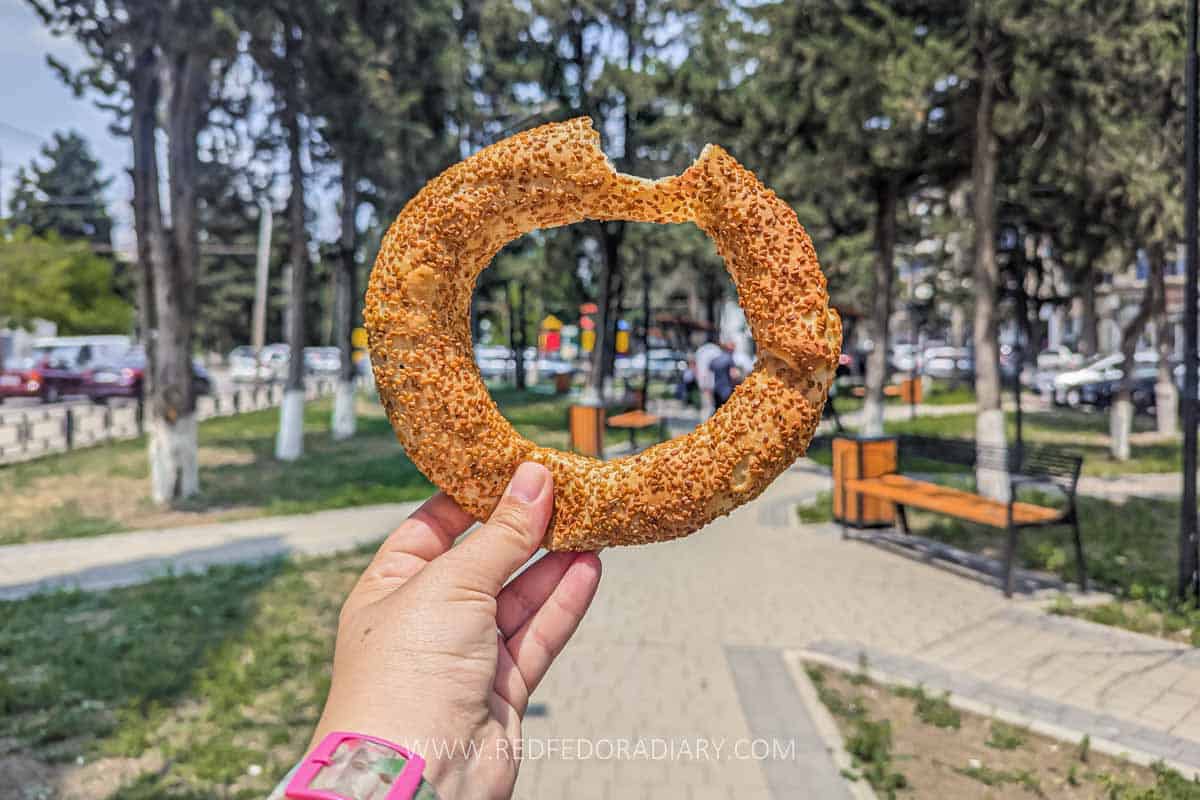
You’ll find very similar versions sold around that are slightly crunchy on the outside and soft inside. It makes a perfect, cheap snack while wandering through the city or browsing the bazaar.
Peek inside the new Imam Hussein Mosque
Compared to the older Imam Ali Mosque, there’s surprisingly little information online about the newer Imam Hussein Mosque, despite it being the city’s most visually striking religious building. It was inaugurated in 2016 with the support of Ayatollah Sayyid Javad al-Shahristani and attended by religious representatives from Georgia, Iraq, and Iran.
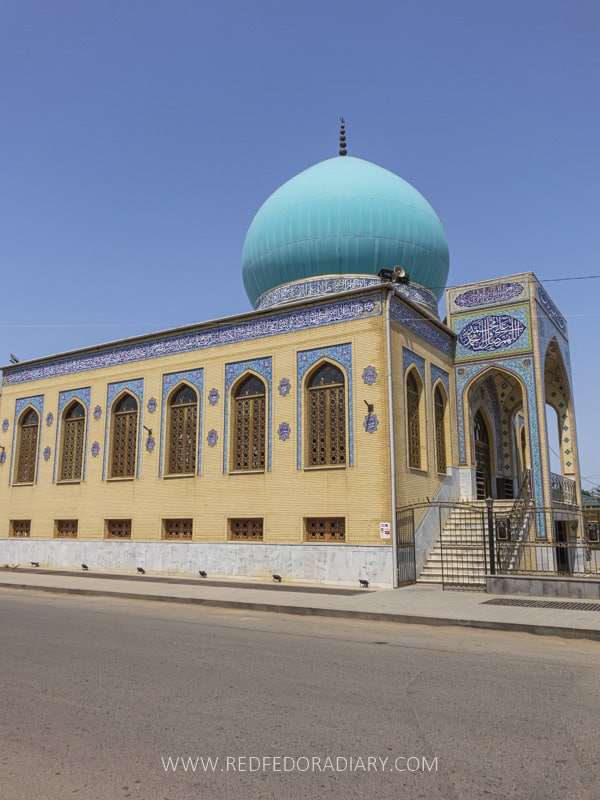
Even from the outside, the mosque immediately stands out. The building is topped with a large turquoise dome visible from afar, while the entrance and facade are decorated with blue tilework, geometric ornamentation, and Arabic calligraphy. The pointed windows, colorful detailing, and overall design strongly resemble modest versions of Iranian mosques.
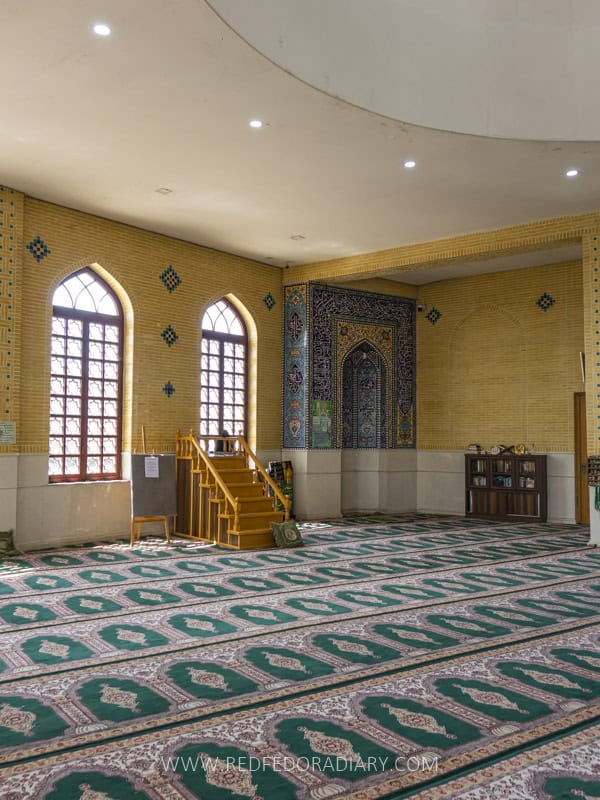
Inside, the prayer hall feels simpler but still elegant, with patterned carpets, warm yellow walls, and decorative blue-and-gold tile panels surrounding the mihrab.
Notice the monument of Nizami Ganjavi
Almost directly in front of the Imam Hussein Mosque, you’ll notice a monument dedicated to Nizami Ganjavi, one of the most important poets of Persian literature and a highly respected cultural figure across the wider region, especially in Azerbaijan, Iran, and parts of Central Asia.
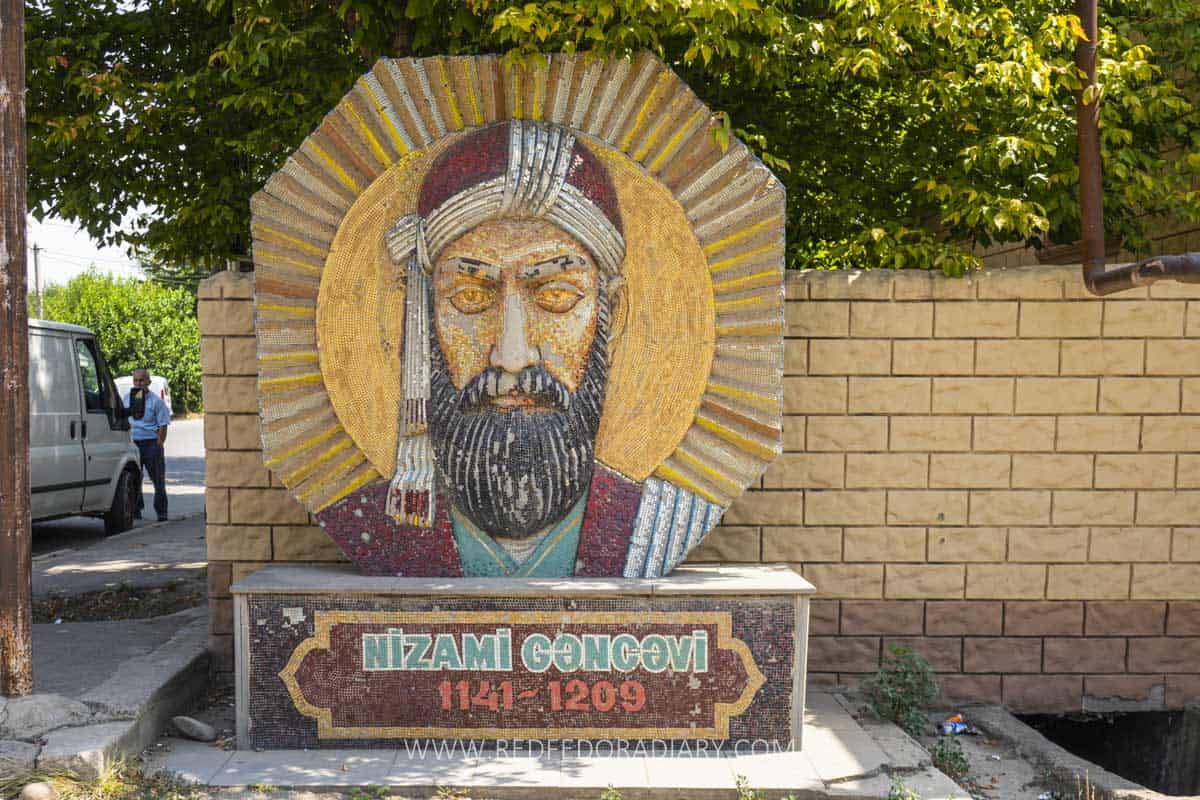
Born in the 12th century, Nizami became best known for his Khamsa or Five Treasures — a collection of long narrative poems that shaped Persian romantic and epic poetry for centuries. His works combined philosophical themes, romance, realism, and moral storytelling, and are still widely studied and celebrated today.
Look for the military airplane near the army base
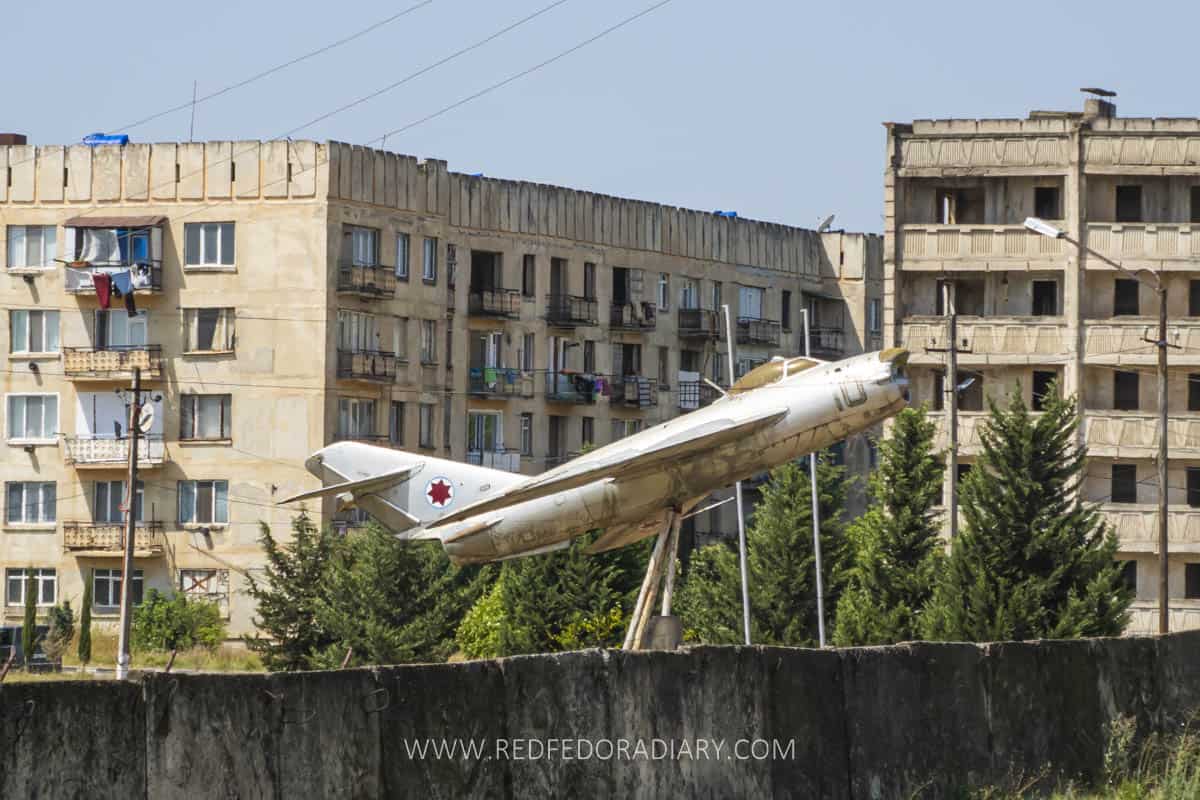
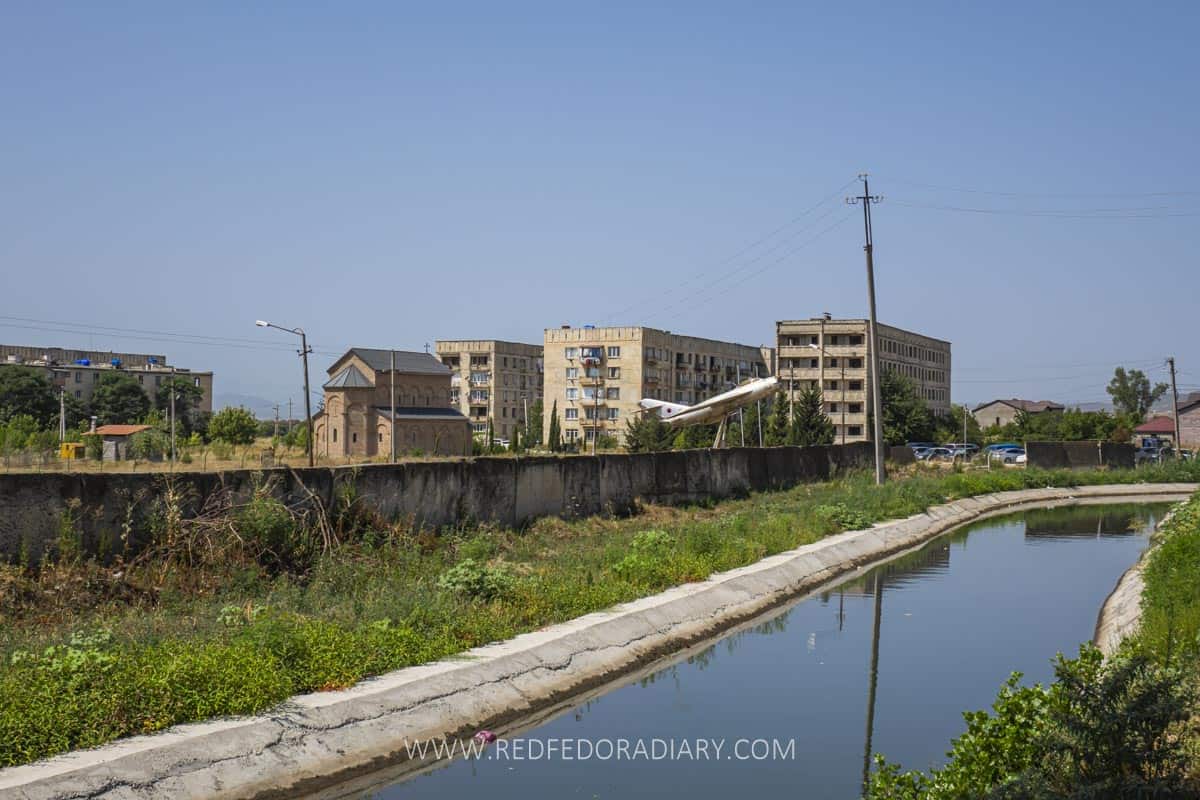
One of the more unexpected sights here is a Soviet-era military aircraft on display at an active army base. The Mikoyan-Gurevich MiG-17 was a Soviet jet fighter developed in the early 1950s and widely used during the Cold War. It became especially known for its role in conflicts such as the Vietnam War due to its speed and maneuverability.
Alongside the Vaziani Air Base near Tbilisi, this is another major airfield in the country with a single runway and the pseudo-ICAO code UG22.
Historically, the base primarily housed fixed-wing aircraft, including Su-25 attack planes, and functioned as one of Georgia’s important mixed aviation bases. Over the years, parts of the facility have undergone modernization with Turkish support and have been used for pilot training, military education, and the maintenance of air defense capabilities.
The airfield also became a target during the 2008 Russo-Georgian War. On August 8, Russian aircraft bombed the airport, destroying the runway and killing three people.
Because this is still an active military area, you can’t go inside the base or get very close to the aircraft, and taking photos isn’t officially allowed. I took my photo from far away with a zoom lens when the soldiers weren’t looking, so don’t expect this to be a typical sightseeing stop.
Shop for Azeri desserts and pastry
One thing I quickly noticed while wandering around Marneuli was the sheer number of pastry and dessert shops lining the main Marneuli–Algeti–Azizkenti highway and Rustaveli Street. Some are tiny local bakeries, while others look more like full dessert shops with large glass counters overflowing with sweets.
We tried both Melodia, which has two branches along the highway, and Oven (marked as an Azerbaijani dessert on Google Maps) to try a mix of savory pastries and traditional Azerbaijani desserts. Besides baklava, there are several local specialties worth trying:
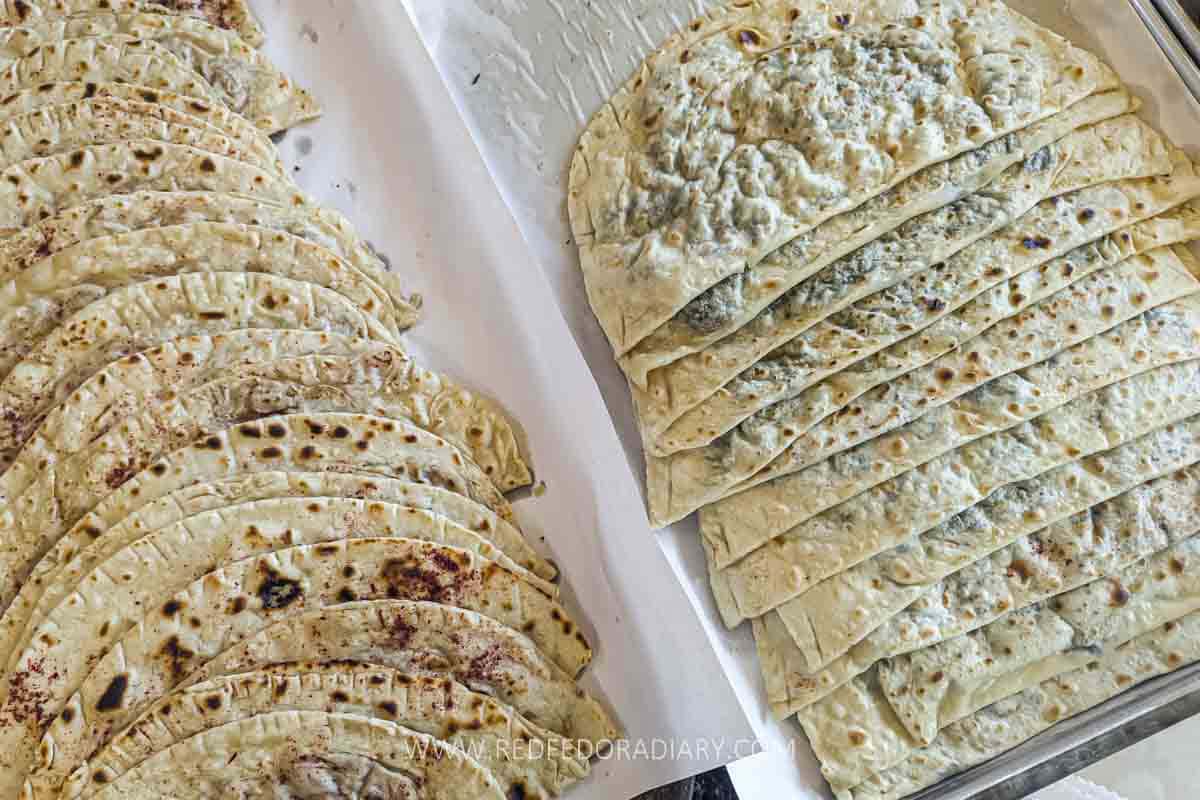
Qutab (Gutab) is one of the most common savory snacks you’ll come across. It’s made from very thin dough, folded into a half-moon shape, and filled with ingredients such as cheese, spinach, or minced meat before being cooked on a flat griddle. Light, crisp in places, and usually served warm.
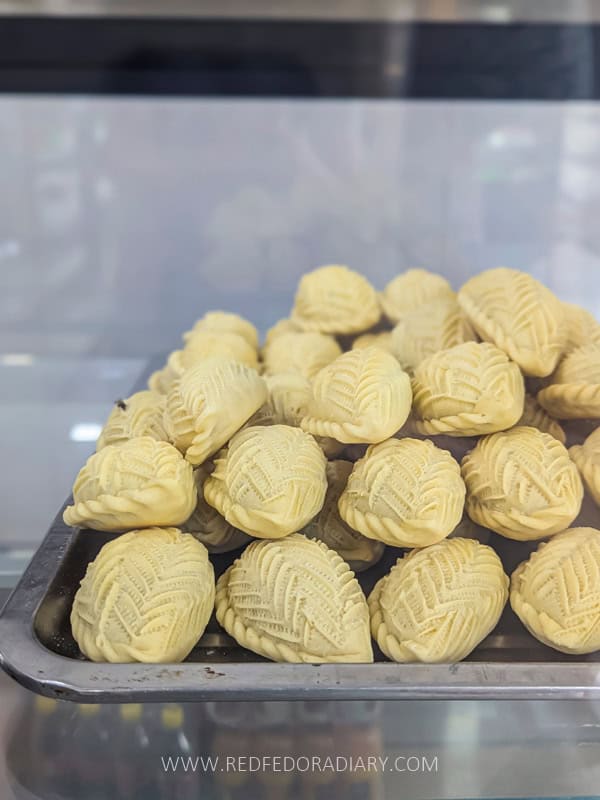
One traditional dessert to look for is Shekarbura, a crescent-shaped pastry filled with finely ground nuts such as walnuts, hazelnuts, or almonds. The shells are usually hand-decorated with intricate geometric patterns, making them look almost too pretty to eat. Traditionally associated with Novruz celebrations, they’re slightly crumbly, buttery, and not overwhelmingly sweet.
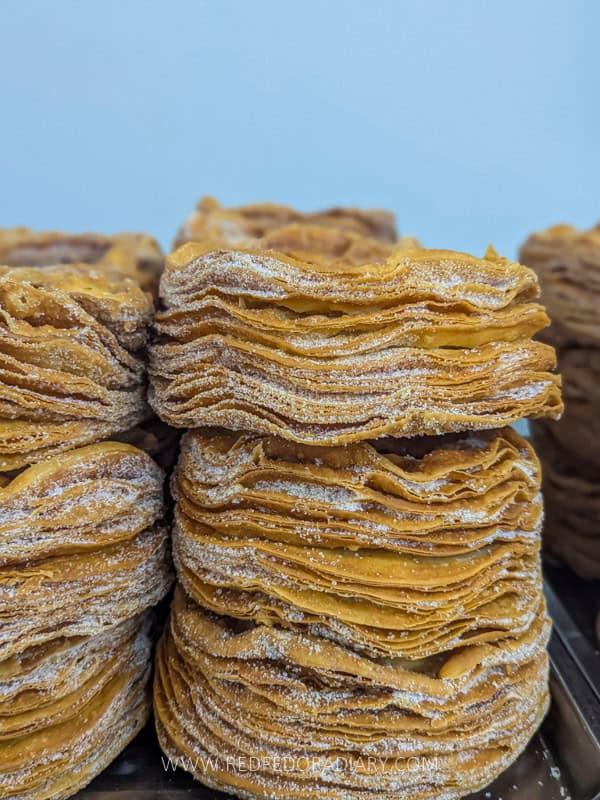
You’ll also commonly see Qatlama, a layered flaky pastry. The dough is rolled very thin, brushed with butter or ghee, then folded and deep-fried until crispy and heavily dusted with sugar. It pairs well with traditional tea.
Notice a Soviet bas-relief
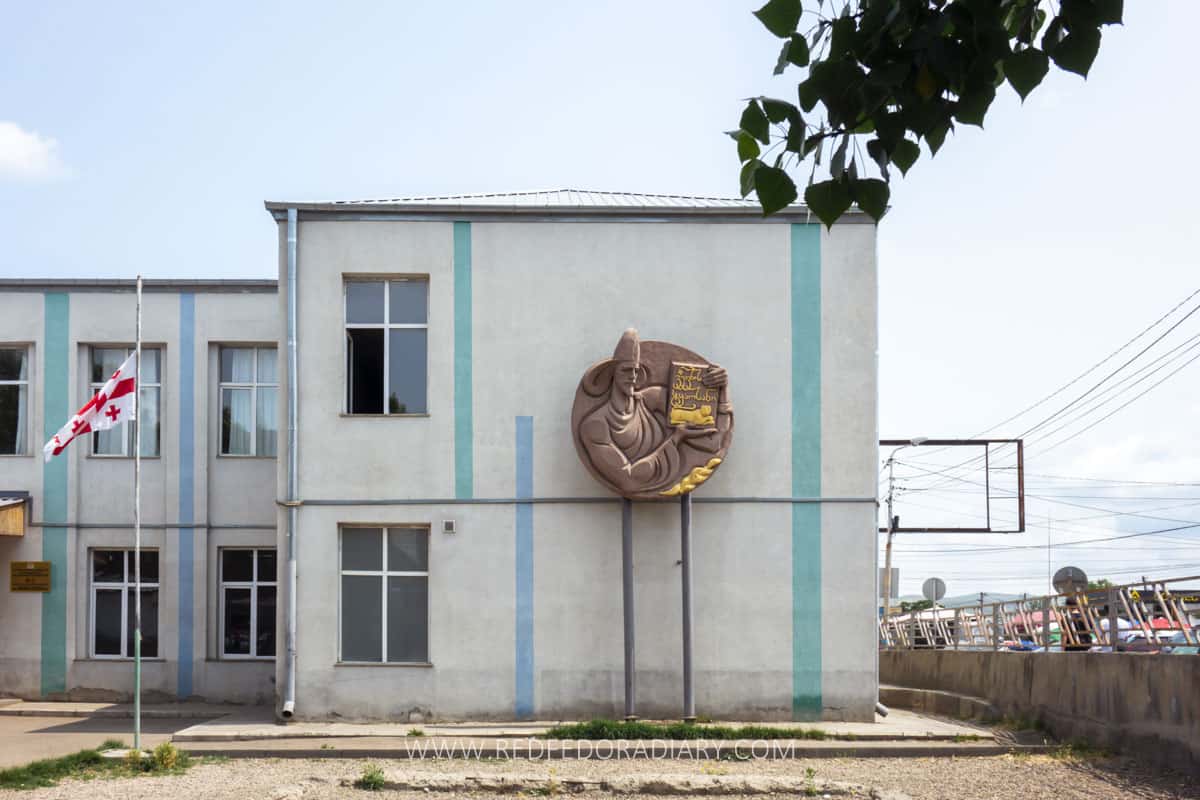
While walking down Rustaveli Street, we came across this decorative Soviet-era bas-relief built into the facade of what is now a judo training studio. Unfortunately, I couldn’t find information on what the building originally functioned as during the Soviet period, but the artwork itself is still worth stopping to see.
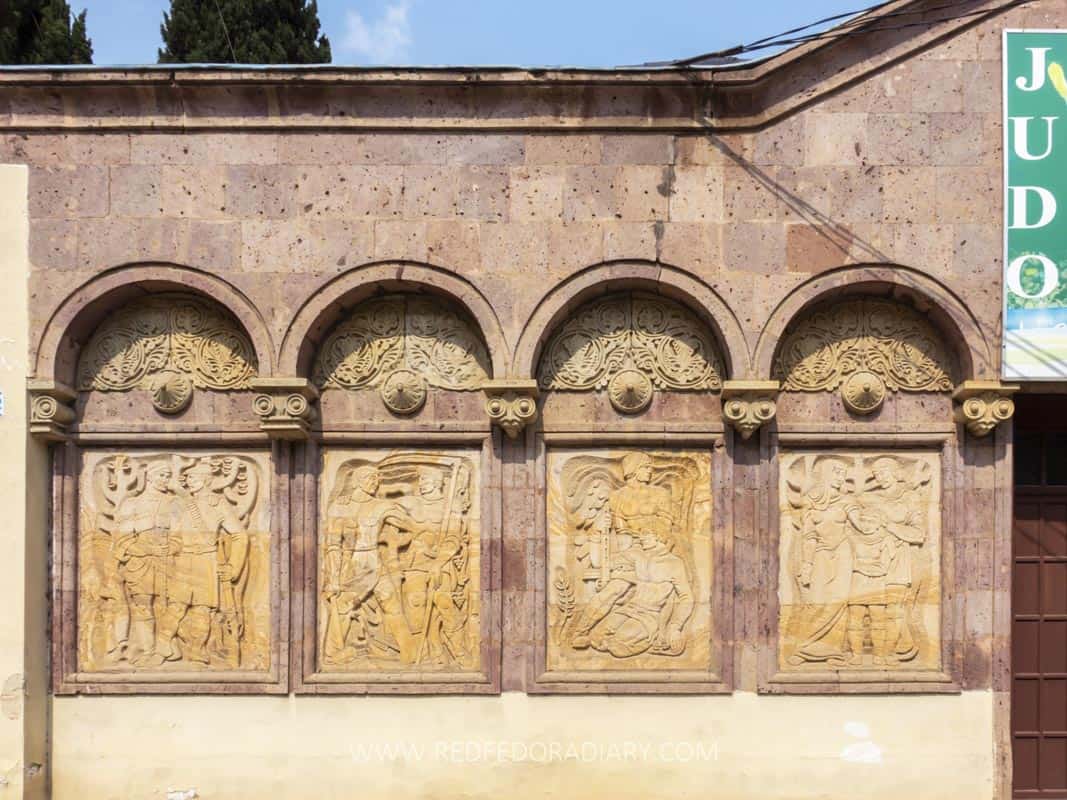
The relief has eight stone panels on each side of the door, each carved with different figures and scenes. It shows themes often found in Soviet public art, like labor, family, youth, and heroism, and seems inspired by older historical or folk designs.
Eat pilafs at the Tea House Mugam
Right at the entrance of Marneuli, near the roundabout behind the SOCAR patrol station, you’ll spot a massive building called Tea House Mugam. In my experience, it’s probably the city’s fanciest and best-known restaurant.
My very first encounter with Marneuli actually started here back in 2022, when my best friend Mariam, Oto, and I drove down for a day trip focused almost entirely on eating lamb dishes for lunch. Since then, we’ve returned a few more times whenever we happened to be passing through the area.
The menu is large and mostly meat-focused, with just a few vegetarian options. Also, don’t be surprised if some of the listed dishes aren’t available that day. That happened quite often when we visited.
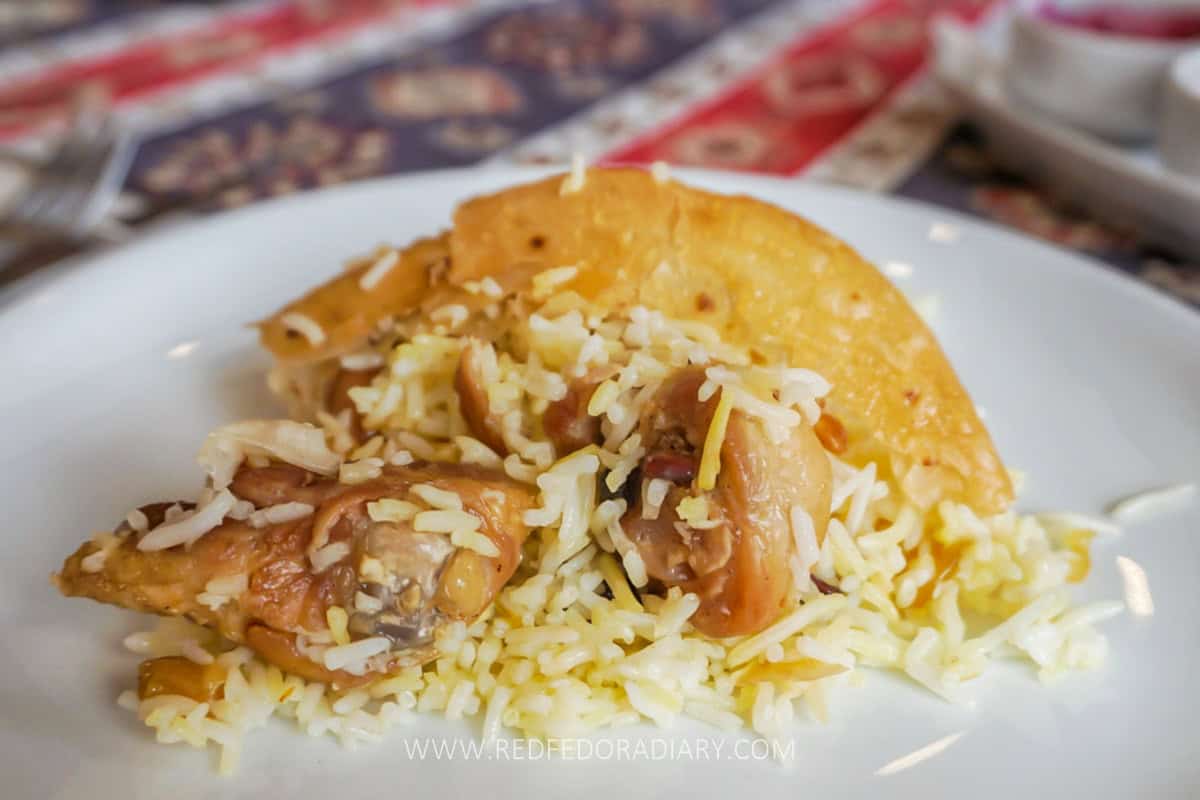
If you eat here, I highly recommend ordering one of their pilafs, which are genuinely excellent. And if you’re visiting with a group, try the Shakh Pilaf, a rich, layered Azerbaijani-style rice dish baked inside a crispy pastry shell. It takes about 3 hours to prepare, so it needs to be pre-ordered.
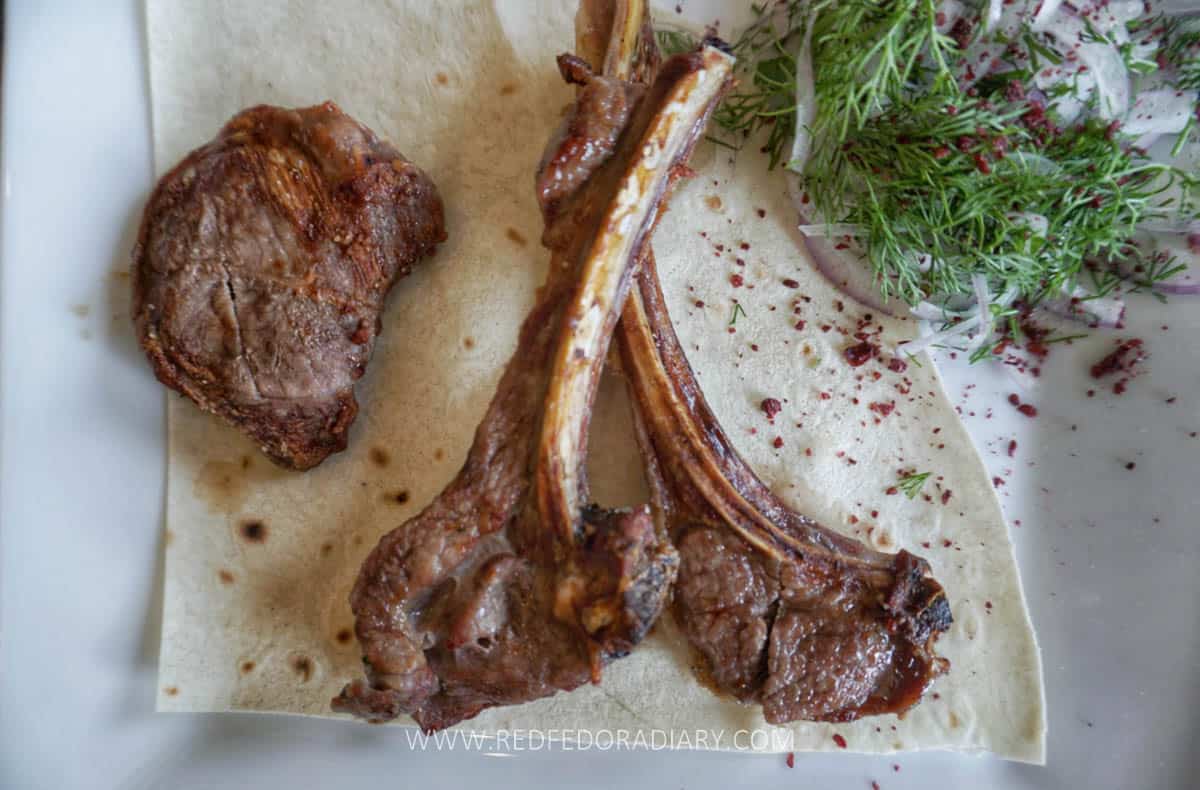
Besides pilaf, the lamb barbecue and kebabs here are especially good. We also really enjoyed the dolma, qutabs, and tava kebab (a dish made with lamb patties served with fried eggs).
Learn about Borchalo carpets
Known for their geometric patterns, bold colors, and symbolic motifs, hand-woven Borchalo carpets by Azerbaijani women were once highly valued across the wider Caucasus region and are considered an important part of the area’s cultural heritage.
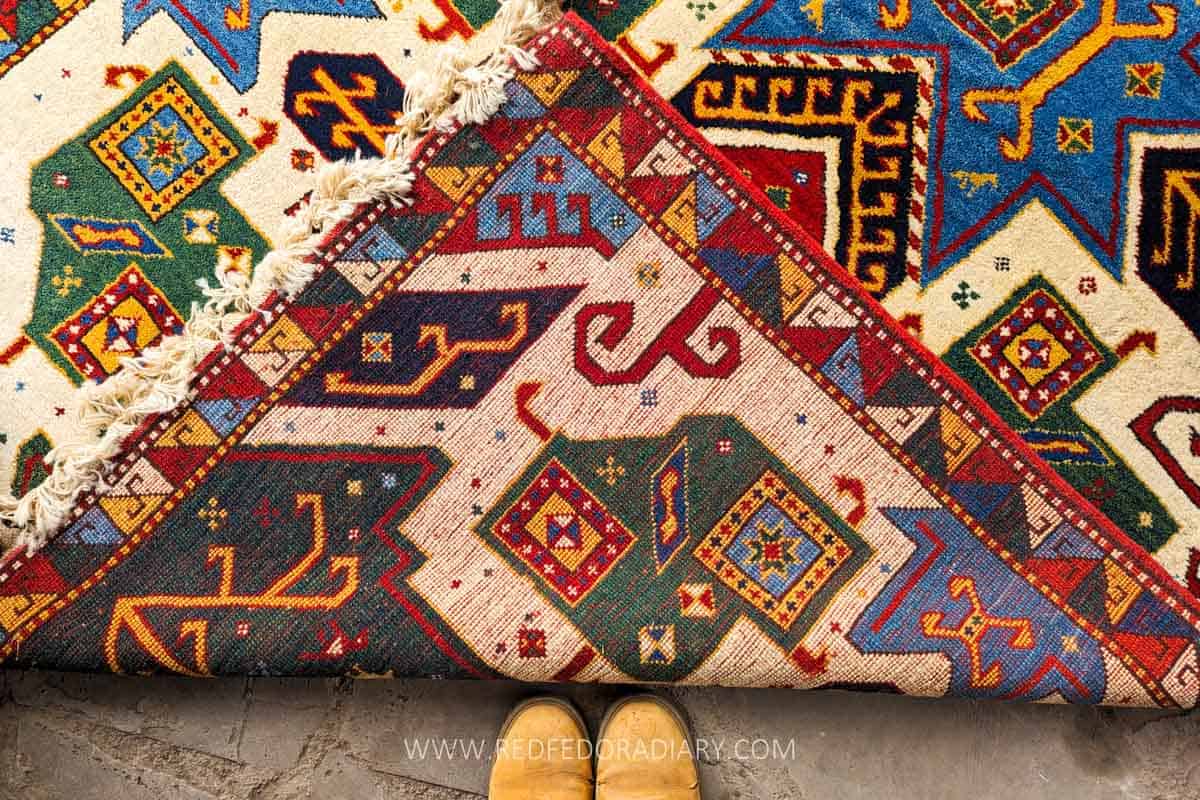
Like many traditional crafts, carpet weaving slowly declined during the Soviet period, and later industrialization brought the tradition to the brink of extinction. Thankfully, an organization called reWoven has been helping to revive the craft and work directly with local women and artisans to preserve weaving techniques and sustain the tradition.
You can visit a village known for Borchalo carpet weaving by joining a tour with reWoven or WT Georgia. These tours let you meet local weavers, learn about the meaning behind the carpets, and discover a side of Georgia that many locals, myself included, know little about.
Try traditional Azerbaijani comfort food
Besides all the Azerbaijani dishes I’ve already mentioned in this article, I think khingal and dovga deserve a separate mention.
Guru khingal is a traditional Azerbaijani dish made with square homemade noodles, ground meat, fried onions, and melted butter, usually served with a garlic-yogurt sauce on the side. While beef versions are common, Tea House Mugam also serves a lamb version.
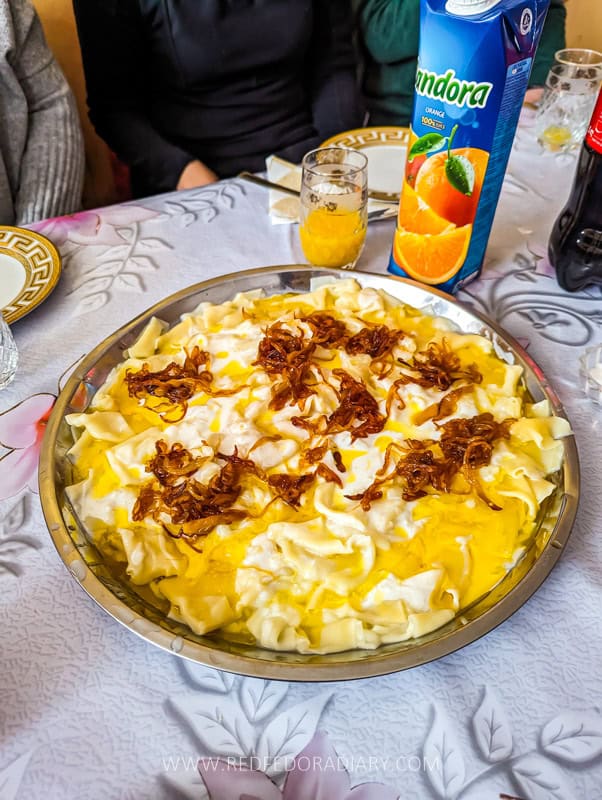
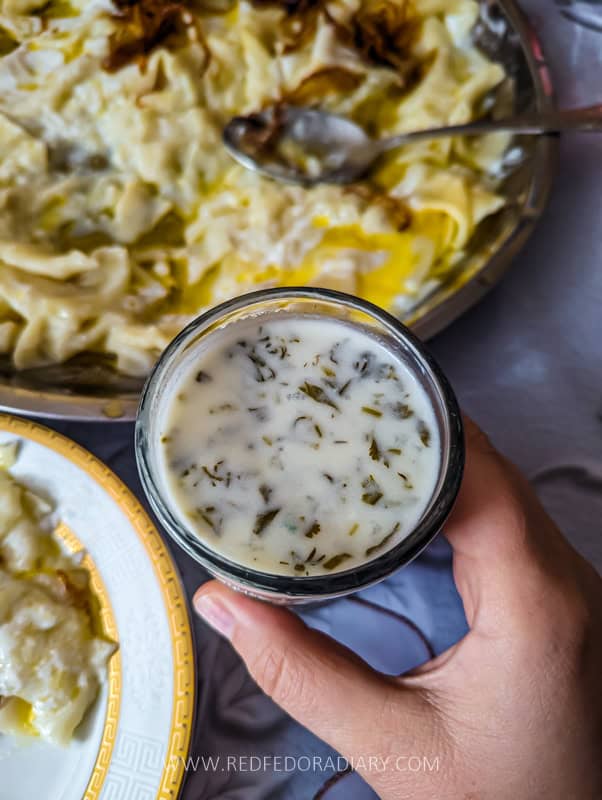
I tried khingal not at a restaurant but during a Borchalo carpet tour when a local family prepared it for us at home. They made a vegetarian version topped with crispy fried onions instead of meat.
Another dish worth trying is dovga, a yogurt-and-herb soup. Depending on the season and household recipe, it can include herbs like dill, coriander, mint, and spinach, sometimes with rice, chickpeas, or tiny meatballs. It’s traditionally served warm in winter and cold in summer.
Where to eat in Marneuli
I think Marneuli has many more interesting places to eat than tourist attractions, and honestly, that’s part of its charm. If you’re tired of standard Georgian food or want to experience the country’s diversity through its cuisine instead of its landscapes, Marneuli is a great place for that. Here’s a short list:
Tea House Mugam: As mentioned above, it’s still one of the best places to eat in Marneuli if you want to try a wide variety of Azerbaijani dishes in a more polished, comfortable setting. The restaurant is known for its pilafs, lamb dishes, kebabs, qutabs, and other traditional meals served in generous portions. The setting feels surprisingly fancy compared to much of the city, though keep in mind that the staff may speak limited English.
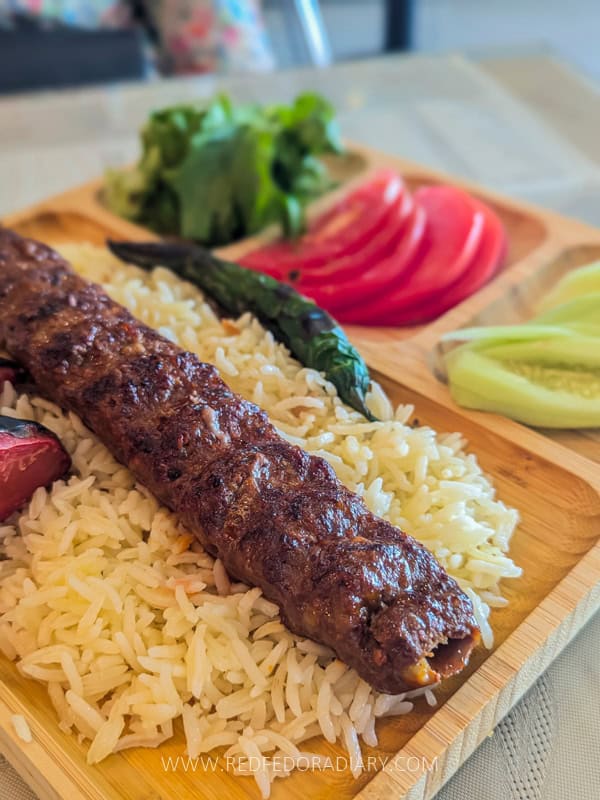
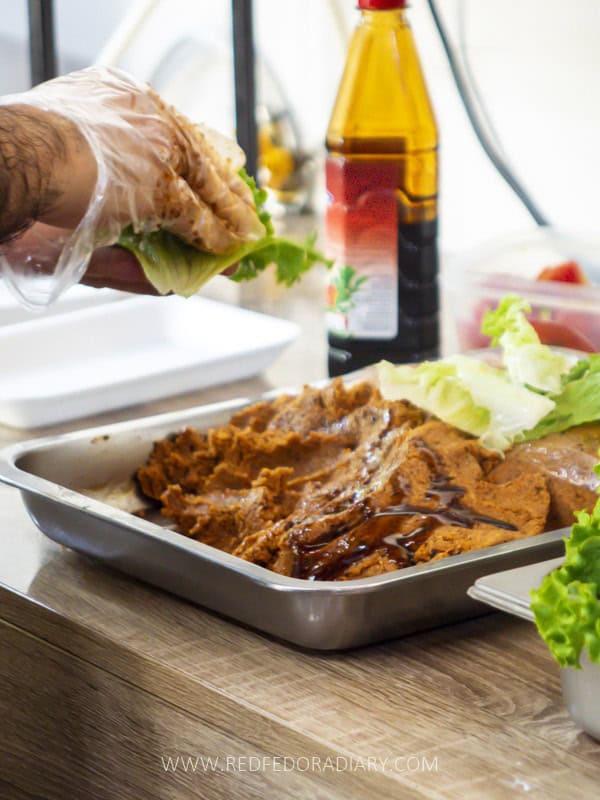
Mangal Restaurant: Translated simply as “grill restaurant,” Mangal specializes in Turkish cuisine cooked over charcoal. The menu includes dishes like lahmacun, Adana kebab, and çiğ köfte, along with various grilled meat platters and breads.
Bakur Doner Cig Kofte Salonu: This small local spot on Rustaveli Street serves what is probably my favorite çiğ köfte I’ve tried outside Turkey. The main cook is originally from the Adana region, which is well known for many famous Turkish meat dishes and street foods. I have a feeling the döner kebab here would be very good as well.
Things to do in Marneuli beyond the city
Many villages and nearby sites are also poorly connected by public transport. While I did notice a few small green local buses operating around the municipality, I couldn’t find much reliable information about their routes or timetables.
These local marshrutkas and minibusses seem to cater far more to residents than tourists, so if you want to comfortably cover multiple places in a single trip, having a car or booking a GoTrip private transfer is honestly your best option.
The latter is one of my favorite transportation services in Georgia. You book a private driver and can add unlimited stops along the route you build yourself. The prices are locked in at booking and are, honestly, much more affordable than many people expect.
Explore Bolnisi
Located west of Marneuli, Bolnisi is one of the most underrated destinations in Kvemo Kartli and easily deserves at least a day, if not longer.
The town is best known for the 5th-century Bolnisi Sioni Cathedral, one of the oldest churches in Georgia and home to the earliest known Georgian inscriptions. But beyond the cathedral itself, Bolnisi has a surprisingly layered history shaped by German settlers, medieval trade routes, archaeology, and Soviet industry.

Within a relatively small area, you’ll find old German houses, abandoned Soviet buildings, vineyards, and one of the best museums in the country.
Compared to many better-known destinations in Georgia, Bolnisi still feels very local and largely undiscovered by international tourism. If you want a more detailed itinerary, historical background, and practical tips, check out my full guide to Bolnisi.
Visit the Dmanisi Archaeological Site
One of the most important archaeological discoveries in the South Caucasus is about an hour from Marneuli: the Dmanisi Archaeological Site.
This site completely changed scientists’ understanding of early human migration after archaeologists discovered some of the oldest human remains ever found outside Africa here. The fossils, estimated to be around 1.8 million years old, helped prove that early humans left Africa much earlier than previously believed.
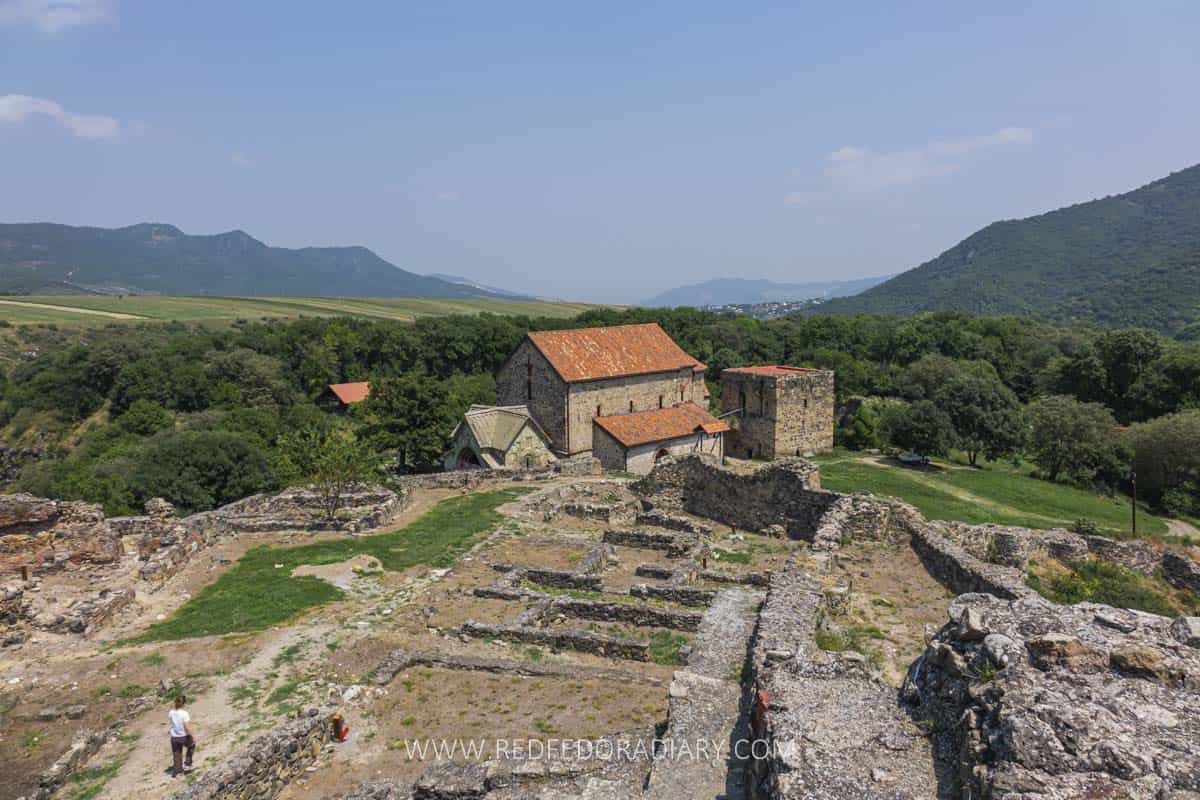
Besides its global archaeological importance, Dmanisi is also simply an interesting place to visit. The area combines medieval ruins, dramatic landscapes, stone walls, and a peaceful hilltop setting overlooking the Mashavera Gorge.
It’s important to know that the active archaeological excavation area is seasonal and usually open only from mid-May to the end of October. However, the ruins of the medieval settlement and the Dmanisi Sioni Church can still be visited year-round.
See the Abulmugi bathhouse
Tucked away from the main highway on the way to Dmanisi Archeological Site, the Abulmugi Bathhouse is another unusual historical landmark.

Dating back to the 17th–18th centuries, the bathhouse is a rare surviving example of Persian-style architecture in the region. Archaeologists uncovered it in 1977 near the ruins of the old town of Abulmugi, along with glazed ceramics, traces of the original water system, and even coins dating to the reign of Queen Rusudan.
What makes the site especially remarkable is not just its history but the fact that the entire 134-ton stone structure was relocated in one piece in 2021 to save it from destruction caused by mining activity and geological instability. The relocation became the first operation of its kind in Georgia.
Climb up to Kveshi Fortress
About 36 kilometers from Marneuli, Kveshi Fortress rises dramatically on a rocky outcrop, overlooking the surrounding valleys.

Dating back to the medieval period, the fortress once guarded important trade and military routes connecting Samshvilde, Tashiri, and Javakheti. Over the centuries, it served as a royal residence for the kings of Kartli before later becoming a stronghold of the influential Orbeliani family.
Compared to many ruined fortresses in Georgia, Kveshi is surprisingly well-preserved. Sections of defensive walls still stand, along with remnants of watchtowers and even a small stone church hidden inside the fortress complex.
How to get to Marneuli
Public transport
Getting to Marneuli is very easy and affordable by marshrutka (minibus). Tbilisi – Marneuli marshrutkas depart from two main locations in Tbilisi: Samgori Bus Station, located in front of Samgori Mall, and Station Square (Sadguri/Vagzali area).
From Samgori, marshrutkas depart approximately every 15 minutes starting at 7:50 am, with the final stop usually at Marneuli Bazaar. The journey takes around one hour, depending on traffic, and the ticket costs 3 GEL.
Marshrutkas also depart from Station Square with similar frequency throughout the day. I’ve included the exact pin locations for both departure points in my Marneuli City Map above to make things easier.
For the return journey from Marneuli back to Tbilisi (either toward Station Square or Samgori), you’ll usually need to wait near the SOCAR petrol station in the city. The last marshrutka back to Tbilisi departs around 6:10 pm.
Own car
Exploring the municipality and nearby areas by car offers much more flexibility, since the city doesn’t have many tourist attractions within its boundaries. If you need to rent a car in Georgia, I recommend LocalRent. They usually have competitive prices, a good range of vehicles, and often include insurance in the base rate.
GoTrip private transfer
If you don’t want to drive but still want the flexibility of stopping wherever you want along the way, GoTrip is one of the best options in Georgia.
Think of it as a long-distance private taxi service where you can build your own route, add unlimited stops, and travel at your own pace. It’s especially useful if you want to combine Marneuli with places like Bolnisi or Dmanisi on a single-day trip.
Plan Your Trip to Georgia Like A Pro