
Europe in Winter: 14 Lesser-Known Destinations to Visit
Europe in winter isn’t just about the same handful of famous cities and festive markets you see everywhere. After spending time traveling across the continent in the colder months, I realized that some of the most memorable experiences come from places that don’t usually make the typical “best winter destinations” lists.
This guide brings together a mix of places shared by fellow travel bloggers who know these areas firsthand. It’s a look at European winter destinations that feel a little different—whether that means quieter towns, mountain escapes, or cities that take on a completely different atmosphere once the temperatures drop. If you’re planning a winter trip and want something beyond the obvious choices, this is a good place to start.
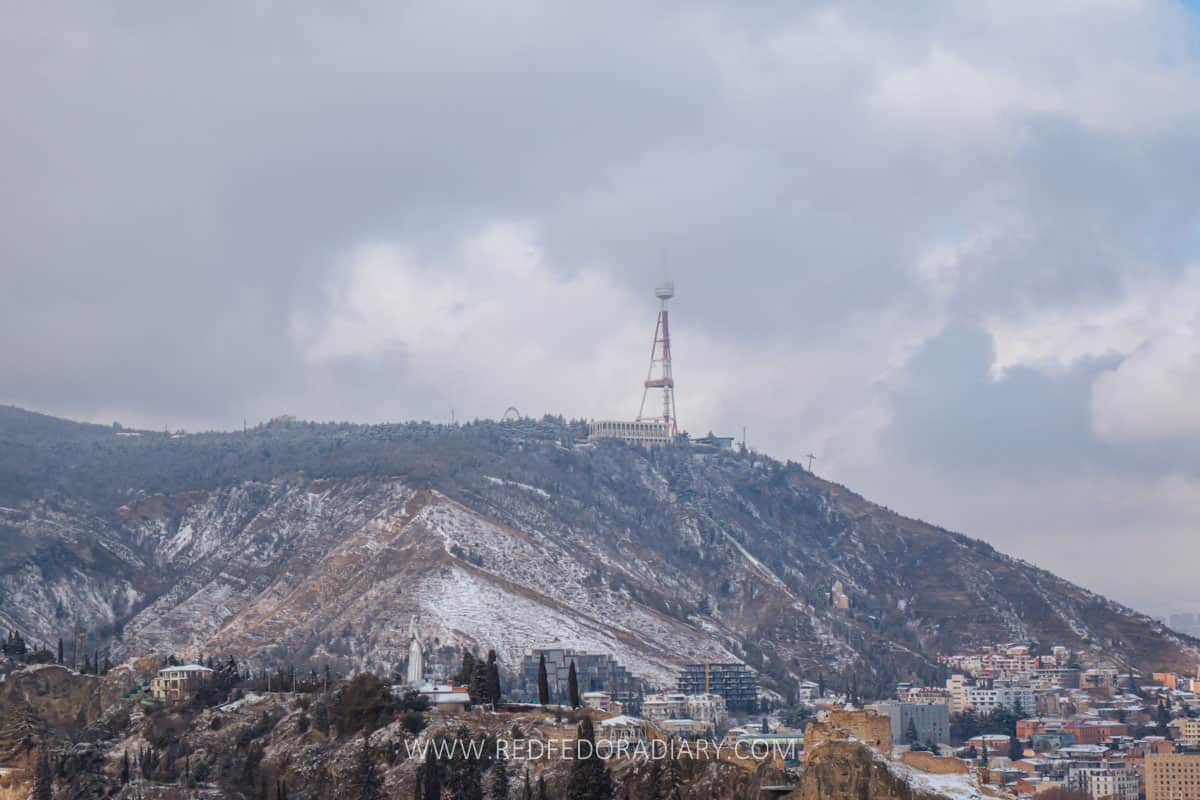
What I like about winter in Europe is how varied it is. Some destinations are all about seasonal traditions—local festivals, smaller-scale Christmas markets, or end-of-year celebrations around the New Year—while others offer a slower pace that’s hard to find during peak travel months.
This list also reflects different types of winter travel. You’ll find places that work well for a relaxed city break, areas known for outdoor winter activities, and even a few options that fit into a longer road trip. The idea is to give you a curated set of places worth considering if you’re traveling in Europe in winter.
Disclaimer: Some of the links in this post are affiliate links, which means I may earn a small commission if you buy something through them—at no extra cost to you. It helps support my blog and lets me share real, first-hand travel tips. Learn more
Best places to visit in Europe in winter that aren’t overcrowded
Tbilisi, Georgia
Tbilisi is one of those places that doesn’t immediately come to mind when thinking about winter destinations Europe has to offer—but that’s exactly why it works so well. Visiting in the colder months feels different here: slower, more local, and without the crowds that fill the city in other seasons.

If you’re planning European winter city breaks, Tbilisi stands out for how long the festive season lasts. The Christmas markets and decorations usually stay up well into January, which means you’re not limited to December travel.
This also makes it a great option for Europe in January, when many other cities have already packed everything away. You’ll also get to experience local Christmas traditions that aren’t widely known, like Bedoba—the day of fate believed to set the tone for the year ahead—and the Alilo parade, a large-scale procession that takes place after Orthodox Christmas.
Another reason Tbilisi works well in winter is the weather. Compared to much of the continent, it falls into the category of warm European destinations in December, with daytime temperatures typically ranging between 7–12°C (45-54°F) and often a bit higher on sunny days. It’s comfortable enough to explore the city on foot, without dealing with freezing conditions.

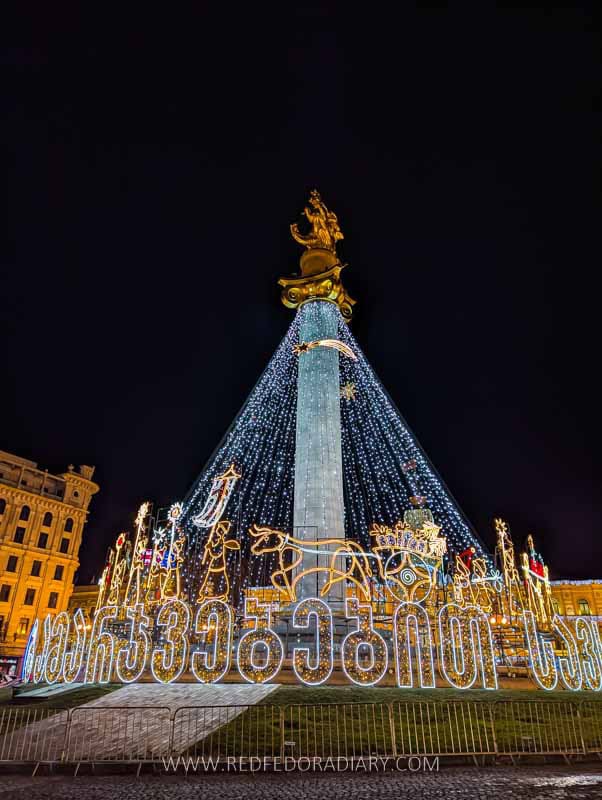
One of the most distinct winter experiences here is visiting the sulfur baths in Abanotubani. Soaking in naturally heated mineral water is something the city is known for, and it’s especially appealing after a day of walking around in cooler weather.
For a city as compact as Tbilisi, there’s plenty to keep you busy. You can spend your time wandering through ancient cobbled streets, taking in the mix of architectural styles shaped by different empires, stopping for long meals filled with Georgian dishes, and stumbling upon small, unexpected details that give the city a layered, lived-in feel.
Lyon, France
Known as the capital of French gastronomy, Lyon is less well-known than its counterpart, Paris. Overlooked by the Fourvière church, it looks magical in winter, especially during the Golden Hour. There are many things to do in Lyon throughout the year, and winter adds a completely different atmosphere.
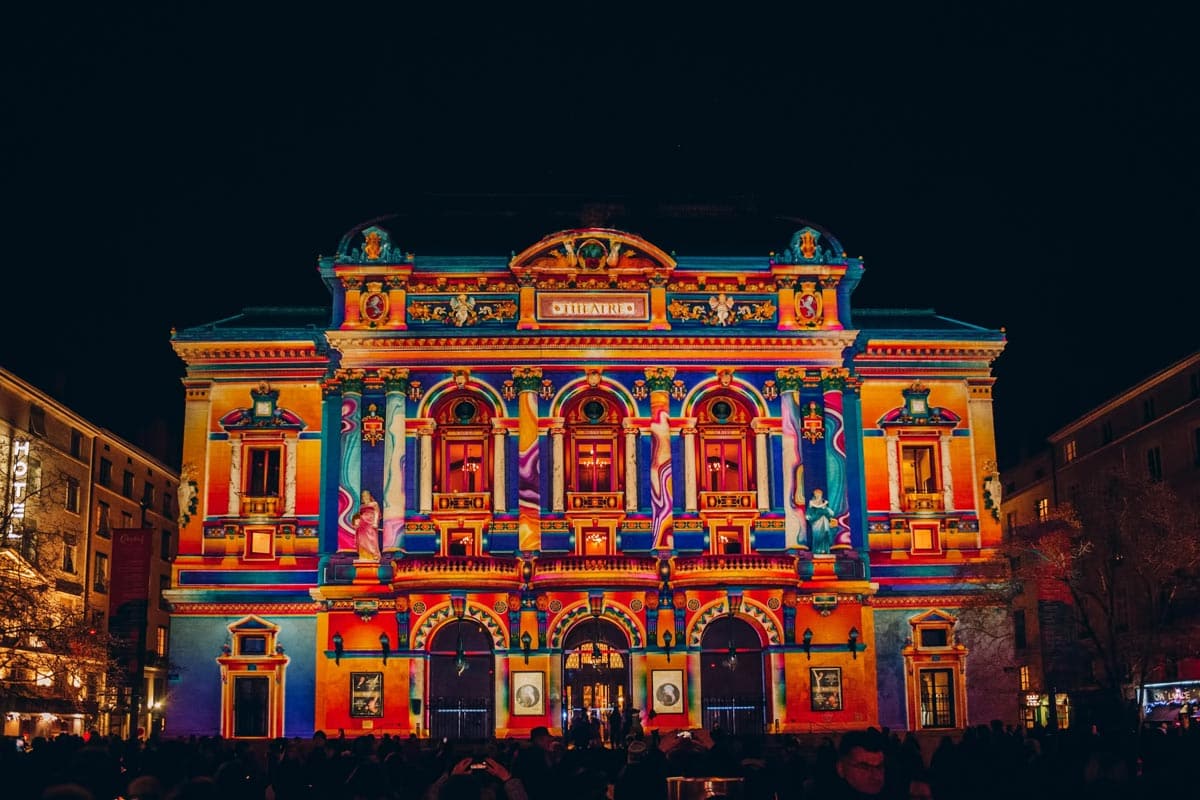
It is one of the great European cities to visit in December for its winter markets, which offer regional food and activities. One of the unique events that takes place earlier in the month is the annual Fête des Lumières (or lights festival), which transforms the city with light art. For any kid or adult, it is truly magical.
The weather stays between 0-8°C (32-46°F), which is completely comfortable for exploring. As you’re walking through the cobblestones of Vieux Lyon, grab a hot chocolate and praline pastry for some extra love and cozy comfort. Then enjoy this food tour or try local cheese at Bouchons (an authentic Lyon restaurant) serving comforting, wintery local dishes.
To escape the cold, museums like the Museum of Fine Arts of Lyon, Confluence, and Gadagne become ideal warm refuges. There’s something so cozy about staring at a painting at a fine arts museum while snow falls outside.
Recommended by Lyon Trip
Plan Your Trip Like A Pro
Arachova, Greece
Greece usually is not what first comes to mind for a European winter destination, especially as a ski holiday, but spend some time in the season here, and you will quickly hear about Arachova. Set on the slopes of Mount Parnassos in central Greece, this mountain town has earned the nickname “the Mykonos of winter” for its lively atmosphere, stylish stays, and busy restaurants.
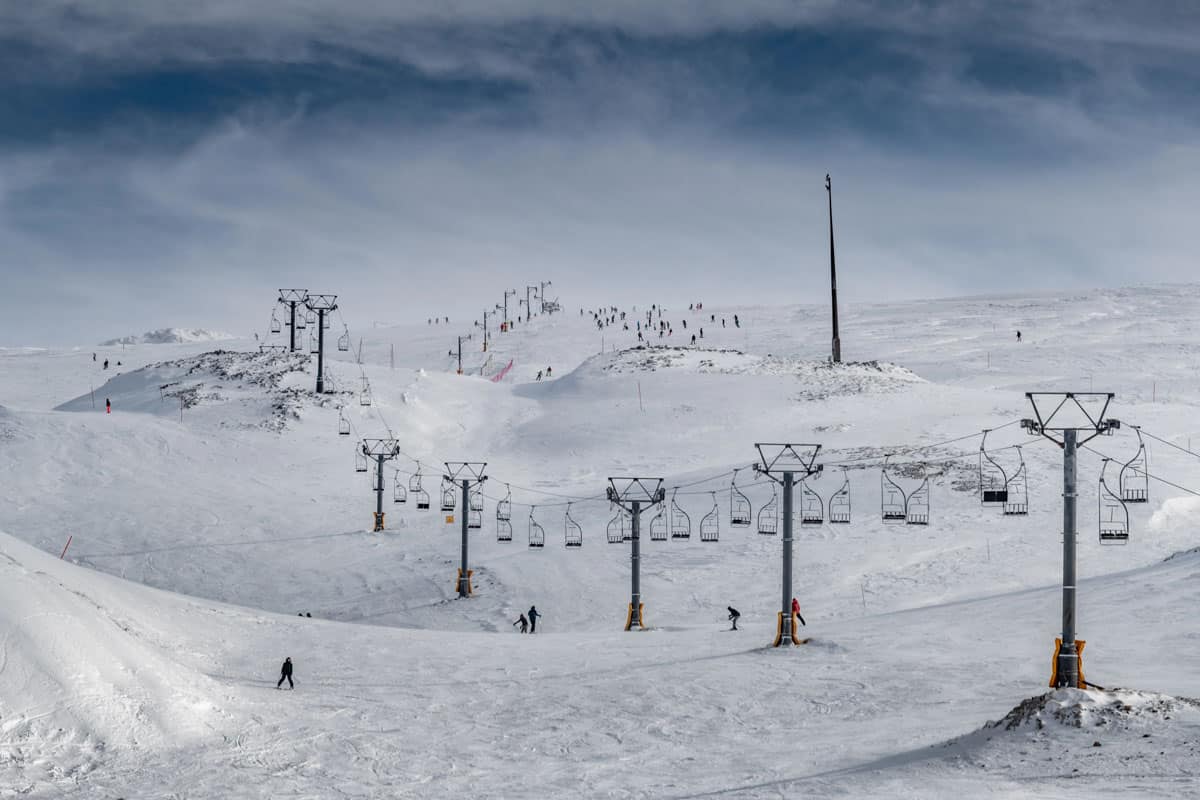
Days here are spent skiing or snowboarding at the Parnassos Ski Center, the largest in the country, with runs suited to beginners through to more experienced skiers. Off the slopes, the town itself is just as much a draw, with traditional tavernas, modern Greek restaurants, and cafés serving strong Greek coffee throughout the day.
If snow sports are not your thing, there are hiking trails nearby in the National Park of Mount Parnassos, which take on a different vibe in winter.
It is also one of the more affordable ski destinations in Europe, with lower lift pass and accommodation costs. Best of all, it is just a two-hour drive from Athens, making it an easy long weekend escape—and if you want the freedom to explore nearby spots, renting a car (I recommend LocalRent for its competitive prices and wide selection) is a convenient option.
Recommended by Urban and Beyond
Black Forest, Germany
The Black Forest in southwest Germany is pretty all year round, but becomes especially magical in winter. It’s no surprise that many fairy tales originate from this region. Each town has its own unique atmosphere, making the Black Forest an ideal destination for travelers seeking a cozy and authentic winter experience.
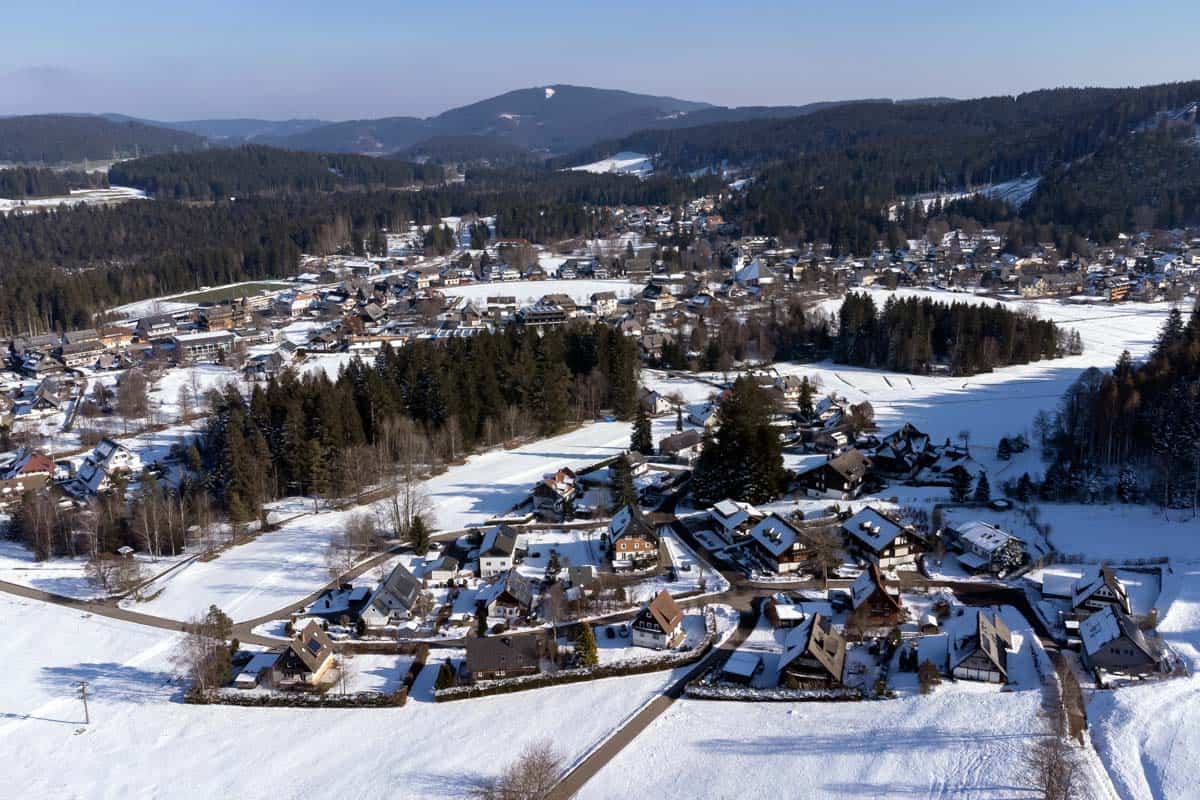
The Ravenna Gorge Christmas Market is certainly a highlight, situated beneath a dramatic railway viaduct deep in the forest. Reaching it by a torch-lit evening walk through the valley adds to the fairytale atmosphere.
Another favorite is the Freiburg Christmas Market, where visitors can browse stalls selling handmade gifts, knitwear, sweets, and ornaments, and even take part in workshops such as candle-making or biscuit baking.
Base yourself in places like Freiburg or Hinterzarten during your winter trip for easy access to multiple markets. Hiring a car can make it easier to go from town to town, as well as giving you the chance to explore some of the more rural roads that look very pretty in the snow.
Recommended by A Life Well Travelled
Nafplio, Greece
Located in the Peloponnese region, Nafplio is one of the warm winter destinations in Europe that lives up to those charming first impressions portrayed in photos and recommendations you might have seen online.
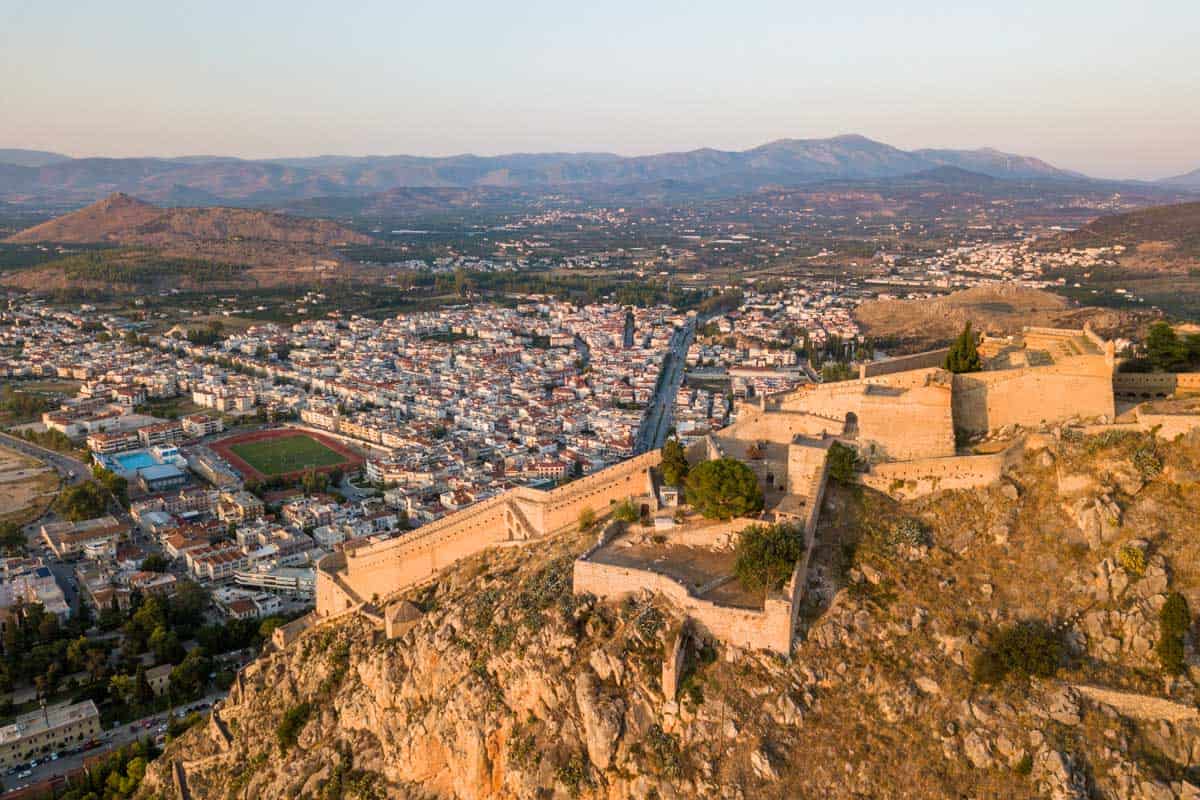
In winter, it has far fewer tourists, a much more relaxed atmosphere, and milder weather compared to most of Europe, usually around 10–15°C (50-59°F) during the day, making it ideal for walking around comfortably without dealing with summer heat or freezing temperatures.
The easiest way to get there is from Athens. The drive takes about 2 to 2.5 hours, and the roads are straightforward. You can rent a car at the airport if you want the flexibility to explore the area, but there are also direct buses from the capital if you prefer not to drive.
What you’ll likely enjoy most is simply wandering around the town. The cobbled streets, colorful houses, and small balconies create a distinct atmosphere. It’s also worth visiting Palamidi Fortress for the views and taking a walk along the seaside promenade. And remember to make time to stop at a café for dessert—L’amande is a great option.
Recommended by Traveling Outside the Box
Durbuy, Belgium
Have you heard of Durbuy? Often called the “smallest city in the world,” this hidden gem in the heart of the Belgian Ardennes feels like a real-life fairytale. It becomes especially magical in winter, as festive lights illuminate the narrow cobblestone streets and medieval stone houses are wrapped with seasonal decorations.
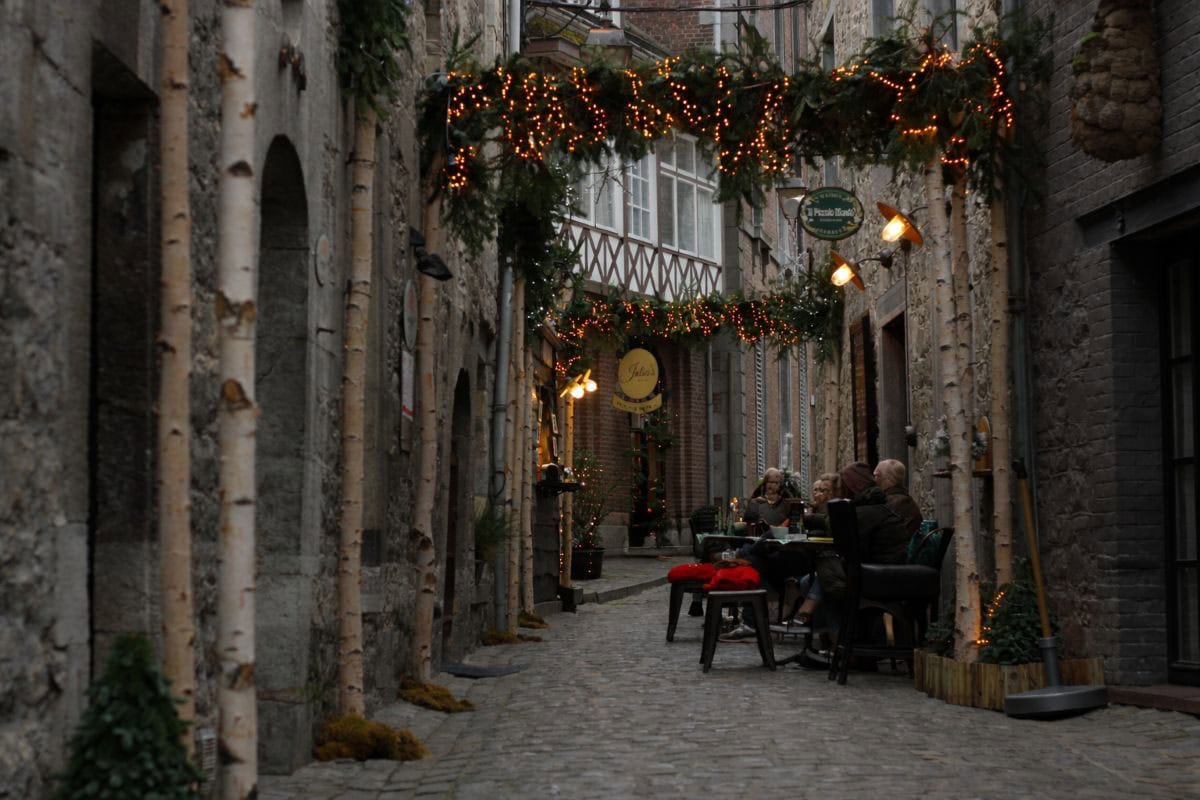
Winter in Durbuy is perfect for slow, cozy days. Visitors can wander through the historic old town, browse charming boutiques, or warm up in traditional cafés. Throughout December, the Durbuy Christmas Market transforms the town into a festive wonderland, filled with local crafts, while the aromas of food and mulled wine linger in the air.
For outdoor lovers, the surrounding forests offer scenic winter hikes, and nearby hills offer opportunities for cross-country skiing, along with peaceful walks along the Ourthe River.
Because Durbuy is compact and popular, consider visiting during the week for a quieter experience. It’s also recommended to book accommodation well in advance, as the festive season draws crowds from across the region.
Recommended by Vanderlust Journey
Gudauri, Georgia
Gudauri is one of the best places to spend winter in Europe if you’re looking for an alternative to more crowded and expensive ski resorts. Located along the Georgian Military Highway, it offers a different kind of winter experience—one that feels more open, less commercialized, and still relatively under the radar.
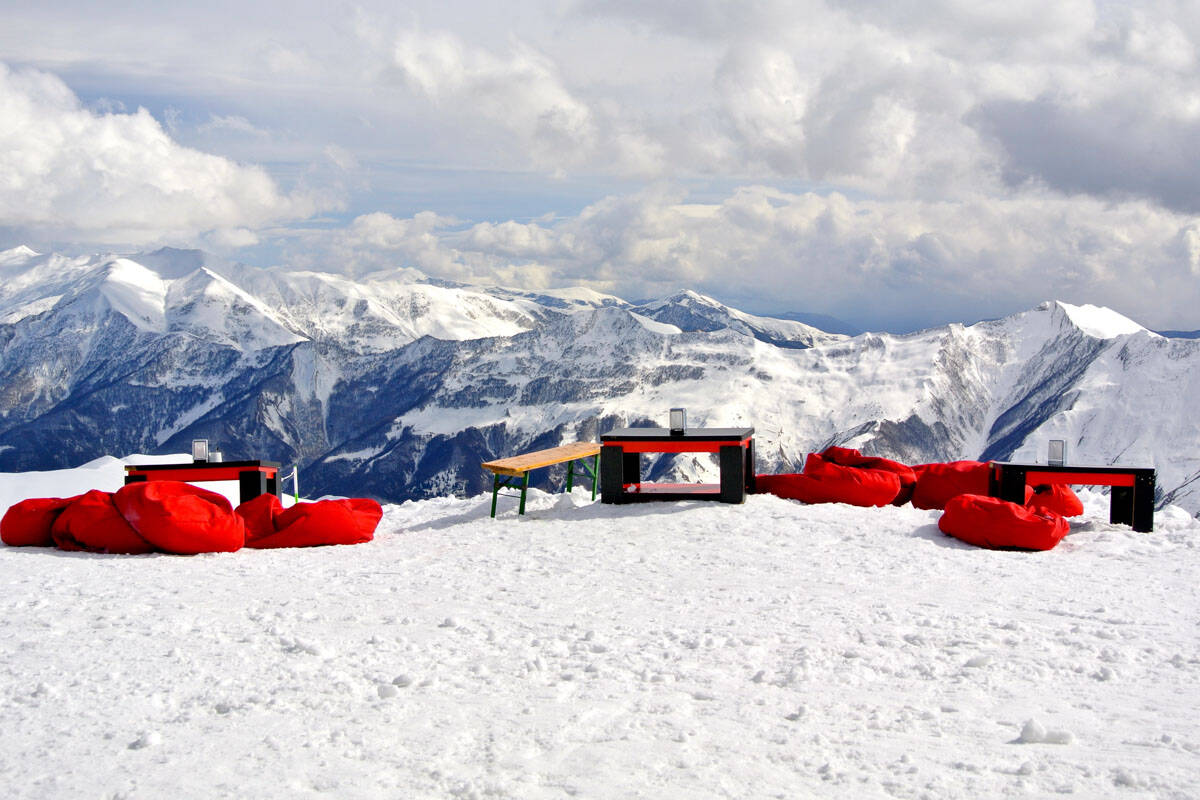
The ski season depends on snowfall, but it typically runs from mid-December through March, with the most reliable conditions between the end of January and mid-February. During this time, you can expect consistent snow coverage and ideal conditions for both skiing and snowboarding.
Gudauri sits high in the Caucasus Mountains, with wide, open slopes and uninterrupted views that stretch across the range. There are around 14 ski lift lines serving a variety of runs, from beginner-friendly slopes to more advanced terrain. You’ll also find a snow park, options for night skiing, and plenty of space for freeriding, which the area is particularly known for.
Beyond the slopes, Gudauri has a relaxed atmosphere that appeals to travelers who want a straightforward winter escape without the heavy après-ski scene you’ll find in some Alpine resorts.
Pyrenees Mountains, France
Winter in the French Pyrenees, a.k.a French Alps, is one of those things people don’t think about, and that’s exactly why it’s so good.
The Pyrenees are the mountains between France and Spain. The French side is much more laid-back than the Alps and also much cheaper – you get the same snowy peaks but without the high prices or big crowds.
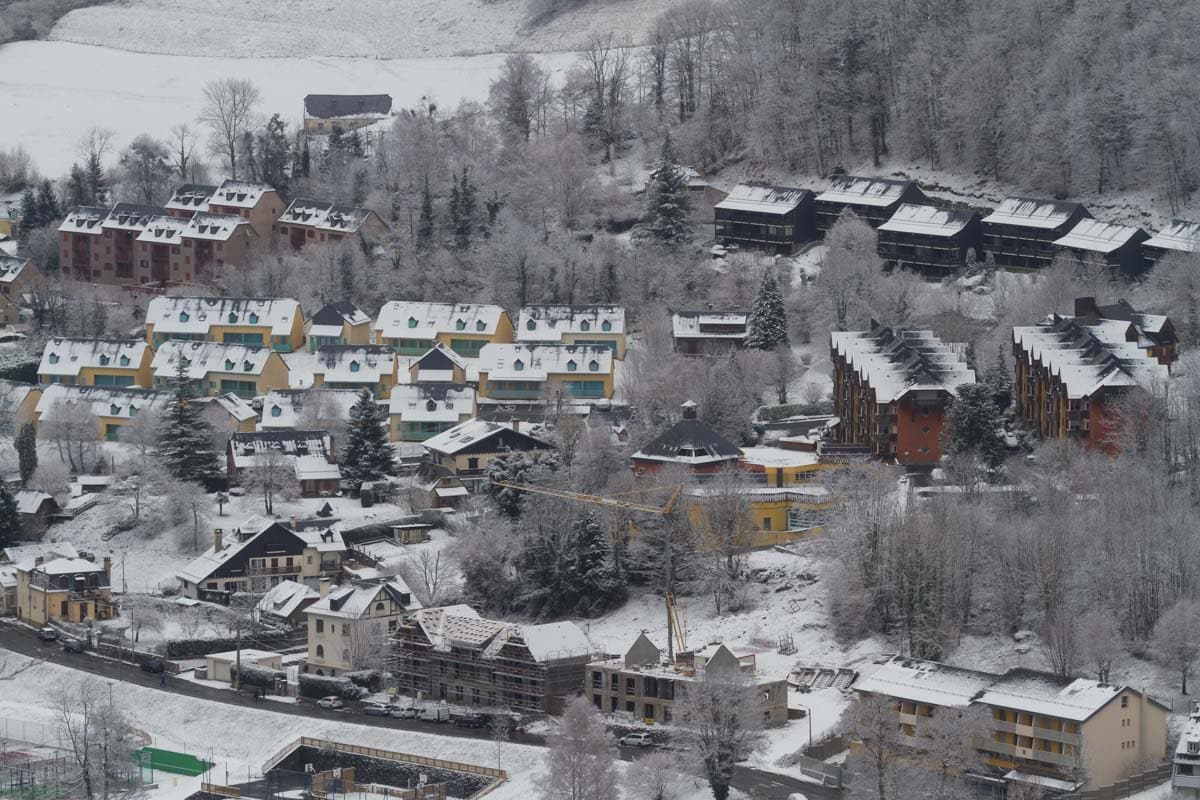
What distinguishes it from others is the atmosphere – it’s quieter and more local. The ski resorts, like Cauterets or La Mongie, don’t feel crowded or overdeveloped.
You can ski in the morning and then spend the afternoon enjoying winter activities like strolling through a small village that really feels lived-in, taking it slow with short walks in the snow, or visiting a thermal spa. If the weather is clear, go up to Pic du Midi. There, you have a full panorama of the snow-covered mountains.
Be sure to check the weather before driving, keep snow chains in your car, and don’t pack your Pyrenees itinerary too full. The mountains set the pace here.
Recommended by Explore With Ersilia
Gdańsk, Poland
Gdańsk quietly stands out as a great winter destination in Europe, especially if you’re drawn to historic cities with character. Located in Eastern Europe, it offers a mix of architecture, history, and a festive atmosphere.

The Old Town is the highlight, with rows of colorful buildings lining Długi Targ (Long Market)—one of the city’s most recognizable streets. Even in winter, it’s lively enough to explore at a relaxed pace, with seasonal decorations and Christmas Market adding to the atmosphere, making Gdańsk one of the best European cities in winter.
For a relatively small city, it has a strong museum scene. The Museum of the Second World War is one of the most comprehensive in Europe, offering a detailed look at the war’s impact, while the Amber Museum focuses on one of the region’s most well-known natural materials and its history. Both are worth including in your Gdansk itinerary, especially during colder days.
If you have extra time, winter is still a good season for short day trips to nearby towns, and within the city itself, head to Zaspa if you’re interested in Soviet-era urban planning and large-scale street art—this residential district is known for its massive murals and gives a different perspective on the city beyond the historic center.
Óbidos, Portugal
Tucked within medieval walls just an hour north of Lisbon, Óbidos transforms each winter into one of the most magical places in Portugal, yet it remains surprisingly under the radar compared to Europe’s larger Christmas markets.
Its medieval walls and castle are the perfect backdrop for the annual Vila Natal, Óbidos’ very own Christmas village from late November to early January. Here, you can wander through twinkling streets filled with seasonal stalls, an ice rink, and funfair attractions. There’s a Santa Claus village for children, live performances, and even themed areas inspired by fantasy worlds.
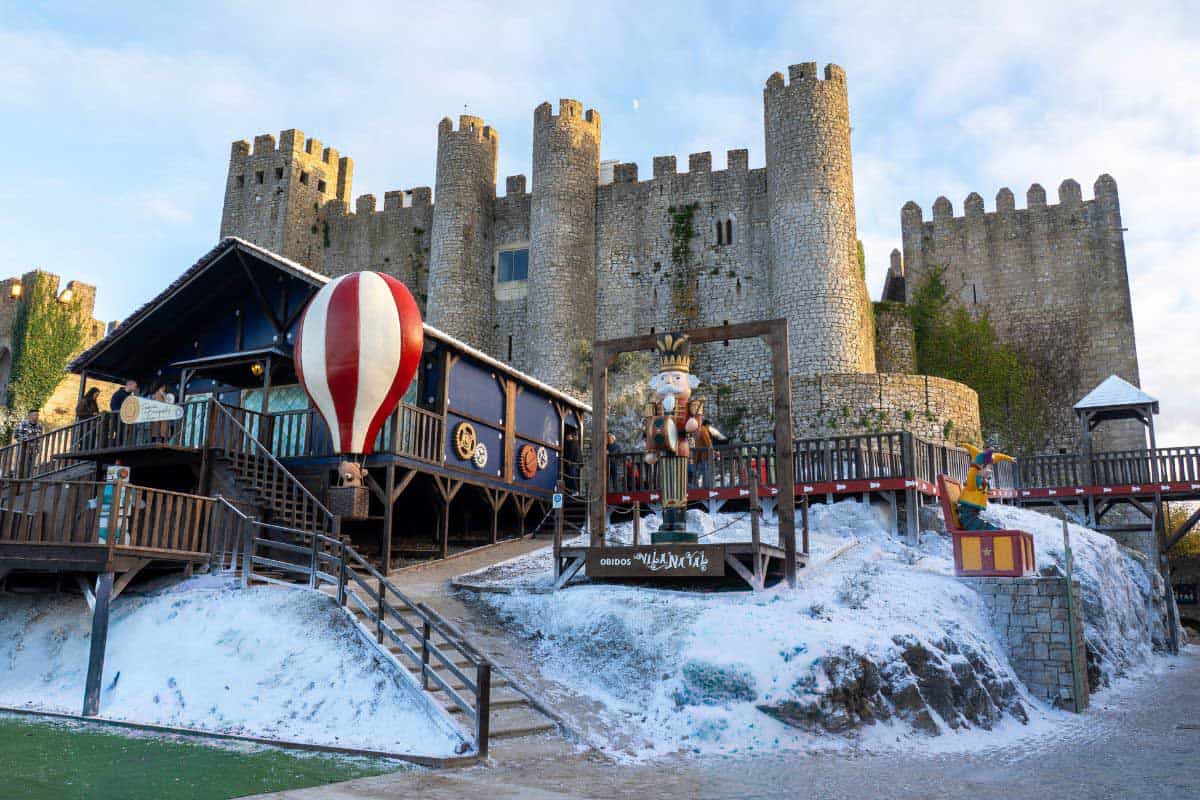
Adults can sip mulled wine or ginjinha (the region’s famous cherry liqueur) while browsing local crafts and seasonal treats. The setting itself, the castle walls, the cobbled lanes, and the whitewashed houses, add a whimsical atmosphere you simply don’t get in larger, more commercial destinations.
Apart from being one of the warmest winter destinations in Europe, what makes Óbidos so appealing is precisely its scale. It’s festive without being overwhelming, offering a more authentic Portuguese Christmas experience. You won’t find massive crowds like in Central Europe, but rather a relaxed, charming celebration grounded in typical Portuguese traditions and gastronomy.
Getting there is easy: from Lisbon, it’s about 1 hour by car, or you can take the bus from Campo Grande, which runs regularly and drops you near the village entrance. For those seeking a festive winter holiday in Europe with character, history, and fewer crowds, Óbidos is one of Portugal’s best-kept Christmas secrets.
Recommended by We Travel Portugal
Alicante, Spain
Alicante usually doesn’t come up as a destination for this season, but it works surprisingly well—especially if you’re looking for a European winter break from colder places.
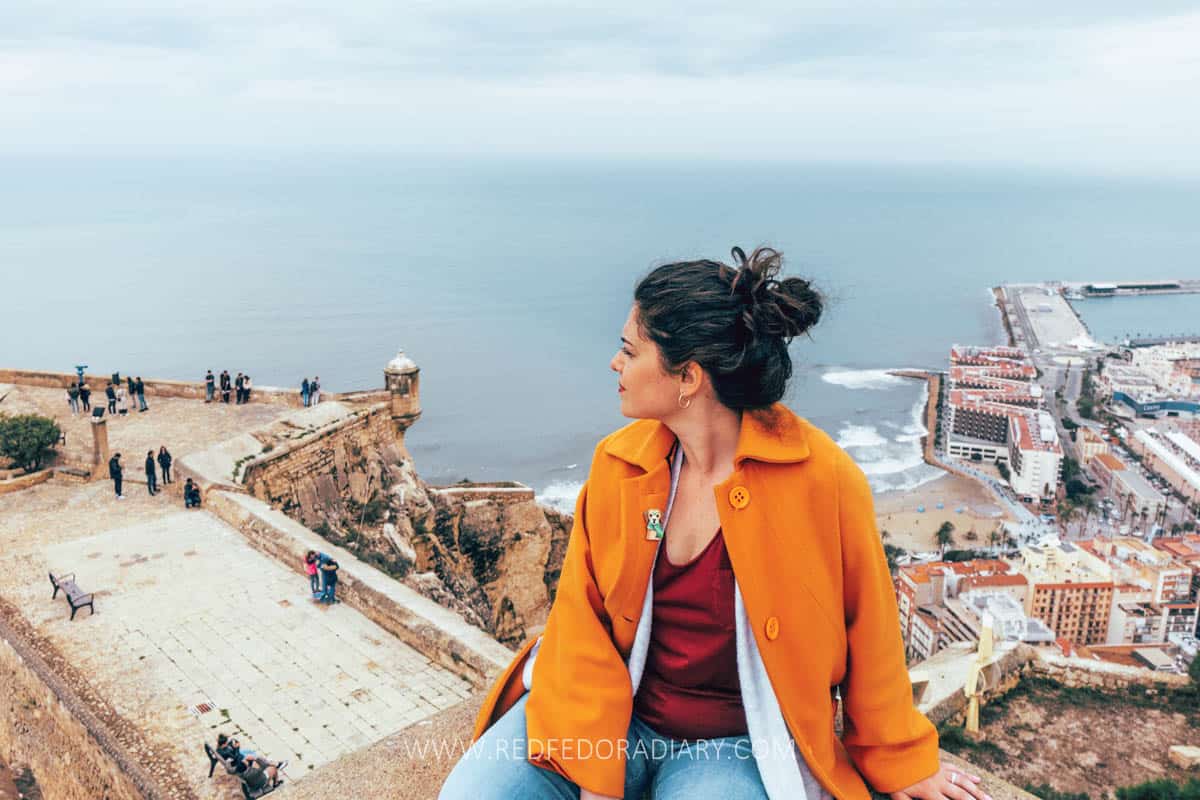
The city itself is compact and easy to explore, with a historic center and the impressive Santa Bárbara Castle overlooking the coastline. Even in winter, you’ll get plenty of sunny days, which make walking around feel completely different from colder parts of Europe. While it’s known as a beach destination, Alicante still holds up in the off-season.
There’s also a good mix of indoor activities, including several free museums, making it a practical option if the weather isn’t ideal. You can easily fill a couple of days exploring the city at a relaxed pace.
Alicante also works well as part of a broader winter itinerary in Spain. From here, you can explore more of the Costa Blanca region, visit nearby towns, or simply use it as a base for a slower, warmer winter trip.
Rugen, Germany
Tucked away in northern Germany, Rügen feels like one of those secret places that quietly come alive in winter—without trying too hard. While most people chase ski resorts, Rügen offers something softer and far more atmospheric. Think empty beaches, dramatic chalk cliffs dusted with snow, and that crisp Baltic air that makes every walk feel refreshing.
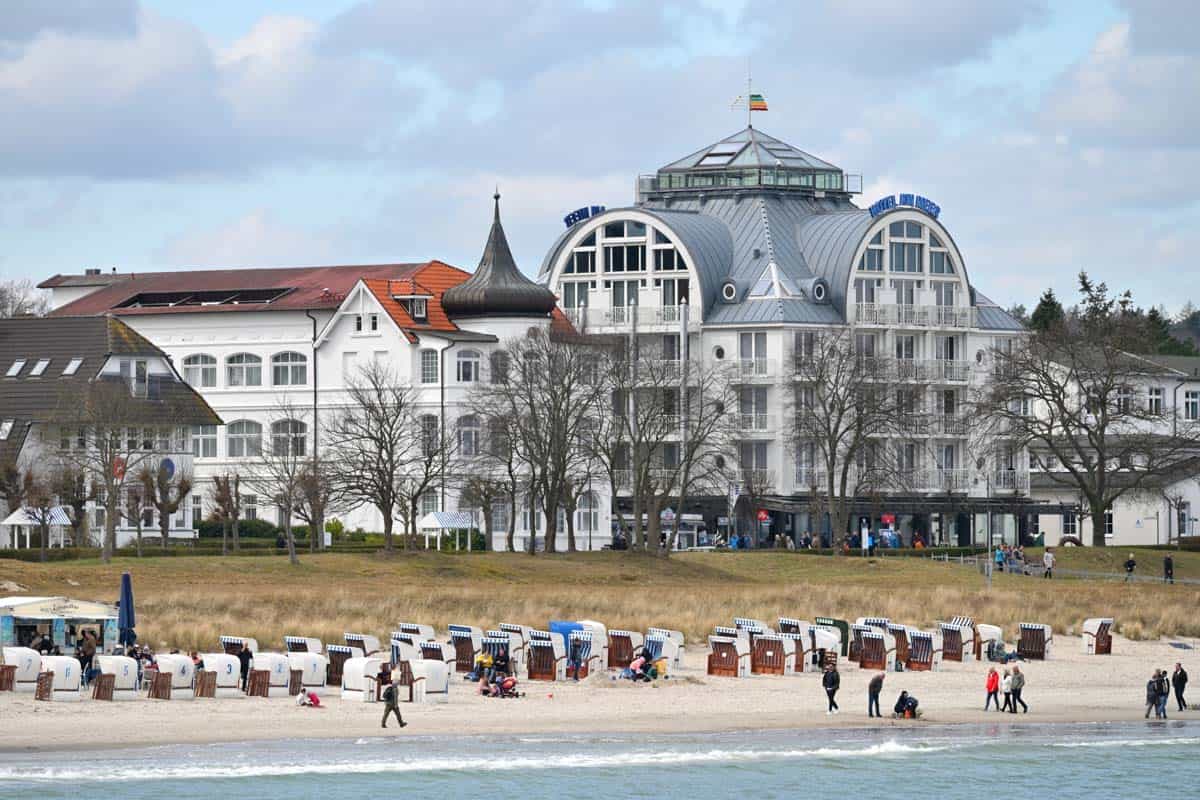
One of the things to do here is walking through Jasmund National Park. The trails lead you to the iconic Königsstuhl, and in winter, it feels almost surreal—quiet, misty, and completely uncrowded. The seaside town of Binz is another great stop, especially for a slow stroll along its pier followed by a cozy café break.
Rügen isn’t only about skiing or ticking off attractions. It’s about slowing down—long walks, warm cafés, and embracing the stillness. Winter here is cold and windy, so layer up well. Public transport is limited, so renting a car makes exploring much easier.
Recommended by Footloose Dev
Wrocław, Poland
Wrocław is one of the best places in Europe to go in winter if you’re looking for a historic city with a playful side. The heart of the city is the Old Town Square (Rynek), where the Christmas Market takes over during December.

With its colorful townhouses as a backdrop, it’s easy to see why Wrocław fits into lists of the best December vacations in Europe. The market itself is one of the more atmospheric ones in the region, with stalls spread across multiple sections, themed decorations, and plenty of local food to try.
Beyond the main square, what makes Wrocław stand out is its quirky side. The city is known for its hundreds of small bronze dwarf statues scattered throughout the streets. Finding them turns into an informal treasure hunt as you explore, but they also carry a deeper meaning—they originated as a symbol of resistance during the anti-communist movement in the 1980s.
Wrocław also works well for classic winter city breaks in Europe with cobbled streets, Gothic and Baroque architecture, and islands connected by bridges along the Oder River. Even in colder weather, it’s easy to move between sights without long distances, making it a practical and enjoyable winter stop.
North Cape, Norway
If you’re looking for one of the best winter vacations in Europe that feels truly wild and unforgettable, North Cape in northern Norway is about as far as you can go – literally!
North Cape (or Nordkapp) is a dramatic cliff edge at the very top of mainland Europe. And while it’s not technically the northernmost point, it still feels like you’re standing at the edge of the world, with nothing but the endless Barents Sea stretching out in front of you.
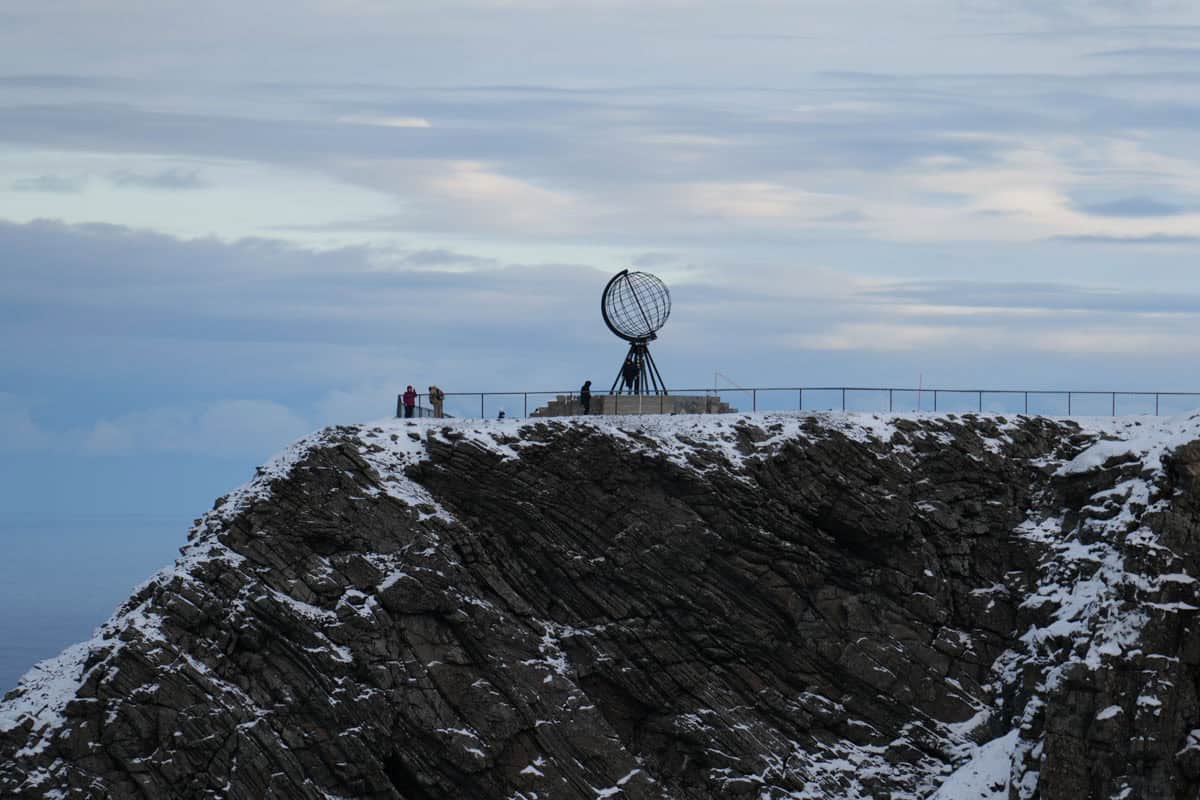
There’s even a famous globe monument at Nordkapp, which is the perfect spot for photos! But it’s the vast, empty landscape that really makes it feel so remote and worth visiting – especially in winter, when the snow-covered landscapes look even more surreal.
And getting there feels like part of the adventure too, as you need to join a snowplow convoy to safely reach the cape through heavy snow and Arctic conditions!
Winter weather can be very unpredictable in Norway, so always check the convoy times in advance (or join a guided tour if you’re unsure about driving). And make sure you have proper thermals for the extreme Arctic temperatures.
Recommended by Where’s Katie Now
How to plan a winter trip in Europe
Planning a winter trip looks a bit different compared to peak-season travel, and that’s exactly what makes it easier in many ways. If you’re traveling during the season, you’ll often deal with fewer crowds, better availability, and more flexibility—but there are still a few things worth planning ahead.
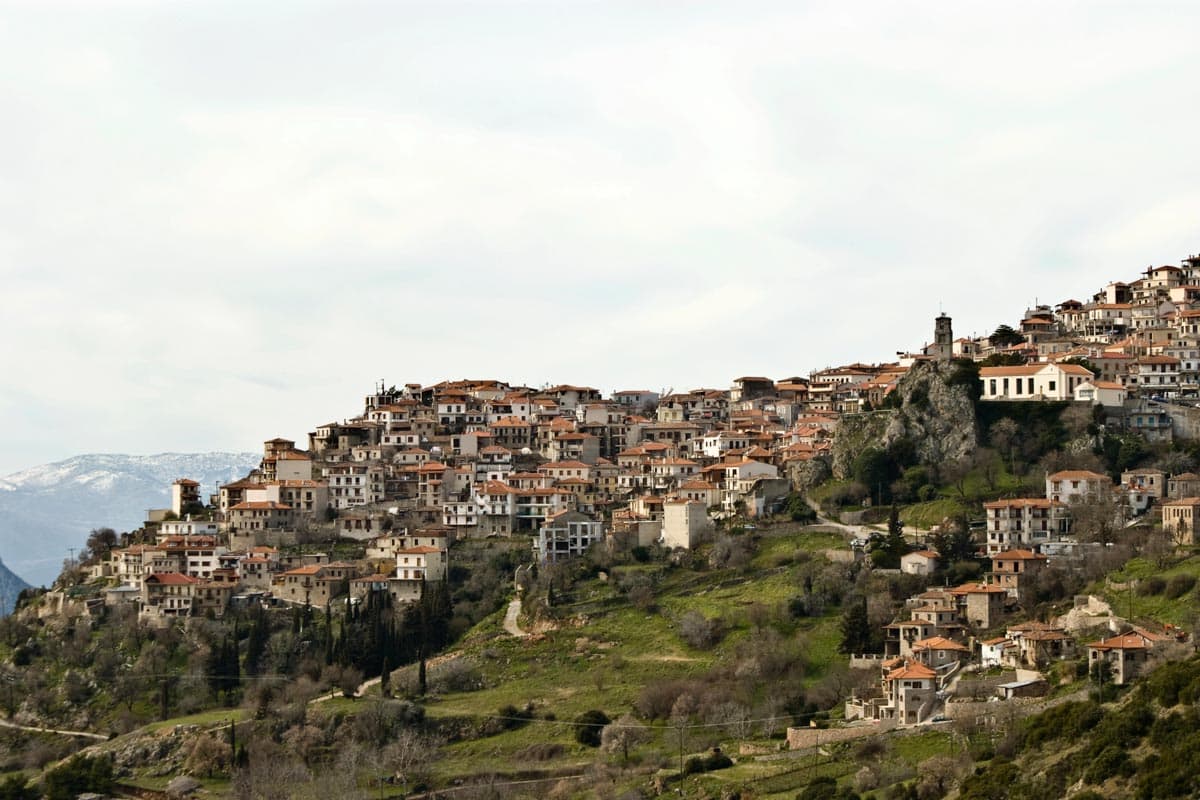
Your Europe in winter itinerary should be loose rather than stuffed with everything in. Winter weather can shift quickly, especially if you’re moving between cities and mountains, so it helps to keep some flexibility in your route. If you’re visiting multiple destinations, group places by region to avoid long travel days in colder conditions.
If you’re planning a trip to Europe in winter with kids, focus on destinations that are easy to navigate and don’t require too much time outdoors in freezing temperatures. Cities with compact centers, good public transport, and indoor attractions (museums, cafes, markets) tend to work best.
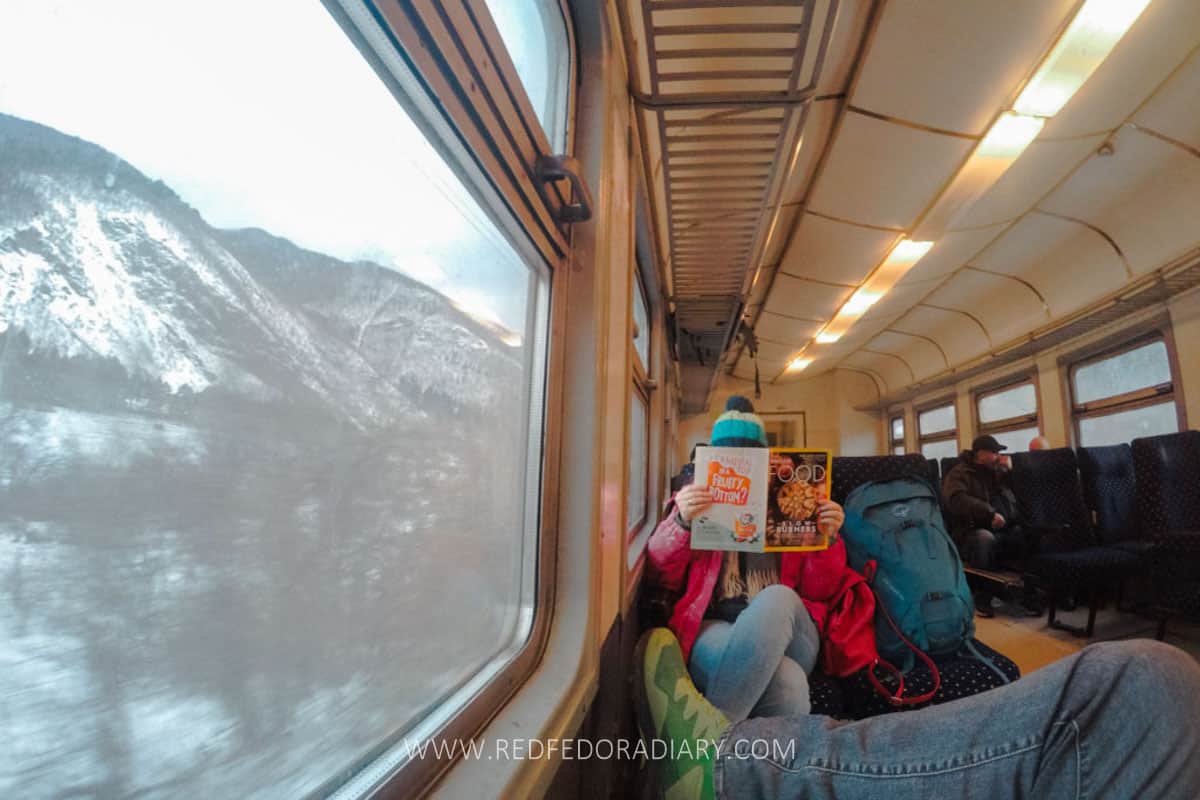
You can also keep your itinerary flexible by planning transport as you go. For shorter distances or when you’re comparing different options, platforms like Omio are useful for checking trains, buses, and flights in one place, along with schedules and prices. If you’re planning longer train journeys across countries, Rail Europe makes it easier to book tickets and plan routes across the continent.
It also helps to arrange a smooth arrival—booking an airport transfer with Welcome Pickups can save time and make things easier after a long flight.
Winter weather can sometimes affect travel plans, especially flights. Delays and cancellations do happen, so it’s worth knowing your rights in advance. Services like AirHelp can help you claim compensation if your flight is delayed or canceled.

For getting around, renting a car can make a big difference—especially for smaller towns or mountain areas. Platforms like LocalRent are useful for regional options and competitive pricing, while DiscoverCars is good for comparing across multiple providers. Just make sure to check road conditions and whether winter tires are included.
Connectivity is another thing to sort before arrival. Using an eSIM makes things much more comfortable, especially when crossing borders—something I cover in more detail in my best eSIMs for travel guide.
Travel insurance is now essential for most trips and, in some cases, required. I usually recommend Heymondo, which already includes a 5% discount through my link and covers medical emergencies, delays, and cancellations.
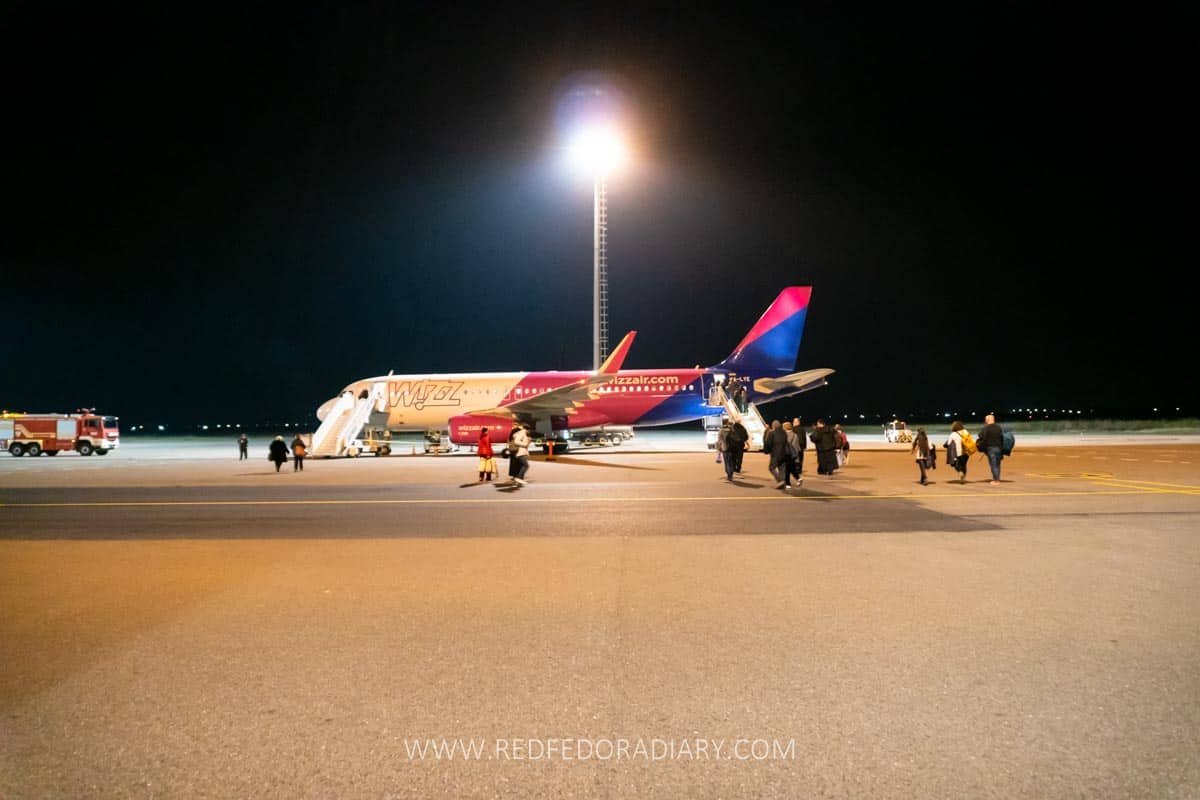
One thing you don’t always need to worry about is booking everything far in advance. Unlike summer in Europe, many destinations don’t require pre-booked tickets or tours. The exception is high-demand experiences—like a northern lights tour in Norway—where booking ahead is still a good idea.
Overall, winter travel in Europe is about balance: plan the essentials, but leave enough room to adjust as you go.
Europe in winter packing list (quick tips)
Packing for winter in Europe is all about staying warm without overpacking. Depending on the scope of your trip, you’ll likely be experiencing different climates—snowy mountains, rainy cities, and milder coastal areas—so versatility is key.
Start with layers. A good base layer, a sweater, and a proper winter jacket will take you far. Instead of packing bulky items, focus on pieces you can mix and match based on the temperature. Thermal tops are especially useful if you’re heading somewhere colder, like Norway or the mountains.
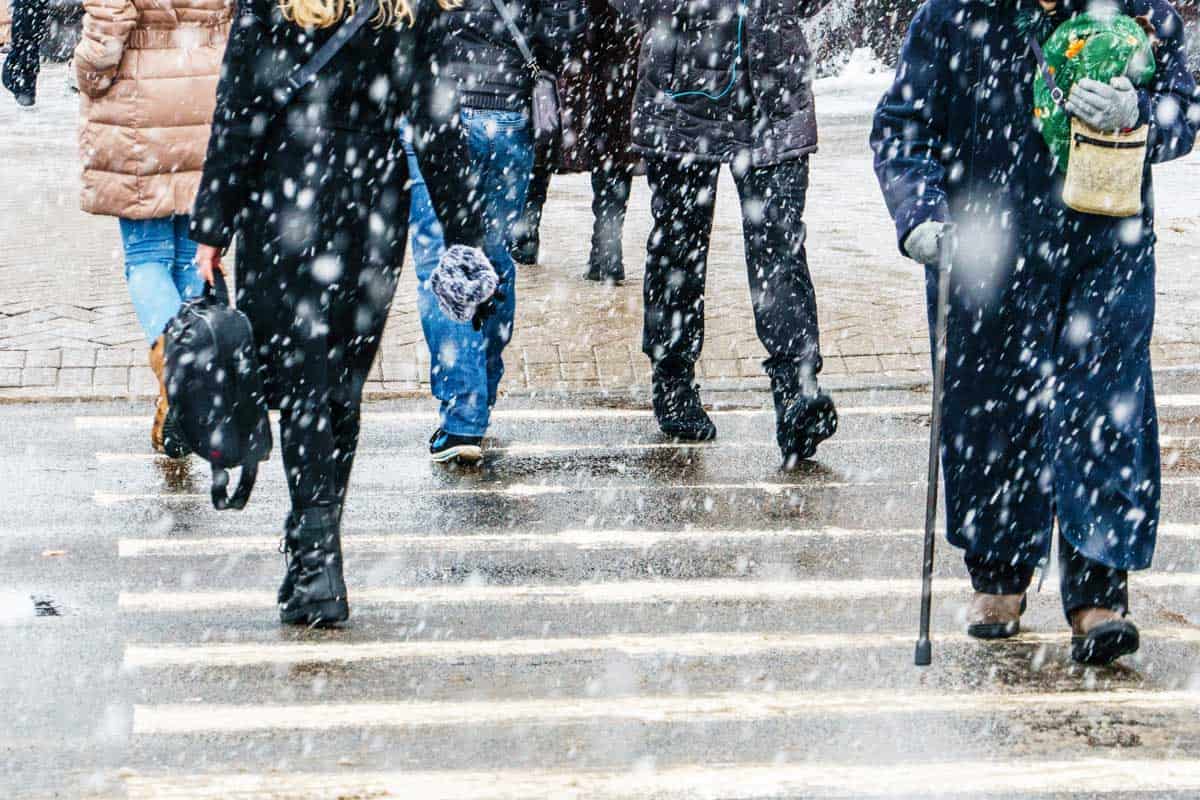
Footwear matters more than you might expect. Go for waterproof, comfortable shoes or boots (I love my Teva boots) with a good grip—cobblestone streets, snow, and rain can make walking tricky. If you’re planning longer days out, having one reliable pair is better than packing multiple options.
Accessories make a big difference in winter. A warm scarf, gloves, and a warm hat don’t take up much space but will keep you comfortable when temperatures drop. These are easy to take on and off, especially when moving between indoor and outdoor spaces.
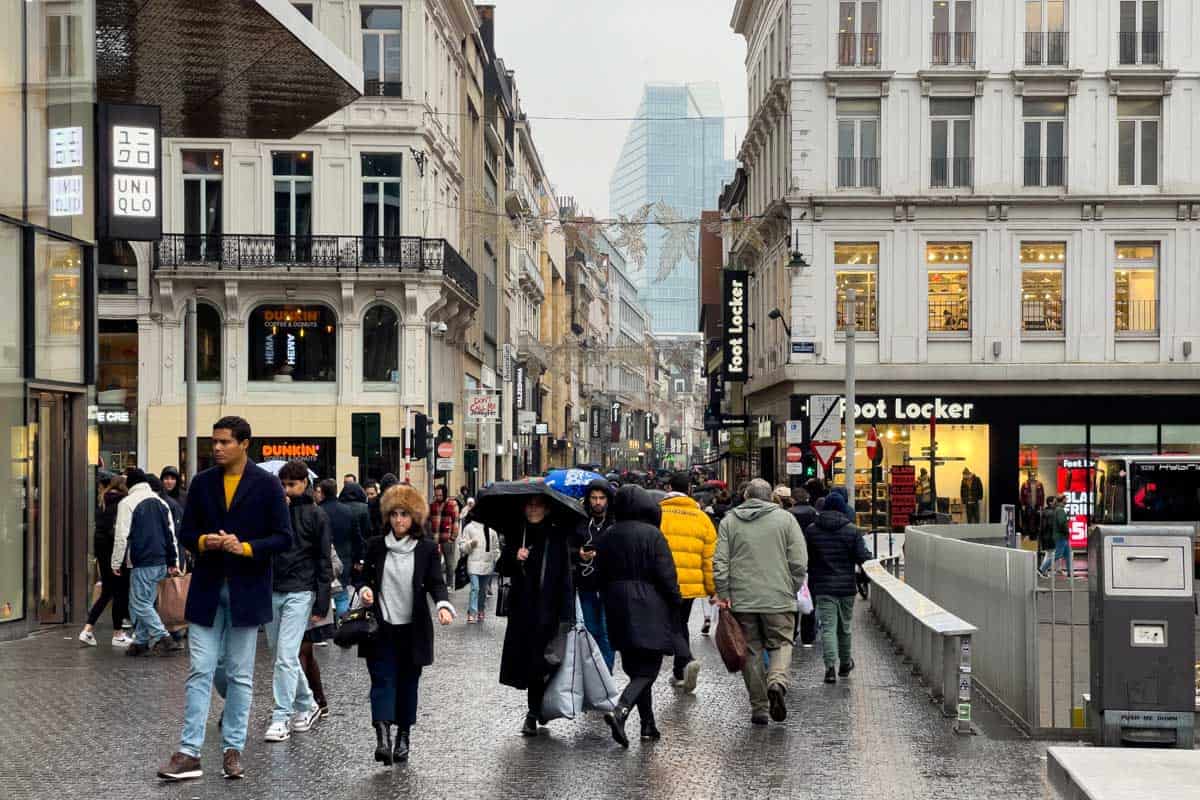
If you’re planning a mix of destinations, think about balance. You might need a heavier coat for colder regions and lighter layers for places like southern Europe.
Lastly, leave a bit of space in your bag. Winter trips often come with markets, seasonal food, and small finds you’ll want to bring back, and having extra room makes things easier.
Europe in winter FAQs: weather, costs, and where to go
Is it worth visiting Europe in winter?
Yes—especially if you prefer fewer crowds and a slower pace. Many cities feel more local, prices can be lower, and seasonal experiences like festive lights, Christmas markets, winter food, and snow-covered old towns offer a different perspective than summer.
Is Europe cheaper in winter?
In many cases, yes. Flights and accommodation are often more affordable outside peak holiday periods. January and February are usually the cheapest months, while December can be more expensive due to Christmas markets and New Year travel.
Is Europe better in winter or summer?
It depends on your travel style. Summer is better for long days and outdoor sightseeing, while winter is better for city breaks, cultural trips, and cozy experiences. If you want fewer tourists and better prices, winter is often the better option.
How cold does Europe get in winter?
It varies a lot. Central and Eastern Europe can drop below freezing, especially in January, while Southern Europe (like Spain or Portugal) stays much milder, often between 10–18°C during the day.
Where to go in Europe in winter?
It depends on what kind of trip you want. For cities, places like Prague, Vienna, and Budapest are popular. For something less obvious, destinations like Tbilisi, Lyon, or Gdańsk offer a great mix of atmosphere and fewer crowds. If you’re after warmer weather, southern Spain or Portugal is a good option.
What are the things to do in Europe in winter?
Winter in Europe isn’t just about sightseeing. You can explore festive markets, take day trips, enjoy winter hikes, visit museums and galleries, or try seasonal food and wine experiences. In colder regions, skiing and snow activities are also a big part of the experience.
Is January a good time to visit Europe?
Yes—January is one of the best months if you want fewer crowds and lower prices. Some attractions may have shorter hours, but overall, it’s a great time for a relaxed trip. It’s a particularly good time to visit Tbilisi to experience Christmas and New Year traditions and join the Alilo Parade on Orthodox Christmas.
What are the best winter destinations in Europe for snow?
For reliable snow, look to places like the Alps (France, Switzerland, Austria), Gudauri in Georgia, or northern destinations such as Norway and Finland. These are ideal for skiing and winter landscapes.
What are the best warm winter destinations in Europe?
If you want milder weather, consider winter destinations in Spain, Portugal (Lisbon and the Algarve), or coastal Greece. These places stay relatively warm compared to the rest of Europe.