
What to Wear in Madrid: Ultimate 2026 Packing Guide
The imperial capital of Spain, Madrid, is a city where you’ll easily spend hours walking between neighborhoods, museums, and cafés without realizing how much ground you’ve covered. That’s why the first thing to think about when deciding what to wear in Madrid is comfort—but without sacrificing style. Locals tend to look polished even in casual outfits, so aim for a balance between practical and put-together.
This Madrid packing list is designed to help you dress for the seasons while keeping in mind how people actually dress in the city. While Madrid enjoys plenty of sunny days, the weather can shift more than you might expect, especially between seasons, so having a bit of flexibility in your outfits makes a difference.
Rather than focusing on basics like how many items to pack, this guide gives you a clearer idea of everyday style in Madrid and what works best by season. Think simple, well-fitted outfits with a slightly elevated touch—nothing overly flashy, but not too relaxed either.
🇪🇸 Planning your trip to Madrid?
- Madrid: If you’re planning your trip, start with my Madrid itinerary to map out your days and see the main highlights without rushing. For food, check out my guide to what to eat and where to eat in Madrid, so you know exactly what to try. I also have a practical guide to getting from Madrid airport to the city center, which will save you time right after landing. And if you want to explore beyond the usual sights, don’t miss my Madrid street art guide for a different side of the city.
- Barcelona & beyond: If your Spain trip includes more than Madrid, I’ve also put together guides for Barcelona, including what to wear, itineraries, and travel tips to help you plan your time there.
- More Spain inspiration: If you’re traveling further, you can explore my guides on romantic cities in Spain and what it’s like to visit Spain in winter. You can also browse all my Spain content here to plan your trip more easily.
Disclaimer: Some of the links in this post are affiliate links, which means I may earn a small commission if you buy something through them—at no extra cost to you. It helps support my blog and lets me share real, first-hand travel tips. Learn more
What to pack for Madrid – the essentials
When traveling to a country, I always recommend packing as lightly as possible, and Madrid is no exception. Whether flying into the city or taking trains from other Spanish cities, a light carry-on or backpack gives you more flexibility. You also avoid extra costs for heavy luggage at the airports.
Travel insurance
Travel insurance isn’t something you pack in your suitcase, but it’s something I always arrange before any trip. It covers situations you don’t expect—like medical issues, delays, cancellations, or lost luggage—and those can add up quickly if you’re not prepared.
For shorter trips, I usually use Heymondo. It’s straightforward to set up, covers the basics, and you can get 5% off through my link, making it an easy choice for most travelers.
If you travel more frequently or don’t have fixed plans, SafetyWing is worth considering. It works on a subscription basis and renews automatically, which is practical for longer or more flexible trips.
Backpack or suitcase?
Oto and I travel with backpacks everywhere. For us, backpacks are more comfortable to carry. I have a 55 Liter Osprey Farpoint, and Oto has a Cobra 60 from The North Face. Both are spacious but small enough to take on board as purchased luggage with budget airlines. Read my full review of the Osprey Farpoint.

However, if you prefer a suitcase, check out this Samsonite in various sizes and sets, or this one that also comes in different sizes.
Day pack or purse/bag
I always bring a small bag for exploring the city. My Osprey backpack comes with a detachable daypack, and I use it to carry our essentials and valuables. For the past few years, we’ve stopped using it as a day pack.

Instead, I take my newer Driibe backpack, designed with city travel and digital nomads in mind—it’s been especially useful when browsing markets or picking up things along the way. Oto also uses the Burton Annex 28L backpack, which works well not just for daily use but also as a practical carry-on for short city trips.
Packing cubes
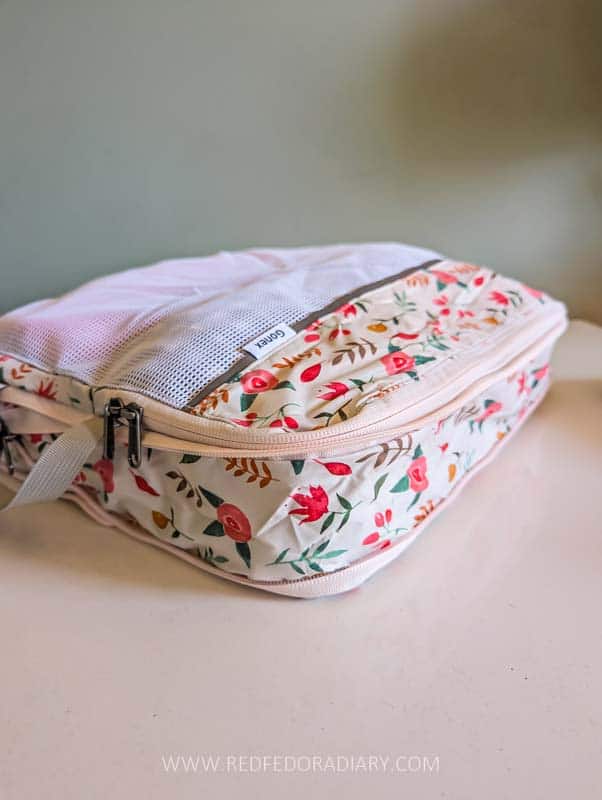
Packing cubes have proved invaluable when opting for a light and minimalist travel approach. Available in various sizes and shapes, sometimes even with a laundry bag, they are convenient for minimizing wrinkled clothes and keeping everything organized.
Currently, we alternate between these compression packing cubes from Gonex, which reduce space by 30%, and the typical ones we bought on Amazon.

Toiletries bag
We carry a single toiletry bag since we don’t use liquid hygiene products, which would require two separate bags.
Our switch to zero-waste solid shampoo bars, body soaps, and deodorants eliminates the need for pouring liquids into small plastic bottles. Additionally, using solid hygiene products makes passing through airport security smoother.
Power charger
Madrid’s picturesque scenery will drain your smartphone battery quickly, especially with frequent photo-taking in every corner. So will maps for navigation. Hence, having an external charger ensures you stay powered up throughout your explorations. I have this Anker MagGo power charger.
Accessories
I always have a scarf with me when I travel, regardless of the season. However, I adapt it to suit the weather. My scarf serves various purposes, whether to stay warm on breezy evenings, shield myself from the sun, or even to use as a makeshift pillow. In spring and autumn, I pack my quick-dry and versatile Turkish cotton towel, which I fell in love with after traveling to Turkey. And for cold winter months, I bring something similar to this warm scarf.
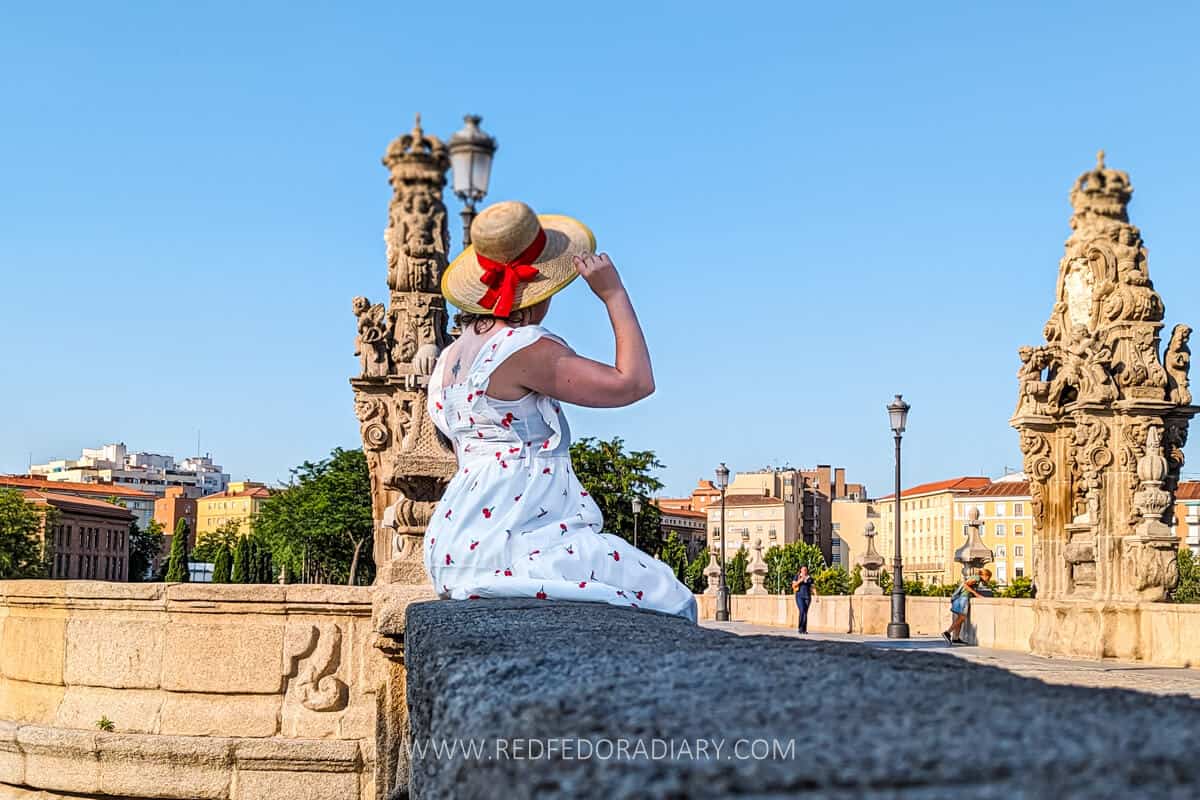
If you are new to the blog, I almost always travel with my red fedora hat. Bring any hat, whether you come here in summer, spring, or autumn. It’s valuable in sunny and rainy weather and suits the local Madrid style.
We always attach a luggage tag to our bags, whether they’re checked in or carried on. It’s a simple step that makes your luggage easier to spot and helps in case it ever gets misplaced.
Power adapters
The electrical outlets in Madrid and Spain follow the European standard, as well as those in certain parts of Asia and Australia. They operate at 230 volts, 50 Hz, but a universal adapter is handy.


Water bottle
The tap water in Madrid is entirely safe for consumption. Yet, carrying your water bottle and refilling it saves money and reflects responsible travel behavior, reducing your impact on the delicate global environment. I love my Stojo collapsible water bottle because it saves a lot of space in my backpack.
Collapsible cup
Oto and I enjoy the flexibility of sipping coffee while exploring the city or sitting down in the park in the mornings and people-watching. Upon realizing the environmental impact of daily takeaway cup use, we now have Stojo’s collapsible cups and ask baristas to pour our coffee into them.
Plan Your Trip Like A Pro
How do people dress in Madrid
Dress code in Madrid
If you’re wondering how to dress in Madrid, I can say Spaniards love dressing well. Men and women always look elegant, classy, and stylish at any age and for any event —even for everyday errands—think well-fitted basics, clean shoes, and outfits that look intentional. Smart-casual is the default: tailored trousers or jeans, button-downs, blouses, light layers, and structured coats, depending on the season.
Even though you’ll see people dressed in various styles, there are a few things to consider to avoid looking like a tourist and drawing the unwanted attention of pickpockets or even locals.
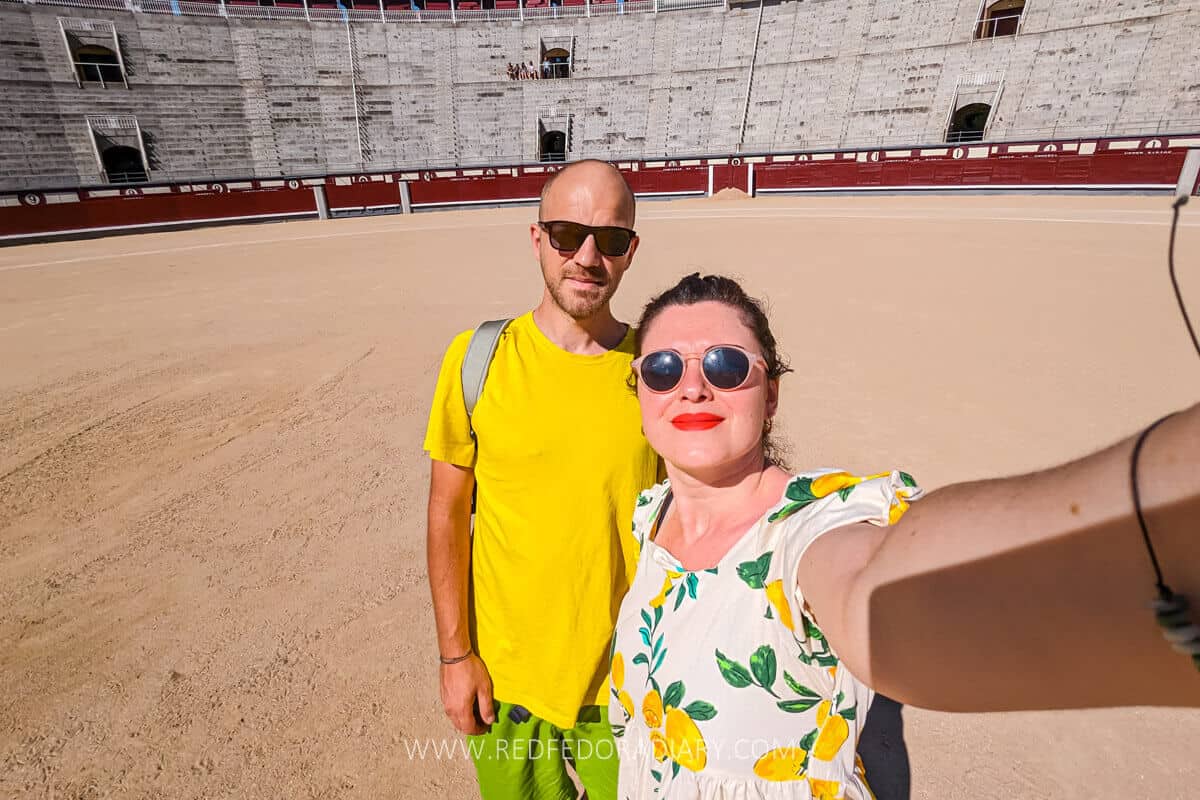
Locals tend to dress according to the season and not the weather. This means that even if the temperatures are high in December, Spaniards will still be wrapped in winter clothing.
Neutrals like black, white, beige, navy, and grey are very common as a base. You’ll also see earthy tones—olive, brown, rust—especially in autumn.
That said, Madrid isn’t strictly minimalist. People often add a bit of color through one piece (a blazer, bag, or scarf) rather than wearing head-to-toe bright outfits.
Avoid bringing leggings or sweatpants as they are no-go Madrid outfits for many locals, as are socks with sandals and shorts outside in seasons other than summer. Also, don’t wear flip-flops in the city. Locals use it only at the beach and in the pools. Basketball shorts, caps, and gym clothes outside the workout area will also give you away as a tourist.
Dressing up for dinner depends solely on the restaurant you go to. If you are going to a nice restaurant, wear something dressy.
Visiting churches and cathedrals
Spain holds strong religious traditions, and the church remains significant for many Spaniards. When exploring churches and cathedrals, it’s important to show respect by avoiding shorts, tank tops, or any overly revealing clothing.
Exploring city
When exploring Madrid, the key is to look put-together while staying comfortable enough to walk for hours.
Start with good walking shoes—clean sneakers, loafers, or flat ankle boots, depending on the season. Then build around that with easy, breathable pieces: jeans or tailored trousers, a simple top, and a light layer like a blazer, cardigan, or jacket. Avoid anything too sporty unless you’re actually heading to the gym.
Local style in Madrid is rarely overly casual, so even a basic outfit tends to feel a bit more structured and intentional. The idea is simple: comfortable enough for long days out, but polished enough that you don’t stand out as a tourist.
Evenings, bars, and restaurants
For bars and casual restaurants, smart-casual works best: dark jeans or trousers, a nice top or shirt, and clean shoes. For women, that could be a simple dress, a skirt with a blouse, or tailored pants with a slightly dressier top. For men, a button-down or polo with well-fitted jeans or chinos is typical. Sneakers are fine if they’re clean and minimal, but many people switch to loafers, ankle boots, or dressier shoes.
If you’re heading somewhere a bit nicer or going out later, outfits lean more polished—think a blazer, heeled boots or shoes, and slightly bolder accessories or makeup. Madrid nightlife starts late, so you’ll see people dressed more “evening-ready” even at 9–10 pm.
Day trips from Madrid
For day trips from Madrid, dress a bit more practically than you would in the city. Comfortable walking shoes are non-negotiable, especially for places like Toledo or Segovia, where you’ll be dealing with cobblestone streets and some uphill walking. Sneakers, sturdy flats, or ankle boots work well depending on the season.
Even if Madrid feels warm, nearby destinations can be slightly cooler or windier, especially in the morning or late afternoon. Think jeans or lightweight trousers, a breathable top, and a light jacket, cardigan, or scarf you can easily take on and off.
Key takeaways:
- Wear season-appropriate layers, not just for warmth.
- Smart-casual style fits Madrid locals best.
- Scarves and accessories help blend in.
- Never wear flip-flops except at pools or beaches.
- Shorts only in the Madrid summer months.
- Avoid sweatpants, athleisure, and baseball caps.
- Dress up slightly for restaurants and churches.
Madrid packing list by season
Madrid is a year-round destination, but seasonal changes will affect what to pack for Madrid. However, don’t worry if your stay coincides with rainy days, as there are plenty of indoor activities in Madrid, and my perfect, flexible itinerary will help you find them.
What to wear in Madrid in spring
Spring in Madrid can feel a bit unpredictable, especially in the earlier months, so it’s best to be prepared for a mix of temperatures. In March, you can expect temperatures ranging from 5°C to 17°C (41°F-63°F), while by May, it usually warms to around 12°C to 25°C (54°F-78°F).
If you’re figuring out what to wear in Madrid in March, pack pullovers or sweaters along with a coat or jacket. It can still feel quite chilly, and occasional rain is common, so a compact umbrella or packable raincoat is worth having. Scarves are also a staple here—locals wear them often, and a lightweight one is an easy way to blend in while adding warmth.
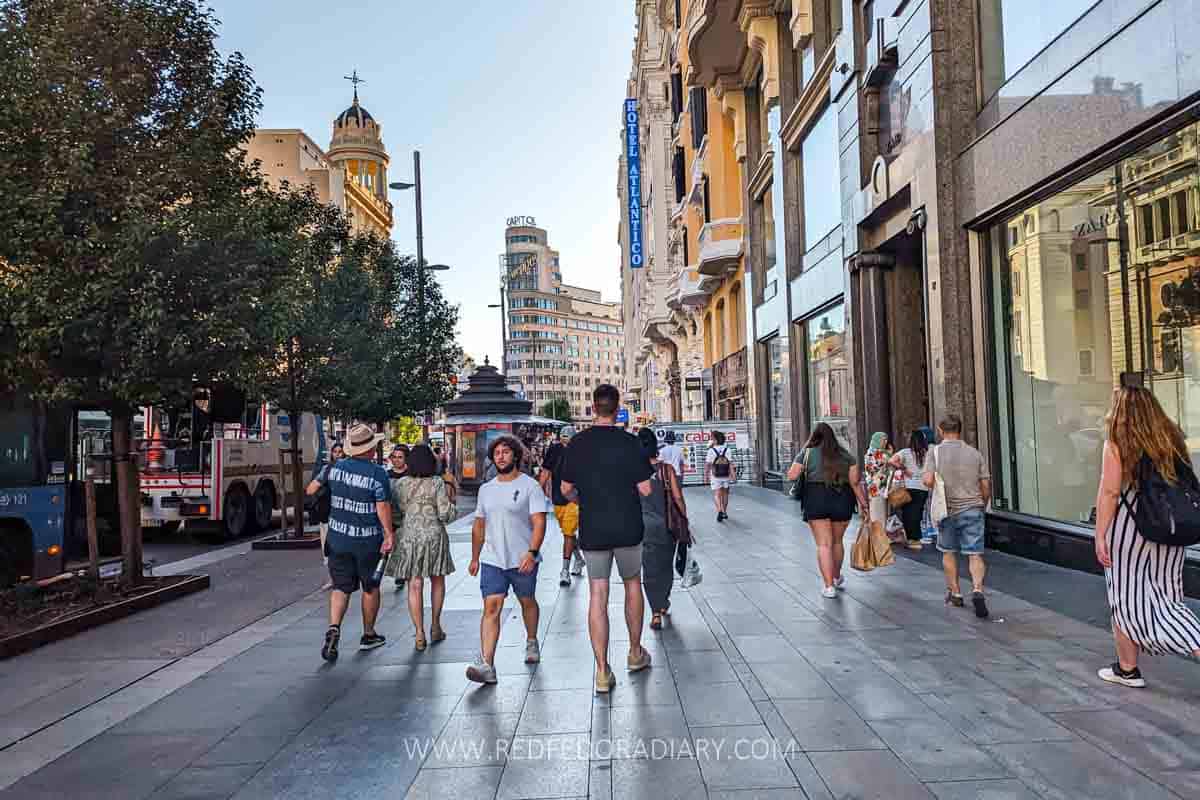
As temperatures start to rise, what to wear in Madrid in April becomes a bit more flexible. You can begin swapping heavier layers for lighter ones and introducing breathable fabrics into your outfits. And if you are traveling in the last month of the season, you can lean into flowy pieces like maxi dresses or skirts (paired with tights if needed), when thinking of what to wear in Madrid in May.
Footwear should stay practical throughout the season. Closed-toe shoes like sneakers or flats work best, as it’s usually not warm enough for sandals until mid-May. For colder days, ankle boots are a solid option.
Recommended tours in Madrid in spring:
What to wear in Madrid in summer
Summer in Madrid is hot, dry, and intense—especially in July and August. Temperatures usually sit between 27–35°C (81–95°F), and walking around the city in the middle of the day can feel exhausting if you’re not dressed for it. Sunscreen is a must, along with sunglasses and anything that helps you stay cool.
When it comes to Madrid summer fashion, think light, breathable, and easy to move in. Dresses, skirts, shorts, and tank tops are all common and fit well.


Footwear is where you need to think ahead. Sandals seem like the obvious choice, but after a full day of walking and standing in crowded bars, they’re not always the most comfortable.
I usually alternate between my The North Face sandals and Teva sneakers—they’re both lightweight and easy to pack, so switching between them is practical depending on the day.
Recommended tours in Madrid in summer:
What to wear in Madrid in autumn
Autumn in Madrid feels similar to spring, with a gradual shift from warm to cooler days. September is usually the most comfortable month, with daytime temperatures around 25°C (78°F), while by November, it drops to about 12°C (54°F). With fewer crowds and pleasant weather, it’s one of the best times to explore the city on foot.
If you’re deciding what to wear in Madrid in September, lighter layers work best. Warm pullovers or sweaters are ideal for cooler mornings and evenings, without needing a full coat during the day.
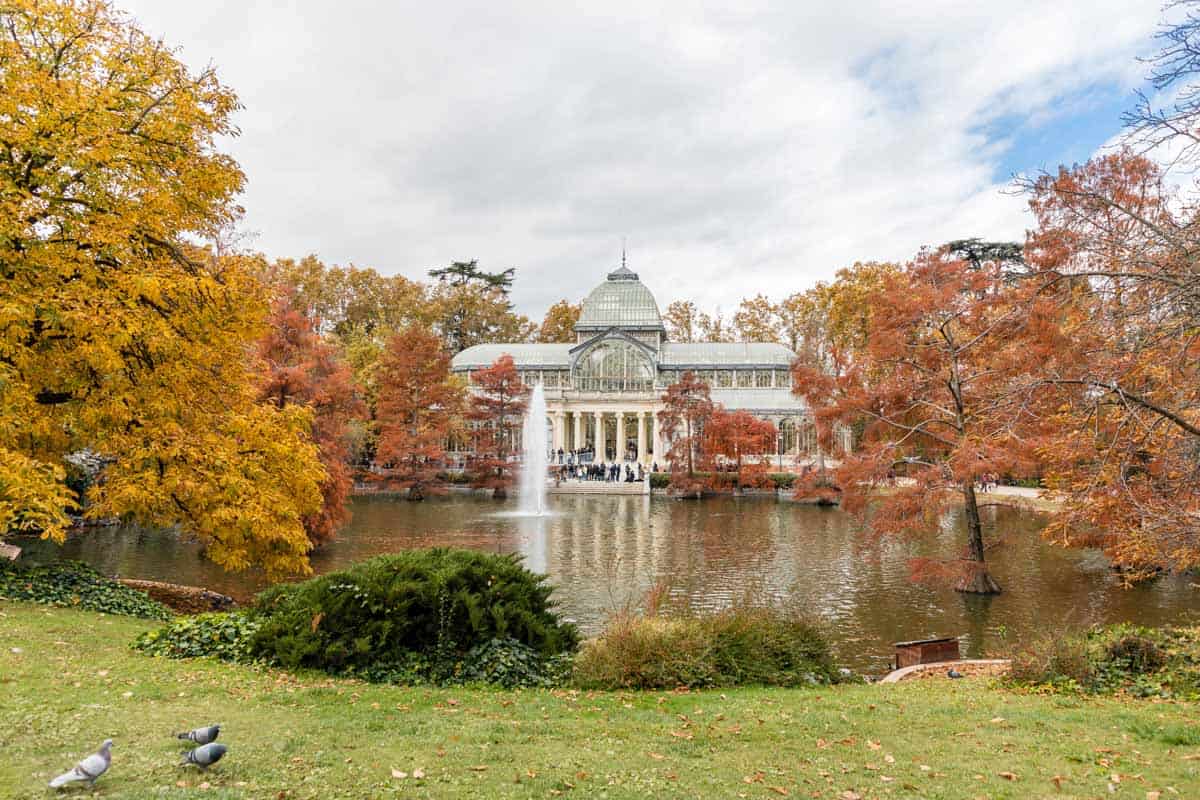
A lightweight scarf is also useful, especially as temperatures can shift throughout the day. By this time of year, locals have already moved away from summer clothing, so you won’t see many people in sandals or shorts.
As temperatures drop, the list of what to wear in Madrid in October needs to include a light autumn coat or jacket for mornings and evenings. By November, you’ll want to rely more on warmer outerwear, knitwear, and closed-toe shoes.
Rain becomes more common in autumn, so practical footwear matters. Ankle boots are a good option—I usually pack my Timberland boots, while Oto goes for the Back-To-Berkeley boots during colder or mild days. It’s also worth bringing a compact umbrella or a packable raincoat to stay dry.
What to wear in Madrid in winter
Winter in Madrid is cold but still milder compared to cities like Prague or Budapest. Temperatures usually range from 2°C to 14°C (36°F-57°F), with averages around 6–8°C (43–46°F).
If you’re planning a trip and wondering what to wear in Madrid in December, layering is key. You’ll be spending a lot of time walking outdoors, but also going in and out of museums, cafés, and restaurants, so having layers you can easily remove makes a big difference.
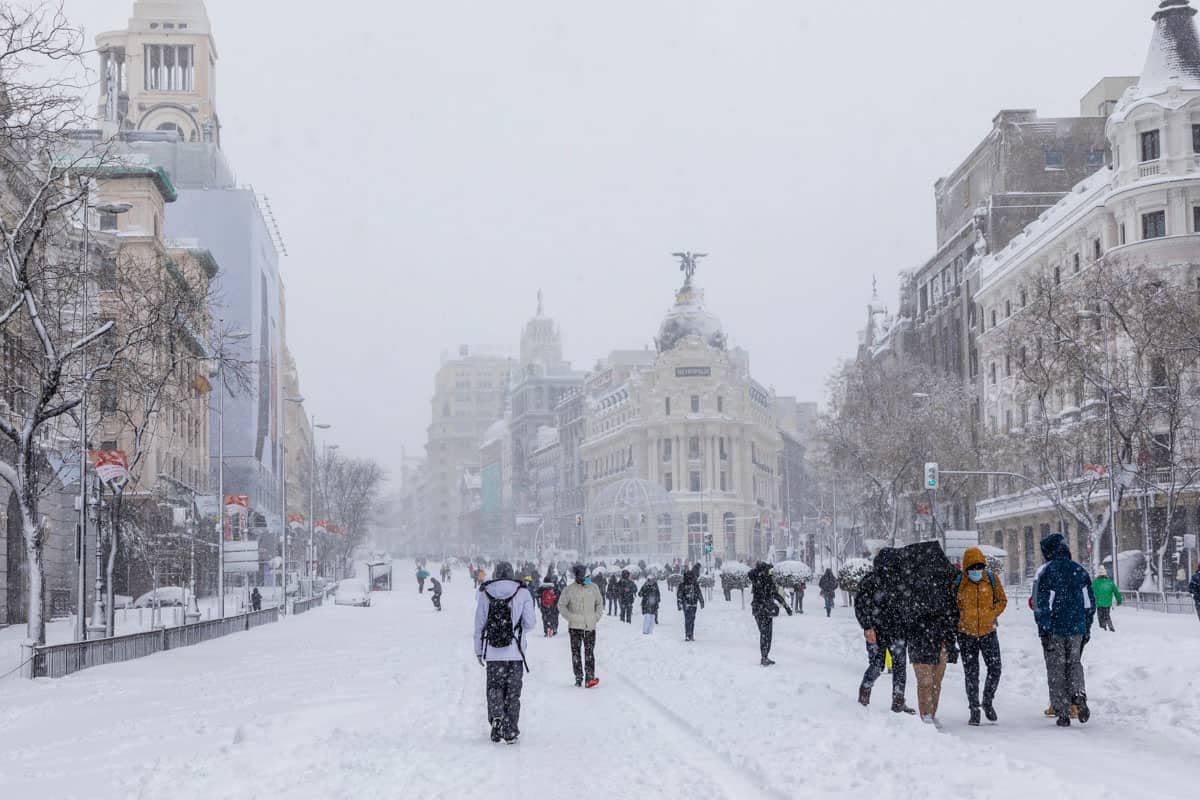
Start with a good base—if you tend to feel cold, a thermal shirt and leggings under your clothes help a lot without adding bulk. On top, go for sweaters or pullovers paired with jeans or trousers, and finish with a warm winter jacket. This approach works well throughout the season, including when checking the Madrid temperature in February, which stays in a similar range.
Accessories are just as important for staying comfortable. A warm, cozy scarf, a hat (like a pom-pom hat), and gloves will keep you warm on longer days outside. For footwear, insulated or sturdy boots are the best choice, especially if you’re walking a lot. Oto usually wears high-ankle snow boots during our winter trips, and they’ve proven to be practical for colder days.
If you’re planning a broader trip, take a look at my Spain in winter guide for more seasonal tips and destination ideas.
Madrid packing FAQs
What should I avoid wearing in Madrid?
Avoid flip-flops, shorts outside of summer, sweatpants, sportswear in public, and revealing clothing in churches or upscale restaurants.
What to wear in Madrid for a week?
For a week in Madrid, pack a mix of comfortable basics and a few more polished pieces. You’ll be walking a lot, so start with good shoes, then build outfits around jeans or trousers, simple tops, and layers depending on the season. Add one or two slightly dressier options for evenings. Stick to versatile items you can mix and match rather than overpacking.
What do locals wear in Madrid?
Locals in Madrid dress smart-casual and tend to look put-together even in everyday situations. You’ll see tailored trousers, jeans, blouses, button-down shirts, and shoes. Athleisure isn’t very common outside of gyms, and outfits usually feel intentional rather than overly relaxed.
What do women wear in Madrid?
What do men wear in Madrid?
Men in Madrid typically dress in a clean, smart-casual way. You’ll often see well-fitted jeans or chinos paired with T-shirts, polos, or button-down shirts. Shoes are usually simple and neat—sneakers, loafers, or boots. As with women’s fashion, the overall look is relaxed yet put-together.
What do people wear to clubs in Madrid?
Madrid nightlife leans toward the stylish rather than the overly formal. For clubs, people usually dress up a bit—think fitted dresses, skirts, or trousers with a nice top for women, and button-down shirts or polos with jeans or chinos for men. Many avoid sporty sneakers unless they’re minimal and stylish.
What to wear in Madrid in January?
January is one of the coldest months, so Madrid winter fashion is all about layering. A warm jacket, sweaters, and long trousers are essential, along with a warm scarf, gloves, and possibly a hat. If you get cold easily, add thermal layers underneath. Closed-toe shoes or boots are the best option for staying comfortable while walking around the city.
What to wear in Madrid in August?
August is extremely hot, so lightweight and breathable clothing is key. Loose long dresses, skirts, shorts, and tank tops work best. Stick to light fabrics and avoid anything heavy or tight. Comfortable shoes are still important, but opt for breathable sneakers or sandals you can walk in for hours.
Planning your trip to Madrid
What to see and do in Madrid
Madrid is the kind of city where you can fill your days without rushing—from exploring historic neighborhoods and museums to relaxing in parks or checking out viewpoints. To structure your time and make the most of your visit, take a look at my detailed Madrid itinerary.
Get to know Spanish food before your trip
If you’re not familiar with Spanish cuisine, it’s worth getting a quick overview before you arrive. Knowing what to order makes a big difference, especially with so many regional dishes. Check out my guide on what food to try in Spain so you know exactly what to look for on menus.


Where to eat in Madrid
Food is a big part of the experience here, whether you’re hopping between tapas bars, trying local specialties, or sitting down for a longer meal. Madrid has everything from traditional spots to more modern restaurants. I’ve put together a full guide to what to eat and where to eat in Madrid, so you know exactly what to try.
Learn some basic Spanish phrases for traveling
Knowing a few basic phrases goes a long way, especially in showing effort and respect to locals and in those local spots where English is rarely spoken. I’ve created a simple guide to Spanish phrases, along with a downloadable cheat sheet you can save to your phone and use on the go.
How to get from Madrid airport to the city
Getting from the airport to the city center is easy, with options like the metro, buses, and taxis. If you prefer something straightforward, I usually book a transfer in advance with Welcome Pickups—you get a fixed price and a driver waiting for you at arrivals, which is especially helpful if you’re arriving late or with luggage.

Avoid roaming charges in Madrid
Using maps, booking tickets, and staying connected throughout the day can quickly eat through your data. Instead of relying on expensive roaming, I recommend using an eSIM—it’s quick to set up and works as soon as you land. I’ve tested and compared several options in my guide to the best eSIMs for travel, so you can pick the one that suits your trip.
Renting a car for day trips
If you’re planning to explore beyond Madrid, renting a car gives you more flexibility. I usually compare options on DiscoverCars to find the best deals, and for more local providers, LocalRent is also worth checking.
Dealing with flight delays or cancellations
Flight disruptions can happen, and dealing with airlines isn’t always straightforward. AirHelp helps you claim compensation for delayed or canceled flights, which can save you time and hassle if something goes wrong.