
Georgia Travel Tips for 2026: 38 Things to Know Before Trip
Tucked between the Greater Caucasus mountains and the Black Sea coast, this small but wildly diverse country packs in more than most places twice its size — and these Georgia travel tips will help you experience it without unnecessary stress.
From ancient cave cities and natural sulfur baths to wine that’s been made the same way for 8,000 years, there’s a lot to take in. That’s exactly why visiting Georgia can feel both exciting and slightly overwhelming at the same time.

The mix of Europe and Asia shows up everywhere — in the architecture, in the food, in centuries-old traditions, and in the rhythm of daily life. Tourism has grown rapidly in recent years, but infrastructure and regulations are still catching up. Public transport isn’t always intuitive; rules have tightened, prices have shifted, and a few practical realities can surprise first-time travelers.
As someone born and raised here — and someone who regularly helps readers plan their travel to Georgia through itinerary consultations — I’ve seen where people struggle most. This guide brings together the questions that come up again and again, so you can arrive prepared, confident, and ready to enjoy visiting Georgia for what it truly is.
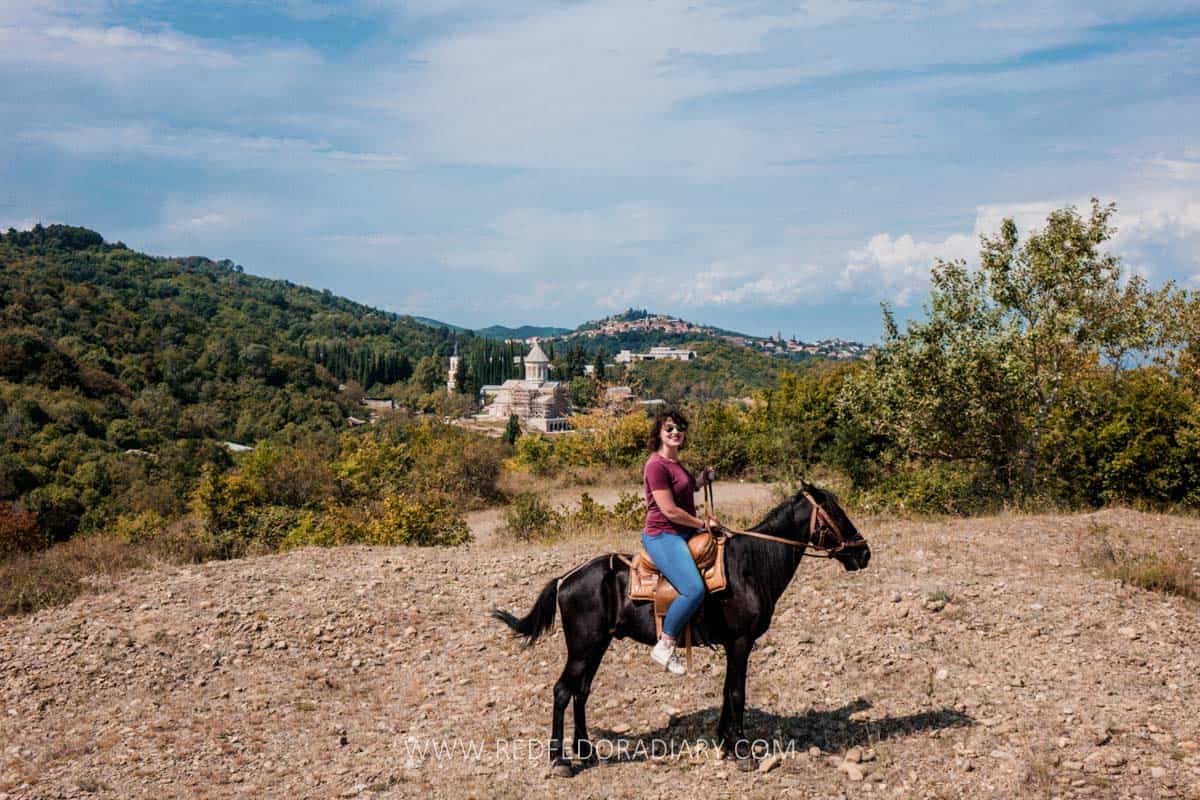
If your plans include time in the capital, I’ve also put together a dedicated Tbilisi travel tips guide that shares practical advice for navigating the city, local etiquette, and things visitors often overlook.
Disclaimer: Some of the links in this post are affiliate links, which means I may earn a small commission if you buy something through them—at no extra cost to you. It helps support my blog and lets me share real, first-hand travel tips. Learn more
What’s changed in Georgia in 2026
If you’re planning your first trip — or returning after a few years — there are a few updates worth knowing before you arrive. None of them should put you off visiting, but understanding them in advance makes your travel to Georgia smoother and far less stressful.
Travel insurance is now mandatory
As of 2026, travel insurance is required for anyone entering Georgia, including travelers who qualify for visa-free entry. Your policy must cover the entire duration of your stay and meet the official minimum coverage requirements. This isn’t something you can arrange casually on arrival — it needs to be sorted before departure.
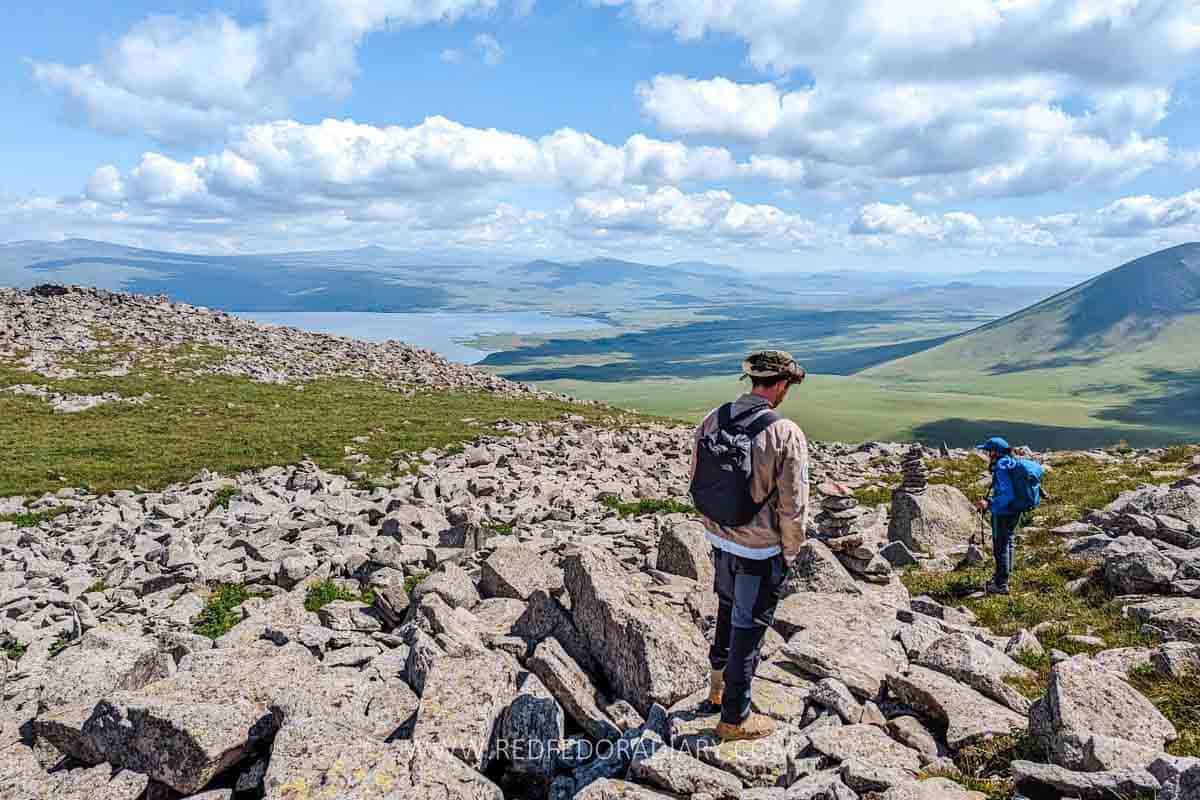
The rule applies regardless of whether you’re staying only in Tbilisi or traveling around the country. If Georgia is one stop on a longer trip, you still need valid coverage for the days you’re here.
I’ve written a separate, detailed guide explaining which policies are accepted and what officers may ask for.
National park ticket prices increase, and new combo tickets
As of April 1, 2026, entrance fees for several of Georgia’s most popular national parks and protected areas have increased. These are places that frequently appear in travel itineraries, especially for trips to western Georgia.
Alongside the price changes, the Agency of Protected Areas has introduced combo tickets, designed to encourage visitors to explore multiple sites and make visits more cost-efficient if you’re planning to see more than one location.
If you hold a Georgian residency card, don’t forget to bring it with you — discounted rates for residents are significantly lower than standard foreign visitor prices.
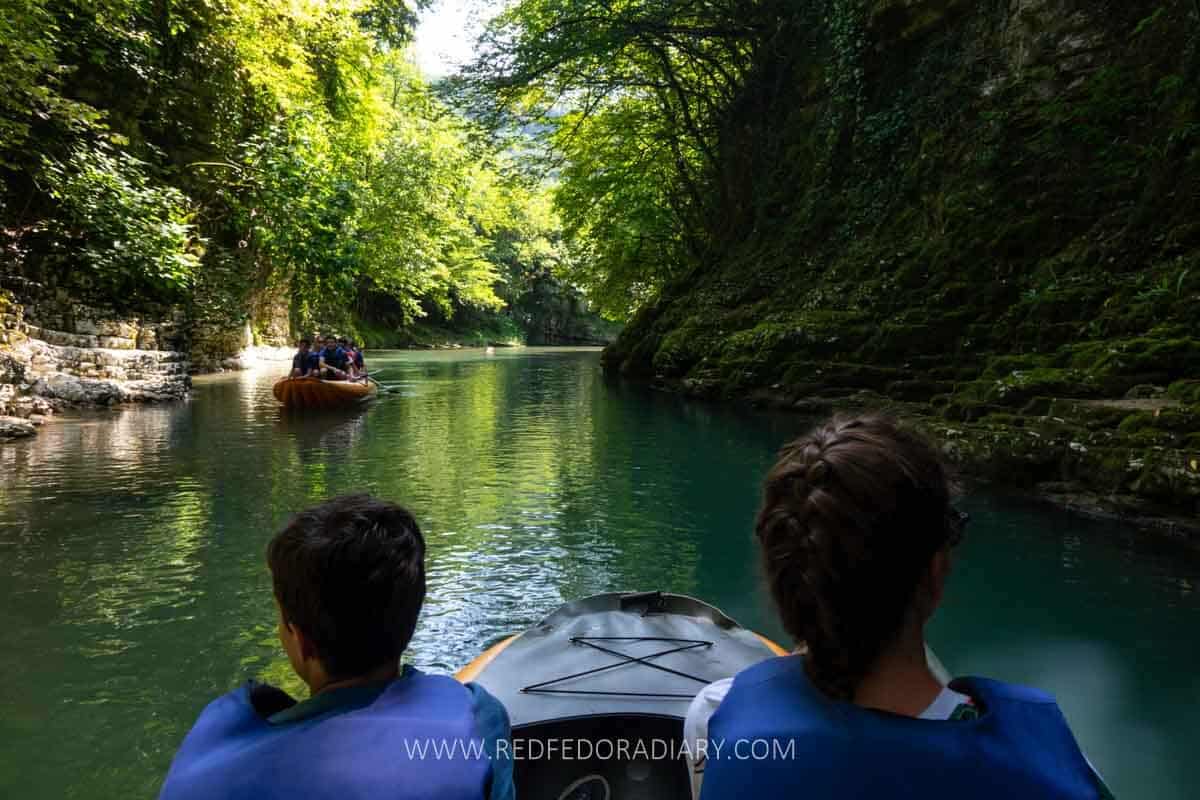
Here are some of the updated adult ticket prices for Georgian citizens/residents and foreigners:
- Martvili Canyon: 16 GEL | 40 GEL
- Okatse Canyon: 16 GEL | 30 GEL
- Prometheus Cave: 16 GEL | 40 GEL
- Sataplia Nature Reserve: 15 GEL | 30 GEL
New combo tickets are now available for selected sites, including:
- Prometheus Cave + Navenakhevi Cave: 20 GEL | 45 GEL
- Prometheus + Sataplia + Navenakhevi: 35 GEL | 75 GEL
- Martvili Canyon + Kinchkha Waterfall: 22 GEL | 50 GEL
- Martvili + Okatse + Kinchkha: 38 GEL | 80 GEL
- Okatse Canyon + Kinchkha Waterfall: 22 GEL | 40 GEL
- Prometheus + Martvili + Navenakhevi: 35 GEL | 85 GEL
- Prometheus + Martvili + Kinchkha: 38 GEL | 90 GEL
If you’re planning to visit multiple natural attractions in the same region, these combo tickets can offer better value compared to buying individual entries.
Peaceful protests in Tbilisi: what travelers should expect
Public demonstrations have become a visible part of life in Tbilisi since late 2024. They began after the government announced a pause in EU accession talks.
International headlines can make the situation sound more dramatic than it feels on the ground. In reality, protests are usually concentrated around Rustaveli Avenue, particularly near the Parliament building in the evenings.
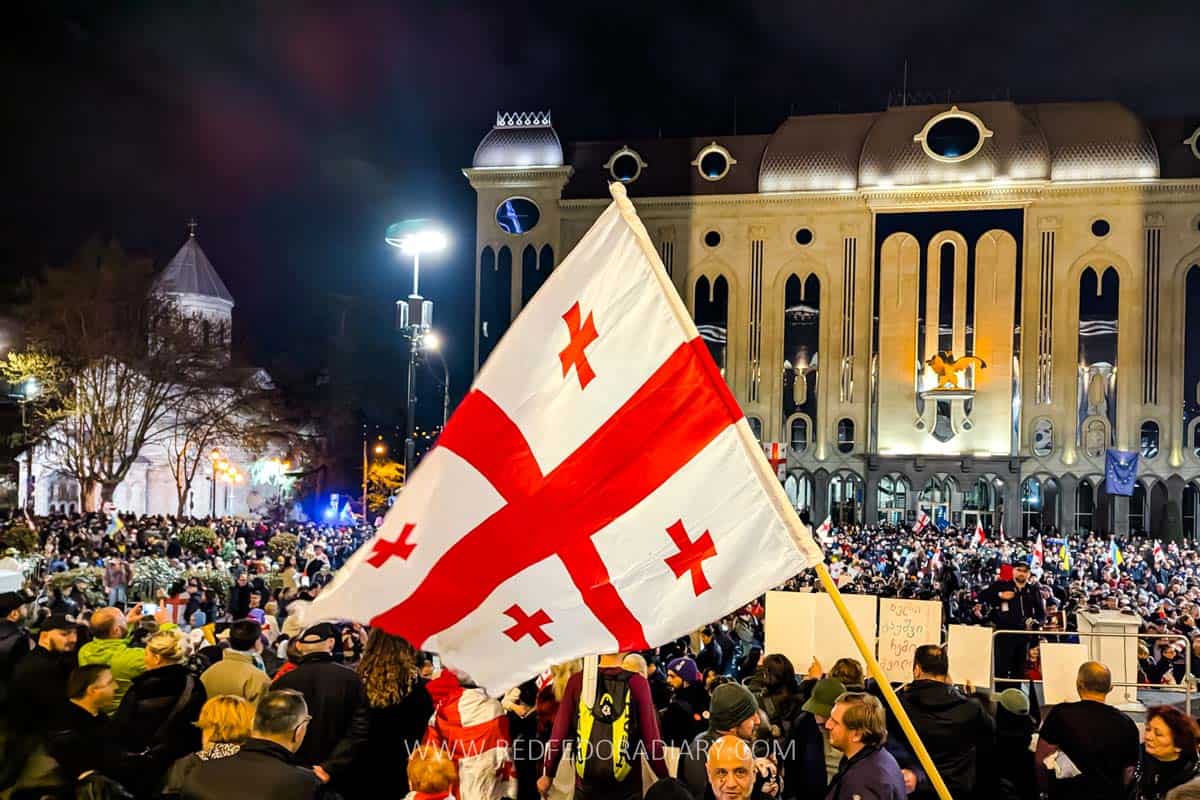
Outside that area, daily life continues normally — cafes stay open, public transport runs as usual, and sightseeing during the day is unaffected.
If you’re traveling beyond the capital, demonstrations in other major cities have largely subsided and are unlikely to affect your plans. In Tbilisi, avoid the Parliament area on Rustaveli Avenue in the evening.
Plan Your Trip to Georgia Like A Pro
Georgia travel tips to know before booking your trip
Understand where Georgia (the country) is — and why it matters
Georgia sits between Russia to the north, Turkey and Armenia to the south, and Azerbaijan to the east, with the Black Sea to its west.
You’ll often see Georgia described as being at the crossroads of Europe and Asia. That’s not just a poetic phrase — it genuinely shapes the culture, architecture, food, and social norms you’ll encounter while visiting the country.
Because Georgia borders Russia, some travelers may assume there are safety concerns. In practice, day-to-day travel is not affected by the border itself. The mountainous terrain makes accidental crossings impossible, and popular northern destinations remain fully accessible to visitors.
There are two Russian-occupied regions — Abkhazia and South Ossetia (Samachablo/Tskhinvali) — that cannot be entered from the Georgian-controlled side without permission and visas.
These areas are clearly defined, and unless you deliberately attempt to approach them, they won’t interfere with your itinerary. Even though some tourist routes, ski resorts, and hiking areas are located relatively close to the border, this doesn’t affect visitor safety.
It’s also important to know that entering these territories from the Russian side is considered illegal under Georgia’s Law on Occupied Territories and can result in fines or more serious legal consequences. As long as you stick to established routes and standard border crossings, this won’t be an issue.
Georgia is a safe country to travel
“Is Georgia a safe country to travel right now?” is the question I get asked most often these days.
Yes — overall, Georgia is a very safe country for travelers. Whether you’re planning travel in Georgia as a solo female traveler, a couple, a backpacker, or with family, most visitors experience no safety issues at all. Violent crime is rare, and tourists are not typically targeted.
Tbilisi, in particular, feels safe even in the evenings, and walking around central neighborhoods after dark is common. That said, basic awareness still applies — just as it would anywhere else. Keep an eye on your belongings in crowded areas, don’t leave valuables unattended, and use common sense when navigating nightlife.
Petty scams do exist, and taxis are where most issues arise. One of the most important Georgia travel tips is to always use a taxi app rather than accepting rides from drivers who approach you on the street or at the airport; Tbilisi airport is particularly famous for taxi scams.
There is also a known bar scam in Tbilisi and Batumi where visitors are invited to a venue and presented with an inflated bill. The simplest way to avoid this is to meet people in well-reviewed places, check Google Maps before entering, and avoid venues with no online presence.
On the positive side, you don’t need to worry about corruption. Police corruption is extremely rare today, and offering a bribe is considered a serious offense.
Check visa rules and how long you can stay legally
Georgia has a generous visa policy for citizens of more than 90 countries, allowing visa-free entry and up to 365 consecutive days of stay. That’s not 90 days within 180 days — it’s a full year from the date of entry.
If your passport isn’t on the 365-day list, you may still qualify for a shorter visa-free stay (typically up to 90 days within 180 days), depending on your nationality. Others will need to apply for a visa in advance.
Visa rules can change, and eligibility depends entirely on your passport. Before visiting Georgia, always check the official Government of Georgia consular portal for the most up-to-date entry requirements and permitted length of stay.
If you do need a visa, Georgia offers an e-visa system for many nationalities, allowing you to apply online before arrival. Services such as iVisa can assist with the application process if you prefer guided support, but the official government platform is always the primary reference point. Overstaying your permitted period is taken seriously, and fines or entry bans can apply.
Georgia is not as cheap as it once was
If you’ve heard that Georgia is one of the most affordable destinations in Europe, that’s not entirely wrong — but it’s becoming less true each year.
Prices have risen noticeably since the COVID-19 pandemic, and even more so after the influx of relocators following the Russia–Ukraine war, which pushed up the cost of accommodation, food, and everyday services, especially in cities. Tbilisi, in particular, feels very different from what budget travel guides written a few years ago might suggest.
That doesn’t mean Georgia is expensive. Depending on where you’re traveling from, it may still feel affordable — especially compared to Western Europe or North America. Outside the capital, your money generally goes further.
Accommodation and dining have seen the sharpest increases, especially in popular neighborhoods. If you’re visiting for just a few days, you may barely notice the difference. But if you’re planning a longer stay, the higher prices can start to add up.
At the same time, wages in Georgia remain relatively low compared to much of Europe, and locals have felt the pressure of rising grocery and rental costs.
Ultimately, your budget will depend on your travel style. You can choose boutique hotels, modern restaurants, and private transfers — or keep things simple with guesthouses, district eateries, and public transport. Intercity transport remains affordable, and museum entrance fees are still reasonably priced.
The best time to visit Georgia depends on your itinerary
There’s no single “best” time to visit Georgia that works for everyone — it really depends on what you’re planning to do. The country has several distinct regions, each with its own climate, peak season, and ideal travel window. What’s perfect timing for a beach trip to Batumi is completely different from what you’d want for hiking in Svaneti or exploring Tbilisi’s landmarks.
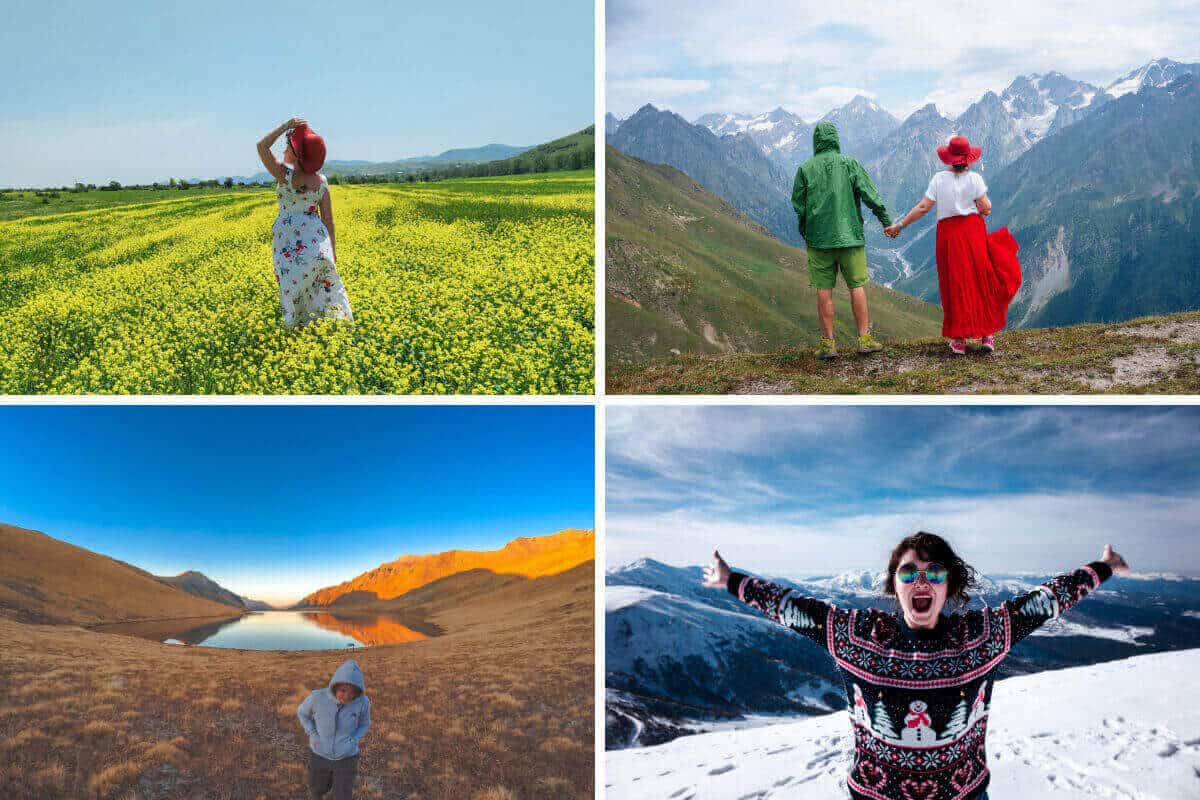
Spring (April to June) and autumn (September to November) are generally the most comfortable seasons for traveling around the country. The weather is mild, the landscapes are at their most photogenic, and crowds are more manageable. These are reliable all-around windows if you’re planning a mixed itinerary that includes cities, wine regions, and some outdoor time.
Kakheti is especially rewarding in autumn during Rtveli, the grape harvest season, which typically begins in September and runs through mid-October. If you want to experience the harvest in a structured and authentic way, join a local wine-focused tour by Eat This! Tours. I’ve personally taken their Sighnaghi wine tour and loved it. You can read my review here, and whenever ready, use code RFD5 for 5% off on all their tours.

Summer is peak season, and it shows. Tbilisi and Kutaisi get genuinely hot, and popular mountain destinations like Kazbegi and Mestiabecome noticeably busier. That said, summer is the most reliable time to access high-altitude areas that are otherwise difficult or impossible to reach. If mountain hiking is your priority, June through August is your safest window.
Keep in mind that accommodation prices rise nationwide in summer, and transport becomes busier as locals travel to the coast or mountain villages for holidays.

Winter, on the other hand, suits slower-paced travelers looking for an uncrowded city break or a ski-focused trip to resorts like Gudauri, Mestia, or Bakuriani. Tbilisi’s festive markets begin later than many European Christmas markets — usually from mid-December — and often continue into January, offering a different seasonal atmosphere.
Do note that some mountain roads close in winter and certain guesthouses shut for the season, so planning ahead becomes more important.
If you’d like a detailed breakdown by month — including regional differences and what to expect realistically — I’ve written a separate guide to the best time to visit Georgia that goes much deeper.
Check public holidays before planning your itinerary
Georgia has 18 public holidays throughout the year, so banks, government offices, and many local businesses close on these days, and some popular sites get noticeably busier as locals head out to celebrate.
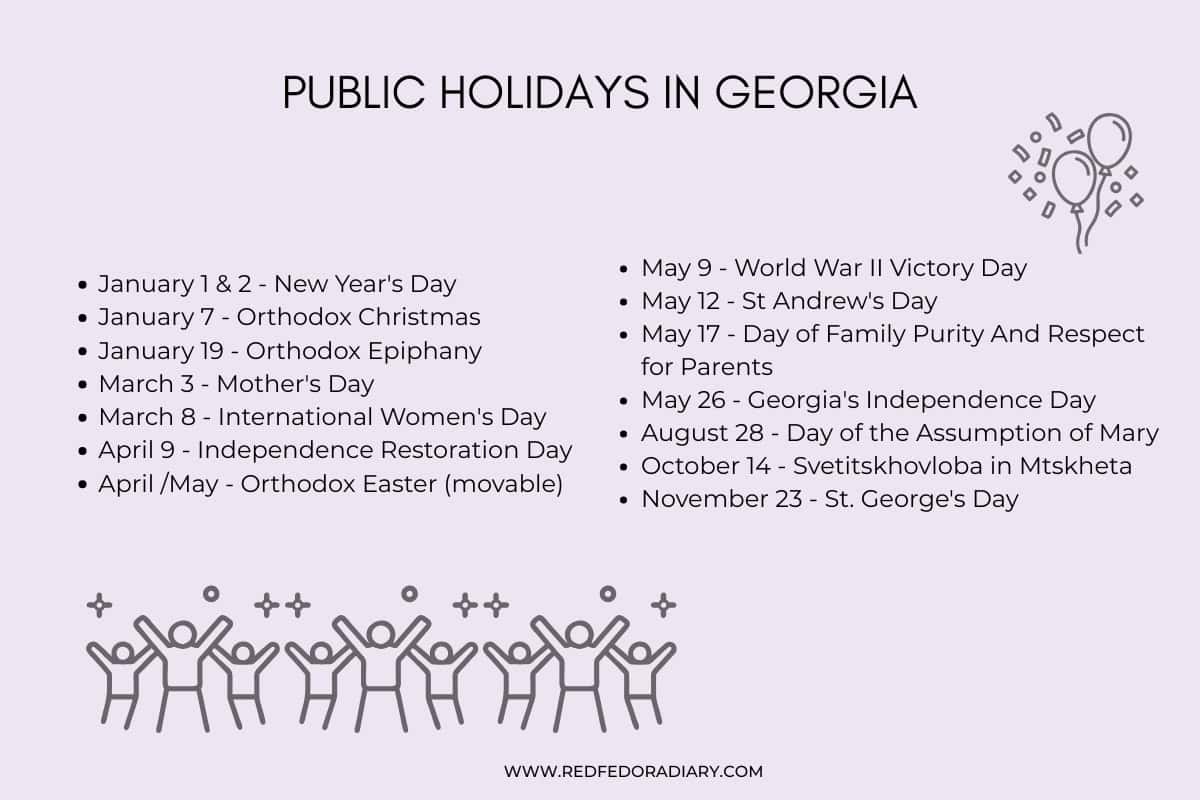
If your trip overlaps with a long holiday weekend, certain services may slow down, and intercity transport — especially train tickets to Batumi or Kutaisi — can sell out more quickly than usual.
That said, everyday life doesn’t completely shut down. Cafés, restaurants, supermarkets, and shopping centers usually operate as normal, and you won’t struggle to find places to eat or things to do in major cities.

On the flip side, arriving during a local celebration can be one of the highlights of your trip. The atmosphere shifts, food appears everywhere, and you experience a side of Georgian culture that most standard itineraries don’t account for.
May 26, Georgia’s Independence Day, is marked by military displays in Tbilisi and public events across the country. Tbilisoba, the capital’s annual festival in October, is lively and fun to experience — though it does come with crowds.

The Christmas and New Year period has its own distinct rhythm, with festive fairs appearing later than most European markets and often lasting longer. On January 7, the Alilo Parade takes place in cities (Tbilisi hosts the largest), featuring a traditional Orthodox Christmas procession that many visitors find memorable.
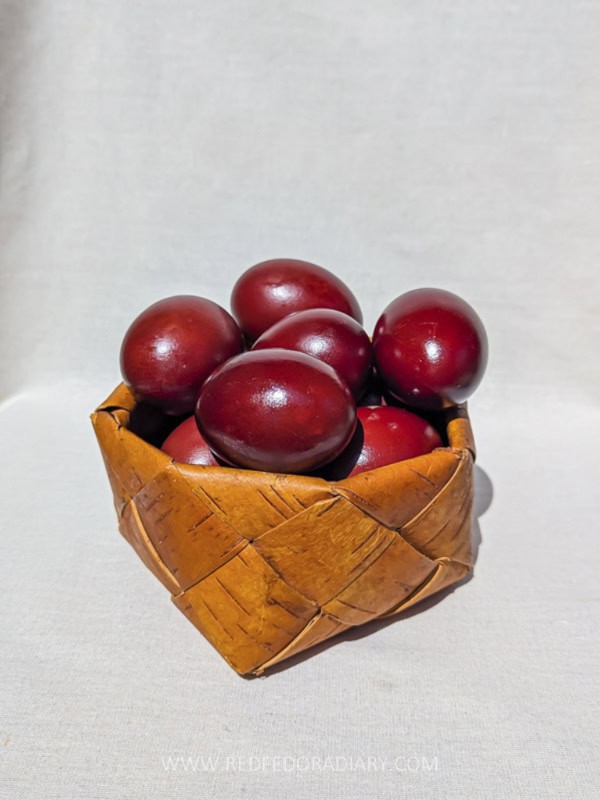
Orthodox Easter is another interesting time to visit. It’s celebrated later than Catholic Easter, and the traditions — from overnight church services to red-dyed eggs and festive meals — offer a cultural experience that feels very different from what many travelers are used to.

Georgia is a deeply religious country, and major Orthodox holidays are taken seriously. During celebrations such as Mariamoba or Svetitskhovloba in Mtskheta, churches can be packed, and the surrounding areas become very busy.
If visiting a specific monastery or religious site is on your list, it’s worth checking whether your dates overlap with a major holiday — it can genuinely change the atmosphere and experience.
Don’t jam your itinerary
If I could give you just one piece of advice for traveling in Georgia, it would be this: DON’T overpack your schedule.
Georgia has a way of making you want to see everything at once. With so many beautiful places packed into a relatively small country, it’s tempting to try to cover it all in one trip — but resist that urge.
An overstuffed itinerary is one of the most common mistakes I see in travel forums and during itinerary planning sessions. I regularly hear from travelers with five days who want to visit both Kazbegi and Mestia — sometimes adding Kakheti on top. On a map, it might look manageable, and in reality, it’s exhausting.
Georgia may appear small, but travel time between destinations adds up quickly. The journey from Tbilisi to Mestia, for example, takes more than seven hours without stops — and that’s in good conditions.
While the new east–west highway has shortened some routes, it isn’t fully complete, and once you leave the main corridors, roads can slow you down significantly.
In rural regions, you’ll encounter uneven pavement or partially concrete roads, and in mountain areas such as Tusheti or parts of Svaneti, roads are narrow, winding, and serpentine. Add changing weather, traffic, or spontaneous photo stops, and an entire day can disappear faster than expected.
But it’s not only about road conditions. Georgia rewards slow travel. You’ll want time to linger over long meals, pause at roadside viewpoints, wander through courtyards, or accept a spontaneous invitation to join a supra.
A good rule of thumb? Plan less than you think you need. Choose fewer destinations and experience them more deeply, rather than racing between them.
You don’t need to book everything far in advance
One of the most common questions I get during itinerary planning sessions is how far in advance to book hotels, tours, and transport. For most of Georgia, the honest answer is — not as early as you might think.
Unlike destinations where popular spots sell out months ahead, Georgia still allows a fair amount of flexibility. Outside peak season, you can often arrive with a loose plan and finalize details on the ground. Guesthouses in smaller towns and villages are usually best booked just a few days in advance.
There are, however, some important exceptions. July and August are the busiest months, and accommodation in popular mountain regions such as Svaneti, Racha, and Tusheti fills up quickly. The same applies to trekking routes like Mestia to Ushguli, where the number of guesthouses along the trail is limited.
Train tickets typically go on sale a few weeks before departure and can sell out on busy routes such as Tbilisi–Batumi. If you plan to rent a car, booking in advance through a smaller platform such as LocalRent or a larger comparison site like DiscoverCars gives you more flexibility and better pricing.
Organized tours and day trips are widely available on short notice, so you don’t need to pre-book every experience before arriving. Even my own architecture tours often receive last-minute bookings.
Restaurants rarely require reservations unless it’s a high-end venue or a major public holiday (refer to the section above). Marshrutka vans cannot be pre-booked — you pay on the day.
If you prefer traveling by coach, some routes, such as Tbilisi–Kutaisi, are now available on Okriba.ge, while Tbilisi Central Bus Station (via TKT.ge platform) in Ortachala offers more options nationwide.
The land border with Azerbaijan is still closed
Georgia’s land border with Azerbaijan has remained closed to regular travelers since the COVID-19 pandemic.
This means that if you’re planning a trip that includes both countries, you cannot currently travel from Georgia to Azerbaijan overland. However, travelers can still enter Georgia from the Azerbaijan side via the land border, subject to current regulations.
The easiest option is to fly between Tbilisi and Baku, which are connected by several short and reasonably priced flights.
Border policies can change, so it’s always a good idea to check the latest official updates before finalizing your travel plans.
Money & payments in Georgia
Cards work well — but always carry some cash
Georgia’s official currency is the Georgian lari (GEL), written as ₾. You’ll use both notes and coins in everyday transactions.
In cities like Tbilisi, paying by card is the norm. Restaurants, cafes, supermarkets, museums, bars, hotels, and even public transport accept contactless payments, including Apple Pay and Google Pay. Visa and Mastercard are widely accepted, while American Express has more limited coverage.
That said, carrying some cash is still a smart move. Smaller bakeries, neighborhood shops, local markets, marshrutkas, mountain villages, and rural guesthouses may prefer or require cash. Many family-run places simply don’t have card machines. Cash is also useful for tipping or paying drivers outside a ride-hailing app.
ATMs are easy to find, but plan ahead in rural areas
ATMs are widely available across the country, not only in Tbilisi but also in smaller towns. You’re unlikely to struggle to find one unless you’re heading into very remote mountain regions — in that case, withdraw cash before leaving the city. Tusheti, for example, does not have an ATM.
Most ATMs accept Visa and Mastercard. If you’re using American Express, you’ll need a Bank of Georgia ATM specifically. Local withdrawal fees are generally low, but your home bank may charge foreign transaction or ATM fees, so it’s worth checking in advance.
TBC Bank and Bank of Georgia are the two largest and most widespread banks in Georgia. Others, such as BasisBank, Liberty, and Tera Bank, sometimes offer slightly lower fees or higher withdrawal limits. If you use a Wise card, Bank of Georgia ATMs typically charge lower fees than TBC ATMs.
Most ATMs dispense Georgian lari (GEL) and US dollars, and some also offer Euros. The available currencies are clearly marked on the machine, so you can check before inserting your card.
If you arrive by air, skip the airport exchange counters and use an ATM in the arrivals hall instead. Airport exchange booths usually offer less favorable rates.
If you prefer to exchange foreign currency later, I suggest using Rico Credit branches or the booth at 6 Pushkin Street near Freedom Square that offers better rates than banks.
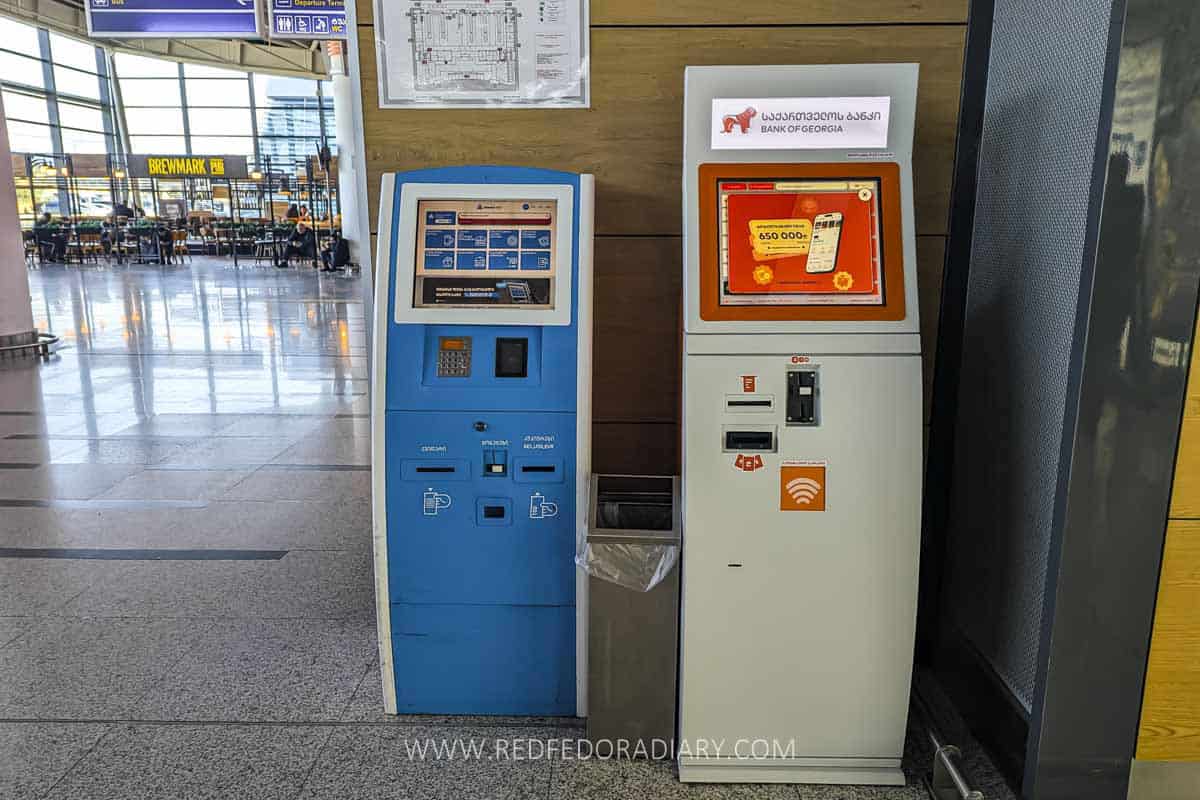
One small but important note: don’t confuse payboxes with ATMs. The brightly colored machines you’ll see on many street corners are used to pay bills or top up phone credit — they do not dispense cash.
Getting around Georgia
Public transport in Georgia works — but it’s not always straightforward
Georgia may look small on the map, but getting around isn’t always as straightforward as you might expect. Overland transport continues to improve, especially with new highway sections opening, but the system is still largely designed for local needs rather than perfectly timed tourist itineraries.
Long-distance travel usually involves a mix of marshrutkas (minivans), trains, shared taxis, or a few coach buses. Direct connections don’t always exist, and travel times are often longer than what Google Maps suggests — especially once you leave the main east–west corridor.
Marshrutkas remain the backbone of intercity travel. They run frequently (depending on destination), reach remote towns and villages, and are inexpensive. However, comfort varies: legroom can be tight, and air conditioning isn’t always guaranteed. Many routes to smaller towns operate on a “fill-and-go” basis, meaning the vehicle departs once it’s full rather than at a fixed time.

In Tbilisi, departures are usually from Didube or Samgori (Navtlughi) bus stations, depending on the direction. The area around Station Square also has marshrutkas heading to popular destinations.
Most marshrutkas cannot be pre-booked. You typically arrive at the station, find the correct vehicle, and pay the driver or ticket office. The main exception is routes departing from Tbilisi Central Bus Terminal in Ortachala, where some tickets can be purchased online through TKT.ge.
Coach buses operate on a few major routes. Companies such as Omnibus, City Bus, and Metro Georgia operate between cities, including Tbilisi, Kutaisi, Batumi, and Zugdidi, usually departing from the Ortachala bus station or Station Square (accessible via Dadniani Street). These buses are generally more comfortable than marshrutkas, and some routes allow online booking.
Trains are a reliable option on certain routes. The Tbilisi–Batumi line is the most popular, with modern Stadler trains offering the fastest rail connection in the country and stopping near Kutaisi International Airport. Other routes exist — most notably Tbilisi–Kutaisi — but coverage is still limited, and trains tend to be slower.

There’s no single centralized website that lists every bus, marshrutka, and train schedule in Georgia, which can make planning slightly confusing at first.
Platforms such as TKT.ge and Biletebi.ge list some routes for advance purchase, though not all of them. Okriba.ge currently sells online tickets for the Tbilisi–Kutaisi route and provides schedules for other routes, but only in Georgian.
For more remote regions like Svaneti, Racha, or Tusheti, public transport options become even more limited, often departing once a day, early in the morning. There is no direct Tbilisi-Tusheti transport because the narrow, serpentine road can only be driven by specialized vehicles. These shared Delicas depart from Alvani village.
Because of this, many travelers choose shared taxis or private drivers instead. It’s more expensive than public transport, but it saves time and removes much of the logistical stress.
Services like GoTrip are a popular and affordable option, offering fixed prices, professional drivers, and the flexibility to stop at viewpoints or villages along the way.
Renting a car opens up much more of Georgia
If you want to explore Georgia at your own pace — stopping at roadside wineries, taking detours through villages, stopping by to look at Soviet architectural gems and mosaics, or reaching places that public transport simply doesn’t serve — renting a car is hands down the best way to do it.
Rental prices can vary quite a bit depending on the company. International rental brands tend to be more expensive, while platforms that connect travelers with local rental agencies usually offer better deals.
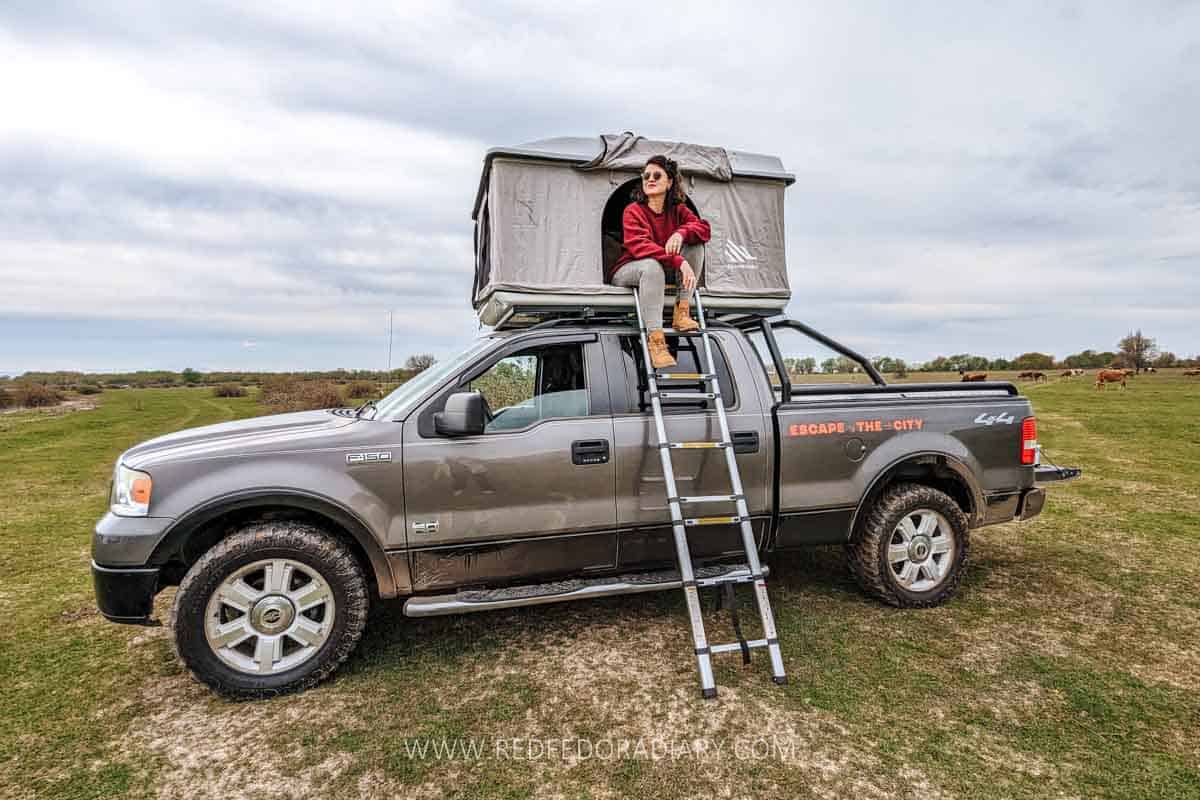
Services such as LocalRent are popular because they work with smaller Georgian companies and often have more competitive pricing. DiscoverCars is another platform that lets you compare multiple rental providers before booking.
When renting a car for mountain/village travel, do read the rental agreement carefully, and make sure you’re clear on what’s covered if something goes wrong on a dirt road in the mountains.
Road safety in Georgia requires awareness
Driving in Georgia is not quite like driving in many other countries, so it’s worth going in with realistic expectations — whether you’re behind the wheel or simply riding in a taxi or marshrutka.
The biggest challenge isn’t necessarily the roads themselves but driving behavior. Speeding, sudden lane changes, aggressive overtaking, and passing on blind corners are not unusual, even on narrow roads.
City driving — especially in Tbilisi — can feel chaotic. Lane discipline is sometimes loose, traffic can be unpredictable, and pedestrians often cross wherever they find a gap (although jaywalking can result in a fine).
Outside the cities, road conditions vary widely. Major highways connecting destinations such as Tbilisi, Kutaisi, and Batumi are in decent condition and relatively easy to navigate.
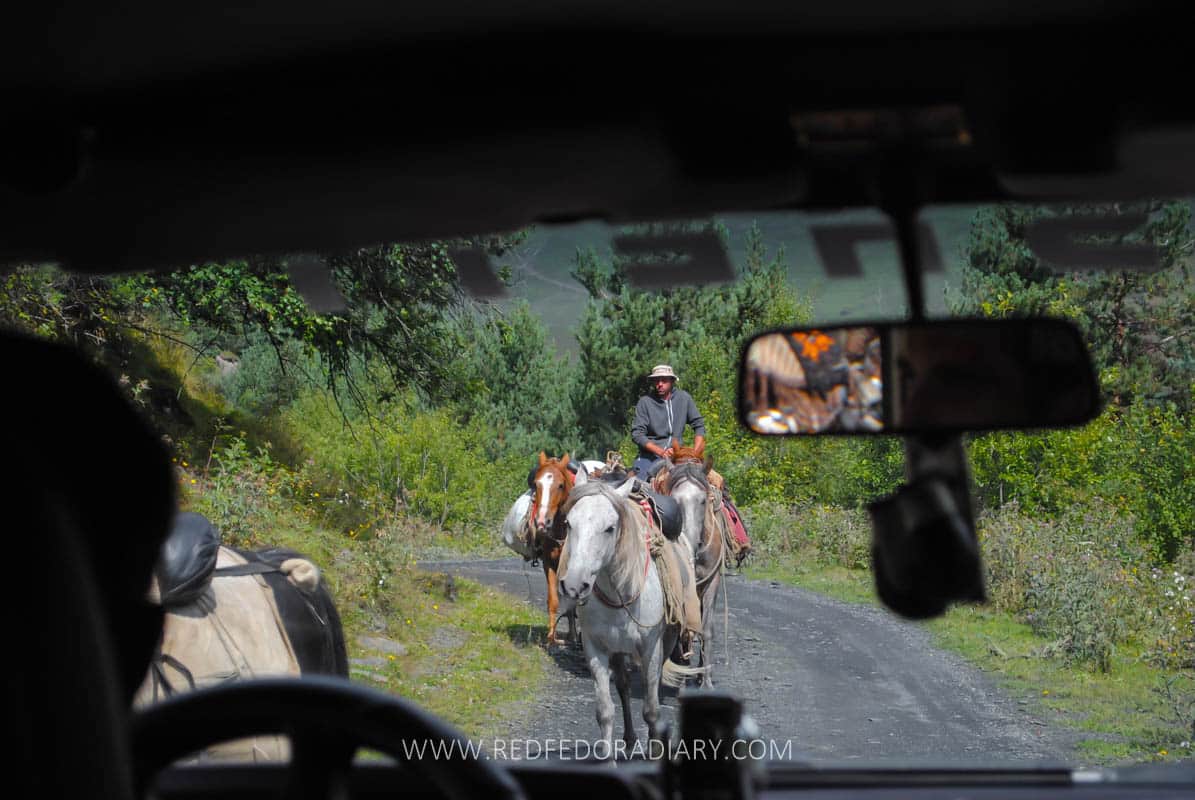
But once you head into villages or mountain regions, the situation changes quickly. Roads can become narrow, steep, winding, or partially unpaved, requiring extra attention and driving experience. A standard rental car won’t work there — you’ll need a proper 4×4 vehicle.
The road to Tusheti, for example, is one of the most dramatic routes in the country and not something to attempt without the right vehicle and driving confidence.
You’ll also frequently encounter sheep and cow herds resting or slowly crossing the road in rural areas, which can unexpectedly slow traffic.
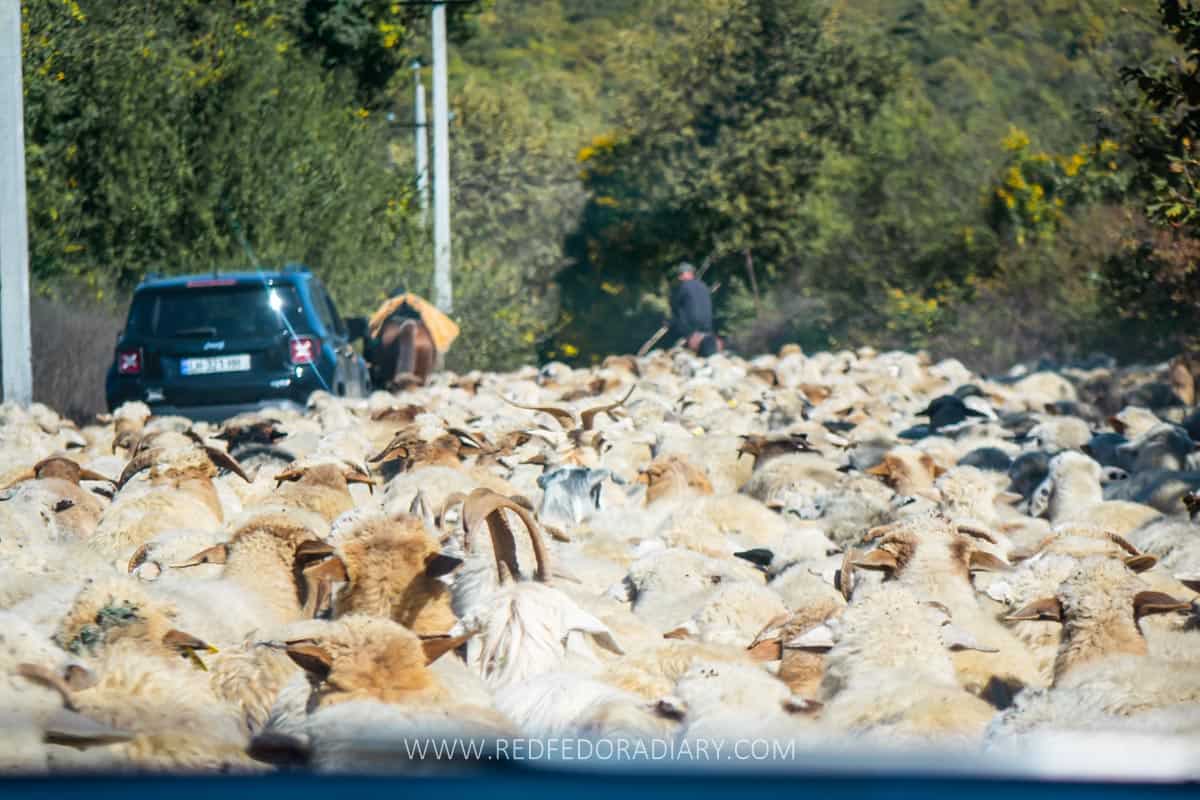
Weather can add another layer of difficulty, particularly during winter or heavy rain. For this reason, it’s best to avoid driving at night in unfamiliar rural or mountain areas where lighting is limited, and animals may appear on the road.
If you’re traveling with a driver or taxi, always wear your seatbelt, even if locals don’t always do the same. By law, only the driver and front passenger are required to wear one, but buckling up in the back seat is still the safer choice.
And if a driver appears reckless or under the influence of alcohol, it’s better to decline the ride and find another option.
When hiring a driver makes more sense
If you don’t want to drive yourself but also don’t love the idea of long marshrutka rides, hiring a car with a driver can be a very practical option for traveling around Georgia. This tends to work especially well for longer routes or journeys where you want to stop along the way.
GoTrip is a service I wish it was available worldwide. It allows you to book a car with a professional driver who takes you from one destination to another with unlimited stops along the way.
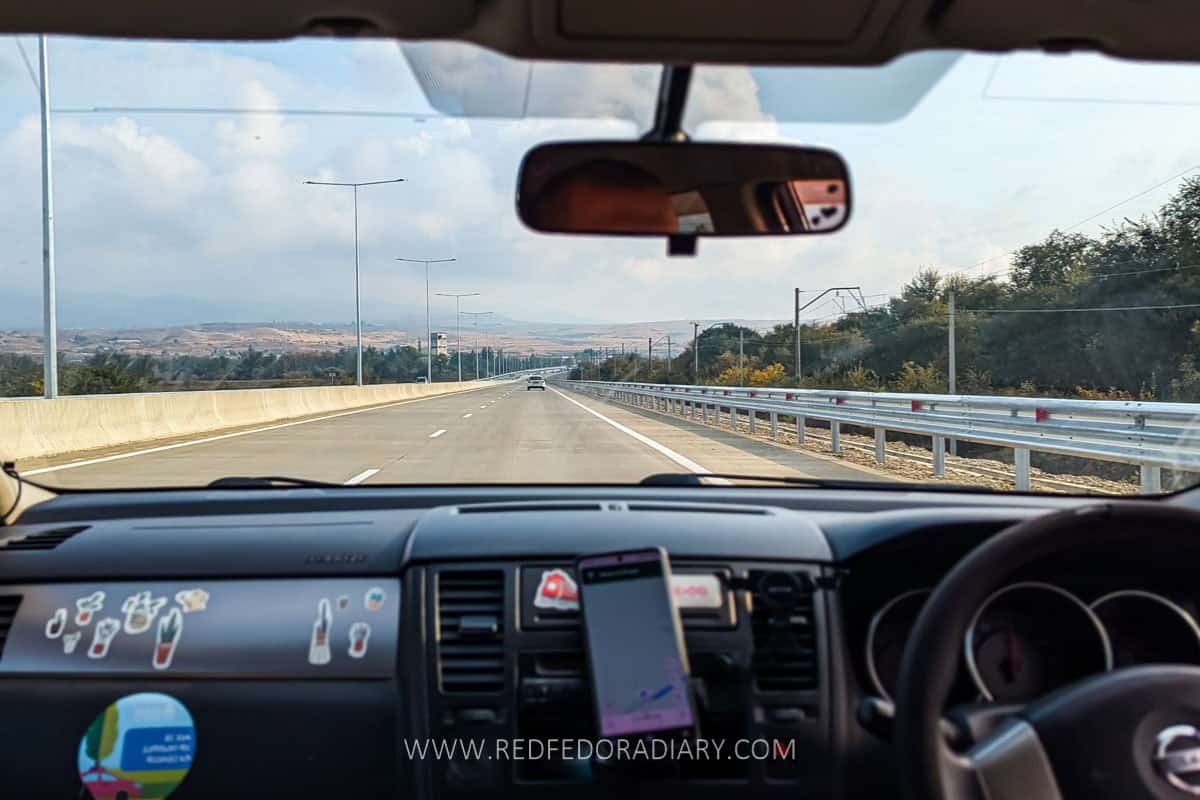
The booking process is pretty straightforward, and the cost is fixed, so there’s no need to negotiate or worry about unexpected charges later.
The biggest advantage is flexibility. Drivers are usually happy to stop for photos, coffee breaks, or short sightseeing detours along the way.
If you’re traveling with two or three people, the price is often comparable to — or only slightly higher than — other transport options, while saving time and making the journey much more comfortable.
Don’t rely on domestic flights when planning your itinerary
Georgia does have a small domestic flight network, but it’s very limited and not something you should plan your itinerary around.
Flights currently connect a handful of destinations, including Tbilisi (via Natakhtari Airport), Batumi, Kutaisi, Mestia in Svaneti, and Ambrolauri in the Racha region. These routes are operated by a single airline, Vanilla Sky, using small aircraft.
While the idea of flying to the mountains sounds convenient, in reality, these flights operate on a very limited schedule, and tickets can be difficult to secure.
They also depend heavily on weather conditions, especially in mountainous areas, which means delays or same-day cancellations are common.
Language in Georgia
English is widely spoken — but not everywhere
Getting around Georgia with English is manageable, especially in larger cities and tourist areas. Many younger Georgians speak English well, particularly those working in tourism, hospitality, and service industries such as hotels, cafes, restaurants, and tour companies.
Once you leave the main cities and head into smaller towns, markets, or rural areas, English becomes less common. In those situations, basic gestures, pointing at things, or using a translation app usually solves the problem quickly. Most people are willing to help even when language becomes a barrier.
The older generation often speaks Russian, which many learned during the Soviet period. While it’s widely understood, it can be politically sensitive, so it’s usually best to start conversations in English and switch only if necessary.
If you want to make interactions smoother — and often more memorable — learning a few basic Georgian words is always appreciated and often earns a smile. See the section below.
Learn a few Georgian words — it makes a difference
Georgian is one of the world’s oldest living languages and uses its own unique alphabet, which doesn’t resemble either the Latin or the Cyrillic scripts. At first glance, it might look intimidating, but pronunciation is actually fairly straightforward — words are spoken exactly as they’re written.
You don’t need to learn complex grammar to travel around Georgia. Knowing just a few basic words can make everyday interactions smoother and often earn a warmer response from locals, even if your pronunciation isn’t perfect. The effort is much appreciated.
Here are a few useful words you’ll need:
- Gamarjoba (გამარჯობა) — Hello
- Nakhvamdis (ნახვამდის) — Goodbye
- Madloba (მადლობა) — Thank you
- Arapris (არაფრის) — You’re welcome
- Gtkhovt (გთხოვთ) — Please
- Ki, Kargi, Diakh (კი, კარგი, დიახ) – yes/okay
- Ara (არა) – no
- Ra ghirs? (რა ღირს?) — How much it is / does it cost?
- Sad aris…? (სად არის…?) — Where is…?
- Inglisurad laparakob? (ინგლისურად ლაპარაკობ?) — Do you speak English?
- Gaumarjos (გაუმარჯოს) — Cheers (used during toasts)
Don’t rely only on Google Translate
Translation apps can be helpful when you’re traveling, but they don’t always handle Georgian particularly well. The language has its own structure and expressions that don’t translate smoothly into English, and direct translations can sometimes come out confusing or inaccurate.
Written Georgian, in particular, doesn’t always convert properly in translation tools. Simple words and short phrases usually work fine, but longer sentences may produce results that don’t make much sense.
It’s best to treat Google Translate as a support tool rather than your primary means of communication.
Using a few basic Georgian words or simple gestures often works just as well — and locals are generally happy to help.
Food, drinking & dining culture in Georgia
Try as much Georgian food as you can
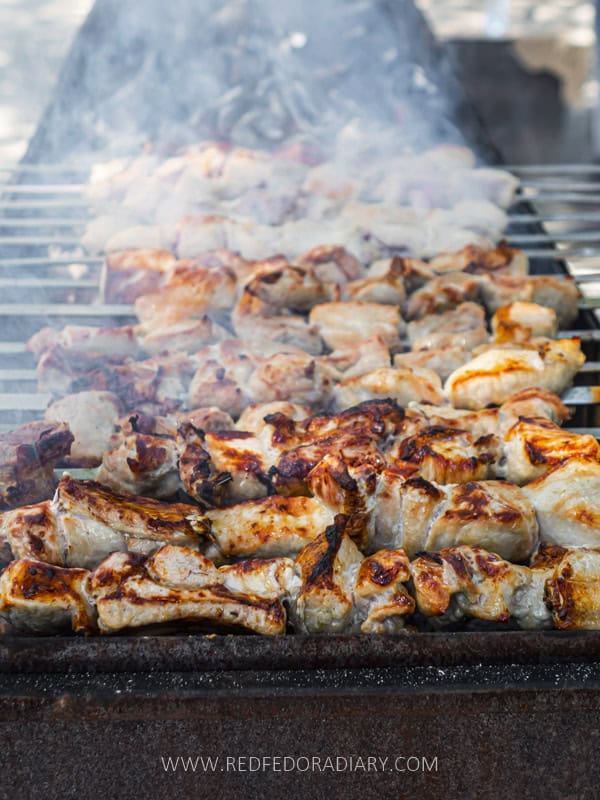
Khinkali (dumplings) and khachapuri (cheese-filled bread) are the two dishes most travelers hear about first, but Georgian cuisine goes far beyond those classics.

Food traditions vary widely across the country, and many regions are known for their own specialties. Some dishes are available year-round, while others are seasonal and appear on menus only at certain times. Because of this variety, you won’t find every Georgian dish in a single restaurant — trying different places is part of the experience.
If you follow a vegetarian or vegan diet, you’ll find plenty of naturally plant-based options. Georgian cooking uses many vegetables, beans, herbs, and walnuts.

Local desserts may look different from what you’re used to, but a few traditional sweets are definitely worth trying.
One of the best ways to understand Georgian food culture is to visit local markets and bazaars. Seeing piles of fresh herbs, cheeses, seasonal vegetables, homemade products, and colorful strings of churchkhela hanging from stalls gives a much clearer picture of everyday cooking than restaurant menus alone.
Know how khinkali are traditionally eaten
Khinkali dumplings come with their own eating etiquette. Traditionally, they’re eaten with your hands, not with a knife and fork.

The proper technique is to hold the dumpling by the top knot (the thick piece of dough at the top), bite a small opening in the side, sip the hot broth inside, and then continue eating the rest. The doughy knob is usually left on the plate rather than eaten.
Even though I’m a local, I don’t always follow this rule perfectly. Khinkali can be messy, and the broth tends to spill everywhere. I often use a fork to hold the dumpling by the knot while I bite and sip.

The one thing that will almost certainly raise eyebrows is cutting khinkali open with a knife and fork. Locals tend to view that as a culinary crime. The only time it’s somewhat acceptable is with vegetarian khinkali, which usually contains less broth.
If you want to try the best versions in the capital, I’ve put together a separate guide to the best khinkali in Tbilisi, based on where locals actually go.
Restaurant service can feel slower than expected
Dining in Georgia often follows a slower rhythm than what many travelers are used to. Meals here aren’t rushed, and tables are rarely turned over quickly.
Servers typically won’t check in repeatedly during your meal, and service can feel minimal or hands-off. If you need something, it’s perfectly normal to catch a waiter’s attention rather than waiting for them to come over.
Some visitors interpret this as poor service (which, in some cases, it truly is), but in many cases it reflects the realities of the hospitality industry, where long hours and relatively low wages are common.
That said, it’s important not to generalize. Many restaurants in Tbilisi offer genuinely warm, attentive service.
Tipping is appreciated but not required
Tipping in Georgia is fairly relaxed. It’s appreciated, but it’s neither mandatory nor expected.
If you’re happy with the service, rounding up the bill or leaving around 10% in restaurants and cafes is perfectly acceptable.
You may also notice a 10% service charge already included in many restaurant bills. This fee typically doesn’t go directly to the staff; instead, it covers general operational costs such as table supplies and service items.
Menus must also include 18% VAT in the listed price, so what you see on the menu should already reflect the final cost unless otherwise stated.
In taxis, bakeries, or hotels, tipping is minimal and often skipped entirely. There’s no expectation to tip for every interaction.
Understand how a Georgian supra works
If you’re lucky during your visit, you may be invited to a Georgian family gathering. If that happens, chances are you’ll experience a supra, the country’s traditional feast.
A supra isn’t just a large meal — it has its own structure and etiquette. At the center of it all is the tamada, the toastmaster who leads the table through a sequence of toasts. Guests usually follow the tamada’s lead rather than clinking glasses at random.
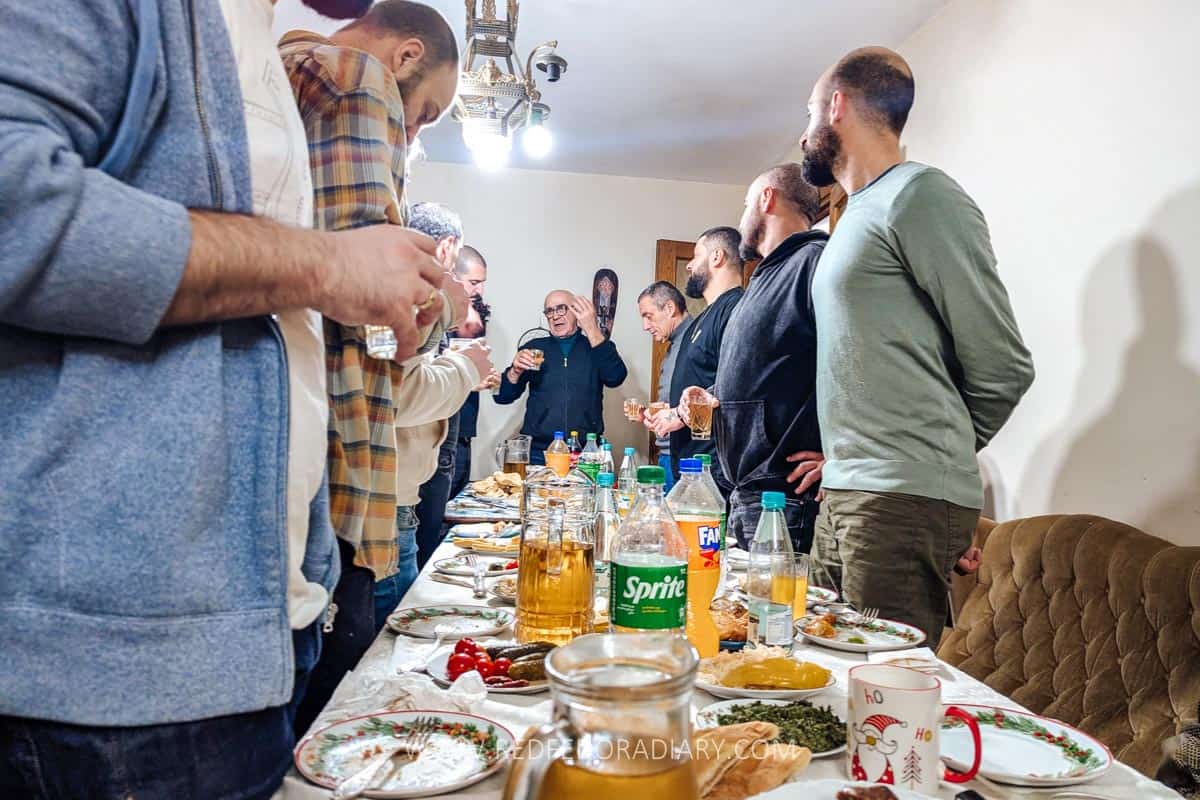
Food arrives in waves, wine flows generously, and conversations move between emotional, philosophical, and celebratory topics — often all within the same evening.
For first-time visitors, a supra can feel intense and overwhelming in the best possible way. If you want to understand what’s happening at the table and how to participate properly, I’ve written a separate guide explaining how a Georgian supra works and what to expect.
Cultural norms & social expectations
Traditional values run deep outside the cities
Tbilisi has a reputation as a liberal, open-minded city — and in many ways it earns that reputation. The nightlife is world-famous, the art scene is thriving, and the city has a distinctly free-spirited energy that can make it feel more progressive.
But that version of Georgia exists alongside a much more traditional one, and it’s important to understand both before you arrive.
Outside Tbilisi, and even in the city’s outskirt areas, Georgia is a deeply religious and socially conservative country, but locals are usually understanding when travelers don’t know the cultural norms.

The Orthodox Church holds significant cultural influence, traditional gender roles are still very much present, and public behavior that might seem completely normal back home can come across as disrespectful or inappropriate here.
Public displays of affection are relatively uncommon, particularly in smaller towns and villages, and dressing modestly is more typical outside urban areas. While there’s no strict dress code in everyday situations, covering shoulders and knees in rural settings is usually the safest choice if you want to blend in and show respect.
The expectations become stricter when visiting religious sites, which I cover below.
Dress properly in churches
Orthodox churches and monasteries have clear dress guidelines. Men should avoid shorts and sleeveless tops, while women are expected to cover their shoulders and knees and wear a headscarf. In some locations, particularly monasteries, women may also be asked to wear a skirt.

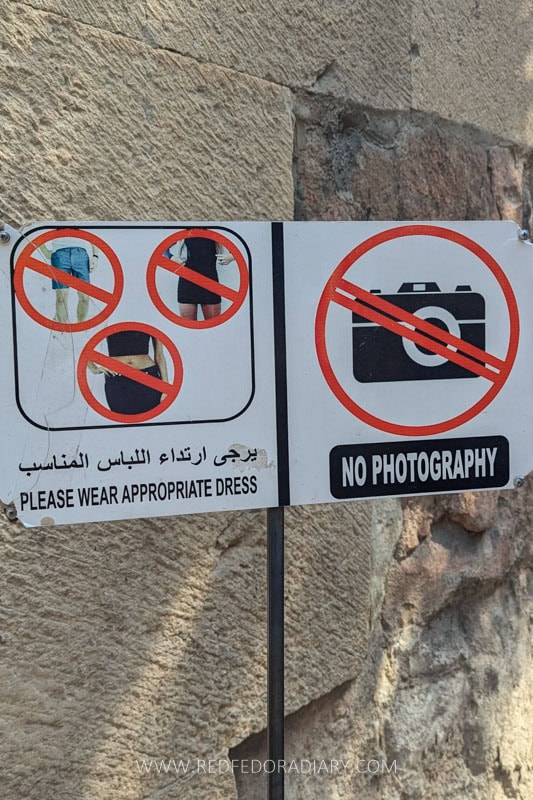
Most religious sites have shawls available at the entrance if you need one, but it’s easier to carry a lightweight scarf with you. Also remember that many historical attractions — including cave monasteries (Vardzia and Uplistsikhe) and fortress complexes — have active religious spaces, so quiet behavior and respectful dress are expected. Photography may also be restricted inside some churches.
Understand Georgian hospitality the right way
Georgian hospitality has a well-earned reputation. We say that “a guest is a gift from God”, which means that people might go out of their way to help, and strangers may invite you in for coffee or supra. There’s a genuine warmth in interactions that’s hard to put into words until you’ve experienced it.
But it’s worth understanding that it doesn’t always show up the way Western travelers might expect. It’s not polished or performative — it’s not the kind of customer service smile you get at a hotel front desk. It can be gruff on the surface, direct to the point of bluntness, and occasionally overwhelming in its generosity.
A Georgian host who insists you eat more, stay longer, or accept a gift you’ve already declined three times isn’t being pushy — that’s just how care gets expressed here.
If someone invites you into their home, takes you out of their way to show you somewhere, or insists on paying for the meal, the right response is to accept graciously rather than deflect out of politeness.
Refusing too firmly can actually come across as the ruder move. Go with it, say thank you, and if you get the chance to reciprocate in some small way, that gesture will mean more than you know.
On the flip side, in heavily touristed areas, some of that warmth is transactional, and it’s worth knowing the difference. Most of the time it’s obvious — but if something feels off, trust that instinct.
Quick practical Georgia travel tips
Georgia does not change daylight saving time
If you’re visiting in spring or autumn, it’s worth knowing that Georgia no longer observes daylight saving time. The country stays on the same time year-round.
Because many other countries still shift their clocks forward or back, the time difference between Georgia and places in Europe or elsewhere changes during those transition periods. This can sometimes cause confusion when checking flight schedules, booking transport, or coordinating calls with people back home.
Decide between a local SIM card and an eSIM before you arrive
Having mobile internet in Georgia makes travel much easier. You’ll likely rely on it for navigation, booking taxis, checking transport schedules, messaging accommodations, and looking up places on the go.
If you’re visiting for a short trip and sticking with cities, an eSIM can be the simplest option. You can activate it before arriving and connect as soon as you land, without needing to visit a mobile shop.
For longer stays or exploring remote and mountain areas, a local SIM card is usually the better choice. They’re inexpensive, easy to set up, and often offer better coverage and faster speeds nationwide than international eSIM providers.
Among the local operators, Magti generally offers the best nationwide coverage, which becomes noticeable once you leave major cities. If you’re mostly staying in the lowlands, Silknet works perfectly well too, with similar prices and data packages.
Local SIM cards can be purchased at official provider shops in the city, and you’ll need your passport for registration. The process usually takes only a few minutes, and unlimited data packages are very affordable.
Tap water is safe to drink
Georgia has abundant freshwater sources, many of them originating in the Caucasus Mountains, so tap water is generally safe to drink across the country.
That said, if you’ve just arrived, it’s a good idea to take it slow on your first day or two. Some travelers find that switching immediately to a new water source can cause a slight upset stomach. Buying bottled water at the beginning gives your body a bit of time to adjust.
You might also notice that the taste varies by area. In Tbilisi, the water can taste slightly chlorinated or mineral-heavy to some people, and older pipes in certain neighborhoods may add a faint metallic note.
Once you’ve settled in, using a reusable water bottle is a convenient and environmentally friendly way to stay hydrated while exploring.
Electricity plugs are the same as in most of Europe
Georgia uses standard European Type C and Type F plugs with 230V and 50Hz.
If you’re traveling from most European countries, you won’t need a power adapter. Visitors coming from the US, UK, or other regions with different plug types will need a universal travel adapter.
Opening hours are not always reliable
Opening hours listed on Google Maps aren’t always accurate in Georgia. Many businesses don’t update them regularly, and some rely more on social media than on Google listings.
If you’re planning to visit a specific cafe, restaurant, or shop, it’s often better to check their Instagram or Facebook page, where updates are more likely to appear. Sending a quick message can sometimes be the fastest way to confirm opening hours, especially if calling isn’t convenient.
Sundays are business as usual in Georgia
If you’re used to traveling in parts of Europe where Sundays feel quiet and many businesses close, that’s not the case in Georgia.
Shops, supermarkets, cafes, restaurants, and convenience stores stay open on Sundays, often with the same hours as the rest of the week. It’s common for people to go out, shop, or meet friends as usual.
The main exceptions are banks and government offices, which are typically closed.
Public toilets are not always easy to find
Public restrooms aren’t always clearly marked or easy to locate in Georgia. Even in larger cities like Tbilisi, finding one quickly can sometimes be challenging.
Outside major urban areas, facilities can be limited and may not always meet the cleanliness standards travelers are used to. In rural regions and along highways, toilets are often simple squat-style facilities.
At some locations, there may be a caretaker who provides toilet paper, but this isn’t guaranteed, so carrying a small pack of tissues is always a good idea.
Many popular tourist attractions with ticketed entry have proper restrooms, but smaller sights and churches may not.
Roadside stops along highways — especially near Gori or Terjola — are common places for travelers to take breaks, often combining a restroom stop with a visit to a cafe or supermarket.
Some toilets charge a small fee of 1–2 GEL, so it’s worth keeping a bit of cash handy. A few might also accept only a card.
Be aware of street dogs
Street dogs and cats are a common sight everywhere in Georgia. In Tbilisi and other larger towns, most dogs are vaccinated, tagged, and monitored to some extent by municipal programs. They’re usually calm, accustomed to people, and spend much of the day sleeping in parks or public squares.
Many locals look after them by providing food and water, and in central areas, they’re often well cared for.
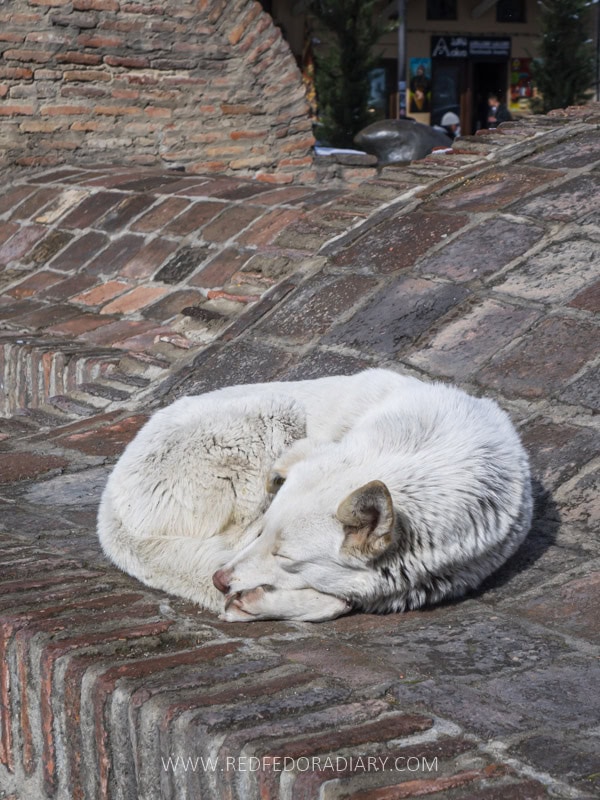
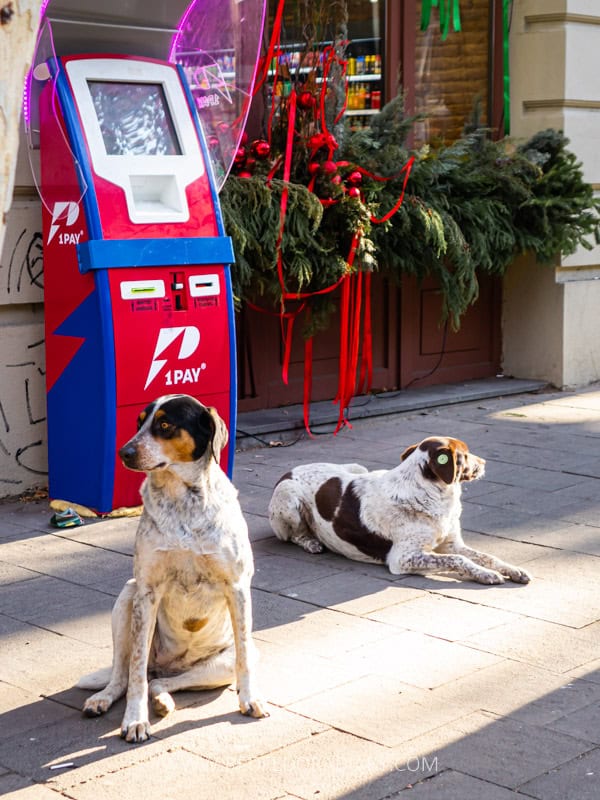
Outside the bigger cities, the situation can be different. In rural regions, animals may receive less support, and their health conditions can vary. While most dogs are not aggressive, it’s always best to approach unfamiliar animals cautiously.
If you’re hiking or traveling in remote areas, be aware of shepherd dogs protecting livestock. These dogs are trained to guard flocks and can be more territorial. If you encounter them, it’s best to stop, keep your distance, and call out so the shepherd can call them back.
Some travelers choose to carry a small bag of dog food to share with animals they meet along the way, especially in rural areas where resources are limited.
Very good review of Georgia for the visitors. All information is correct, just e-visa platform was closed unfortunatelly.
Thank you for notifing! Will update accordingly
Great Article. Thank you for sharing all this info. Looking forward already for when i visit. Kindly recommend or share helpful information on getting local photographers that are pocket friendly as well.
Thanks