
9 Things to Do in Gurjaani, Georgia + Travel Tips
When planning a trip to Kakheti, most travelers focus on popular destinations like Telavi and Sighnaghi and overlook smaller towns along the way. Gurjaani is one of them, and although it might not be an obvious tourist destination, there are enough interesting things to do in Gurjaani to make the visit worth it.
What I particularly like about Gurjaani is that it offers a different experience from the usual Kakheti sightseeing route. It’s a place to explore local history, discover unusual architecture and public art, and glimpse everyday life in a Georgian town shaped less by tourism. You won’t find the same tourist infrastructure as in more popular destinations, but that’s part of what makes exploring Gurjaani interesting.
This Gurjaani guide focuses mainly on attractions within the town itself, making it useful for planning a day trip from Tbilisi, even if you’re relying on public transport. However, if you’re traveling by car, hiring a private driver, or staying overnight, I’ve also included a few places worth visiting beyond the town’s boundaries at the end of the guide.
Where is Gurjaani?
Gurjaani is a small town in eastern Georgia’s Kakheti region, approximately 115 km from Tbilisi. It sits on the edge of the fertile Alazani Valley, at the foothills of the Gombori mountain range, surrounded by vineyards and agricultural landscapes.
The town is the administrative center of Gurjaani Municipality and lies along the main road connecting Telavi with Signaghi, making it a convenient stop when exploring Kakheti.
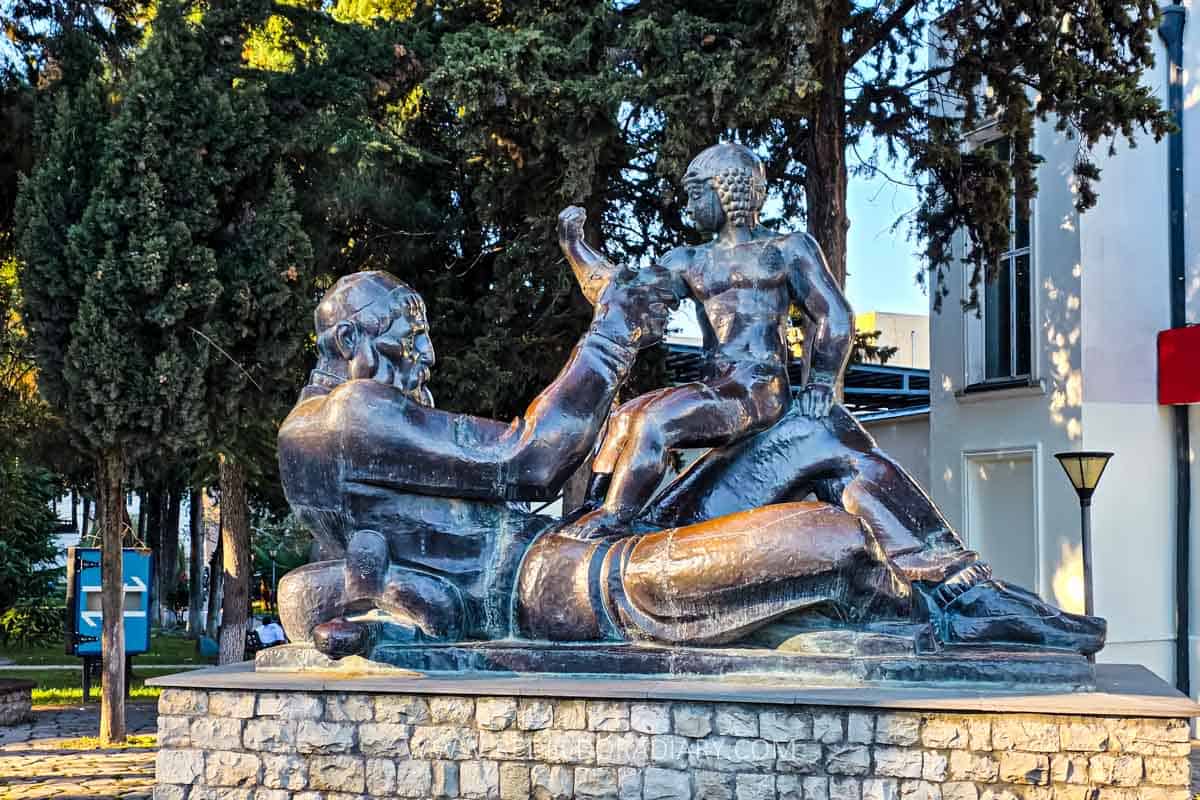
Gurjaani has long been associated with viticulture and winemaking, but it also has an interesting history. Although the settlement first appeared in written records in the early 16th century, it grew into a larger town during the Soviet period and received official town status in 1934.
Wine production, food processing, and the railway played important roles in its development, leaving traces of its Soviet-era past that you can still see today.
Best things to do in Gurjaani
Discover the unusual Akhtala mud resort
Gurjaani is known for its naturally occurring therapeutic mud. Located in Akhtala Park in the city center, the Akhtala mud spa has long been known for mud treatments and is one of the city’s most distinctive attractions.
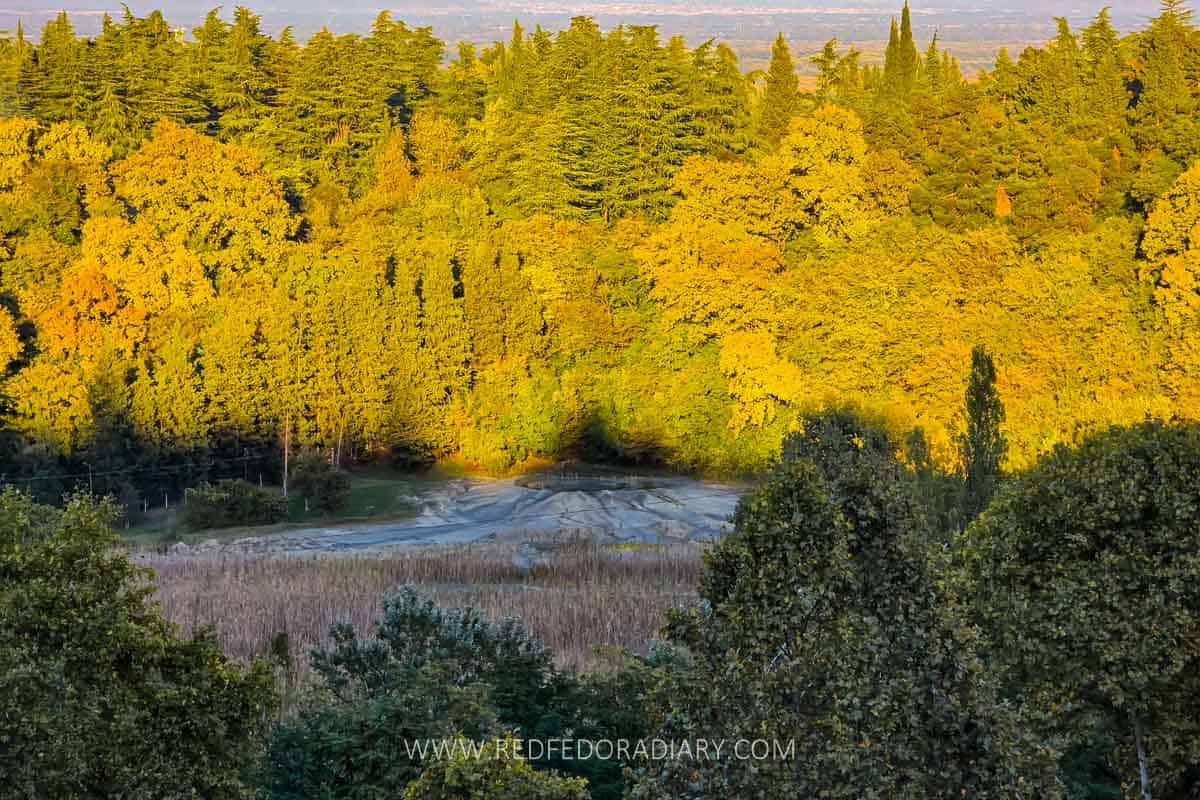
Akhtala has pseudo-volcanic mud that rises naturally to the surface rather than being extracted from a lake or riverbed. Historically, people have used the mud in therapeutic baths, particularly to relieve joint, muscle, and other health conditions.
During the Soviet period, Akhtala operated as a health resort, attracting visitors for treatments and rehabilitation. My grandma was one of the frequent visitors for the treatments. Its traditional therapy season runs from May to November.
Even if you’re not interested in mud therapy, it is still worth knowing about, and maybe even doing, a mud bath just for the experience.
Visit the Nato Vachnadze House Museum
One of the most interesting things to do in Gurjaani, connected to Georgian culture, is to tour the Nato Vachnadze House Museum, dedicated to one of the biggest stars of Georgian and Soviet cinema in the 1920s and 1930s.
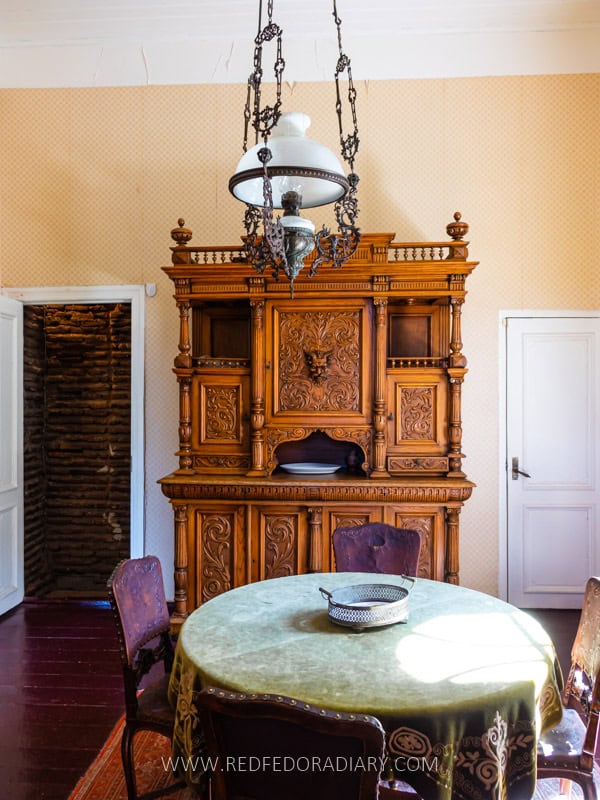
Born in Warsaw to a Georgian aristocratic father from the Andronikashvili family and a Polish mother, Nato Vachnadze became one of the most recognizable faces of early Soviet cinema. Her beauty, screen presence, and acting talent made her enormously popular and a celebrated figure in Georgian film history.
She was also the mother of two prominent Georgian film directors, Eldar and Giorgi Shengelaia. Eldar is particularly well-known for directing Georgian cinema classics such as An Unusual Exhibition (1968), The Eccentrics (1973), Samanishvili’s Stepmother (1977), and Blue Mountains (1983).
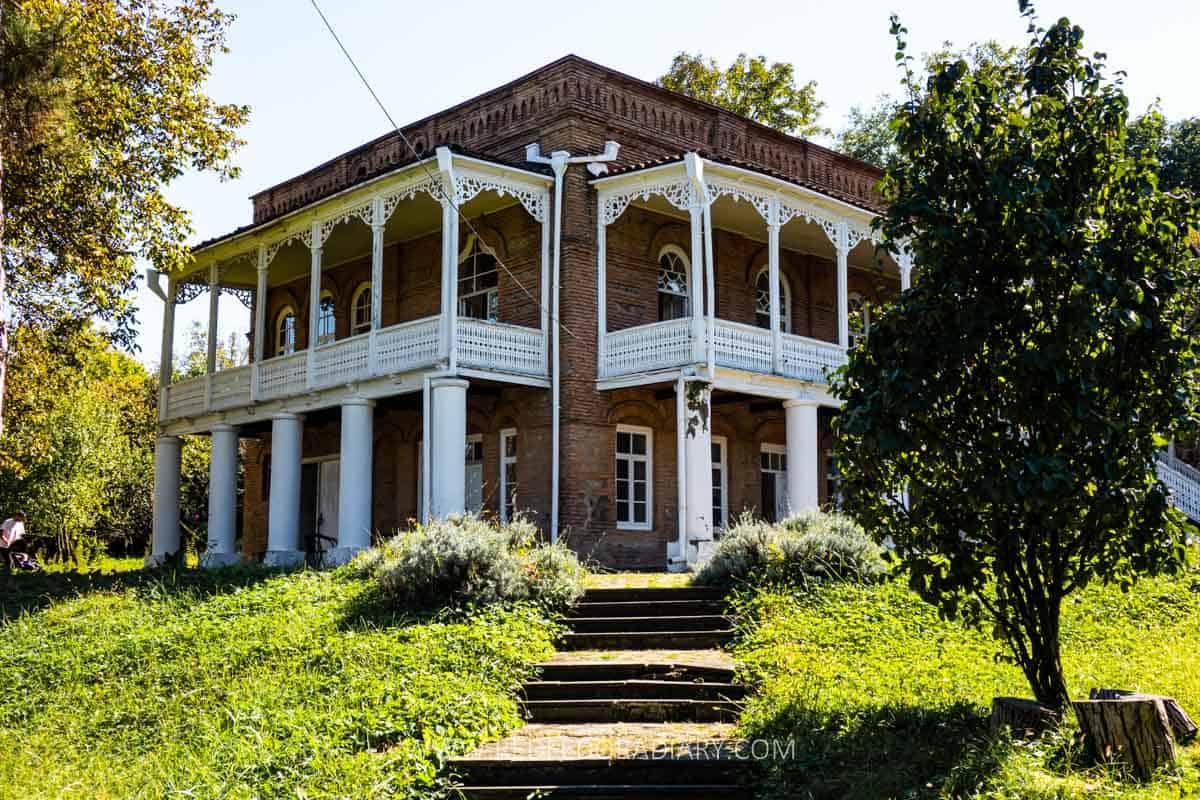
The museum opened in 1981 and consists of two buildings, each offering a different perspective on the family’s history and Nato’s career.
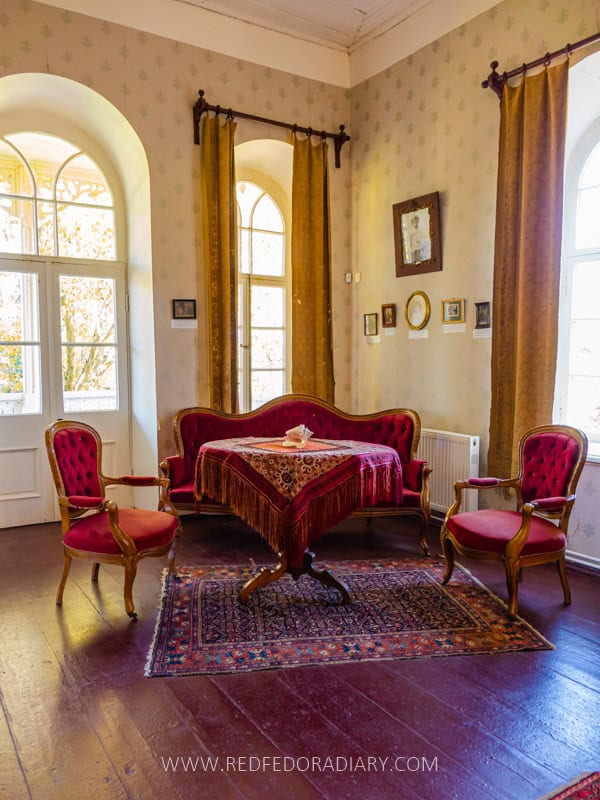
The family’s early 19th-century ancestral home, a beautiful two-story house with a traditional Georgian carved wooden balcony, features rooms with antique furniture, household objects, and personal belongings that offer a glimpse into this aristocratic family’s everyday life. The walls are filled with old family photographs, portraits, and a family tree tracing their history.

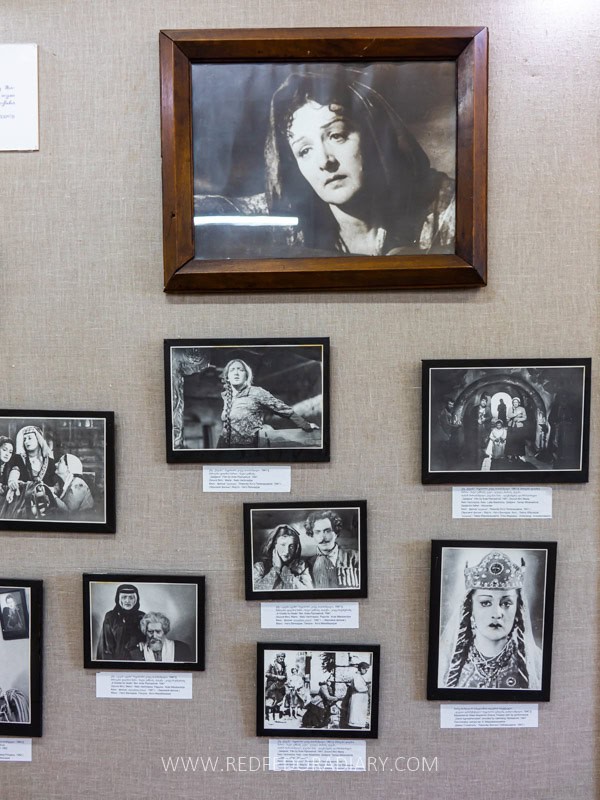
The second building is dedicated specifically to Nato Vachnadze and her acting career. Here, you’ll find a few costumes from her films, along with an extensive collection of black-and-white photographs, movie posters, and images documenting her performances, celebrations, and public life. There’s even a note from Stalin.
Although the museum doesn’t offer guided visits in English, I found it relatively easy to explore independently. Most exhibits have English titles or short labels, so you can get a general idea of what you’re looking at even without understanding Georgian.
- Opening hours: Tue-Sun from 10 am to 6 pm; Closed on Mondays
- Entrance fee: adults – 3 GEL for Georgian citizens; 5 GEL for other nationalities. Cash only!
Practical information: The museum is just outside Gurjaani’s town boundaries, so if you’re exploring on foot or using public transport, you’ll need a local taxi to get there and back.
Admire the only two-domed church in Georgia
Dating to the 8th–9th centuries, Gurjaani Kvelatsminda Church is a rare example of early medieval Georgian architecture, built during the so-called transitional period as church designs evolved toward the distinctive styles of later centuries. Dedicated to the Dormition of the Mother of God, its name, Kvelatsminda, translates to “All Saints” in Georgian.
Its unusual architecture makes it an important stop on your itinerary: it is the only surviving church in Georgia with two domes.
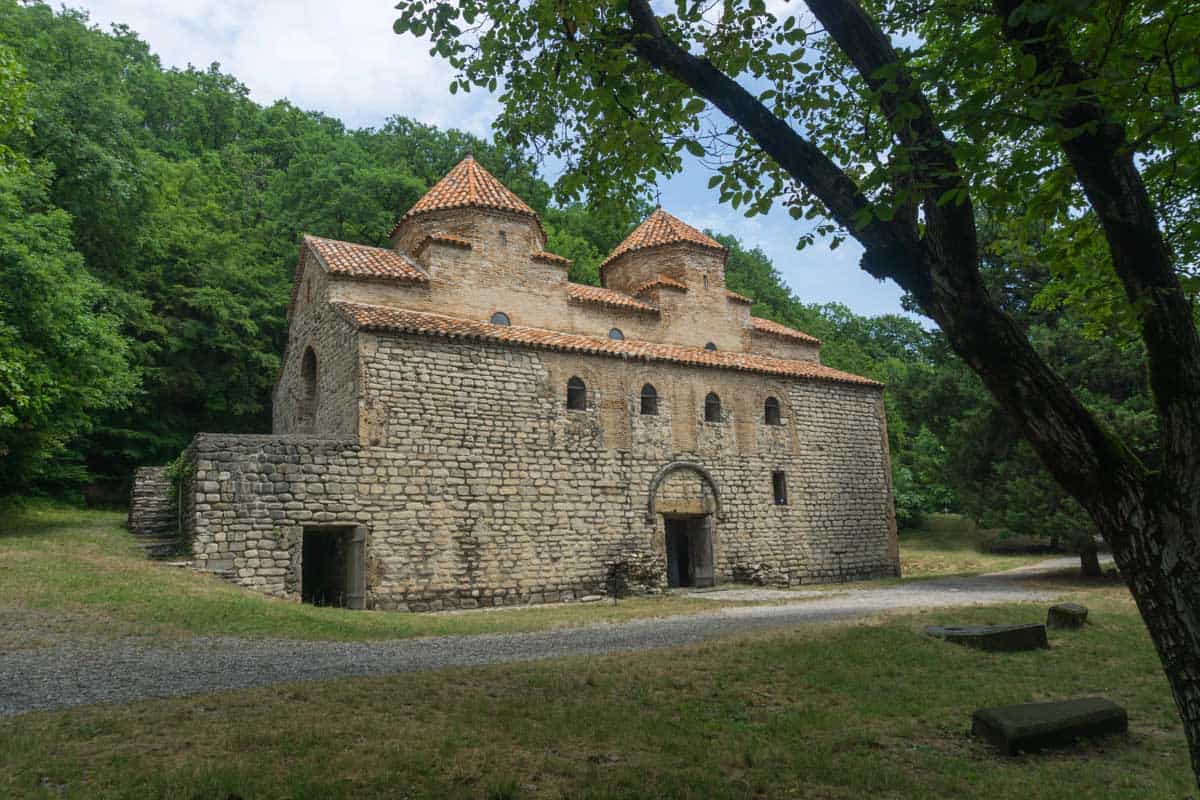
Unlike many Georgian churches built primarily from cut stone, Kvelatsminda was constructed mostly using cobblestones, with pumice stone for the corners and decorative details, and brick for the arches, pillars, and vaults.
The church has a three-nave layout, with a taller central nave and two low, octagonal domes rising above its eastern and western sections. Parts of the building are built on two levels, adding to its unusual design.
Religious services here ended in the 17th century after Persian invasions and raids from neighboring Dagestan. Worship briefly resumed in 1822, but the church was abandoned again in 1845 when the local clergy moved to Khirsa Monastery.
In 1938, the church grounds were cleared, and the building was restored as a historical monument. Further conservation work followed in 2010, helping preserve this unique example of Georgian religious architecture.
Even if you’ve visited plenty of churches around Georgia, Gurjaani Kvelatsminda is worth adding to your Kakheti itinerary.
Practical information: The church is about 2 km from Gurjaani’s town center, so if you’re visiting by public transport and exploring on your own, it’s best to take a local taxi.
Explore Gurjaani’s colorful street art
Over the past few years, Gurjaani has developed a growing street art scene, with colorful murals transforming otherwise ordinary residential buildings into large outdoor artworks. Thanks to the Tbilisi Mural Fest, international and Georgian artists have brought their distinctive styles to the town.
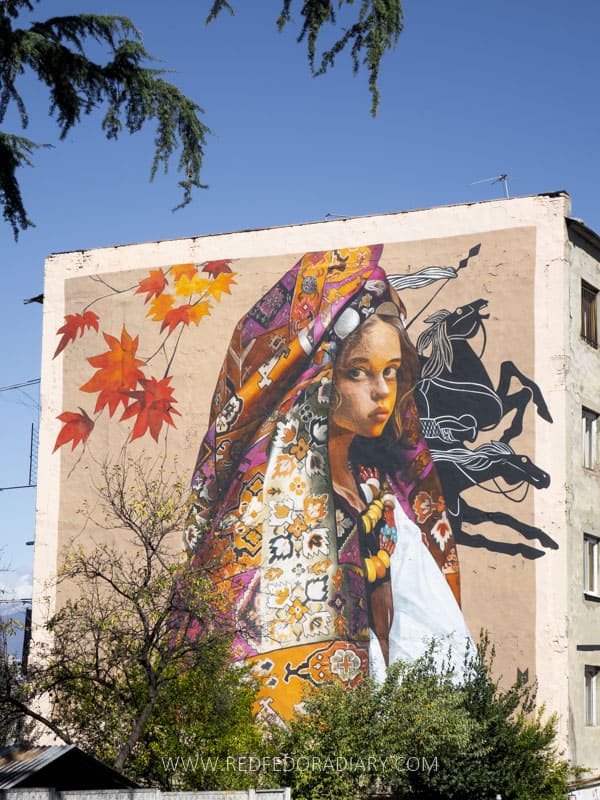
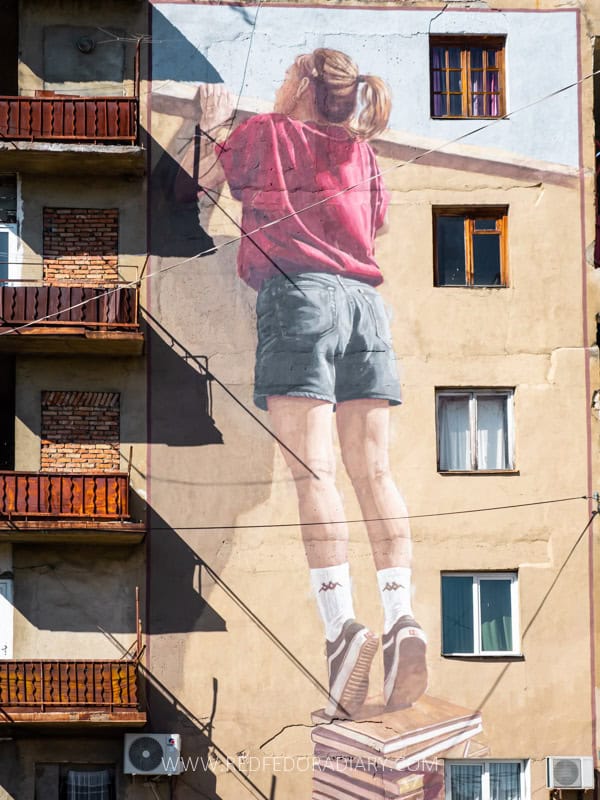
Some of those murals draw inspiration from Georgian cinema, history, and cultural traditions, while others feature contemporary artwork that adds a splash of color to the town’s streets.
Unlike in larger cities, where murals can be scattered across different neighborhoods, Gurjaani’s street art is easy to explore, with several impressive works within walking distance of each other.
For exact locations and information on each mural’s meaning and the artists behind it, check out my dedicated article on Gurjaani Street Art, which also includes a map.
Don’t miss Soviet-era mosaics
If you love Soviet-era art and architecture as much as I do, don’t miss the massive mosaic that decorates Gurjaani’s former bus station in the town’s main square. Created in 1985 by Georgian artists Leonardo Shengelia and Enriko Kopadze, this impressive artwork wraps around three sides of the building and depicts different aspects of Georgian life and culture.


The central composition is particularly striking, featuring colorful scenes that celebrate Georgian winemaking, music, and folk traditions. Look closely, and you’ll spot traditional dancers, singers, hunters, and even people making churchkhela, Georgia’s famous walnut-and-grape-juice sweet. I’ve seen plenty of Soviet mosaics across Georgia, but this is one of the few I’ve come across depicting churchkhela-making!
The right side of the building, facing Akhtala Park, features scenes of cars and people, while the mosaic on the left is partly hidden behind later extensions to the building. Thankfully, the original artwork hasn’t been destroyed, although you can’t see that section in its entirety.
See the massive WWII Memorial of Glory
Overlooking Gurjaani and the Alazani Valley, the Memorial of Glory, also known as the Memorial of Heroes Fallen in the Great Patriotic War, is an enormous Soviet-era memorial complex dedicated to local soldiers who fought and died during World War II.
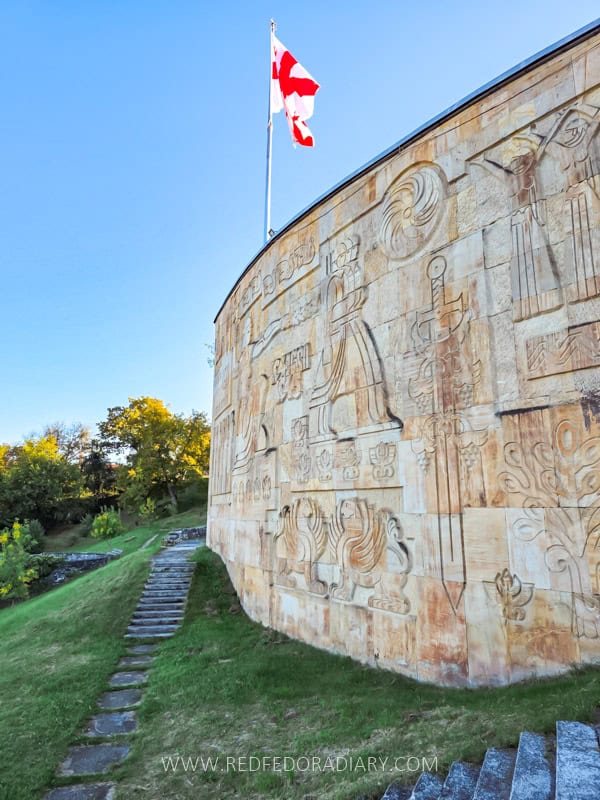
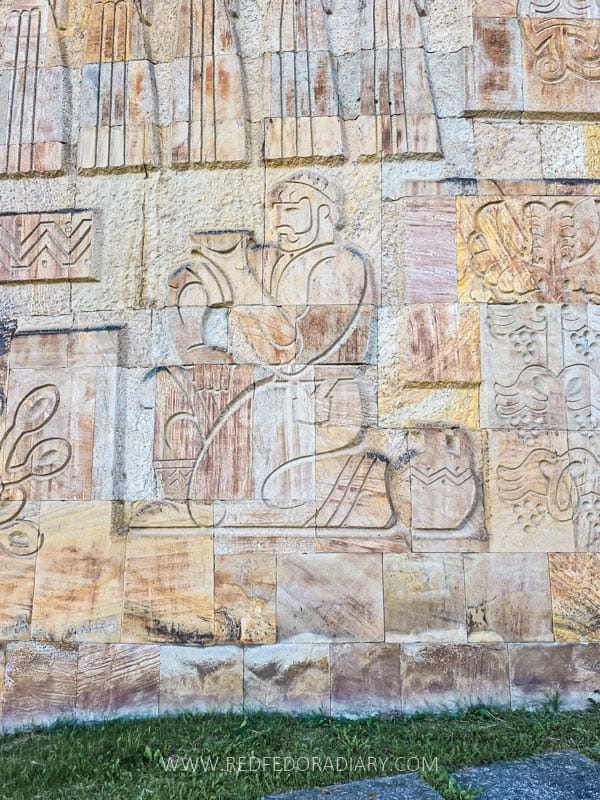
Unveiled in the 1970s, the memorial spans several terraces and includes monumental sculptures, carved stone walls, a small war museum, an amphitheater, and other war-related elements.
Its most recognizable feature is the approximately 15-meter-tall bronze sculpture known as the Father of a Soldier, created by Georgian sculptor Merab Berdzenishvili. The monument was inspired by the famous 1964 Georgian film Father of a Soldier (Jariskatsis Mama), directed by Rezo Chkheidze and starring Sergo Zakariadze.
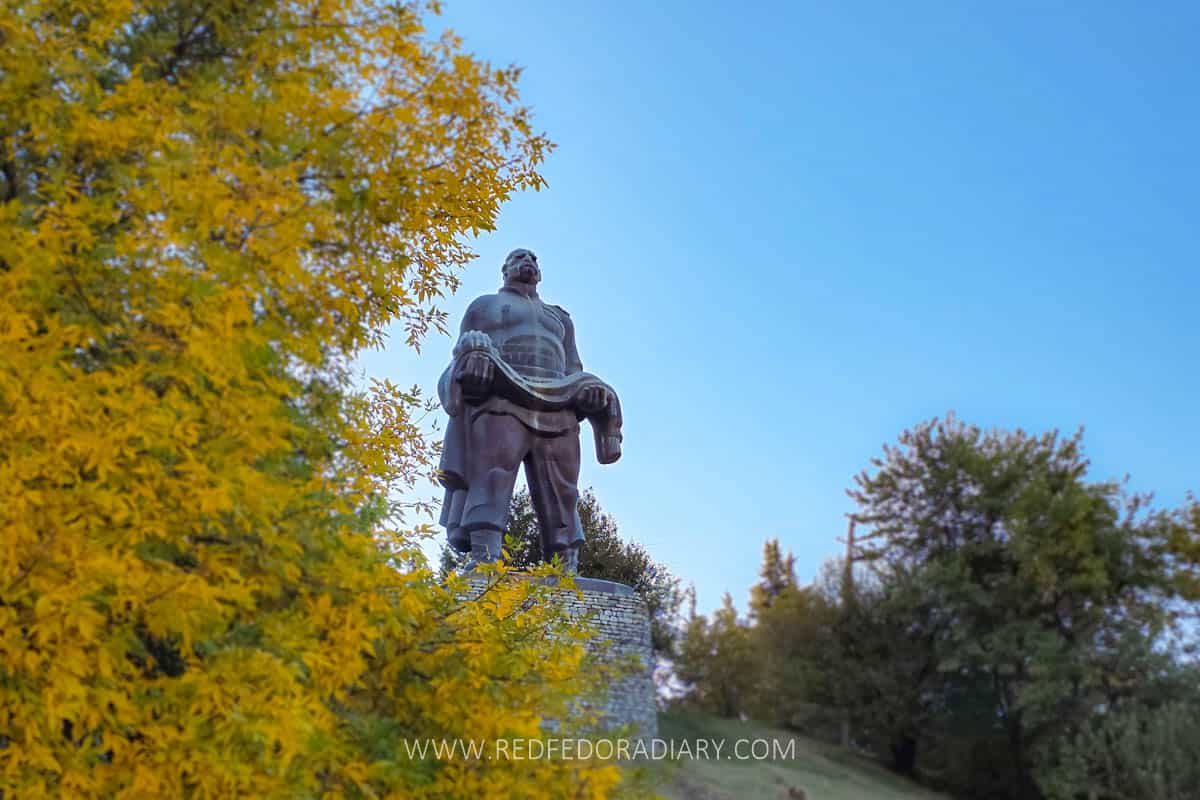
The film follows Giorgi Makharashvili, an elderly Georgian farmer who travels to the front to find his wounded son. His journey becomes a moving story of parental love, sacrifice, and the devastating consequences of war. The sculpture depicts the film’s main character holding a soldier’s helmet and cloak, symbolizing the grief of families who lost loved ones.
Another striking feature is the massive curved stone panorama, decorated with intricate relief carvings. The composition brings together scenes of war, remembrance, and celebration, alongside traditional Georgian motifs, stylized figures, and decorative patterns. Its yellowish-beige stone and monumental scale make it an impressive example of Soviet-era public art incorporating Georgian cultural symbolism.
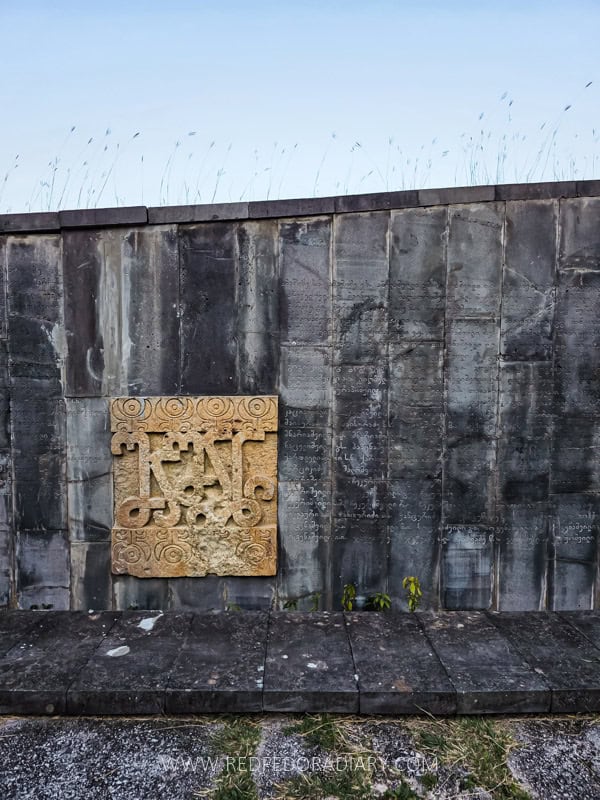
I was particularly interested in the grey stone Wall of Eternity, where the surnames of thousands of Gurjaani Municipality residents who died during World War II are engraved. According to the museum guide, about 12,800 residents served in the war, and around 4,600 never returned. The names are grouped by their home villages, with each village name beautifully carved in decorative Georgian lettering.
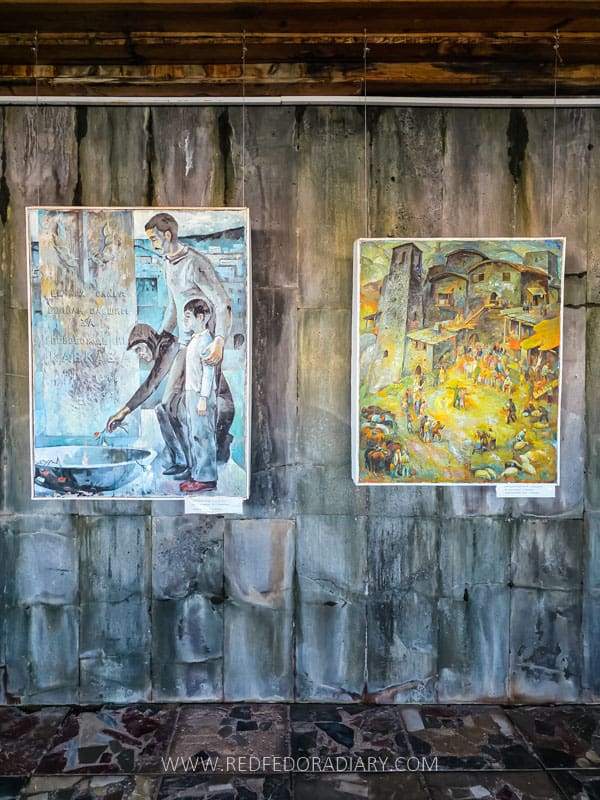
The memorial also includes a Museum of Glory, which displays paintings and sculptures by Georgian artists depicting different aspects of the war, while the nearby amphitheater serves as a space for public gatherings and events.
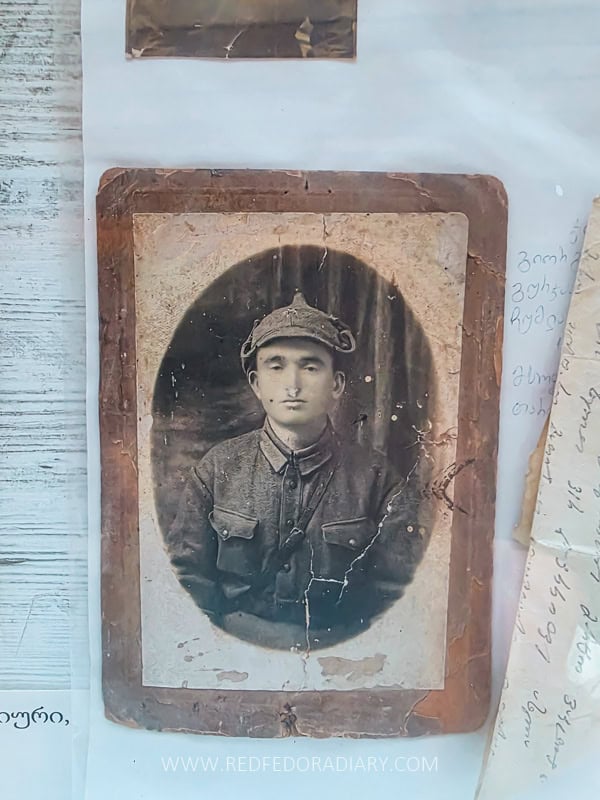
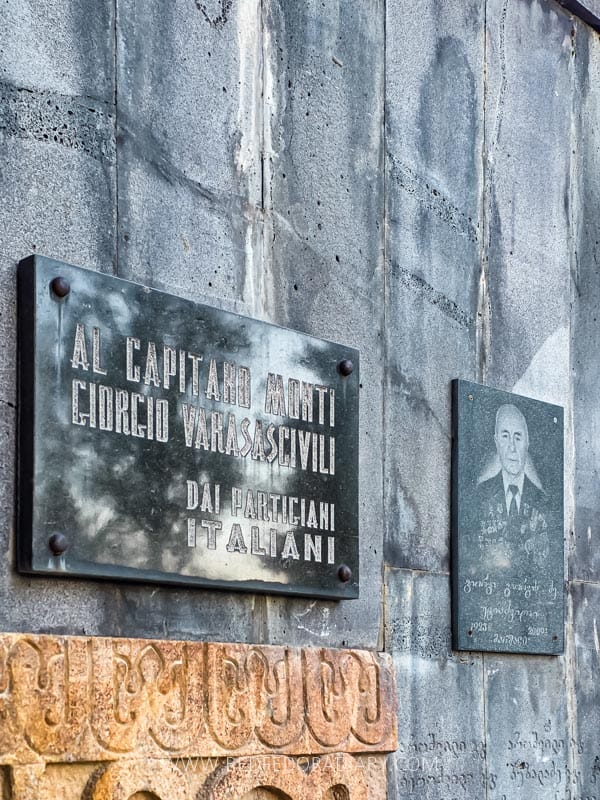
Another detail worth looking for is a commemorative plaque honoring Giorgi Varazashvili, a Georgian soldier from the village of Jimiti in Gurjaani Municipality who became known as Captain Monti while fighting alongside Italian partisans during World War II.
After escaping captivity, Varazashvili joined the Italian resistance in the Treviso region in 1944. He became known for his courage and eventually died during a reconnaissance mission in February 1945, when he and his fellow partisans were surrounded by enemy forces. Rather than risk revealing their comrades’ location, they sacrificed their lives. Varazashvili was later awarded Italy’s Bronze Medal for Military Valor, and Italian partisans brought a commemorative plaque to Gurjaani to honor his memory.
- Opening hours of the Museum of Glory:
- Entrance fee: adults – 3 GEL for all nationalities; Cash only!
Browse the local Gurjaani bazaar
For a glimpse into everyday life in Gurjaani, stop by the local bazaar, where residents shop for fresh produce, groceries, and household essentials.
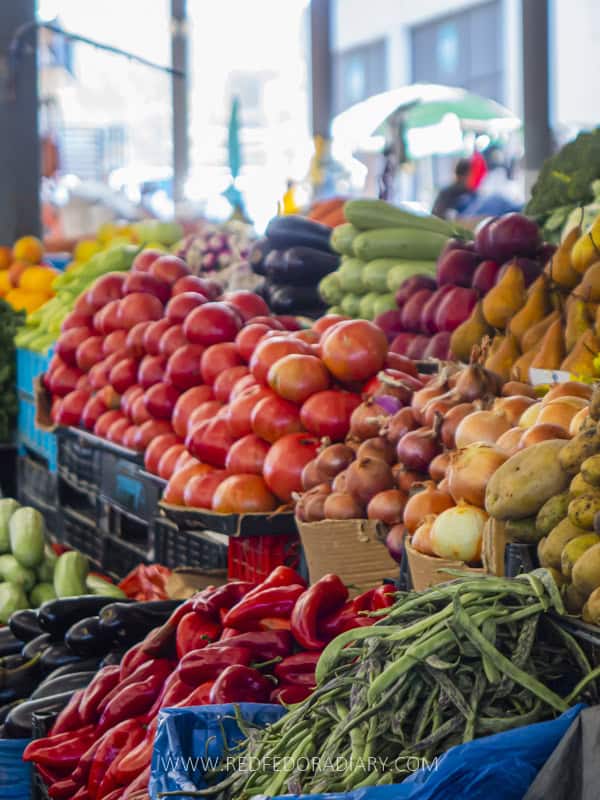
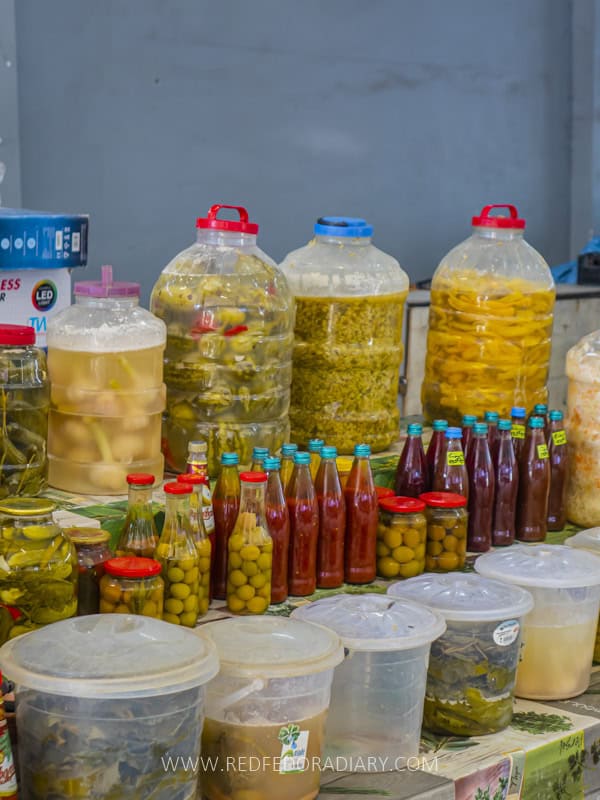
As you wander between stalls, you’ll find seasonal fruits and vegetables, fresh herbs, nuts, homemade pickles, jams, and other goodies, along with locally grown products, kitchenware, and everyday items. Depending on the season, you might also come across grapes, churchkhela, and other Kakhetian specialties.
The bazaar is a good place to browse regional produce and pick up fresh fruit or snacks for the rest of your trip. You don’t need much time here, but it’s worth including in your Gurjaani walk.
Spot Soviet-era sculptures on the Gurjaani Culture House
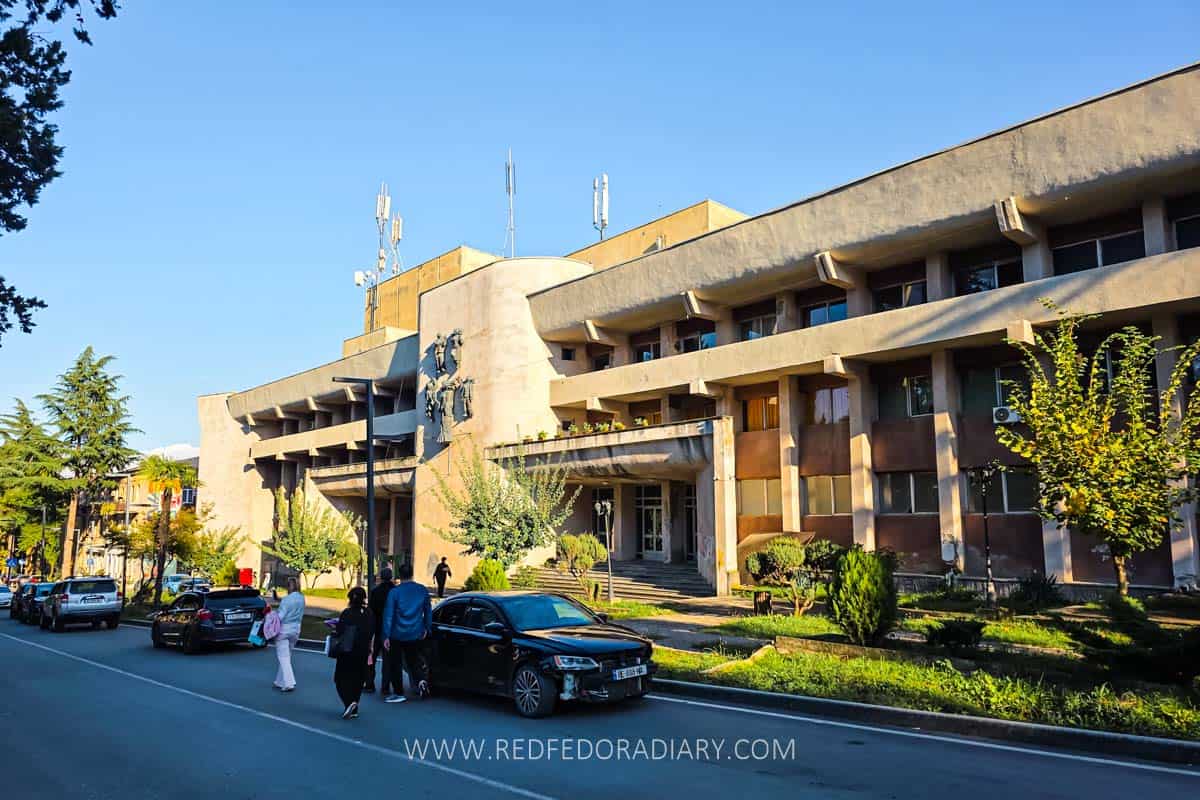
Right next to Akhtala Park, stands the Gurjaani Culture House, originally built as a Soviet Palace of Culture.
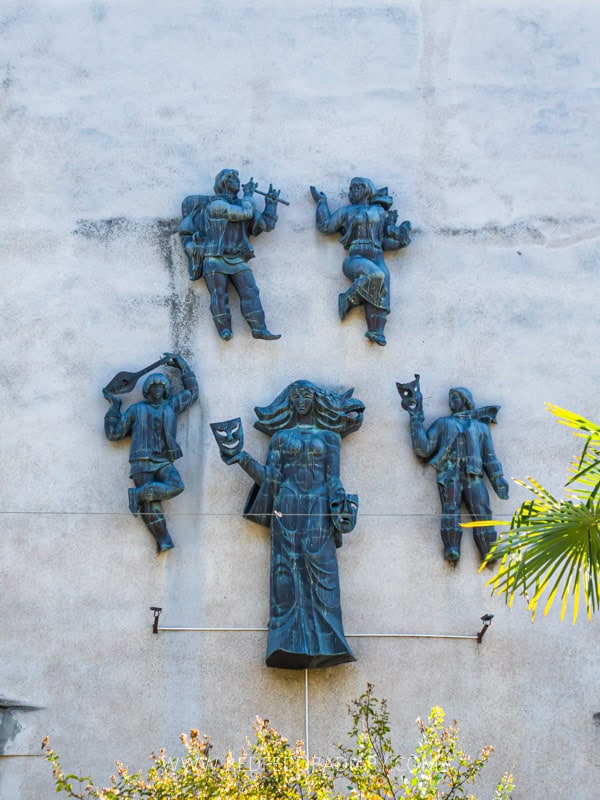
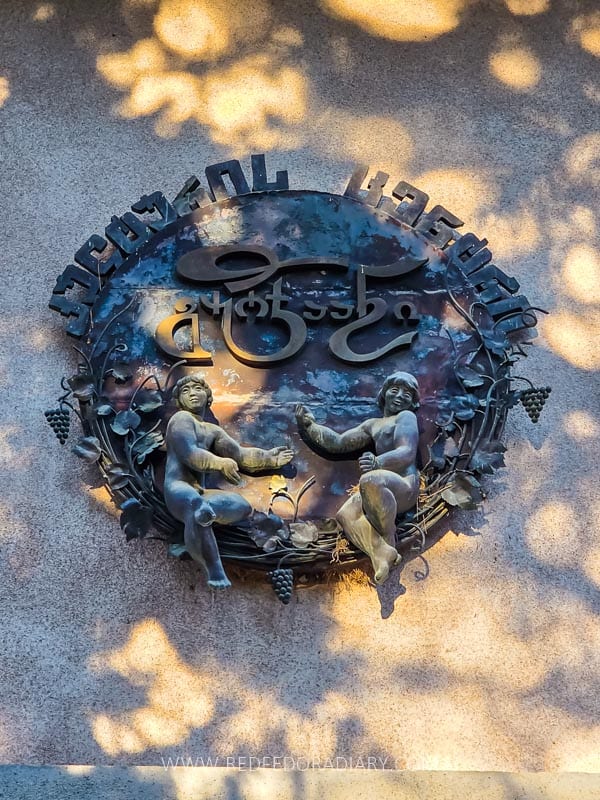
On one curved exterior wall, you’ll notice a group of metal sculptures depicting musicians, dancers, and theatrical performers. Some figures appear to play traditional instruments, while others wear folk costumes or hold theatrical masks, representing different forms of Georgian artistic expression.
Another decorative element is a circular metal composition featuring two seated figures surrounded by grapevines and grape clusters. The artwork also incorporates “Culture Center Gurjaani” in Georgian lettering.
Attend the Gurjaani Wine Festival
If you’re visiting Gurjaani in October, try to plan your trip around the Gurjaani Wine Festival, one of my favorite wine festivals in Georgia. Held annually in Akhtala Park, this massive celebration brings together hundreds of winemakers from across the country, making it a fantastic opportunity to discover Georgian wines and experience Kakheti’s winemaking traditions.

Wine is naturally the main attraction, with everything from small family wineries to larger producers showcasing their wines. But what I particularly love about this festival is that it goes well beyond wine tasting. Local artisans display their handmade crafts, farmers sell seasonal produce, and food stalls prepare traditional Georgian dishes right in front of you.
The atmosphere is especially lively around the food stalls, where mtsvadi (Georgian barbecue) sizzles over open fires, fresh shoti bread bakes in traditional tone clay ovens, and large pots of tatara, a thickened grape-juice mixture used to make churchkhela, bubble over the flames. You’ll also find plenty of freshly made churchkhela and other regional specialties to try or take home.
How to get to Gurjaani from Tbilisi
Gurjaani is easy to reach from Tbilisi, whether you drive yourself or use public transport. Depending on your budget and travel style, you can rent a car, take a marshrutka, share a taxi, or book a private transfer.
By car
Driving is the easiest and most flexible way to get to Gurjaani, especially if you want to explore attractions outside the town or combine your visit with other places in the municipality or Kakheti without relying on local taxis.
Gurjaani is about 104 km from Tbilisi, and the drive takes around two hours, depending on traffic and where you start in the capital.
If you need to rent a car, I recommend LocalRent, which offers a wide selection of vehicles at affordable prices, sometimes with insurance included.
By marshrutka
Taking a marshrutka (minibus) is a budget-friendly way to travel from Tbilisi to Gurjaani, especially if you plan to explore the town on foot.
Minibusses depart from Tbilisi Central Bus Station in Ortachala every 20-40 minutes or so starting from 7:35 am to 7 pm. The tickets are available for purchase on TKT.ge. Tickets cost 15 GEL.
By shared taxi
Shared taxis are a popular and slightly more comfortable alternative to marshrutkas when traveling from Tbilisi to Kakheti.
You can find them near Isani metro station (exact location), where drivers wait for passengers heading to various towns across the region. Some even stand near the metro exit, calling out destinations to attract travelers.
The main drawback is that shared taxis typically depart only once all seats are occupied. If you don’t want to wait, you can pay for the remaining empty seats and leave earlier.
By private transfer
Another comfortable option, and often more affordable than you might expect, is booking a private transfer through GoTrip.
Think of it as a long-distance taxi service, but with more flexibility. You can choose your driver based on reviews, travel directly from your accommodation in Tbilisi, and add several sightseeing, photo, or rest stops along the way without changing the price.
Unlike a regular taxi, GoTrip lets you book your journey in advance at a fixed price agreed upon when you book.
Best time to visit Gurjaani
The best time to visit Gurjaani is spring (April–May) and autumn (September–October), when the weather is generally pleasant for exploring the town on foot and visiting nearby attractions in Kakheti.
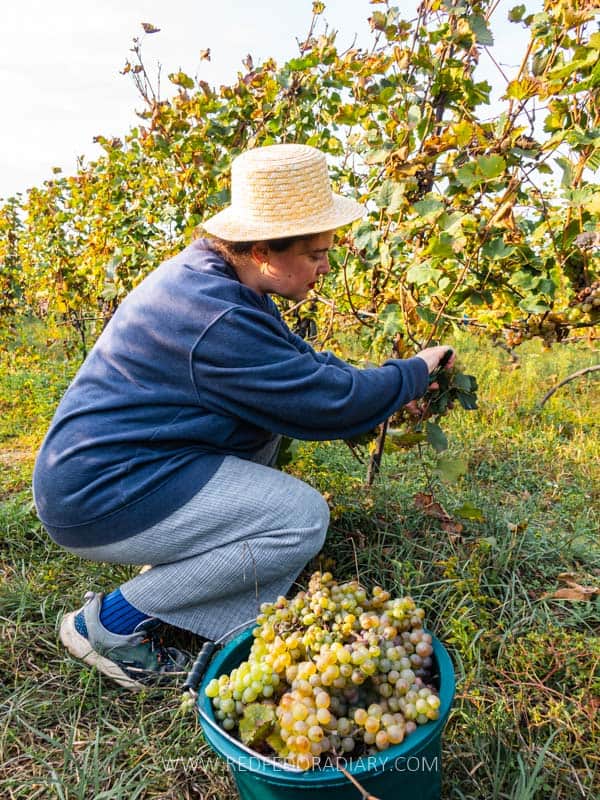
Autumn is particularly special because it coincides with Rtveli, Georgia’s traditional grape harvest season. In September and October, vineyards across Kakheti buzz with harvesting and winemaking, making it an excellent time to experience the region’s wine culture. October also hosts the annual Gurjaani Wine Festival in Akhtala Park, another great reason to plan your visit around this time.

Spring is equally enjoyable, with greener landscapes, blooming trees, and comfortable temperatures for sightseeing. It’s a good choice if you prefer exploring Gurjaani without the intense summer heat.
Summers in Gurjaani can get quite hot, especially in July and August, when temperatures in the Alazani Valley often exceed 30°C (86°F). If you’re visiting during these months, plan your outdoor sightseeing for the morning or late afternoon.
Winter is generally quieter and colder, with fewer visitors and less activity around the vineyards. You can still explore Gurjaani’s historical landmarks and Soviet-era architecture, but shorter daylight hours and colder weather make it less convenient to spend a full day walking around town.
How much time do you need in Gurjaani?
How much time you need in Gurjaani depends mainly on how you’re traveling and what you want to see.
If you’re mainly interested in exploring the town’s attractions, you can easily visit Gurjaani as a day trip from Tbilisi, even if you’re relying on public transport. You can spend several hours discovering its Soviet-era architecture, colorful murals, local bazaar, and historical landmarks.
However, a few attractions, such as the Nato Vachnadze House Museum and Kvelatsminda Church, are outside the town center and require a short taxi ride.
If you’re traveling by car or private transfer and want to explore more of Gurjaani Municipality, you can still pack a full day of sightseeing into your itinerary. But if you are using public transport, consider staying overnight or spending two to three days in the area. This gives you more flexibility to visit nearby villages, wineries, historical sites, and other attractions without rushing.
Gurjaani can also serve as a convenient base for exploring this part of Kakheti, especially if you prefer a quieter stay than the region’s more popular tourist towns.
Places to visit near Gurjaani
Explore Telavi, Kakheti’s historic capital
Located north of Gurjaani, Telavi is Kakheti’s historical and administrative center and a great place to explore the region’s royal history, architecture, and local culture.
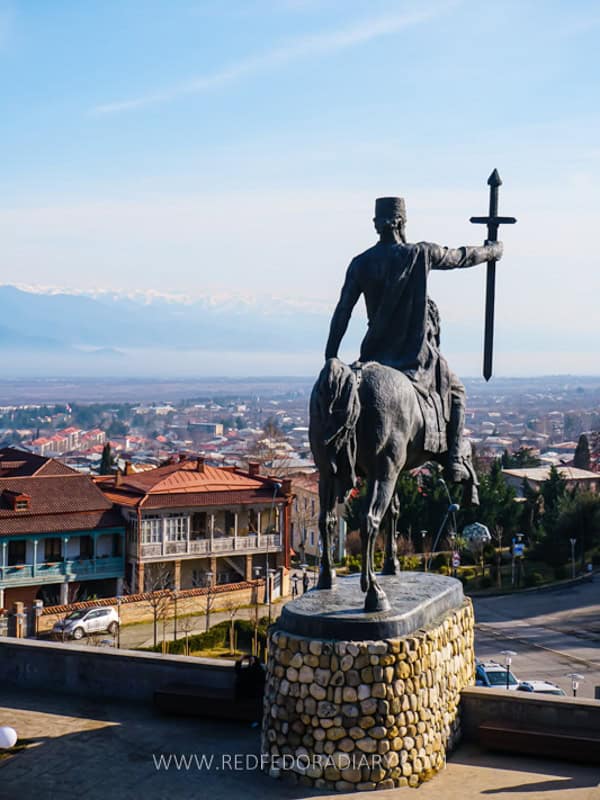
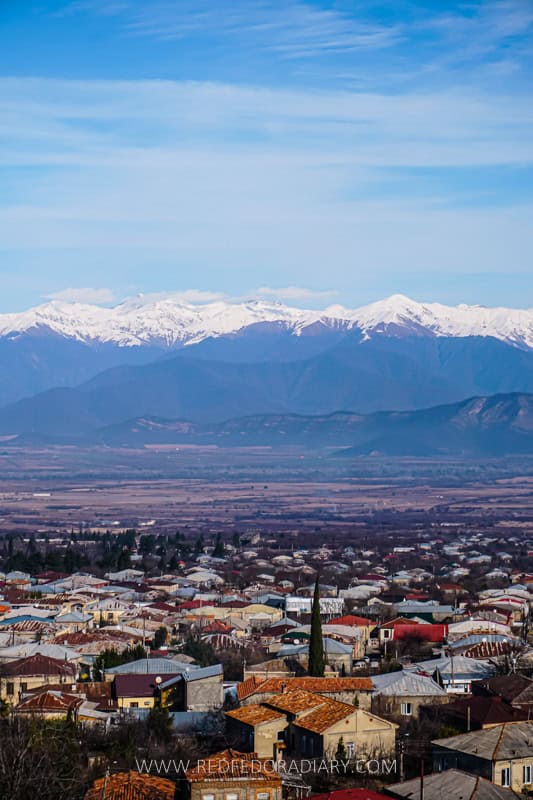
Start at Batonis Tsikhe, the former royal residence of King Erekle II, now home to a museum dedicated to the region’s history. Wander through the older streets to admire traditional Kakhetian houses with carved wooden balconies, and stop by the centuries-old Giant Plane Tree, one of Telavi’s best-known landmarks.
Telavi also makes a convenient base for exploring nearby wineries, monasteries, and villages, especially if you plan to spend several days in Kakheti.
Wander through the picturesque town of Sighnaghi
Perched on a hill overlooking the Alazani Valley, Sighnaghi is one of Kakheti’s most recognizable towns, known for its cobblestone streets, colorful houses, and beautiful views of the Caucasus Mountains.

Sections of an 18th-century defensive wall surround the town, offering panoramic views of the valley. Beyond its picturesque streets, Sighnaghi has a small museum featuring works by Georgian painter Niko Pirosmani, while the nearby Bodbe Monastery is an important pilgrimage site associated with St. Nino, who brought Christianity to Georgia.
Sighnaghi is more tourist-oriented than Gurjaani and even Telavi, but its historic architecture and hilltop setting make it a worthwhile addition to a Kakheti itinerary.
Visit the hilltop Nekresi Monastery
Set high on a forested hillside overlooking the Alazani Valley, Nekresi Monastery is an early medieval religious complex near Kvareli, offering some of Kakheti’s most beautiful panoramic views.
The complex includes several churches and historical buildings from different periods, including a small basilica traditionally dated to the 4th century, making it one of Georgia’s earliest surviving Christian structures.

Beyond its religious and architectural significance, Nekresi is worth visiting for its peaceful surroundings and views over the vineyards and villages of the Alazani Valley.
The monastery sits above the main parking area, and you can reach it by walking uphill or, when available, taking a shuttle service.
Where to stay in Gurjaani
If you’re planning to spend more than a day exploring Gurjaani and the surrounding area, staying overnight gives you more time to discover nearby villages, wineries, and historical attractions without rushing back to Tbilisi.
Unlike more tourist-oriented towns, Gurjaani has a very limited (almost zero) accommodation selection. If you’re traveling without a car, I’d suggest staying close to Gurjaani center so you can easily reach shops, restaurants, and local transport.
If you have your own vehicle, consider guesthouses and wineries in the surrounding villages, especially if you want to experience rural Kakheti.
Alternatively, you can stay in Telavi or Sighnaghi, both of which offer a wider range of accommodation, restaurants, and tourist facilities. Check the accommodation options here.