
14 Best Markets in Tbilisi: A Local Guide
Bazaars, or markets in Tbilisi, are part of everyday life here. From early-morning produce runs to weekend flea markets and seasonal pop-ups, these places show how the city actually shops, eats, and socializes. If you’re curious about local food, second-hand finds, or everyday shopping in Tbilisi, markets are where it all comes together.
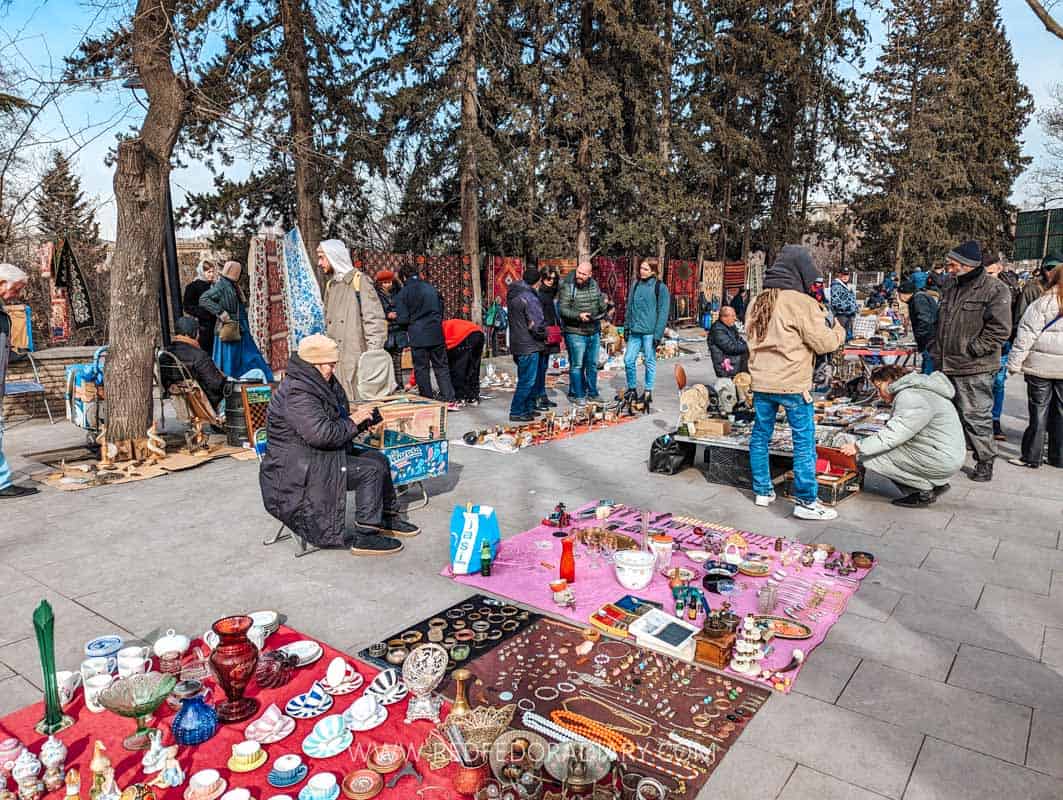
You’ll find everything from massive food bazaars locals rely on daily to informal flea markets selling unique items, old household things, and the occasional unexpected objects.
Some markets are permanent and busy year-round, others appear only on Sundays or around holidays like Easter and Christmas. They can be chaotic, with an authentic Georgian atmosphere, and always interesting to walk through — even if you don’t plan to buy anything.
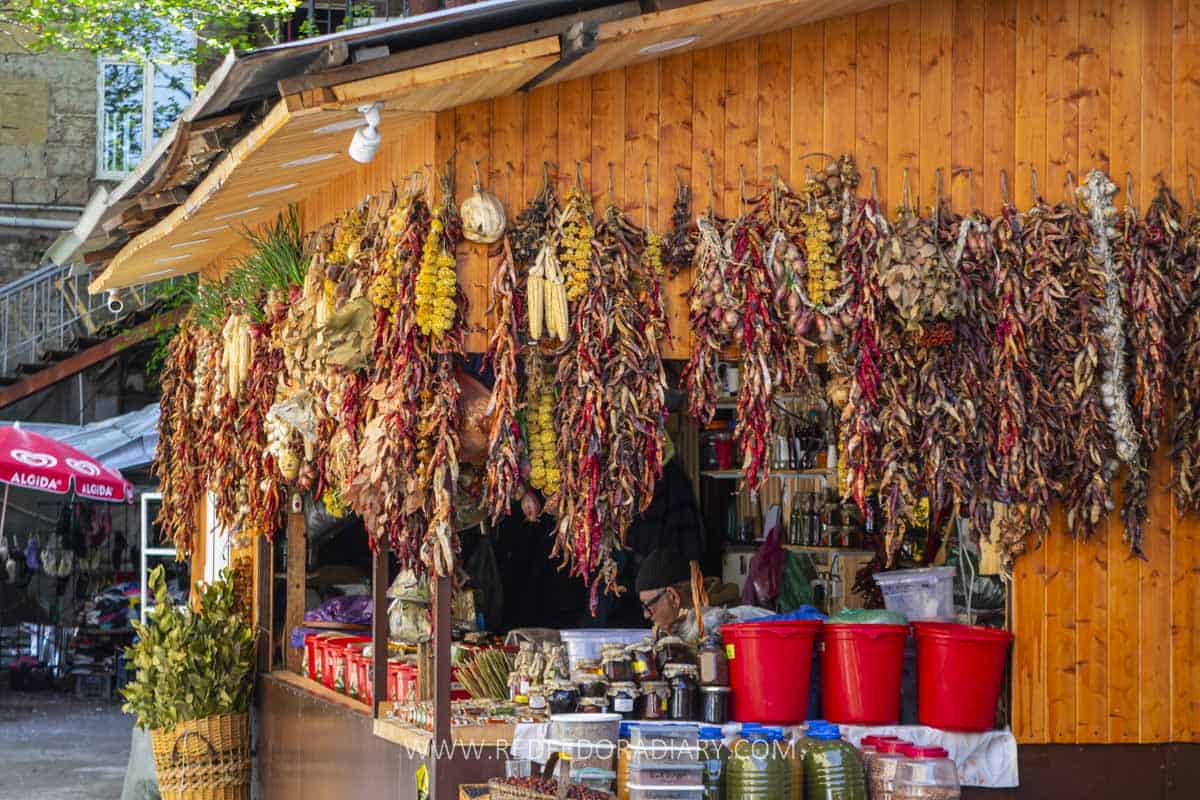
This Tbilisi markets guide includes those I actually recommend visiting, grouped by type, so you can quickly find what you’re looking for. At the end, I also provide some local tips when visiting these markets as a foreigner.
Farmers and food markets in Tbilisi
Dezerter Bazaar
- 📍 Location: Abastumani Street, near Dinamo Stadium
- ⏰ Opening hours: Daily, approx. 7 am–5 pm
Dezerter Bazaar is the city’s best-known produce market and one of the busiest. It gets its name from the 1920s, during the war between Georgia and Russia, when deserting soldiers gathered in the area to sell their weapons. The nickname stuck, even though today the market has nothing to do with arms and everything to do with food.
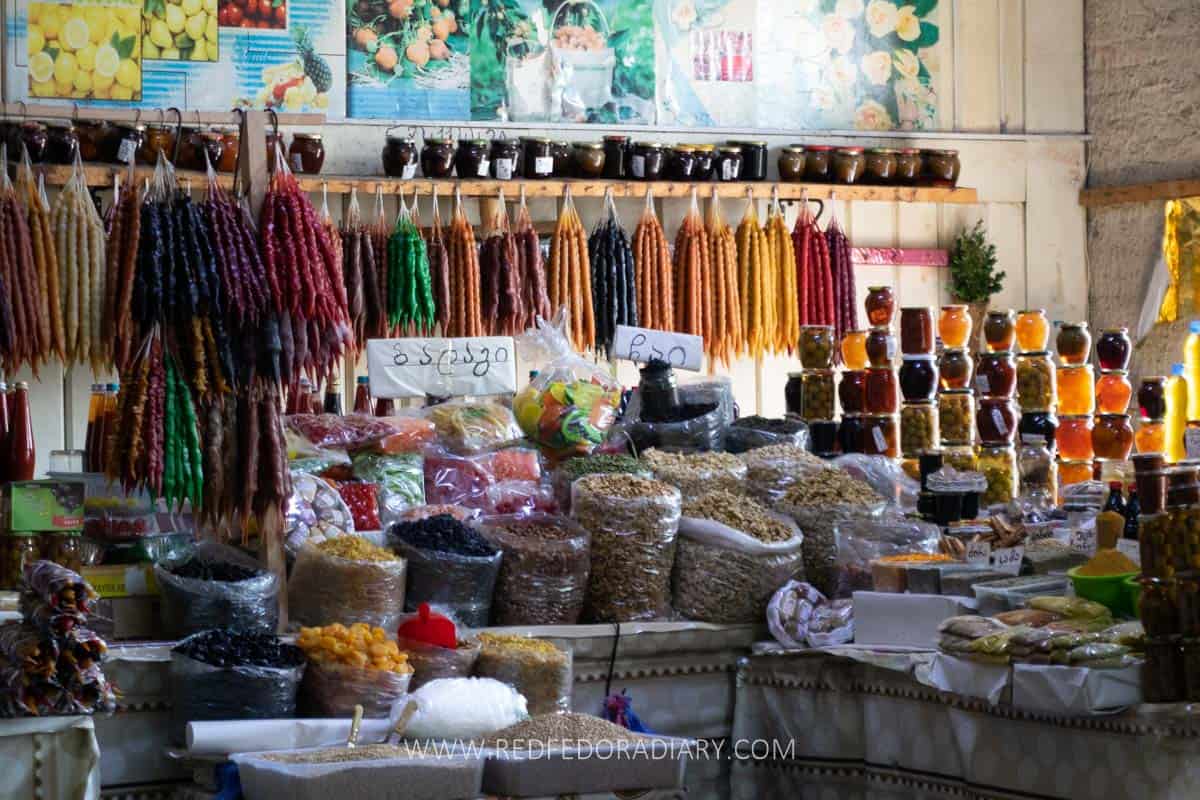
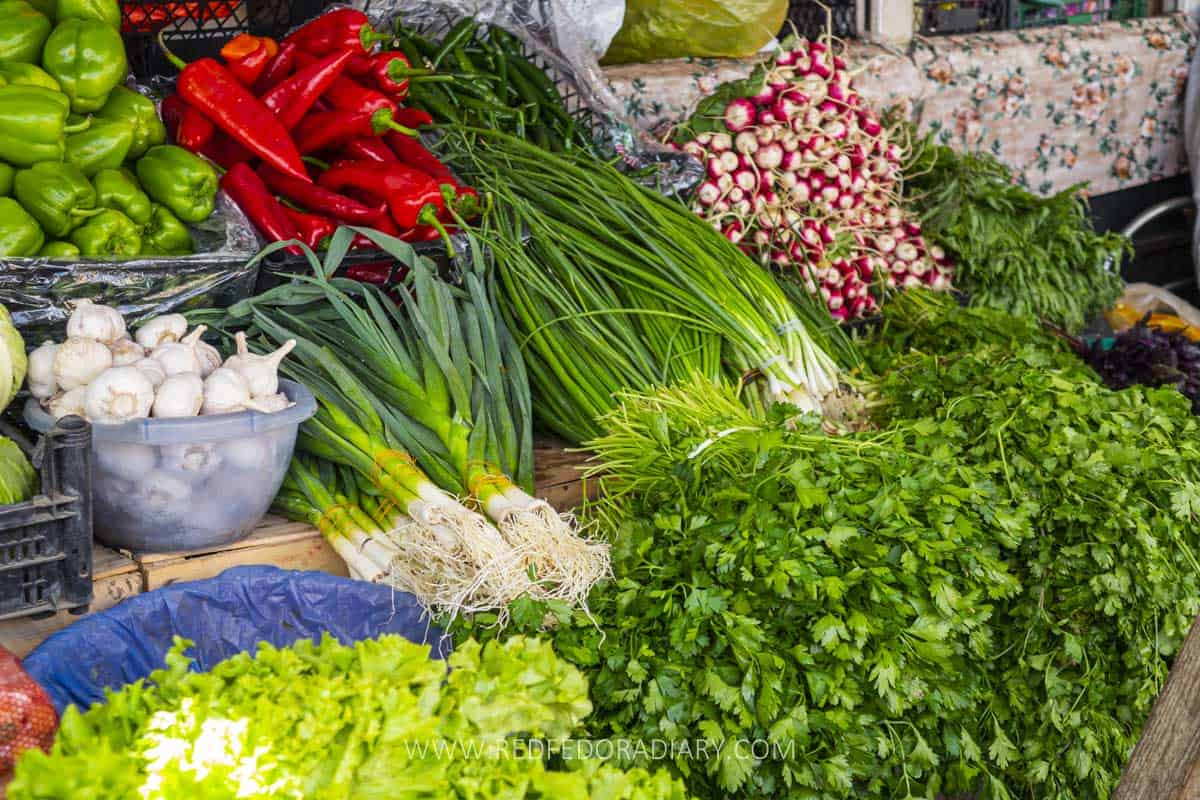
Bazaar is mainly supplied by farmers from western Georgia, alongside imported produce, which explains the wide selection year-round. You’ll see seasonal fruit and vegetables, fresh herbs, spices, cured meats, cheeses, and plenty of Georgian wine sold homemade-style in repurposed plastic bottles.
The covered hall is packed, loud, and full of everyday market energy — while the surrounding streets spill over with additional stalls and specialty shops stocking products from India and Iran.
Because of its central location and popularity with visitors, prices here can be slightly higher but are still low compared to smaller residential stalls.
If you’re curious to dig deeper, joining a guided market tour can help make sense of what you’re seeing and tasting.
💡 Nearby idea: Several small and big museums are within walking distance, including the Silk Museum and Pirosmani’s tiny house museum. This is also a good spot to jump on the Tbilisi Metro and start noticing station details, such as mosaics, reliefs, and Soviet-era design.
Samgori (Navtlughi) Bazaar
- 📍 Location: Mevele Street & Moscow Ave., outside Lower Samgori Metro Station
- ⏰ Opening hours: Daily, approx. 8 am-5 pm
If you want a more local experience, Samgori Bazaar, also known as Navtlughi, is one of the best markets in Tbilisi for that. Located in the eastern part of the city, it’s far less touristy than Dezerter and still feels very much like a neighborhood market locals rely on.
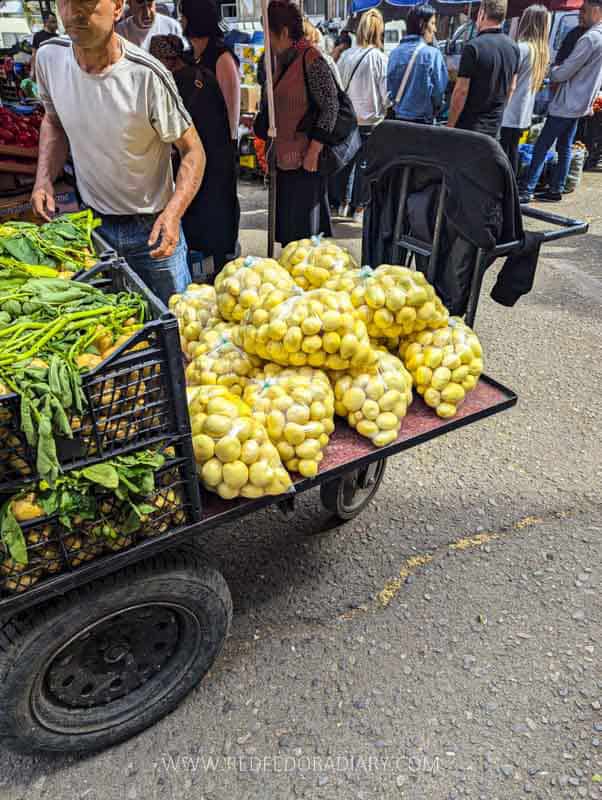
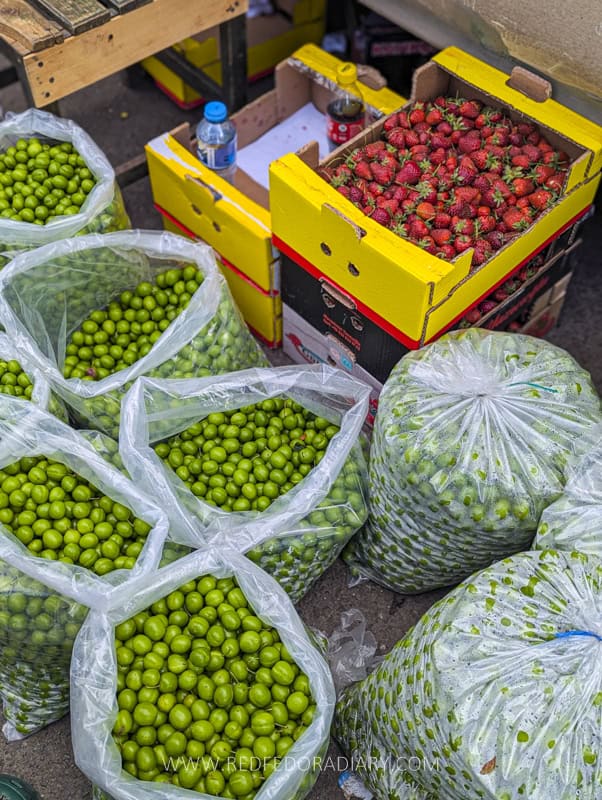
Many vendors here sell produce brought directly from their own farms in eastern Georgia, alongside imported goods. Prices are usually lower, and the atmosphere is noticeably more authentic.
You’ll find fruit, vegetables, nuts sold in bulk, plus spices, pickles, fresh fish, churchkhela, cheeses, meats, and other staples of Georgian cuisine. The market has several areas to explore, so wander around and don’t limit your visit to only the covered space. Walk down Mevele Street to enter other areas, both left and right of the street.
Thanks to its direct metro access, Samgori is easy to reach, yet still overlooked by most visitors.
Plan Your Tbilisi Trip Like A Pro
💬 Your Trip, Your Way – Crafted by a Local
🚗 Book Your Transfers Before You Land
🛜 Stay Connected from the Moment You Arrive
🏥 Travel Smart with the Right Insurance
Sunday Farmers Market at Ezo
- 📍 Location: Kikodze Street, Sololaki (former Ezo Restaurant space)
- ⏰ Opening hours: Every Sunday from 10 am to 2 pm
This small Sunday farmers’ market is one of my favorite weekend rituals in Tbilisi. Held in Sololaki, it brings together small-scale producers offering organic fruit and vegetables grown without chemicals or GMOs, alongside a carefully curated selection of homemade goods.
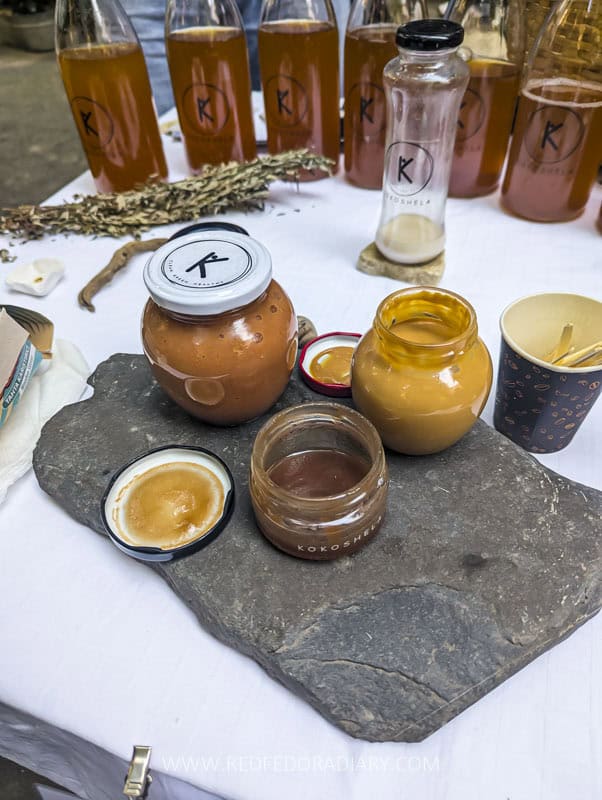
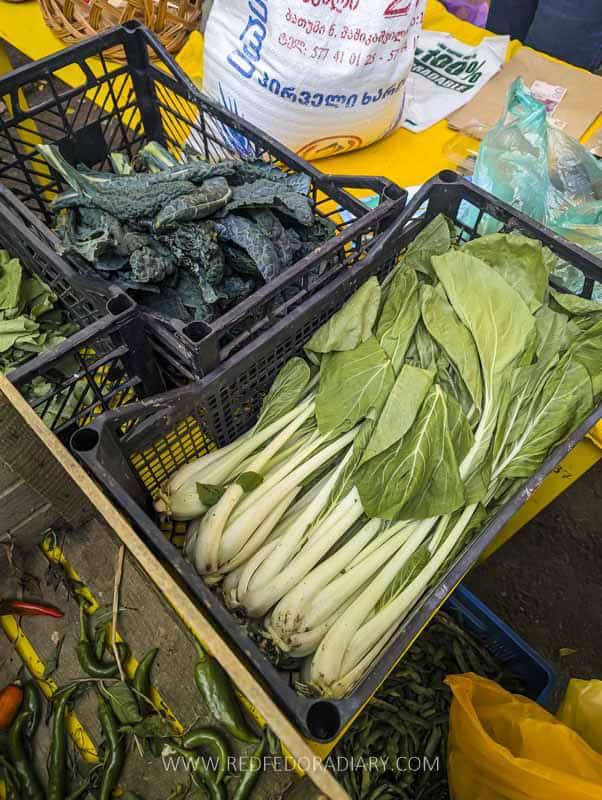
You’ll find jars of unique and classic jams, kombucha, Georgian teas, herbs, goat cheese, preserves, and both vegan and traditional condensed milk.
While it officially starts at 10 am, regulars show up earlier, and once the door opens, most of the best items are gone within the first hour or so, so arriving early really matters here.
It’s compact, friendly, and very community-driven, making it a nice contrast to the larger daily markets around the city.
💡 Nearby idea: This is a great starting point for exploring Sololaki. Nearby, you’ll also find the Writer’s House and the David Sarajishvili Museum, a gorgeous bourgeois building of 1905. If you’re in the mood for classic sights, continue downhill toward the Old Town and follow my top Tbilisi attractions guide.
Agromarket
- 📅 Date: Several times a year
- 📍 Location: Dedaena Park
- ⏰ Opening hours: 12 pm to 7 pm
- 🔗 More info: Facebook page
The Agromarket usually takes place three times a year, changing its theme with each season, and brings together farmers, small producers, and food makers from across Georgia.
You’ll find stalls selling cheeses, cured meats, honey, nuts, sauces, teas, wines, and regional specialties, alongside street food, music, and small activity zones.
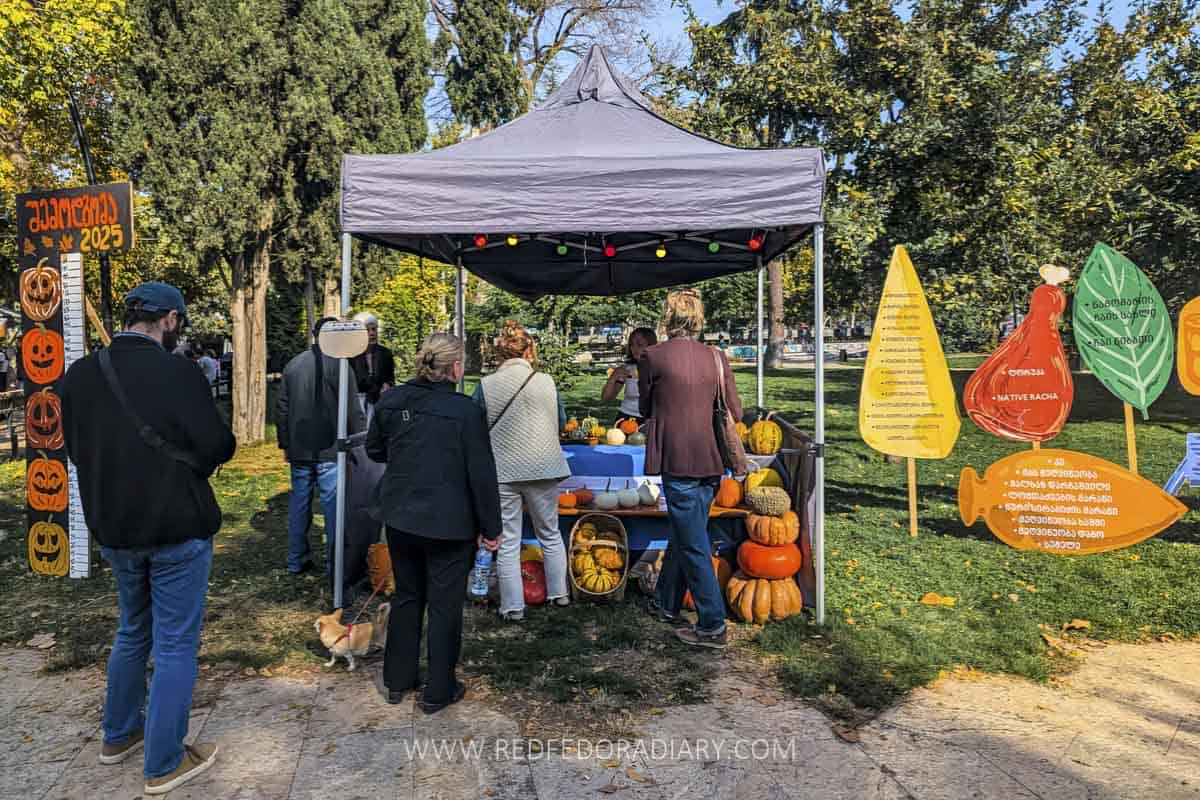
I love coming here to stock up on products directly from the farmers, some of which are not even available in the shops, and scout for new produce.
Because dates and formats vary, the best way to stay updated is to check their Facebook page close to your travel dates. If you’re in the city at this time, I highly recommend checking it out for something truly local.
Niche & flea markets in Tbilisi
Dry Bridge Market
- 📍 Location: Dry Bridge (Mshrali Khidi), next to Deda Ena Park
- ⏰ Opening hours: Daily, approx. 10 am–5 pm. Best on weekends from late morning
Dry Bridge Market is the most well-known name among Tbilisi flea markets, and for many visitors, it’s their first introduction to the second-hand market scene here.
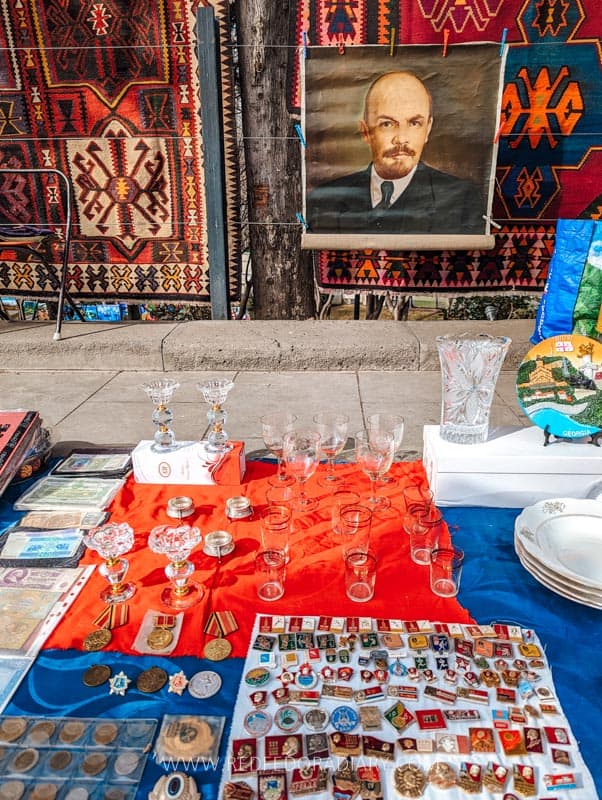
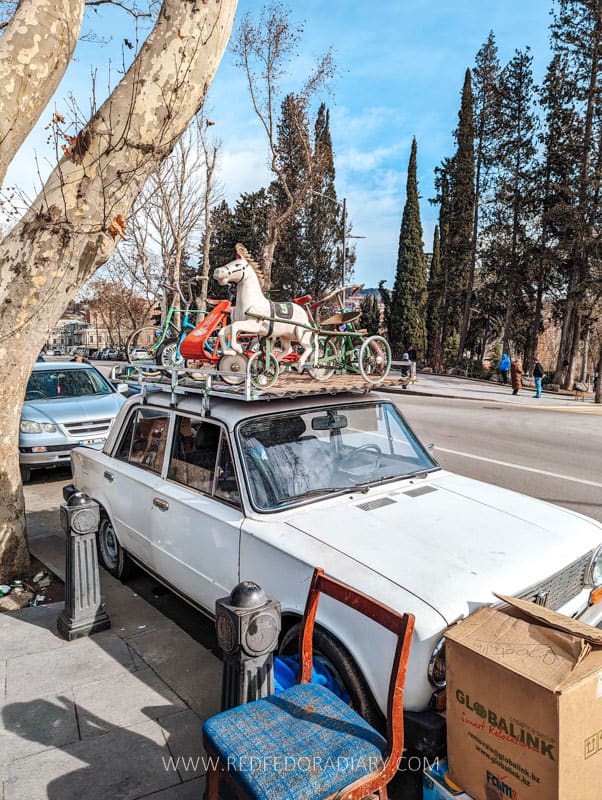
Set right in the city center, this open-air market stretches across the bridge and nearby park paths, with sellers laying out everything from Soviet-era objects to handmade items and artworks right on the pavement.
You’ll see old medals, cameras, vinyl records, porcelain, carpets, books, coins, and personal memorabilia from different decades. Although not my go-to place, I still enjoy rummaging through displays here, and over the years I’ve picked up a few genuinely unique vintage finds.
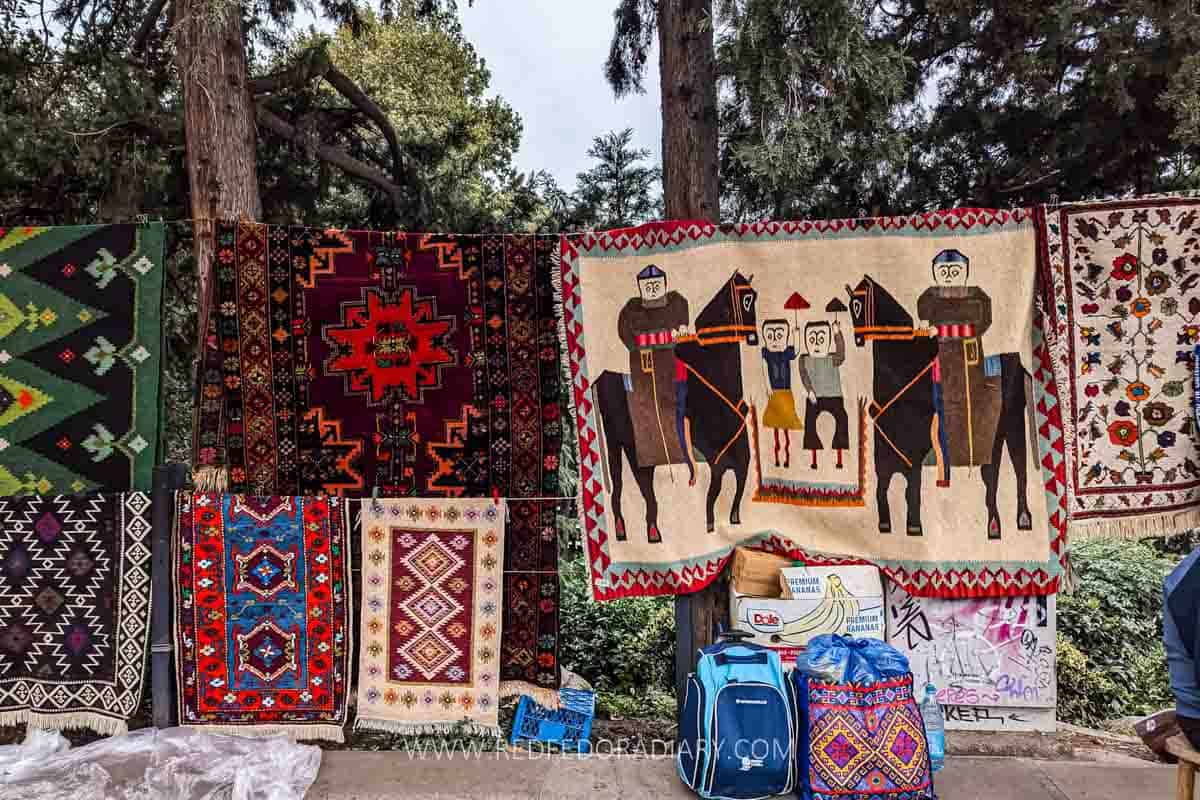
That said, its popularity comes with a downside. Prices can feel inflated compared to another Tbilisi flea market, especially since many sellers know they’re dealing with tourists. Even so, it’s worth visiting at least once for the experience.
💡 Nearby idea: From Dry Bridge, it’s an easy walk toward Aghmashenebeli Avenue, one of the best places in the city to see Art Nouveau façades up close. You can also stop by the Art Palace Museum — a highlight in my museums in Tbilisi guide — or detour to spot murals using my Tbilisi street art guide.
Barakholka Flea Market
- 📍 Location: Near Samgori (Navtlughi) Bazaar
- ⏰ Opening hours: Daily, approx. 10 am-5 pm. Best on weekends from 11 am.
Barakholka is, hands down, my favorite flea market in Tbilisi — and one I quietly kept to myself for years. The name comes from the Russian word barakhlo, meaning old or unused items, which fits the place perfectly.

Located next to the Samgori Bazaar area, it’s housed in warehouses and covered sheds, giving it a very different feel from Dry Bridge.
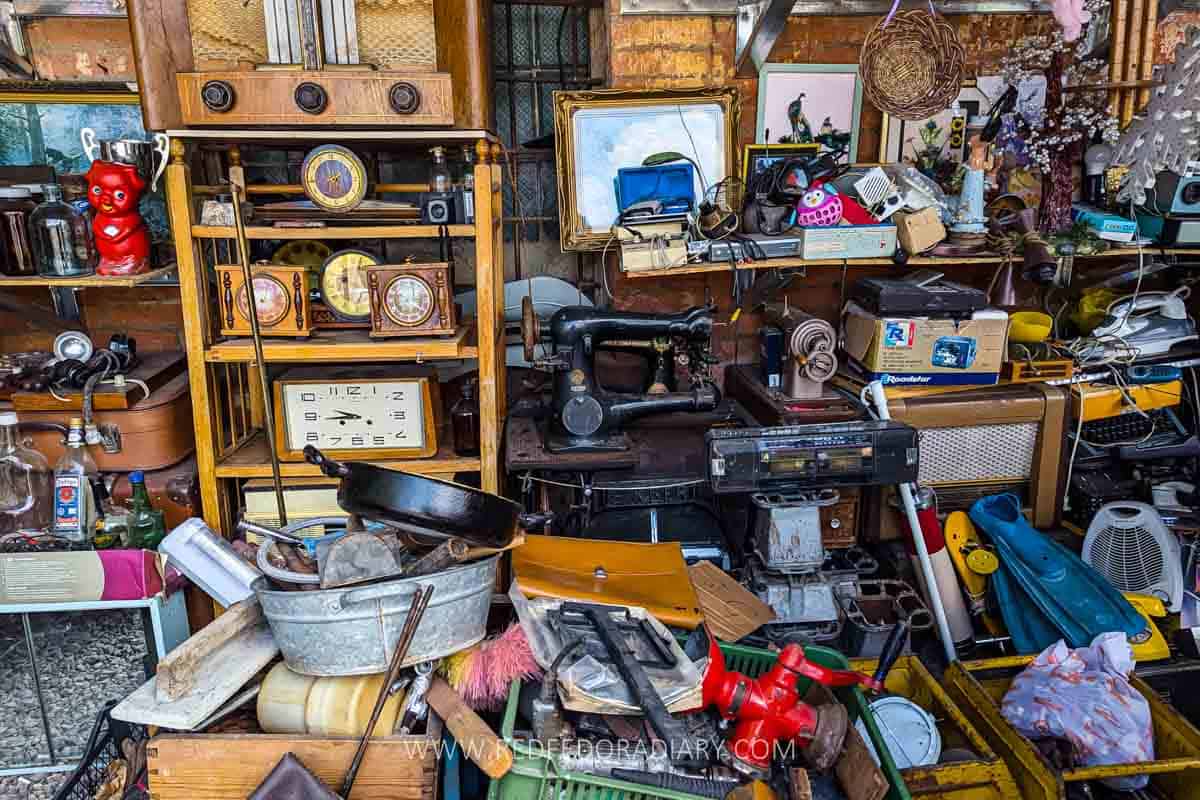
Here, the focus is firmly on second-hand goods, antiques, Soviet-era, and household items. You’ll come across street signs, old tools, china, piles of pans and pots, electronics, furniture pieces, and boxes of things that clearly came straight out of someone’s storage room or a basement. It’s less polished, more chaotic, and far more immersive.
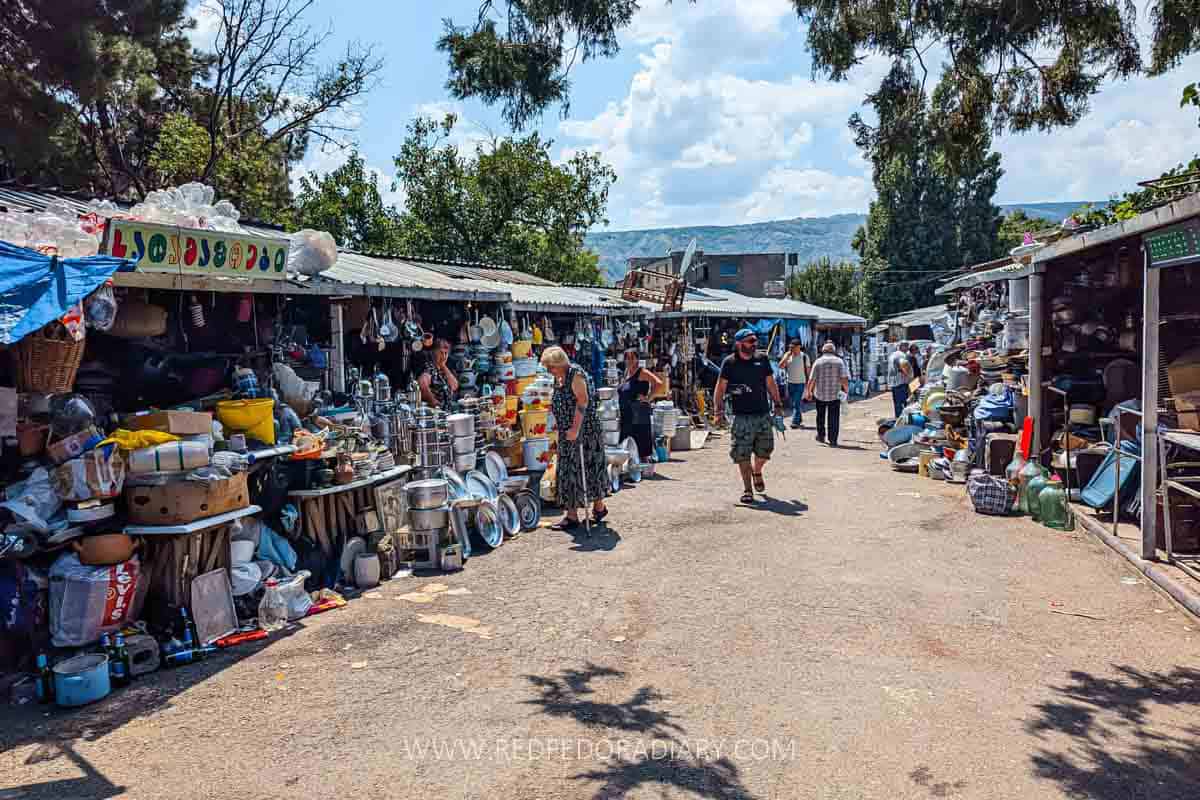
The secret is mostly out now, and more tourists and expats have started coming here instead of Dry Bridge. As a result, the rock-bottom prices are mostly gone — though you can still find better deals if you’re willing to dig and negotiate a little. Even with that change, Barakholka still feels more local and less curated, which is precisely why I keep coming back.
Best Tbilisi Tours & Day Trips – Handpicked by Local
Gold Market
- 📍 Location: Tbilisi Central Railway Station / Central Shopping Center (ground level)
- ⏰ Opening hours: Daily, approx. 10 am-6 pm
Tbilisi’s Gold Market occupies two large halls on the ground level of the Central Railway Station complex. It’s a very straightforward, no-frills setup: long rows of stalls, dozens of vendors, and glass counters filled with jewelry, making it the best market in Tbilisi for gold trinkets.
Most sellers offer gold jewelry priced by weight and type, so prices fluctuate with the daily rate. You’ll see plenty of minankari (traditional Georgian cloisonné enamel), rings, chains, bracelets, and classic designs that locals actually buy and wear.
Don’t expect fancy displays or collections; it is a simple market where people come to buy, sell, repair, or even custom-make jewelry.
If something catches your eye, don’t rush. Walk around, compare stalls, and ask a few prices for the same item — some vendors will quote lower than others.
Clothes, everyday goods & wholesale-style Tbilisi markets
Station Square Market
- 📍 Location: Around Station Square Metro Station
- ⏰ Opening hours: Daily, approx. 10 am–6 pm
Known among locals as Vagzali or Vagzlis Bazroba, this market was once one of the main places to shop for clothes in Tbilisi before shopping malls and international brands took over. While it has shrunk over the years, it’s still very much alive — especially for people looking for affordable basics.
Spread across various parts of the Station Square territory, most stalls sell everyday garments, underwear, socks, shoes, jackets, and sportswear, as well as household items such as cleaning supplies, school supplies, backpacks, toys, and suitcases.
Almost everything here is imported, mainly from Turkey, with some goods coming from China. It’s not pretty or curated, but it’s practical — and for many families, still a go-to spot for cheap shopping in Tbilisi.
Lilo Mall
- 📍 Location: Kakheti Highway, just past Tbilisi International Airport
- ⏰ Opening hours: Daily, approx. 8 am–5 pm
- 📦Best days: Monday, Thursday, and weekends
Lilo Mall is a massive market-style complex and the largest of its kind in Georgia. Much like Vagzlis Bazroba, it used to be a go-to place for families shopping for clothes before international mass-produced brands and shopping malls became common in Tbilisi, and it’s still where many people come to buy both individually and in wholesale.
Unlike Station Square Market, Lilo is incredibly diverse. You can buy clothes, shoes, textiles for custom tailoring, curtains, kitchenware, electronics, tools, craft supplies, and pretty much anything you might need for daily life.
Goods are mostly imported from Turkey, China, and the Middle East, and prices are usually lower than in city-center shops.
The market is divided into sections with signs, but it can still feel overwhelming on a first visit. Although I’ve been here dozens of times, I still can’t figure my way out, so I usually don’t go without my mom if I ever need something. She’s a pro in the Lilo Mall maze.
My advice is to give yourself time, walk around without a strict plan, and ask vendors for directions if you’re looking for something specific. Bargaining is expected here, especially if you’re buying more than one item.
Artisanal & pop-up Tbilisi markets
Flash Market
- 📅 Date: Weekends
- 📍 Location: Sioni Street, Old Tbilisi (near Chardin Street)
- ⏰ Opening hours: From 12 pm to 9 pm
- 🔗 More info: Facebook page
Flash Market is one of the newest additions to the Tbilisi street market, following STALL’s pause of its market on Rustaveli Avenue amid ongoing protests that began in November 2024.
Set right on Sioni Street, it pops up on weekends and brings together local artisans, makers, and small brands in an informal, open-air setup.
You’ll find handmade jewelry, leather goods, accessories, small fashion labels, home items, and edible products, all made or produced in Georgia. Because of its central location, it mainly attracts tourists, making it a great stopover when exploring Old Town or Abanotubani.
💡 Nearby idea: Once you’re done browsing, continue downhill into the Old Town and Abanotubani. From sulfur baths to river views, there’s plenty nearby — my things to do in Tbilisi guide has plenty of ideas to extend your walk.
Female Entrepreneurs Market
- 📅 Date: Occasional, usually over a weekend
- 📍 Location: Bazari Orbeliani
- ⏰ Opening hours: From 12 pm to 9 pm
- 🔗 More info: Facebook page
Bazari Orbeliani, together with UN Women Georgia, regularly hosts a rotating market focused on women-led brands and small businesses, usually running for three days from Friday through the weekend.

The space is limited, with around 30 artisans at a time, so each edition features a slightly different mix of participants.
These markets are a great place to find locally made food products, handmade items, and thoughtful Georgian souvenirs that don’t often appear in standard souvenir shops. Because vendors rotate frequently, it’s worth checking what’s on whenever you’re nearby.
💡 Nearby idea: Hop on the metro at Liberty Square and check out some of the city’s most interesting stations or take a stroll along Rustaveli Avenue to see how different architectural layers sit side by side, from Soviet-era landmarks to Art Nouveau facades and Moorish details.
Seasonal & holiday Tbilisi markets
Christmas Markets in Tbilisi
- 📅 Date: Mid-December to early-January
- 📍 Location: Varies yearly
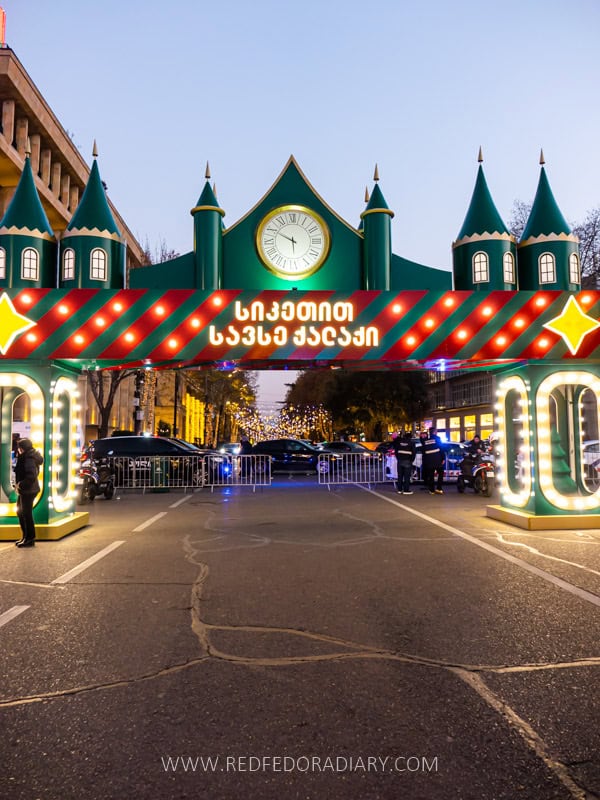
Tbilisi in winter fully leans into the holiday spirit with temporary Christmas villages and pop-up markets spread across the city.
These markets usually combine small artisan stalls with food stands, festive lights, and public spaces designed for evening walks rather than serious shopping. Although that depends on the market itself.
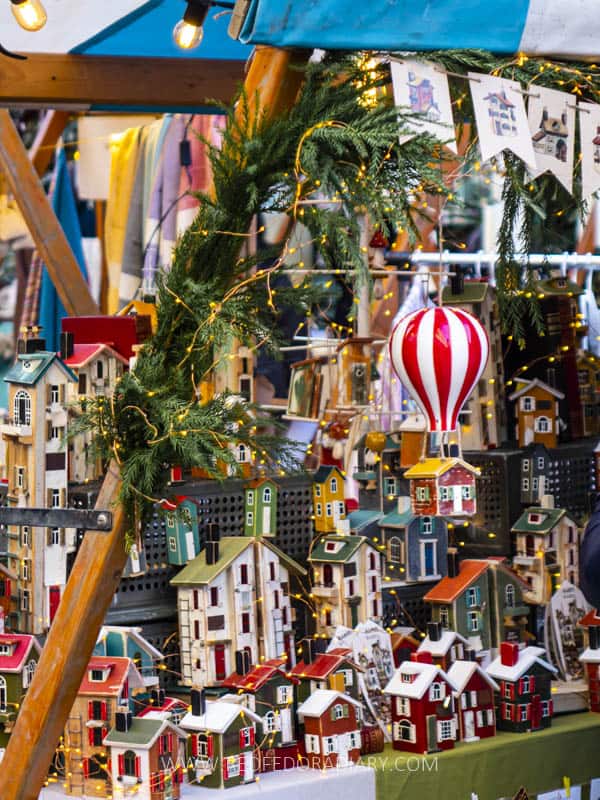
You’ll find handmade gifts, simple decorations, local snacks, and hot wine — often made with Saperavi rather than the classic mulled blends you might expect elsewhere.
Locations change from year to year, so it’s worth checking my detailed Christmas in Tbilisi guide for updated information close to your visit.
Just keep in mind that Georgia follows the Orthodox calendar, so Christmas celebrations — and markets — run later than in most of Europe.
Best Hotels in Tbilisi – Where to Stay
Not sure which area suits you best? 📍 Check out my Where to Stay in Tbilisi guide for the top neighborhoods and hotel picks by budget before booking. Here are my quick picks for the best places to stay right now.
Easter Markets
- 📅 Date: Spring, in the weeks leading up to Orthodox Easter
- 📍 Location: Neighborhoods across Tbilisi
In the lead-up to Orthodox Easter, small street markets start appearing all over Tbilisi. These are very local, practical setups focused on customs rather than the traditional sense of a bazaar.
Stalls sell dyed eggs, natural color powders, wheatgrass, madder root, and candles used for Easter rituals.
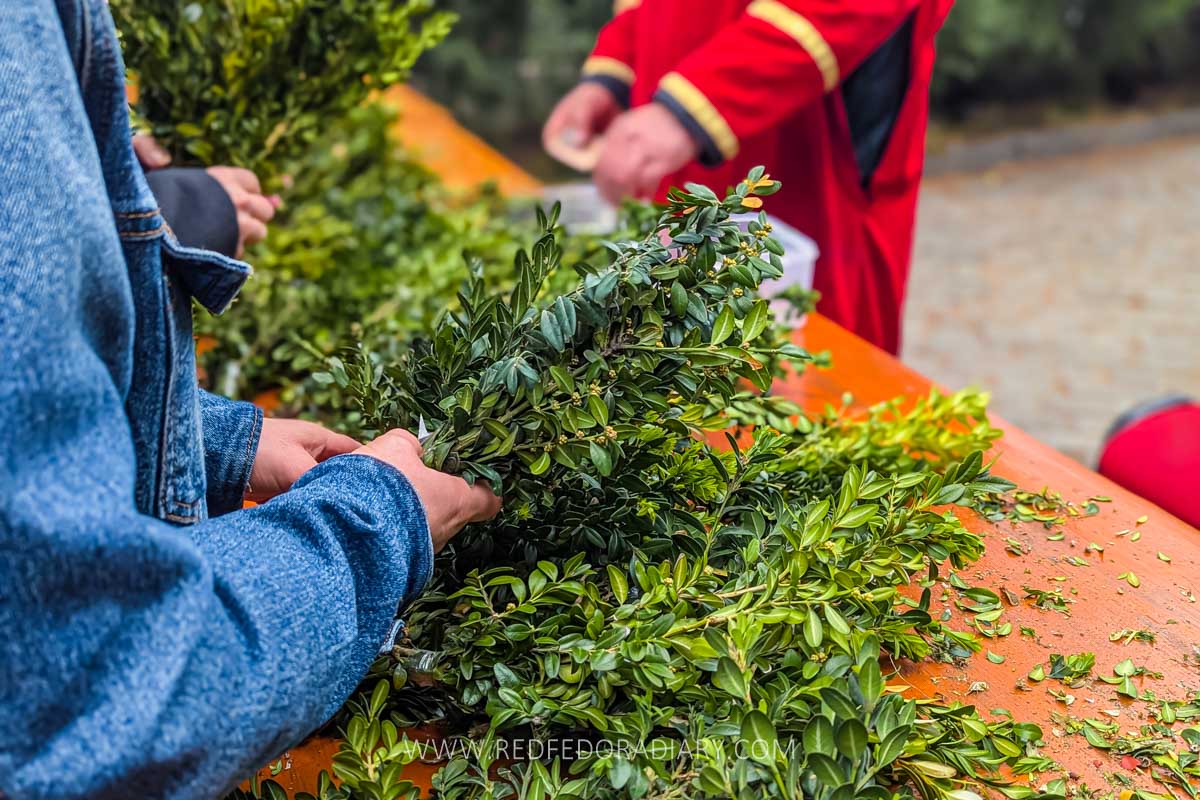
Unlike Christmas markets, there’s no single “main” location — these pop up in residential areas across the city and feel very much part of everyday neighborhood life.
If you’re visiting in spring, this is one of the best ways to see how Easter is actually prepared and celebrated here. For context on the traditions behind what you’re seeing, you can read my complete Easter in Georgia guide.
Easter Cakes Market
- 📅 Date: Around Easter
- 📍 Location: Bazari Orbeliani
- 🔗 More info: Facebook page
The Easter Cakes Market at Bazari Orbeliani is a short but popular seasonal market focused entirely on Paska Easter bread/cakes.
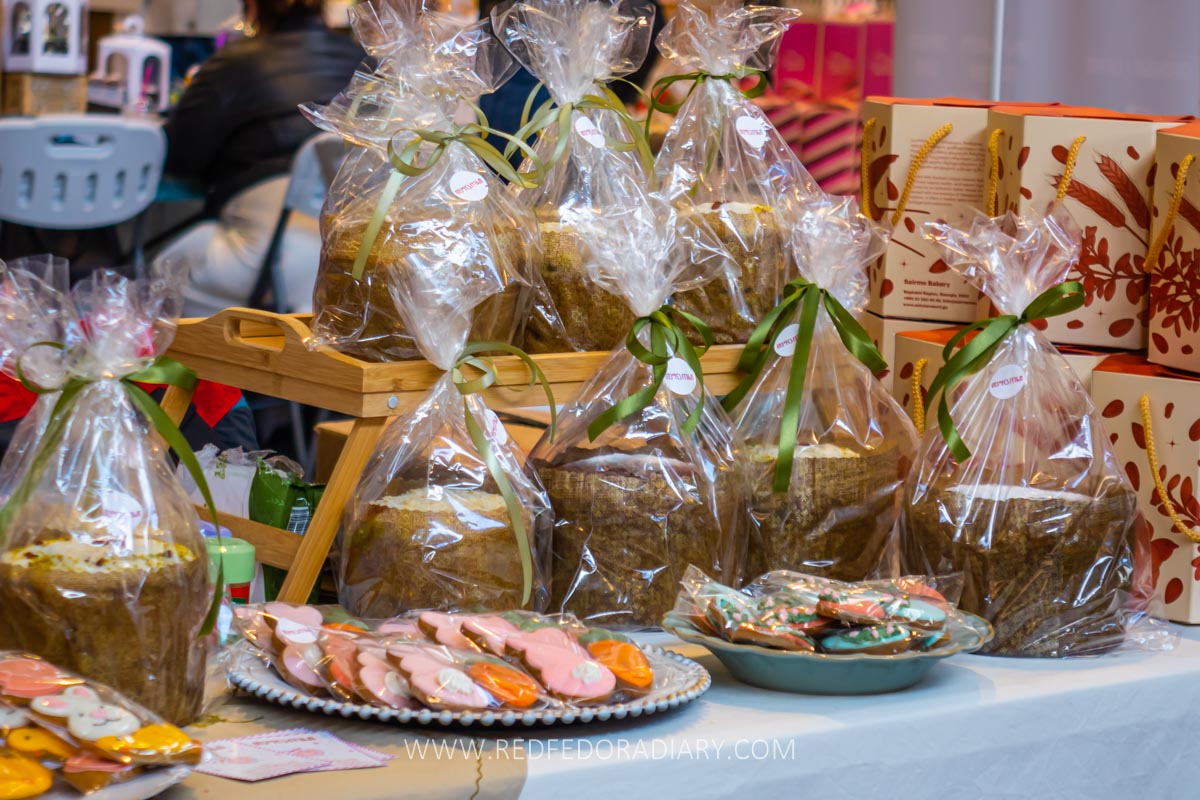
For a few days, local bakeries, home bakers, and small producers bring out their best produce to sell.
It’s a good place to compare styles and tastes before committing to a purchase. Expect both classic and modern versions of traditional Easter cakes, but do remember that it’s not a huge market, and only a handful of bakers participate.
Practical tips for visiting markets in Tbilisi
Best days & times to visit
Mornings are best for food markets, especially Dezerter and Samgori, when produce is freshest, and stalls are fully stocked. Flea markets like Dry Bridge and Barakholka come alive on weekends, usually from late morning onward. Seasonal and pop-up markets are short-lived, so it’s always worth checking dates close to your visit.
Cash vs card
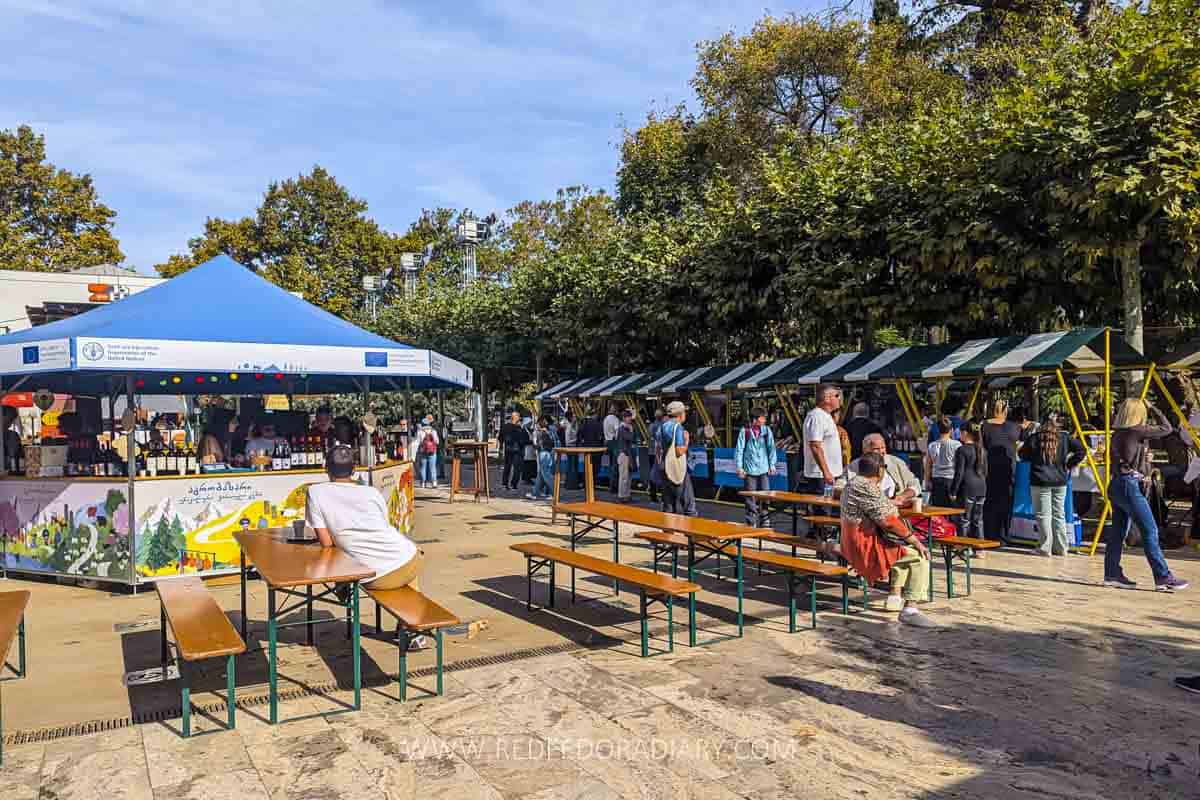
Cash is still king at most markets. Some larger or more curated markets accept cards, but many vendors don’t — especially at flea markets and neighborhood stalls. Small bills are useful, and ATMs are easy to find around central areas.
What’s worth buying where
Fresh fruit, vegetables, cheese, herbs, and spices are best bought at food markets like Dezerter and Samgori.
Vintage items, Soviet memorabilia, and one-off finds are what flea markets do best, while Station Square Market and Lilo Mall are practical for clothes, household items, and everyday basics.
Seasonal markets are better for atmosphere and small gifts rather than serious shopping.
How to avoid tourist traps
If a market feels overly polished or prices seem surprisingly high, step back and compare stalls.
Don’t buy the first thing you see — especially at Dry Bridge or the Gold Market — and don’t be afraid to browse quietly before asking for prices. You can try to bargain, but don’t be too pushy.