
Christmas in Tbilisi 2026: How to Celebrate Like a Local
If you’re planning to celebrate New Year’s Eve and Christmas in Tbilisi, here’s everything you need to know before you arrive — from Georgian Christmas traditions and food to where to find Christmas markets, lights, and seasonal events across the city.
December is a great time to visit Tbilisi. The main avenues and neighborhood squares turn bright and cozy, with illuminated streets, festive decorations, and markets popping up around First Republic Square, Orbeliani Square, and other corners of the city.

Even without snow — which Tbilisi rarely gets during the holiday season — the city still feels warm and lively. For context, the last proper snowfall happened in early January and again in March 2023. In February 2025, we had a snow dust that melted within just a few hours.
If you’ve been to Georgia before, you already know how many customs this country has. Every occasion comes with its own rituals, and the New Year and Orthodox Christmas is one of the most tradition-heavy times of the year.

While much of the world starts decorating and shopping in mid-November, Georgians take a slightly slower approach — preparations begin later, but once they do, the city shifts into full celebration mode.
Disclaimer: Some of the links in this post are affiliate links, which means I may earn a small commission if you buy something through them—at no extra cost to you. It helps support my blog and lets me share real, first-hand travel tips. Learn more
What’s New for Christmas in Tbilisi (2025–2026)
A few changes are coming to the holiday season in Tbilisi this year, so here’s a quick overview to help you plan:
- First Republic Square will host all major New Year’s Eve and Christmas celebrations, relocating the events away from Rustaveli Avenue and the Parliament building due to the ongoing protests that began in November 2024. (I share protest updates three times a week on my Facebook page under the #RFDProtests2024 hashtag)
- The main Christmas tree also moves to the First Republic Square this season and will be lit on December 12.
- The Tbilisi Christmas market 2025 dates are December 12, 2025 – January 14, 2026, organized by the City Hall at the First Republic Square.
- The Fabrika Tbilisi Christmas Market returns on December 21–22, offering a range of local crafts, food stalls, and handmade gifts.
- The 25th Annual Winter Fair, hosted by the International Women’s Association (IWA), will take place on November 29 at the Sheraton Grand Tbilisi Metechi Palace.
Plan Your Trip to Georgia Like A Pro
Key dates for Christmas in Georgia
When is Georgian Christmas?
Georgia follows the Julian calendar, which means major religious holidays fall 13 days later than in countries using the Gregorian calendar. Because of that shift, Orthodox Christmas is celebrated in early January rather than December.

The festive mood still starts much earlier. Once the lights switch on across Tbilisi in mid-December, the holiday period runs all the way through January 19, ending with Orthodox Epiphany.
Whether you’re planning to spend the season in the capital or travel around the country, you’ll have several weeks of celebrations to experience.
Do Georgians Celebrate Christmas on December 25?
Georgia celebrates Christmas on January 7, following the Julian calendar, which shifts religious holidays 13 days later than in countries using the Gregorian one.
Because of this, December 25 isn’t considered Christmas Day in Georgia and is treated as a regular working day.
The date gained even more distance from local tradition during the Soviet era. After Georgia was forcefully incorporated into the Soviet Union in 1921, religious celebrations were banned, and families stopped openly marking Christmas altogether.
New Year’s Eve eventually became the main holiday of the season — a tradition that still feels stronger than Christmas for many households today.
Some families still enjoy a small celebration on December 25, but the official Christmas in Georgia remains January 7.
How to celebrate Catholic Christmas in Tbilisi
If you want to experience a Catholic Christmas in Tbilisi, you can attend Mass at St. Peter and Paul Apostles’ Church in Chughureti (near Fabrika Tbilisi), which holds a service on the evening of December 24.
A few expat-focused restaurants also organize Christmas Eve dinners on December 24.
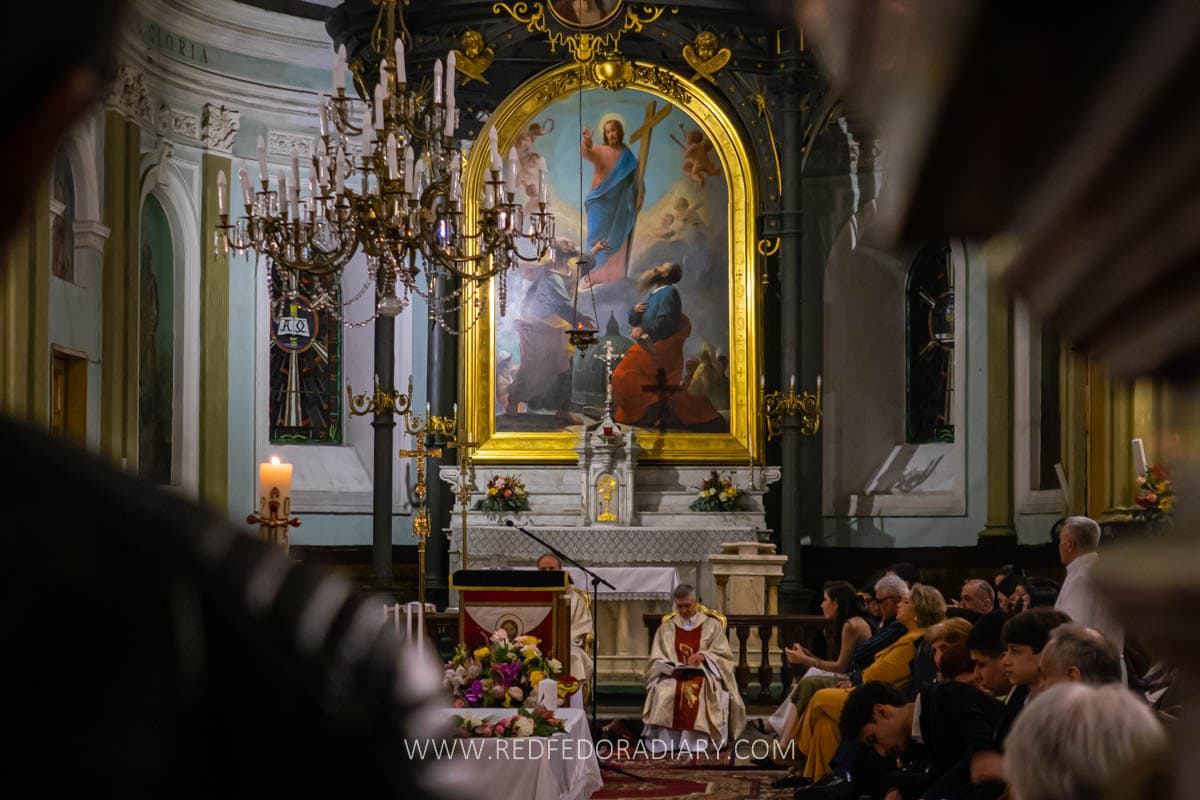
These usually require advance booking, and the best way to find them is by checking Facebook event pages or following places like ATI Restaurant at Sheraton Grand Tbilisi Metechi Palace, Café Littera, or Organique Jasper Bar, which have hosted such dinners in previous years.
Orthodox Christmas in Georgia: Essential Dates (2025–2026)
Before diving into Georgian traditions and how people celebrate, here are the key dates to keep in mind:
- December 12 – Official lighting of the city decorations and the main Christmas tree at First Republic Square
- December 12 – Opening of the Tbilisi Christmas Market at First Republic Square
- December 31 – New Year’s Eve celebrations and a gala concert at First Republic Square
- January 1 – Tradition of Mekvle (public holiday)
- January 2 – Bedoba a.k.a Day of Fate (public holiday)
- January 7 – Georgian Christmas and the Alilo Parade (public holiday)
- January 14 – Old New Year and last day of the Tbilisi Christmas Market
- January 19 – Orthodox Epiphany, marking the end of the holiday season
Georgian Christmas traditions and customs
Buying and decorating the Christmas Tree
Preparation for the New Year and Christmas season usually starts in mid-December. Many families, including mine, still do most things at the last minute — especially when it comes to buying fresh products — but a few things can be done in advance, starting with the Christmas tree.
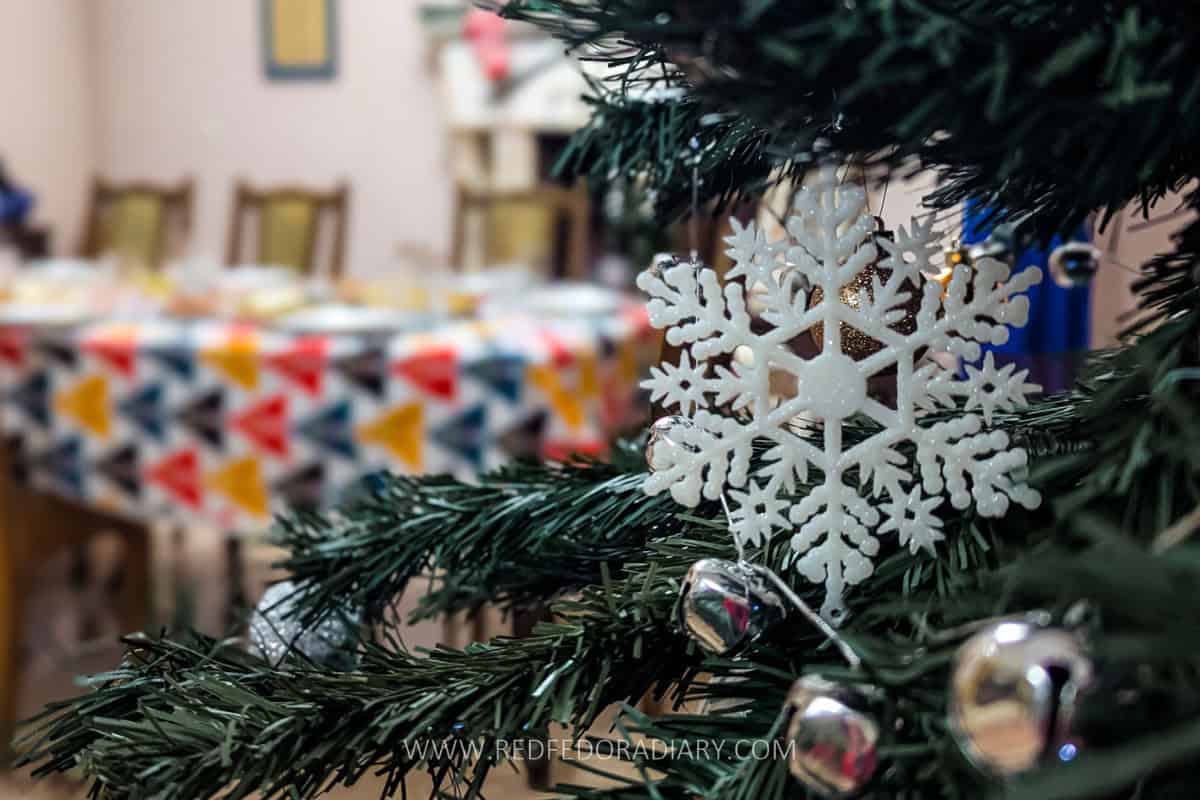
You can get both artificial and natural trees in Tbilisi. Buying a real one can be a bit tricky because some are cut illegally, so it’s worth being careful about where you purchase it. Some natural trees come with roots, which you can replant in the garden or keep in a pot, while others are sold already mounted on wooden stands.
The most affordable area to buy trees is around Station Square and the Dezerter Bazaar, but you’ll also see vendors in different parts of the city, including Didube Bus Station. Prices vary by size, and vendors even sell individual branches if you only need part of a tree.
If you prefer artificial or potted trees, homeware shops like Gorgia, Domino, Super, Carrefour, and Jysk usually have a good selection.
Chichilaki – the Georgian Christmas Tree
Alongside the regular green tree, Georgians also put up a Chichilaki, a traditional tree made from shaved hazelnut branches that curl into soft, conifer-like strands.
They come in different sizes, and prices vary accordingly. Instead of shiny ornaments, Chichilaki is often decorated with dried fruit or small natural touches.

We usually place a small or medium one next to the main tree or somewhere visible in the living room.
Before January 19, families traditionally burn the Chichilaki as a symbolic way of leaving the past year’s misfortunes behind.
Getting Christmas decorations
Some shops begin displaying Christmas-themed items as early as mid-November. Most hypermarkets and homeware stores dedicate entire shelves to decorations.
If you’re looking for kitchen items with Christmas motifs, I usually recommend Super (various branches) and Home on the ground floor of Galleria Tbilisi.

Carrefour Hypermarkets also stock plenty of seasonal decorations. Even Biblusi bookstores often bring in themed items. For vintage ornaments, Dry Bridge Market is a fun place to browse.
Many local artists at the Tbilisi Christmas markets also sell handmade decorations and crafts.
Prepping for holiday food
Turkey isn’t part of everyday Georgian cuisine, so people mainly buy it for the New Year’s Eve dinner table. The best places to get one are Dezerter Bazaar or Samgori (Navtlughi) Market — though be prepared for the chaotic atmosphere, especially in late December, as both markets get extremely busy.

You can also ask your neighborhood butcher in advance or check a few stores that usually stock turkey during the season, such as Agro Meat Market, Tserti, and Butchery.ge.
Supermarkets like Carrefour, Agrohub, Goodwill, and Gastronome often carry fresh or frozen turkey as well.
Making or buying Churchkhela
Churchkhela is a classic Georgian sweet made from grape juice and nuts — usually walnuts in eastern Georgia and hazelnuts in the west.
Since many families make wine at home, they often have leftover grape juice called badagi, which is used to make Churchkhela.


While you can buy excellent Churchkhela in many shops around Tbilisi, making it at home is relatively easy and fun. We usually prepare ours in late October or early November, so it has enough time to dry properly.
If you prefer to buy them, the shop Badagi is a crowd favorite. Their Churchkhela is usually on the softer, fresher side, so if you’re like me and prefer it more air-dried, buy it a few weeks before the holidays and hang it somewhere at home to firm up.
Christmas gifts & Georgian Santa (Tovlis Babua)
Gift-giving isn’t a major tradition in Georgia, and it’s not treated as a big ceremony. Children always receive presents from relatives and grow up believing that Santa delivered them, but for adults, it really depends on the family — it’s not something everyone does.
Georgia also has its own version of Santa Claus called Tovlis Babua, or “Snow Grandpa.” He’s said to come from the mountain region of Svaneti, dressed in traditional Georgian clothing — a felt coat and a warm hat — and he carries sweets and candies in a simple saddle bag rather than big, material gifts.
Candy exchanges with strangers and friends
During the festive season, especially on New Year’s Eve, it’s common across Georgia to exchange small, individually wrapped candies with people you know and even complete strangers.
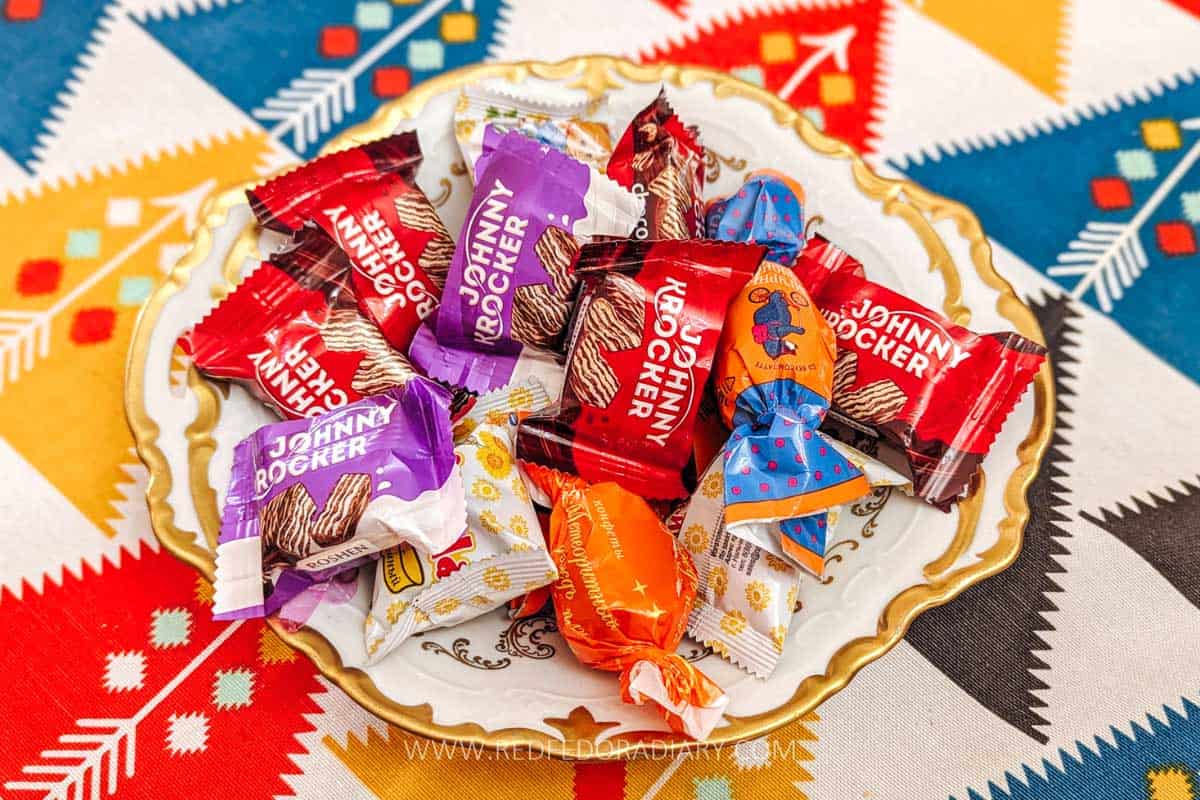
Keep a few candies in your pocket when you head out — you’ll probably need them.
Don’t be surprised if a taxi driver hands you one, or if a neighbor you haven’t seen all year suddenly knocks on your door with a little bag of sweets.
Where to experience Christmas in Tbilisi
Christmas lights and decorations in the city
Tbilisi does have a small ceremony to switch on its Christmas lights and its main Christmas tree. The date changes each year and is usually announced only a few weeks in advance.


For the 2025 season, the lights will turn on December 12, along with the main Christmas tree at First Republic Square. From that day on, you can wander around different neighborhoods to look for illuminated displays and enjoy the start of the festive season.
Some parts of the city always stand out. Freedom Square and the St. George statue usually carry the year’s theme — past seasons included The City Full of Peace, The City Full of Solidarity, and European City, to name a few. Rustaveli Avenue often has the most impressive decorations, with lights stretching above the avenue and along its sidewalks.
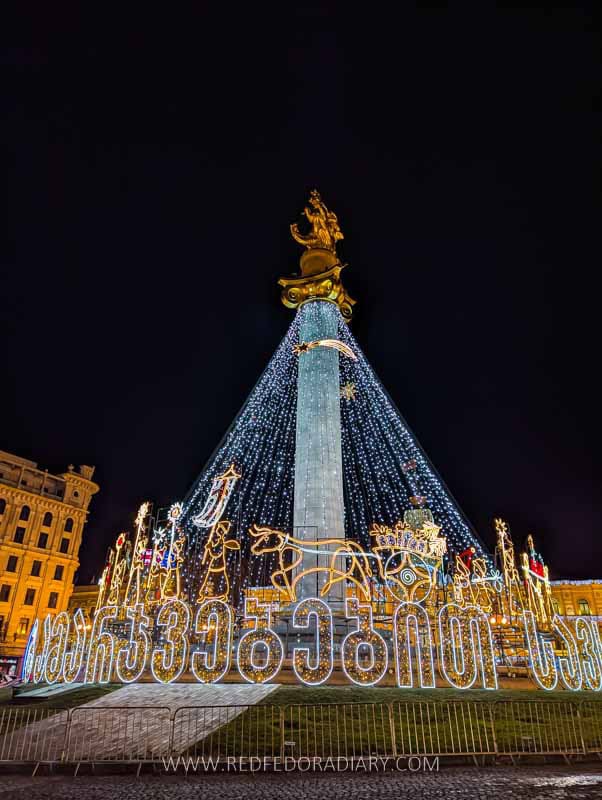
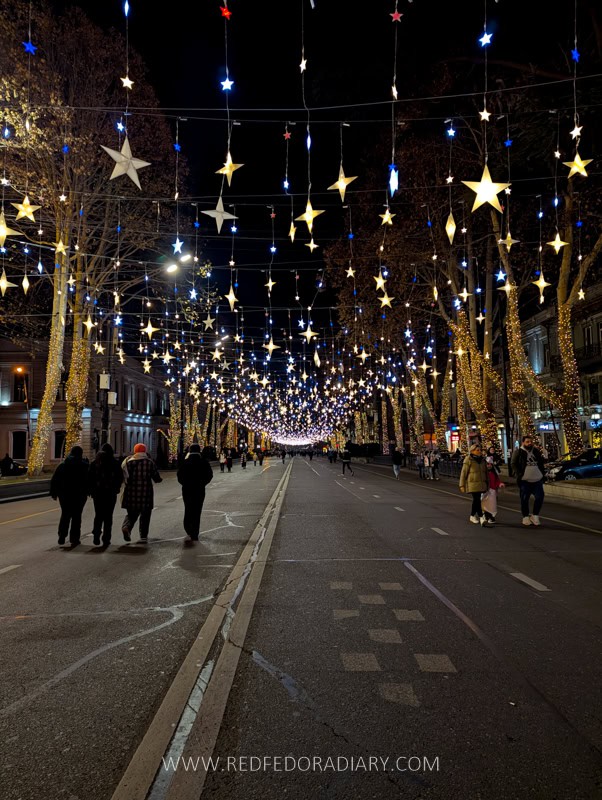
Other central areas also get their share of festive displays. Orbeliani Square, Atoneli Street, Kostava and Melikishvili streets, as well as Chavchavadze and Tsereteli Avenues, all feature different styles of decorations each year.
Tbilisi also recycles part of its Christmas lights and installations. Once new displays go up in the center, older pieces are sent to other districts in Tbilisi or smaller cities around Georgia — so you’ll spot familiar motifs across the country.
Christmas Markets in Tbilisi (Updated for 2025–2026)
Tbilisi Christmas markets run throughout the festive season, with both the City Hall and private venues organizing their own events.

The official, city-run market opens on December 12 at First Republic Square and runs through January 14, featuring food stalls, mulled Saperavi wine, and plenty of handcrafted Georgian souvenirs and artisanal products.
Independent markets add even more variety. Fabrika Tbilisi will host its annual Christmas Market on December 21–22, while the IWA (International Women’s Association) holds its popular charity fair on November 29.
Several other small and large markets will likely pop up across the city, though many organizers announce their dates closer to December.
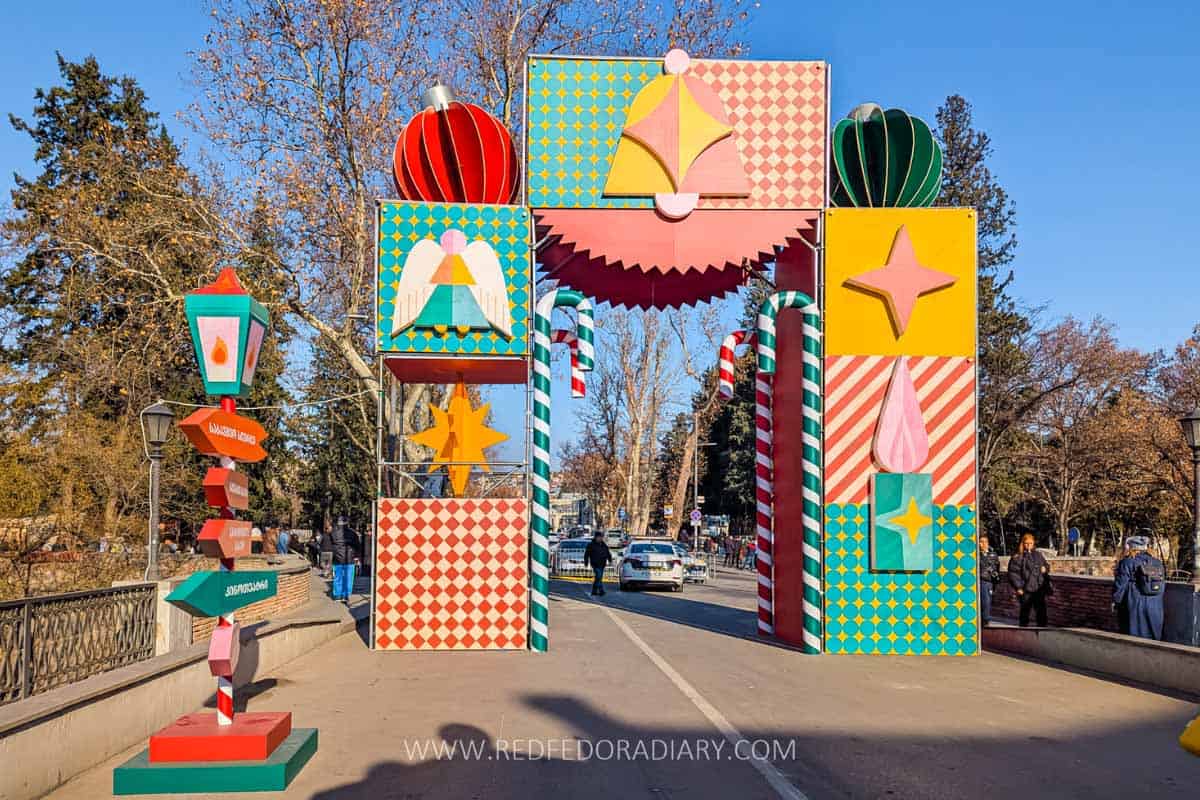
Visiting these markets is one of my favorite things to do in Tbilisi in winter, especially if you’re looking for thoughtful Christmas gifts to bring home. Many local artists and small businesses participate, so it’s a great place to support creatives and find unique seasonal items.
If you’re traveling with kids, most markets have daytime activities and workshops. Independent businesses also organize family-friendly events during December, so it’s worth keeping an eye on Facebook event listings for updated schedules.
How Georgians celebrate New Year’s Eve in Tbilisi
While Georgia technically marks two New Year dates, the night of December 31 is the biggest and most meaningful one.
Families spend most of the day preparing food, decorating their homes, and finishing all the last-minute tasks before everyone gathers for the late-night dinner.

Each household has its own rhythm for setting up the Christmas tree. Some put it up early in December, while others – like my family – decorate it on December 30.
The dinner table is usually arranged around 11 p.m., but no one congratulates each other until the clock hits 00:00:01. Once the New Year “arrives”, sparkling wine is opened, and everyone shares warm wishes.
To say Merry Christmas in Georgian, you can say “Gilotsav Shobas”, Happy New Year in Georgian is “Gilotsav Akhal Tsels”, and the more extended version is “Gilotsav Shoba–Akhal Tsels,” which combines both Christmas and New Year.
Fireworks on December 31
Fireworks begin several days before New Year’s Eve, as they are sold everywhere and in every possible size. The real show, however, starts on the night of December 31.
Safety concerns and discussions about animal welfare come up every year, and many people, including me, have stopped using fireworks at home. Still, the tradition remains strong countrywide.
Georgia doesn’t have an official city-run fireworks display, so the entire city lights up from individual homes — rooftops, balconies, and courtyards — creating a picturesque scene across the Tbilisi skyline.
Fireworks start as soon as it gets dark and continue intensifying until midnight, then slowly fade over the next hour or two. It’s beautiful, loud, chaotic, and unforgettable — an authentic glimpse into how locals welcome the new year in Tbilisi.
The best viewpoints to watch the fireworks include Narikala Fortress, Mtatsminda, Betlemi Rise Street, and the Betlemi Church viewpoint. Public transport typically runs extended hours on this night and is often free, making it easier to reach these areas if you can’t get a taxi.
Traditional New Year’s Eve Menu in Georgia
Every region has its own customs, and Georgian Supra traditions for Christmas naturally vary from family to family. Because Tbilisi brings together people from all over the country, there isn’t one fixed New Year’s Eve or Christmas dinner menu — everyone cooks a little differently. Still, there are several classic dishes you’ll find on most tables.
Satsivi (turkey or chicken walnut stew)
Satsivi is one of the most traditional Georgian dishes for New Year’s Eve — a cold stew made with turkey and a thick walnut sauce.

Growing up, my siblings and I didn’t like turkey or cold stews, so my mom swapped it for chicken and made a hot version similar to Kharcho. Many families still keep this tradition, but the meat often changes to fit personal taste and budget.
Suckling Piglet (Gotchi)
A slowly roasted suckling piglet is another classic dish tied to Georgian Christmas traditions. Some families prepare it a day in advance, while others take the piglet to their neighborhood tone baker and ask if they offer to roast it — many do, and some even hang signs for it: გოჭის შეწვა (Gotchis Shetsva).
Over the years, my family stopped roasting it because the price increased dramatically (you need to buy the whole piglet), and the dish is primarily crispy skin and fat, with just a thin layer of meat.
Pkhali (vegetable walnut appetizer)
Pkhali is a staple Georgian appetizer made from vegetables seasoned with spices and ground walnuts. We usually prepare eggplant, pumpkin, and red pepper at home.

Even though I love spinach pkhali, we rarely make any more because it takes an unrealistic amount of spinach to make a decent portion.
Khachapuri
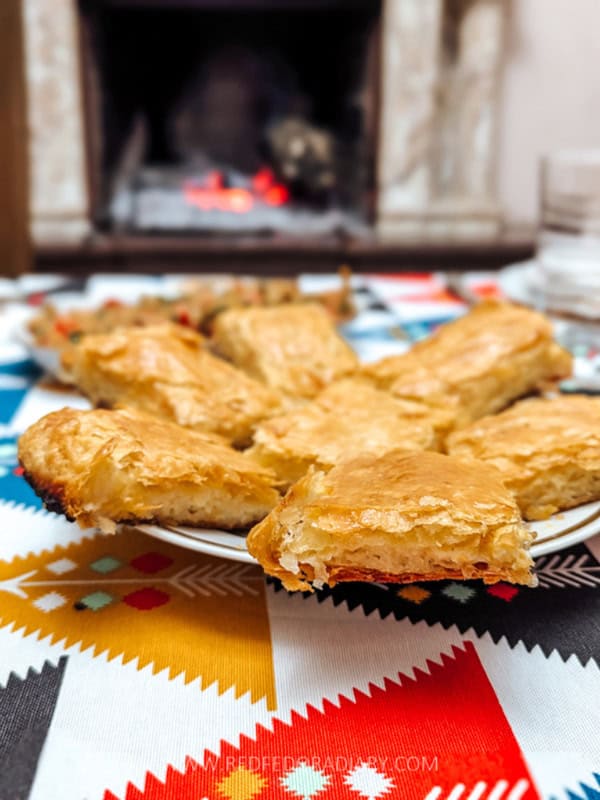
No Georgian dinner is complete without traditional Georgian khachapuri. Every household chooses a different version for New Year’s Eve — I personally love my mom’s half–puff pastry khachapuri packed with cheese. This dish always shows up on the table, no matter what region the family is from.
Olivie (Russian salad)
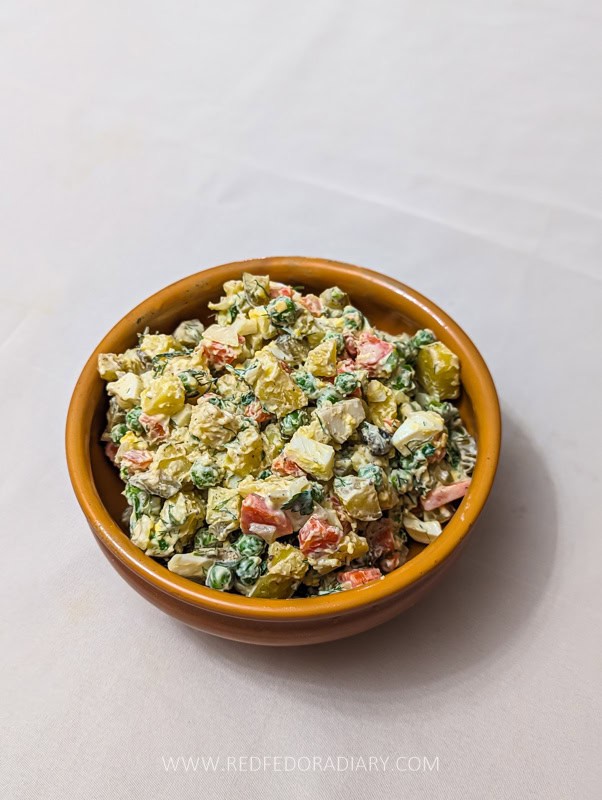
A remnant of the Soviet era, Olivie is still common on New Year’s tables across Georgia. It’s made from boiled potatoes, carrots, eggs, cucumber pickles, canned peas, onions, and a heavy dose of mayonnaise. We usually tone it down by mixing mayonnaise with sour cream to lighten its flavor.
Holodets and Hren
Holodets is a cold meat aspic — essentially a savory meat jelly — eaten with hren, a sharp horseradish sauce that tastes like a mix of mustard and wasabi, another Soviet remnant. It’s not everyone’s favorite (only my parents enjoyed it), so we stopped making it in recent years.

Desserts and sweets
Desserts for this occasion are served on their own small table (think of a coffee table setting). Most families prepare a mix of seasonal fresh and dried fruit (figs, persimmons, black plums), along with nuts, wrapped candies, Churchkhela, and other traditional sweets. Some might bake a cake, but it’s not a necessity.


The most important sweet for Georgian Christmas festivities is Gozinakhi, made from caramelized honey and walnuts. Stores do sell them, but mass-produced, so the only way to try better ones is to make them yourself, be invited to a Georgian household, or scout them at Christmas markets.
You may also find Pelamushi, a grape-juice pudding thickened with corn flour, which is more common in western Georgia. In the east, the same dessert is called Tatara, thickened with wheat flour instead.
Where to celebrate NYE in Tbilisi (Parties + Public Events)
After midnight celebrations with family, many people head out to continue the night with friends. Some go to restaurants, bars, or clubs hosting special Tbilisi New Year events, while others gather at a friend’s house. Everyone does something different, but going out after a family dinner is very common.
Most venues in Tbilisi announce their New Year’s Eve programs closer to mid-December, so it’s worth keeping an eye on the Facebook Events section.


For ticketed events, check TKT.ge, and if you need ideas, the Tbilisi Events in English Facebook group is an excellent source of up-to-date suggestions.
One of the main public celebrations is the New Year Gala Concert at the First Republic Square, featuring Georgian performers and starting a few hours before midnight.
Many restaurants and bars prepare special dinners for those who want to celebrate the New Year in Tbilisi in style outside the home. These usually include a set menu, live music, and a DJ later in the evening.
January holiday traditions in Georgia
January 1 – tradition of Mekvle
Mekvle is one of the most charming Christmas traditions, even if it’s rooted in a bit of superstition. The mekvle is the first guest to enter the house anytime after midnight on New Year’s Eve, and they’re believed to bring luck, goodwill, and a positive start to the year.
Traditionally, this was always a man who arrived with sweets or fruit, but today, gender doesn’t matter at all.
In the past, families chose their mekvle very intentionally — usually someone cheerful, kind, or considered “lucky.” They’d even invite that person to the house right after midnight to secure a good year ahead. Nowadays, most people don’t plan it as carefully.
Growing up, my mom always believed my brother had the best energy among us. She wanted him to be our mekvle, so after midnight she’d send him outside for a moment so that he could come back in as the “first guest.” Whether that counts is still debatable, but it’s one of those family traditions that stuck with us.
January 2 – day of fate (Bedoba)
January 2, called Bedoba in Georgian, meaning “the day of fate,” is my favorite tradition of the season. The idea is simple: whatever you do on this day reflects the year ahead.
Because of that, people try to fill the day with things that make them genuinely happy — spending time with loved ones, sharing good food, going for walks, or simply relaxing.
If you’re spending this day in Georgia (or elsewhere), plan something enjoyable for yourself on this day. Book a spa treatment, visit the sulfur baths, go for a nice meal at one of the many Tbilisi restaurants or cozy cafes, or enjoy a slow coffee date with friends. As long as it brings you joy, it fits the spirit of Bedoba.
I once heard a person went to the airport in the belief that they would travel more often that year and spent a few hours there. Whether it worked or not, I don’t know, but it’s a fun experiment.
January 7 – Georgian Orthodox Christmas
Orthodox Christmas in Georgia begins on the evening of January 6, when believers gather at churches for the late-night mass and to hear the Patriarch’s sermon.
The service continues well into the early morning hours of January 7, often until five or six o’clock. It’s a quiet, solemn ceremony — but visitors are welcome to attend. Just follow the usual dress code observed in Georgian churches.
Holy Mass in churches
If you want to experience the Orthodox Christmas Mass, I recommend Holy Trinity Cathedral or Kashveti Church. People gather both inside and outside to pray, light candles, and listen to the service. The mass itself is mostly sermons, readings, and a few moments of church singing, and it continues until very early morning.
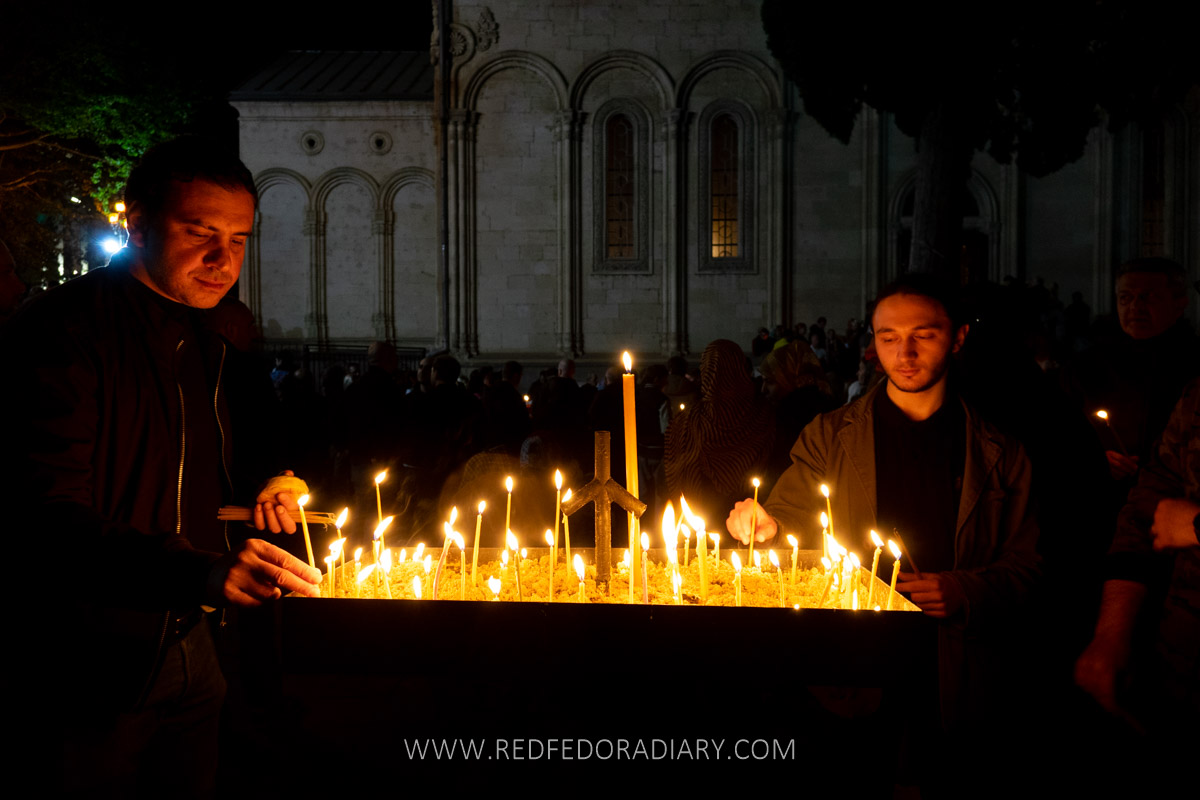
One part that may stand out to visitors is the short procession in which clergy step out of the church, carry icons, and walk around the building several times, before re-entering to continue the service. Believers also join this walk.
Christmas dinner at home
January 7 is a family-centered day. There’s no special Christmas dinner like the one we have for New Year’s Eve, but many families have their own small traditions.

In my case, we always bake Guruli pie, a version of khachapuri filled with boiled eggs — a custom from my father’s home region of Guria in western Georgia. It’s one of my favorite dishes, and we make it every year.
Alilo Parade
Tbilisi also hosts the Alilo Parade on this day, a religious procession that marches through the city’s main streets. Participants dress in traditional costumes, carry Georgian flags, icons, and crosses, and play Christmas carols over the speakers as they walk from the First Republic Square toward the Holy Trinity Cathedral.


It’s a meaningful part of festive traditions, and anyone can watch or even follow along as the group walks.
If you want to contribute, you can bring food, clothing, or small donations either at the start of the parade or along the way. These are later distributed to families in need through the church. The procession usually begins around 12–1 pm, and it’s free to attend.
January 14 – Old New Year
According to the Julian calendar, the New Year technically falls on January 13, so Georgia marks the Old New Year on January 14.
It’s not a public holiday, and there’s nothing grand about the celebration — most families simply gather for an easy dinner at home to round off nearly two weeks of Christmas and New Year festivities.
January 19 – Orthodox Epiphany
Orthodox Epiphany marks the baptism of Jesus and officially brings the festive period to an end. By this date, most families take down their Christmas decorations and lights. It’s also time to burn your Chichilaki, a symbolic way to let go of any misfortunes from the previous year and to welcome the new year with a clean start. This is one of those small but meaningful traditions still practiced today.
If you’re unsure where to burn the Chichilaki, you can donate it to the Tbilisi Zoo or the Zoological Center and its bear shelter — apparently, the animals love playing with them.
Practical tips for visiting Tbilisi in December & January
Weather & what to Pack
December and January are the coldest months in Tbilisi, but the city rarely gets snow. Temperatures usually hover between 0°C and 8°C, with chilly evenings and a bit of humidity that makes it feel colder than the number suggests.
You won’t need heavy-duty winter gear unless you plan day trips to Kazbegi or Bakuriani, where it’s much colder and snowier.

Layer up for changing temperatures: Warm base layers, including thermal shirts, long-sleeved tops, or leggings to wear under the jeans. Fleece pullovers, warm sweaters, and winter jacket go without saying.
Comfortable and weather-appropriate footwear: Tbilisi is best explored on foot, with its charming cobblestone streets and hilly terrain. Your shoes should be both comfortable and warm. A good pair of insulated boots is a must. I usually wear my Timberland boots in the city with wool socks and an added warm insoles.
Other accessories: Tbilisi’s winters can be unpredictable, with rainy days throughout the season. So pack an umbrella. I rarely go out without a warm hat and a scarf.

Power Adapter: Georgia uses European-style plugs (Type C & F), so bring a universal adapter if needed.
Tbilisi’s winter weather is manageable, but layering is key — especially when you go from cold streets into overheated cafés.
Opening hours of museums, shops & restaurants
While most dates around New Year and Christmas in Tbilisi aren’t official public holidays, many businesses close or shorten their hours between December 31 and January 3. In recent years, the government has extended public-sector holidays until January 10 or even January 14, which affects government offices, post offices, and museums.
Private businesses operate more flexibly. Restaurants, cafés, and bars stay open throughout the season, especially on New Year’s Eve, but may open later on January 1–2. Most update their holiday hours on social media.
Supermarkets and grocery stores like Carrefour, Nikora, and Agrohub generally remain open, but have short operating hours on December 31. Small neighborhood shops often close for several days.
Shopping malls usually stay open on all days except January 1 and 2, when they may operate with limited hours.
If you plan to visit museums, double-check their Facebook pages or websites — they are almost always closed on public holidays.
Getting around the city during holidays
Public transport in Tbilisi runs as usual throughout December and January. On New Year’s Eve and Orthodox Christmas, buses and the metro operate on an extended schedule — and they are often free to use.
Traffic, however, becomes a whole different story. Starting mid-December and continuing into the first days of January, the streets get incredibly crowded, especially near big open markets like Deserter Bazaar (Station Square), Samgori/Navtlughi Market, and Lilo Bazaar.

On December 31, traffic can get gridlocked for hours at peak times. Ordering a taxi becomes difficult, and prices surge noticeably. If you need to get somewhere, use the metro — it’s the fastest and most reliable option these days.
Where to stay in Tbilisi for Christmas
Staying central makes a massive difference during the winter holidays, especially when traffic is at its worst.
For easy access to First Republic Square, Rustaveli Avenue, Orbeliani Square, and most Christmas and New Year events, choose hotels in Vera, Sololaki, Mtatsminda, Rustaveli, or Orbeliani.

Here are great options for different budgets:
- Stamba Hotel – Stylish, warm, beautifully decorated, and perfect if you want a cozy base with great dining on-site.
- Rooms Hotel Tbilisi – Trendy, comfortable, and ideal for couples or solo travelers.
- Shota @ Rustaveli Boutique Hotel – Central and quiet, with spacious rooms and great breakfast.
- Ibis Styles Tbilisi Center – Affordable, modern, and perfectly located for sightseeing.
- Communal Hotel Sololaki – Lovely boutique stay with character; ideal for design lovers.
- Bazzari Boutique Hotel – A convenient location near Orbeliani Square, great for walking to Christmas markets.
- Sheraton Grand Metechi Palace – A good choice if you want amenities, spa, and hotel-organized New Year dinners, but a bit outside of the city center
Tbilisi winter tours and experiences
Generally, winter in Tbilisi is a great time for museums, food tours, wine tastings, and day trips to snowy mountain areas.
If you want to explore Tbilisi beyond the classic highlights, check out my full guide to alternative Tbilisi tours that offer a completely different way to see the city.
Here are some of the best winter tours in Tbilisi for you to join:
- Architecture Tour – Art Nouveau, Mansions & Urban Legends – Walk through the elegant neighborhoods once home to Tbilisi’s wealthy families and discover Art Nouveau mansions, bourgeois homes, and urban legends you won’t find in any guidebook — led by me.
- Tbilisi Christmas Tour & Glühwein (Half-Day Walking Tour) – Stroll through Tbilisi’s Christmas markets, admire festive decorations, and warm up with hot chocolate or Glühwein.
- Tbilisi Free Walking Tour and Wine Tasting (Tip-based) – A relaxed 1.5–2 hour intro to Tbilisi’s Old Town, perfect for your first day in the city.
- Qvevri vs Classic Georgian Wine Tasting Experience – Taste four wines made from the same grapes but produced with different methods, including traditional qvevri winemaking.
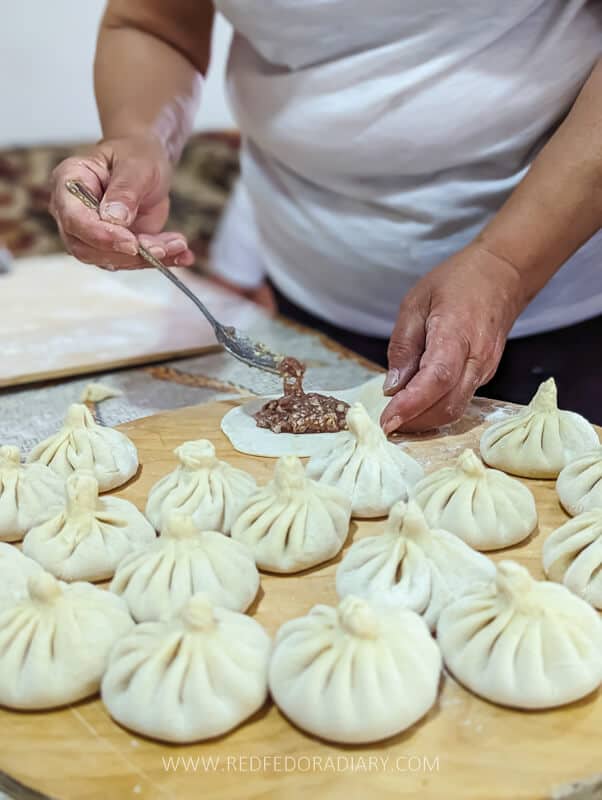
- Khinkali & Khachapuri Cooking Class (Small Group) -Learn how to make Georgia’s most beloved dishes in a hands-on cooking class
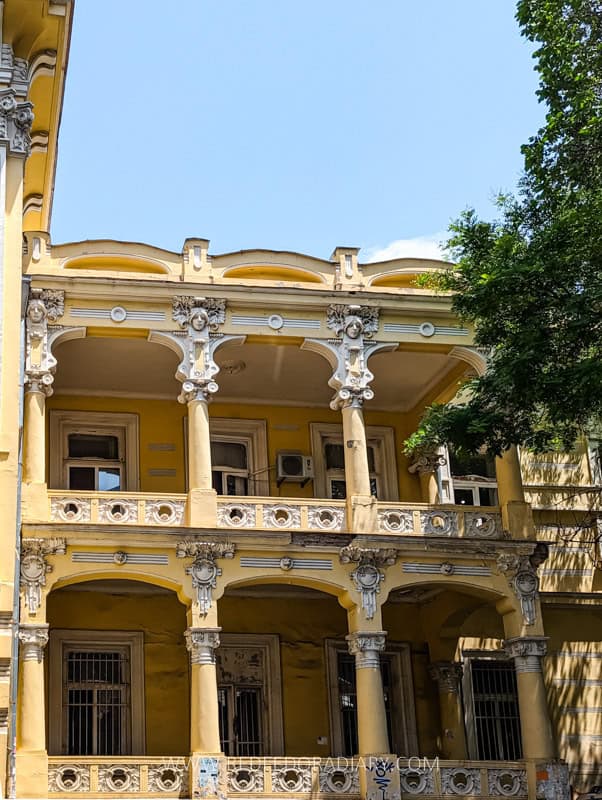
- Off-the-Beaten-Path Soviet Tbilisi Tour – Explore Tbilisi’s Soviet-era architecture, abandoned buildings, and everyday relics that shaped the city’s modern identity.
- Tbilisi Food Tour with a Local Family – Visit a local home and prepare six traditional Georgian meals, while hearing stories about regional cuisine and tasting homemade wine and chacha.
- Highlights of Caucasus Mountains – A full-day escape into the Caucasus Mountains, including stops at Jinvali Reservoir, Ananuri Fortress, Gudauri viewpoint, and the iconic Gergeti Trinity Church in Stepantsminda (Kazbegi).
- Kakheti Wine Region Day Trip – Spend the day in Kakheti tasting unlimited wine and incredible homemade food in Sighnaghi with my trusted partners at EatThis!Tours — I’ve taken this tour myself and can’t recommend it enough. You can also read my detailed Sighnaghi tour review, and don’t forget to use code RFD5 for 5% off.
FAQ: Christmas in Georgia
Is December 25 a holiday in Georgia?
No, December 25 is not a public holiday in Georgia, nor does it have a religious significance for the Orthodox Christian country.
Georgian Christmas is on January 7; therefore, December 25 is a regular working day, although Catholic churches in Tbilisi do hold a Christmas Eve mass on December 24.
How warm is Georgia in December?
December in Georgia varies by region, but Tbilisi stays relatively mild, usually between 0°C and 8°C. It’s chilly but not extreme. Mountain areas like Kazbegi, Gudauri, and Bakuriani are much colder and snowier. Layering is key if you’re planning day trips from Tbilisi.
Does it snow in Tbilisi in December?
Snow in Tbilisi is rare in December. Some years we don’t get any snow at all, and when it does, it usually melts within a day, or even hours. If you want a proper snowy winter atmosphere, head to Bakuriani, Gudauri, or the surroundings of Stepantsminda (Kazbegi).
Is Christmas a good time to visit Georgia?
Absolutely. Christmas in Tbilisi feels festive from mid-December until mid-January. The city is full of lights, Christmas markets, concerts, and seasonal food. It’s a great time to experience local traditions like the Alilo Parade and New Year celebrations — without the heavy crowds you find in Europe.
When do Christmas markets start in Tbilisi?
The Tbilisi Christmas market dates vary each year and are announced a few weeks in advance. Typically, the dates are between the first two weeks of December and the first two weeks of January.
Tbilisi Christmas market 2025-2026 opens on December 12 and runs until January 14. Independent markets, like the one at Fabrika Tbilisi, usually take place after December 20, and the IWA charity fair is held sometime in December, but in 2025 it’s scheduled for November 29.
Are restaurants and shops open on New Year’s Day?
Most restaurants, cafés, and bars stay open, though many operate with shorter hours on January 1–2. So do supermarkets and grocery stores, while small neighborhood shops may close for a few days. Museums and government institutions are closed during official public holidays.
Hello! Thank you for the useful info. I am looking for suggestions as to where to have Christmas eve dinner on the 24th as we are Catholic. I read that there are places that offer but havent found much info. Do youhave any suggestions?
Hi Eeva,
Thanks so much for your comment and feedback! Like I mention in the article, a few expat focused restaurants do Christmas Eve Dinner on December 24th. For now, only Ati Restaurant of Sheraton Grand Hotel has announced the menu and reservation details. I haven’t seen anyone else post anything just yet. Once I have more info, I’ll update the post.