
10 Years Later: Looking Back at Tbilisi, Travel Blogging, and What’s Next
Ten years ago, on June 16th, I bought a domain redfedoradiary.com. I can’t remember my very first post or the exact moment I hit publish, but I do remember spending way too much time choosing the name and researching platforms before anyone had read a single word. The name needed to feel right and meaningful. The platform had to be easy enough for someone with no coding skills or tech confidence.
I had no idea what I was doing. I also had no idea how far I would come, how much it would mean to me, or how it could break my heart.
How travel blogging has changed
When I started Red Fedora Diary in 2016, travel blogging was very different. There was no pressure to be on video, no algorithm deciding if your work got seen, and no TikTok asking you to sum up a destination in 30 seconds. You wrote, published, people found you through Google, and if your writing was good, they came back. It felt simple, maybe because it really was.
Few people in Georgia pursued travel blogging professionally at the time, making it an exciting time. Now, things are more complicated—a topic I’ll get to soon.
My original plan wasn’t even to be a blogger. I wanted to be a travel writer — the kind whose bylines appear in international publications. Red Fedora Diary was my portfolio. A place to develop my style, put my work out there, and show editors what I could do.
And for a while, that worked. I wrote for Lonely Planet, National Geographic Food, Wanderlust UK, The Culture Trip, Passion Passport, Matador Network, and more.

Then 2020 happened, and the world turned upside down. With nowhere to pitch and nowhere to go, the blog stopped being a portfolio and became the thing itself. I decided to go full-time.
It was the right decision. But it also marked the start of a much tougher chapter.
Over the course of ten years, Red Fedora Diary has undergone more transformations than I can count — logos, platforms, hosting providers, themes, layouts, and designs. At some point, I even started a Georgian version of the blog — but maintaining two languages while doing everything else was too much, and I eventually let it go.
Every single change was figured out by me, through extensive searches, tech forums, and more YouTube tutorials than I care to admit, until I landed on what it looks like today. Every bug was also mine to fix — and still is. So, somewhere along the way, in addition to being a writer, I also became my own IT department, web designer, marketer, and social media manager.
By then, social media had already begun to shift. Instagram went from a place where a good photo and a caption could build a real following, to a platform that increasingly rewards video, reels, and posting frequency.
I joined in, too. I spent way too many hours curating my feed, obsessing over how each image looked next to the others, and worrying about what to post next when I ran out of photos of myself in front of landmarks, which were really popular at the time. Looking back, I wish I had spent more of that time writing.
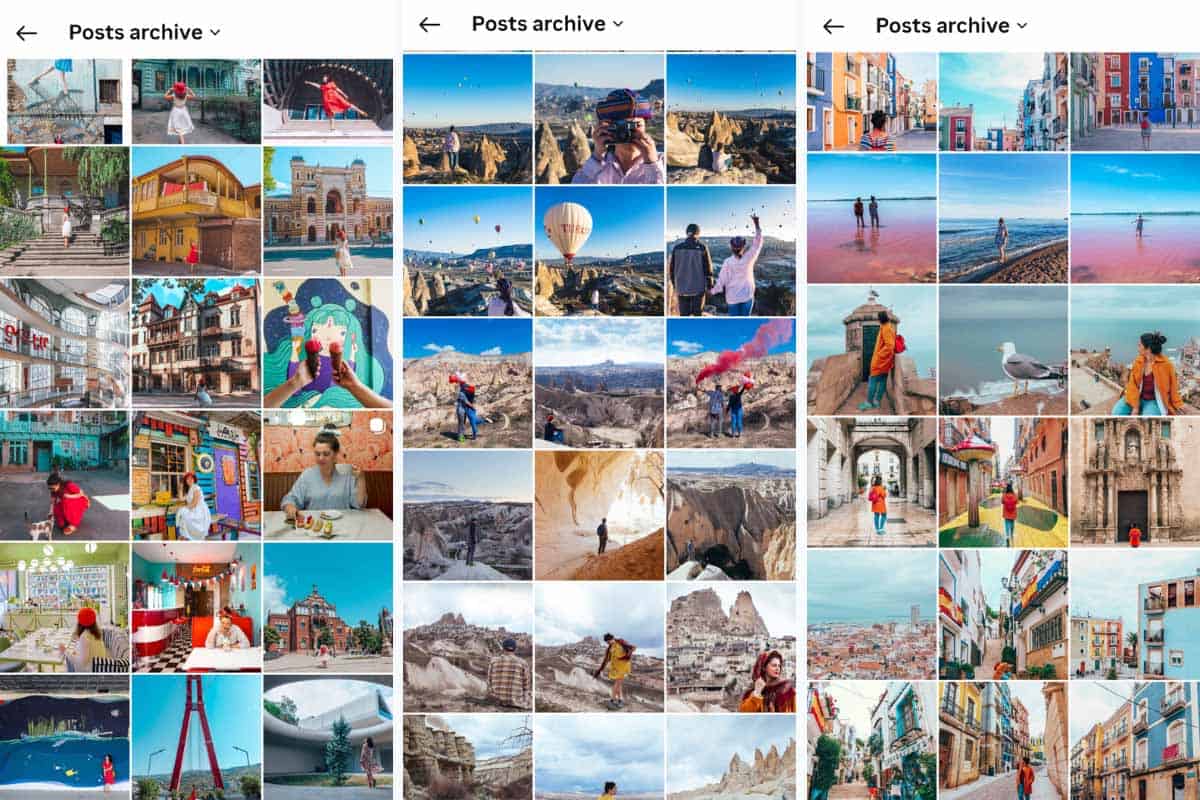
One good thing did come out of that phase: my Secret Instagram Places in Tbilisi post, which still does well in my stats today. But even with all the hours and energy I put into showing off various cities, the results just weren’t there. That’s when my love-hate relationship with Instagram began, and honestly, it still hasn’t fully worked itself out.
Facebook quietly stopped showing your posts to the people who had already chosen to follow you. Then TikTok arrived and reset everyone’s expectations about content all over again. Video wasn’t optional anymore.
And then Google changed the rules.
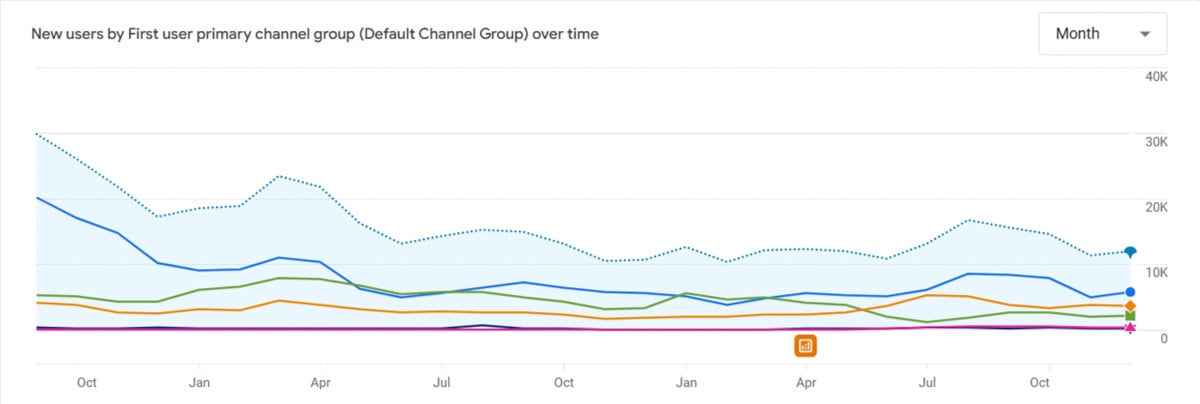
For years, search traffic constituted the backbone of most travel blogs, including mine. You wrote thorough, useful content, Google ranked it, readers found it. Then, the Helpful Content Update arrived in August 2022 — the first of many — and the rules changed overnight. The September 2023 update hit particularly hard.
Traffic that had taken years to build dropped sharply, and with each new update, recovery felt slow and frustrating. What had worked before simply didn’t anymore. After the 2023 HCU update, my blog permanently lost about 55% of its traffic.
Looking back, my biggest mistake was not focusing on Tbilisi and Georgia from the beginning. I got so caught up in writing for international publications, building my portfolio, and curating my Instagram feed, that I missed what was right in front of me.
What I could offer was something no passing traveler could match: the perspective of someone who has spent almost her whole life in this city. By the time I realized that, the chance to be the primary travel resource for Tbilisi and Georgia had already been taken. Honestly, I’m still coming to terms with that.
And then there’s something that has nothing to do with algorithms or platforms.
In 2023, I lost my best friend Mariam to a devastating and rare cancer called sarcoma. She was my biggest supporter, my loudest cheerleader, and the reason Red Fedora Diary exists at all. The name, the whole foundation of this blog, came from a backpacking trip we took together through Southeast Asia. (You can read more about why I chose the name here.)
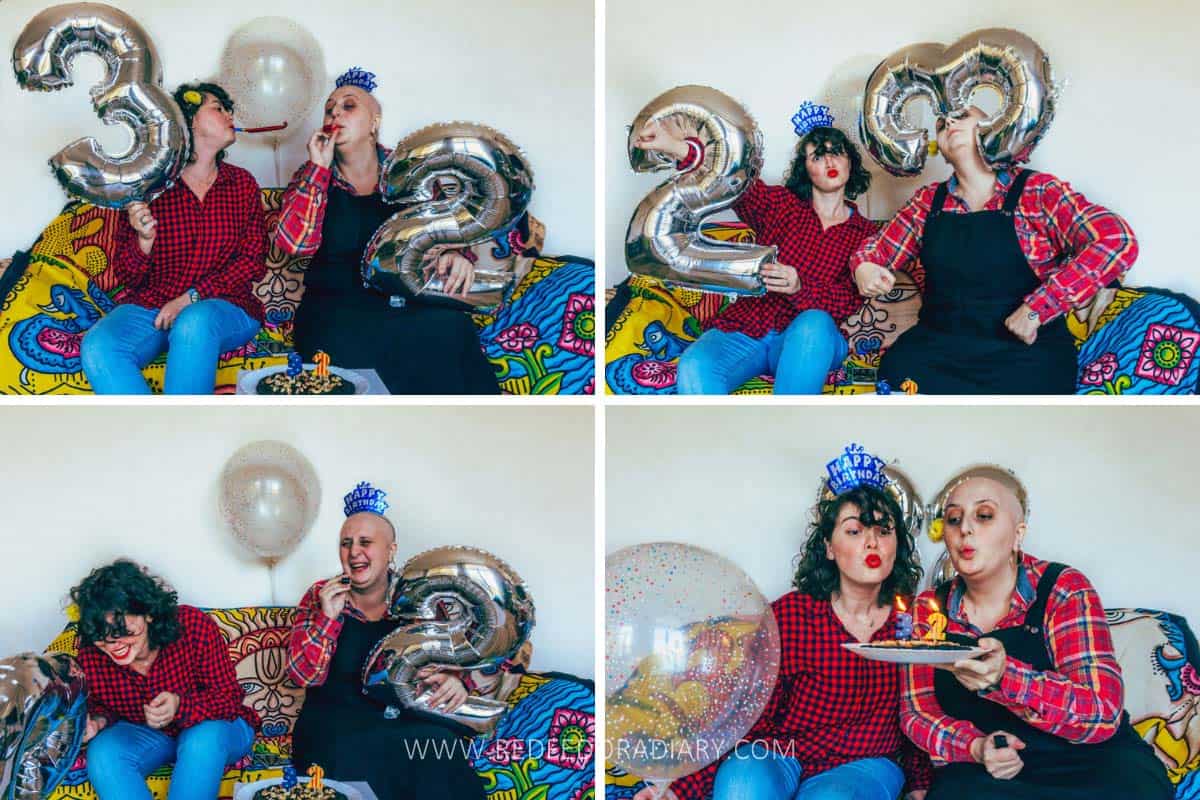
We also shared a birthday — which made losing her feel like losing something twice a year. She changed what this blog means to me in ways that are still hard to put into words. Maybe that’s a post for another day.
Now, add a baby to a one-person operation that’s already competing with other blogs, social media, and search engines, and some days it truly feels like an uphill battle.
Writing and blogging used to bring me pure joy and excitement. Now I often find myself anxious about keeping up with a fast-changing internet that never slows down — and that anxiety has a way of taking the fun out of something I genuinely love. Maybe I need a bit of a guilt-free break to come back to it with fresh eyes and actually enjoy it again.
But I’m still here ten years later, though with a slightly different approach.
And if you’re reading this, thank you. Truly. In a world where every scroll takes you somewhere else, the fact that you’re here means a lot.
If you’ve ever liked a post, left a comment, or shared something from Red Fedora Diary, those small actions help keep independent creators like me visible in a world that’s increasingly designed to make us disappear. Thank you!
How Tbilisi has changed
Tbilisi in 2016 was a different city. Not unrecognizable, but different in the way a place feels before it knows it’s about to be discovered. The Old Town was quieter, the tourist infrastructure was thinner, and you could walk through Abanotubani on a weekend morning without navigating around big groups of tourists and locals trying to sell you poorly structured day trips with the “Turi po Gruziu” phrase (Tours in Georgia in Russian) while leaning on their cars or holding the banner and aggressively approaching you nowadays.
The city had charm, and it had chaos, but it hadn’t yet become a talking point in every “underrated European destinations” listicle on the internet.
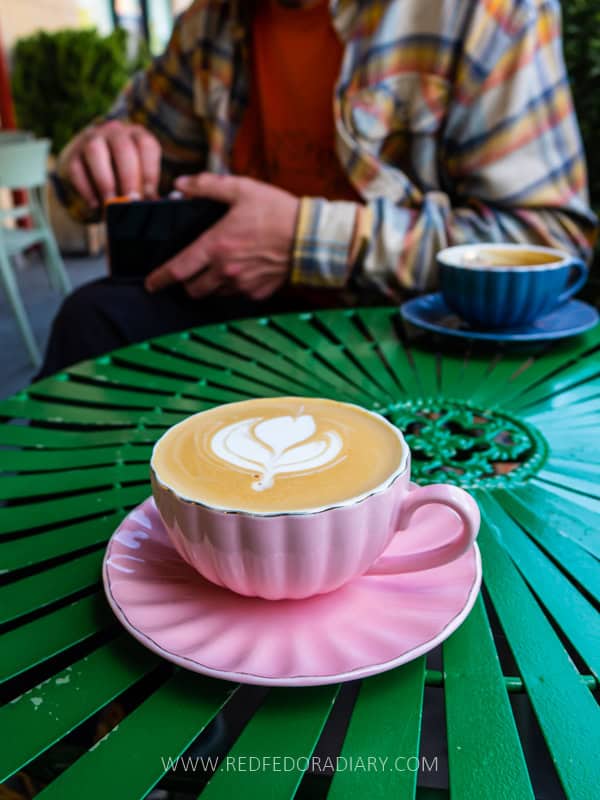
That changed fast. The tourism boom, when it came, came quickly. Hotels began to appear in newly built or renovated Soviet-era buildings. Wine bars multiplied. Specialty coffee spots started popping up in neighborhoods that didn’t have a single café before.
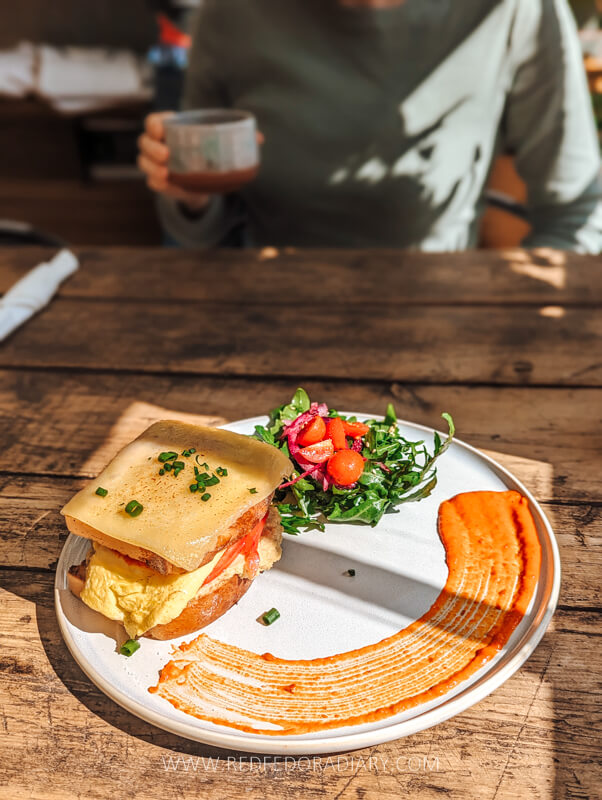
Breakfast culture, something that barely existed in Tbilisi’s restaurant scene when I started this blog, slowly took hold too, with places actually opening at 8 or 9 am. The nightlife that had been non-existent began to take shape, with various clubs and pre-party venues opening.
Ten years is a long time, and Tbilisi has changed in more ways than I could fit into one post. But a few changes really stand out, the kind you notice whether you’ve lived here for years or are visiting for the first time.
The neighborhoods
Fabrika Tbilisi is the best example of how quickly things can change. When it opened, it was the place to be, a converted Soviet sewing factory that suddenly caught everyone’s attention. For years, it attracted both locals and visitors, then lost some of its energy as new places opened, but now it has found its place again.
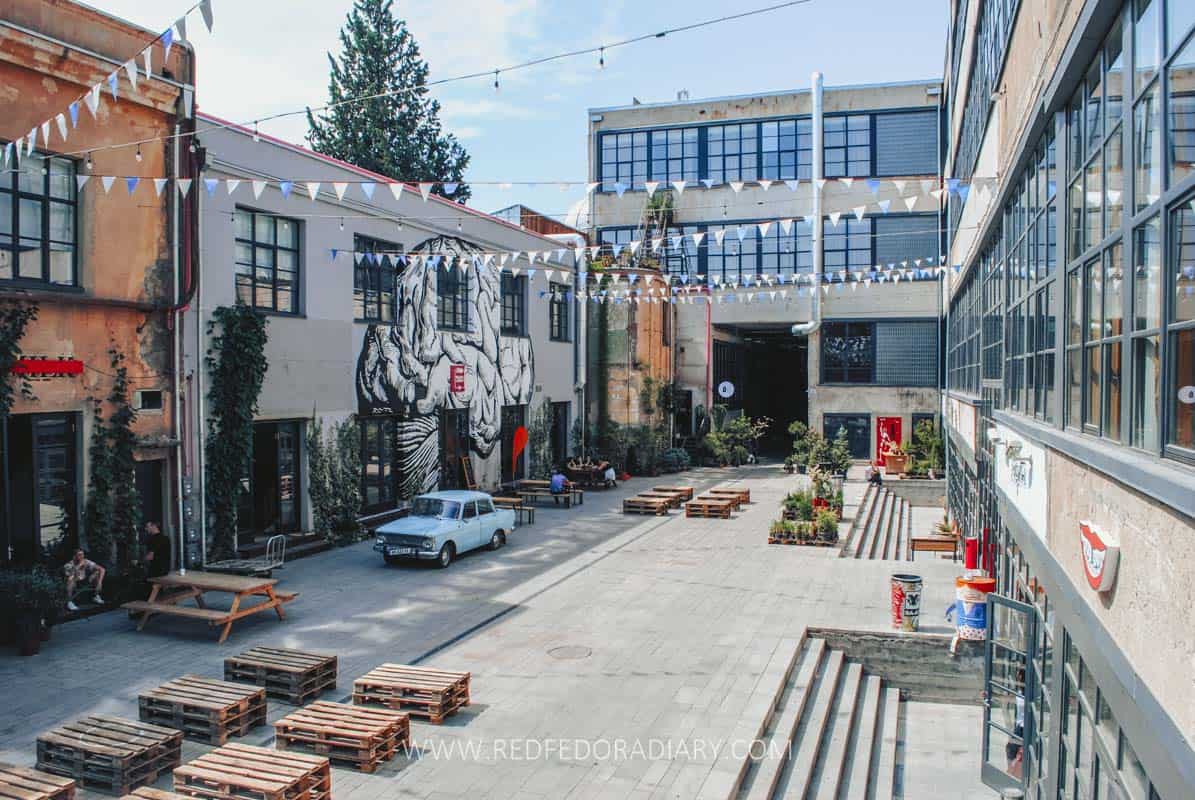
Fabrika also put Chughureti on the map. Before it opened, the neighborhood hardly registered on any traveler’s radar. Now it appears in travel guides, and many visitors still refer to the whole area simply as “the Fabrika neighborhood”. The area itself got livelier as a result, with new places opening and a mixed crowd filling the streets.
Sololaki has a quieter version of the same story. There’s no single venue that defined its transformation, but when you walk through it, as I often do on my Sololaki tours, you can feel the change happening little by little.
Gentrification in Tbilisi isn’t as aggressive or as obvious as in some other cities, but it’s happening. Both Chughureti and Sololaki are still developing, with rich histories, growing dining scenes, and plenty left to discover.
Aghmashenebeli Avenue has transformed too. What was once a slightly faded but architecturally beautiful stretch now has renovated facades, though it remains largely lined with Turkish and Middle Eastern restaurants, with the occasional Georgian place scattered in between. It’s more polished than it used to be. Whether that’s an improvement or a loss depends on who you ask.
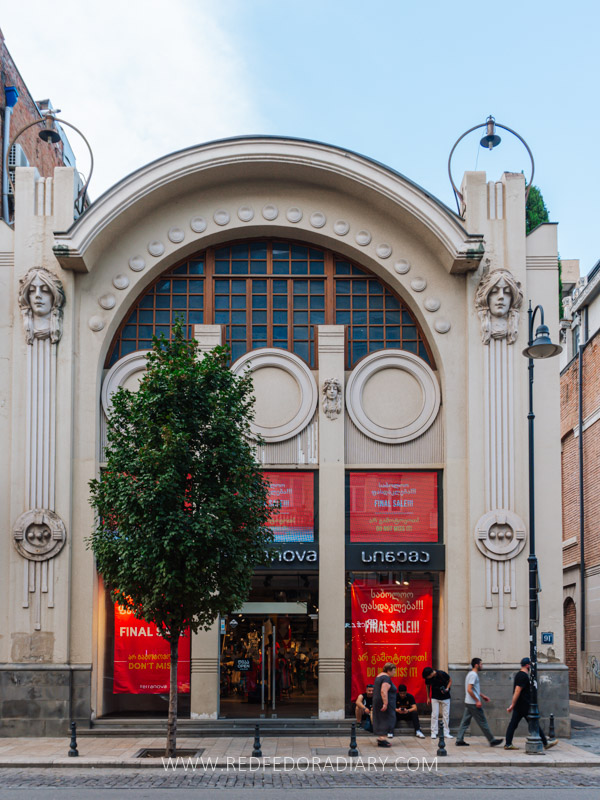
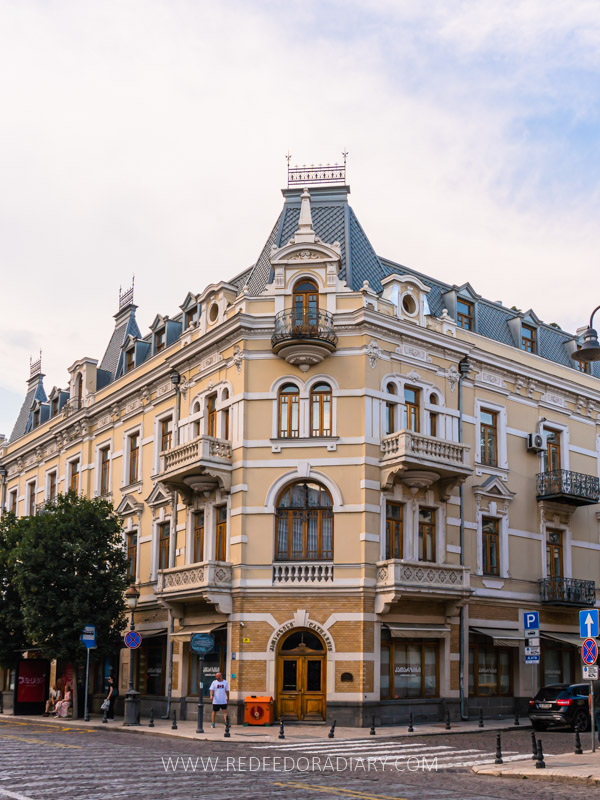
There’s also a bigger trend of turning industrial, historical, and Soviet-era spaces into something new. Wine Factory N1, Hotel Stamba, Bazari Orbeliani, and, more recently, Zeche and Radio City have transformed once-functional or forgotten buildings into landmarks and gathering places.
Ten years ago, Dezerter Bazaar was just a market: chaotic, local, and practical. Now, it often appears in travel content and is sought out by visitors as part of a ‘must-visit in Tbilisi’ itinerary that didn’t really exist before. The market itself hasn’t changed much, but its surroundings have changed completely.
Similarly, Dry Bridge hasn’t disappeared or changed much, but its context has. What once felt like a local weekend ritual, quietly browsing Soviet collectibles and antiques, is now a regular stop on most Tbilisi itineraries, and the prices clearly show that.
The craft beer and natural wine scenes have also become a real part of the city’s nightlife. What seemed niche a few years ago now feels like a normal part of how Tbilisi socializes after dark.
What’s been lost
Not every change was for the better.
Cafés and small businesses I used to return to have closed. Some of the city’s Soviet mosaics and architectural details are gone or disappearing, absorbed into renovations. If that’s the part of Tbilisi you want to understand, I’ve written about beautiful Soviet-era buildings worth checking out, as well as mosaics and memorabilia from the bygone era that can still be found in the city’s backstreets.
The iconic Old Town panorama, with its sulfur baths, Narikala Fortress, and the hillside dropping down to the river—the same view that’s in almost every promotional image of Tbilisi—has had a construction site in front of it for years now, with no clear end in sight.
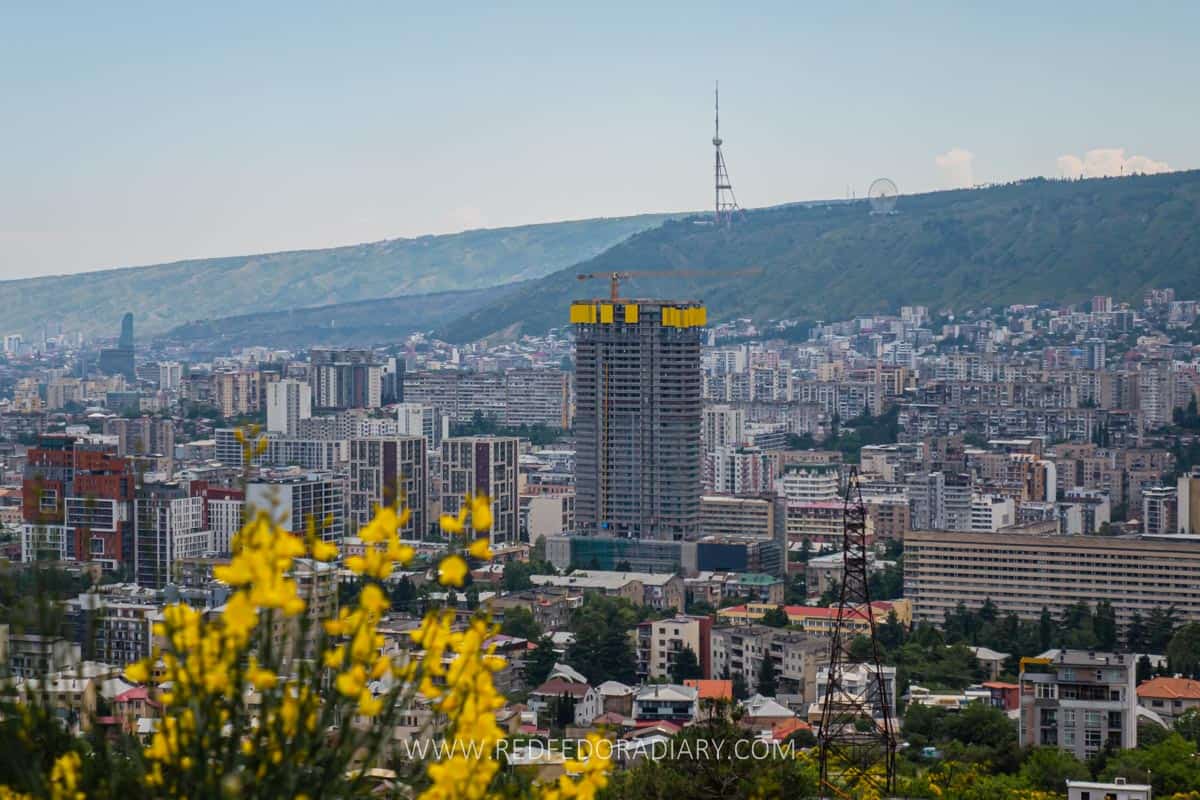
And it’s not just that one view. Construction is everywhere. Every empty plot in the city seems to have a new multi-story building going up. The noise isn’t new to Tbilisi, but the scale now is on a whole different level compared to ten years ago.
Locals are being priced out of housing as the skyline changes around them, and the environmental cost is real too. Summers are noticeably hotter, and the air quality on bad days speaks for itself.
The bigger picture
Official tourism statistics tell one story, but not the whole story. The numbers that looked promising before COVID never fully recovered, and the political situation, both locally and in the region, has quietly changed who comes to Tbilisi and why.
Without going into details, the way Georgia promotes itself as a destination has changed. If you look at things like charter flight routes instead of just official statistics, you can see the direction of that change clearly.
The city is still welcoming visitors, but the makeup of those visitors has changed, and you notice it when you walk through Old Town and the city center.
The city is also no longer the budget destination it once was. Depending on where you’re from, it might still seem affordable, but if you earn your income locally in lari, daily life—groceries, rent, eating out—has become genuinely hard to keep up with. That change matters, and it’s part of the bigger story.
What hasn’t changed
The Tbilisian courtyards we call “Italian”. Walk through the right door in the Old Town, and you’re still in someone’s quiet, crumbling, laundry-strung world that has nothing to do with tourism or trends.
The architectural details — the carved wooden balconies, Art Nouveau details, the layered facades — are still there if you know where to look. The hospitality is still genuine and warm, even if the restaurant service remains, let’s say, charmingly indifferent to the concept of urgency.
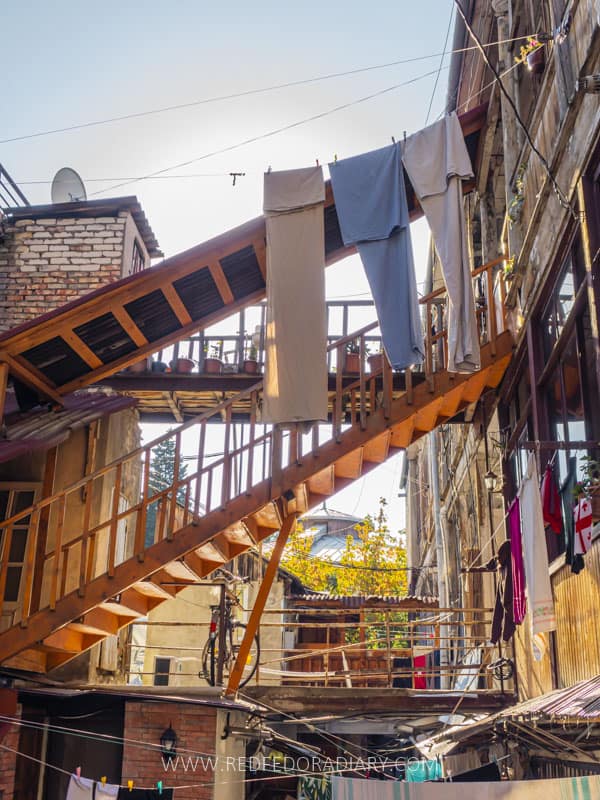
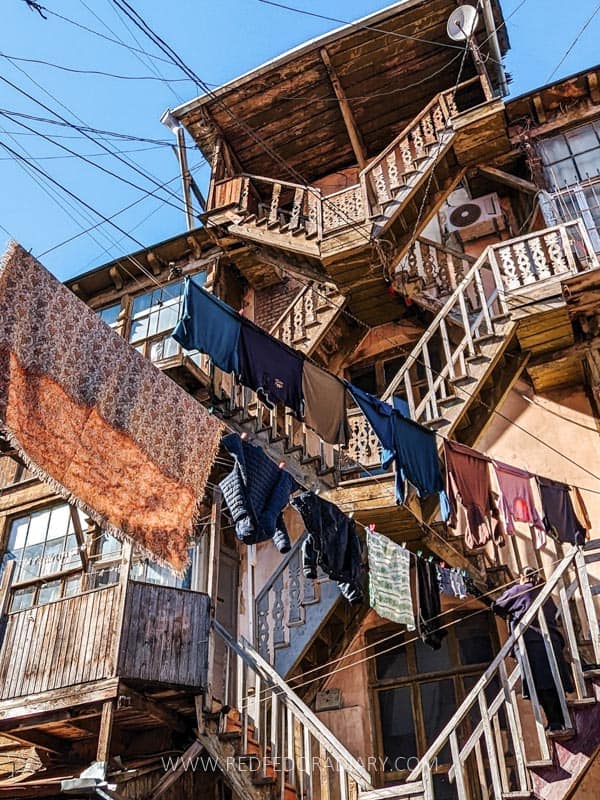
Honestly, the city still surprises me. After almost a lifetime here and years of writing about it, I still find corners and details I haven’t noticed before, even in neighborhoods I walk through several times a week.
Tbilisi is more complicated now than when I started writing about it years ago. It’s louder, more expensive, more competitive, and moves faster. But it’s still the place I know best, and the place I keep coming back to, even though I never really left.
What ten years taught me
I was a different traveler in my first years—eager, always on the move, trying to see and write about everything. My itineraries were packed, squeezing as much as possible into every day and every trip. It was work disguised as adventure, and while I still loved it, somewhere along the way, it started to take the fun out of it.
In the last two years, I’ve been trying to do something I should have done much earlier: slow down and focus on Tbilisi. It’s not that I don’t want to travel anymore, but I want travel to feel like travel again. Living here lets me cover the city properly, keep up with it, and update what needs updating. And when I do travel somewhere, I want it to be for myself, and write about it only if I feel like it.
The blog taught me things I didn’t expect to learn.
My most visited posts were rarely the ones I spent the most time on. A packing guide for Barcelona—practical, plain, and not very personal—turned out to be one of the most popular things I’ve ever published. It led to a series of similar guides that still drive traffic today.

Meanwhile, posts I was truly proud of landed quietly and stayed quiet — like my deep dives into Georgian tea or the Qvevri masters keeping an ancient winemaking tradition alive.
The blog also led me to write a Digital Nomad Guide for those moving to Tbilisi as nomads or expats, and a Croatia ebook to help travelers decide where to go — both things I never imagined producing when I started. And somewhere along the way, I put together a free Tbilisi guide too, which has found its way to more inboxes than I expected.
Writing guidebooks was always something I wanted to do but never quite found the time for, and maybe that’s still ahead. For now though, it’s not the focus.
Over time, telling stories about lesser-known places became my favorite thing to do. Not the famous landmarks or big cities, but the details in between and the places that don’t show up on popular travel lists.
My photography evolved too. Besides pointing a camera at the obvious, I started looking for interesting angles. Food photography became part of it too — anyone who has ever sat across a table from me knows the food gets photographed before it gets touched, and my friends have been very patient about it.
In the last year or so, I’ve been seeking out alternative, unknown destinations not just in Tbilisi but across Georgia and beyond. I genuinely enjoyed my trips to Bolnisi and Marneuli, putting together guides for both, and my alternative tours of Tbilisi became a hit. I have a few more in that same spirit waiting to be published.

And as it turns out, community matters more than traffic spikes. The numbers go up and down—Google makes sure of that—but the people are what stay constant.
Readers who found me somewhere on this vast internet reached out and then showed up in Tbilisi wanting to meet. Some have joined my tours, and the small community that occasionally gathers around my social media announcements to do something together brings me genuine joy. Replies to my newsletters or social media messages are warm and personal.
It’s a small thing, but in such a competitive space where it’s easy to feel invisible, those messages remind me why I started this in the first place.
And that brings me to what comes next.
What’s next
For years, Red Fedora Diary has helped people discover Tbilisi and Georgia through articles and guides. That isn’t changing. But I have to admit, the last few years have been tough on the blog, my mental health, and on independent travel bloggers everywhere.
It’s genuinely heartbreaking to watch a platform you put so much energy into slowly fade. AI, changing reader habits, and the way Google has steadily taken apart what independent bloggers spent years building—it’s a lot to deal with.
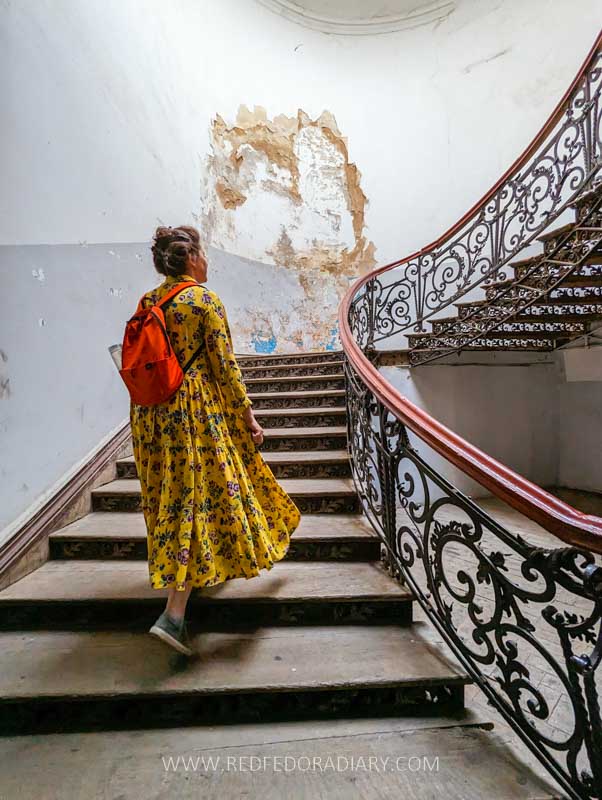

The blog isn’t going anywhere, but my focus and energy are shifting toward something I’ve found myself enjoying more each year.
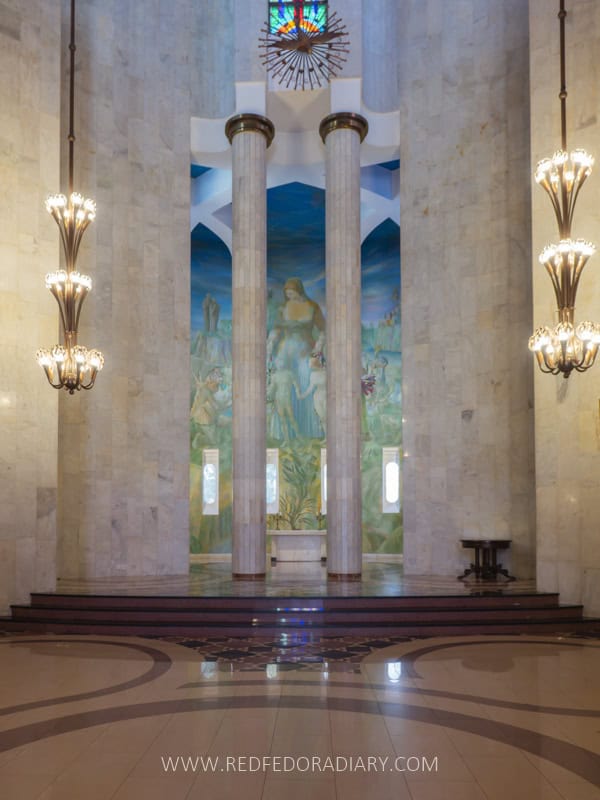
You might already know that I run architecture tours of Tbilisi’s late 19th- and early 20th-century Art Nouveau and bourgeois buildings — sharing stories that never made it into any guidebook. More recently, I’ve started offering guided visits to the Palace of Rituals, an outstanding example of Soviet architecture that most visitors only see from the outside.
Starting most likely in September, since we’ll be spending most of the summer at my in-laws in Ordu, Turkey, I’ll be offering more niche tours that I truly don’t think anyone else in the city is doing, along with classic Tbilisi Old Town tours available on demand.

And something I’m admittedly not great at talking about: I also offer itinerary planning and consultation services, with packages based on your interests and needs. If you or someone you know has ever wanted help planning a trip to Georgia that goes beyond the standard route, I am more than happy to draw on my experience to create a custom plan for you.
I don’t see Red Fedora Diary becoming less of a blog. I see it growing into something bigger—a place where ten years of local knowledge doesn’t just live on a page, but comes to life in person.
Ten years ago, I had no idea what I was starting. I still don’t know exactly where it’s headed, but I’m excited to find out. Thank you for being part of this journey. I truly am very grateful!
We had a wonderful Art Nouveau trip with you.
You have a warm place in our hearts.
Ilan and Rachel,
Israel
Thank you Rachel,
Always happy to hear from you!
I love the warmth and kindness that permeates your writing. Even more nurturing in the current climate. I am so looking forward to meeting you and joining one of your tours. top of my list is the Art Nouveau one. Please keep on writing!
Than you Judith for your kind words ❤️ Looking forward to meeting you as well!
Thank you for sharing a deeply personal journey. It’s not easy being an entrepreneur. Wishing you the best this transition. I wish I were still there to enjoy your architecture tours!! Still following from afar….
Candy,
Thanks so much for always supporting my work, means a world. Hope, I can show you around when you are back 😍
You are one of my greatest friends and even though we’re miles apart, reading this makes me feel like I’m right there with you. Thanks for sharing, being vulnerable, pushing forward…and Happy 10 Year Anniversary!
Jennyyy!
Thanks so much for those words. Definitely feeling the same about you and miss our long walks and endless convos. Miss you bunch ❤️
This is such a great article and I am definitely going to look more into it depth into your instagram past posts. Keep writing, and I’ll keep reading !
Thank you Nicola for your words, means a lot Truly!
I lived in Tbilisi 2018-2020, fell passionately in love with the city and the country and have revisited at least once every year since I moved out. Your social media posts and your blog have brought me joy. I love being able to maintain my affair with Tbilisi from afair through your photography and writing, but I also share your mixed emotions about how to city has changed, for better and for worse. I’m coming back in November this year and both looking forward and dreading a bit what a I’ll see. Bringing friends with me who are visiting Georgia for the first time and I really hope I’ll be able to let them sense the old magic of Georgia that has kept me coming back. Anyway, just want to thank you for you efforts and show my support, I really hate how all my long-time favourite travel blogs are suffering from the AI algorithm bullshit. Good luck with the next chapter! Maybe I’ll bring my friends to one of your tours when the time comes.
This is a bittersweet and profoundly excellent read, rich with the history of a city I adore. As a longtime blogger, not a travel writer per se, but someone who has long documented personal experiences, I deeply relate to this journey (as a professional writer, i am continuously replaced by AI for example) . In a fast-paced world dominated by social media, where people rarely pause to read a post, let alone deep travel writing, the landscape has fundamentally changed.
The transformation in Tbilisi is striking to me as well. Even when I am away for just a few months, I return to find major shifts. I am not Georgian, and I know I may be viewed as a tourist, but it would be a profound shame if this city lost its soul to mass tourism, fracturing its traditional socio-cultural fabric under rapid demographic changes.
Tbilisi still possesses a distinct flavor that is inseparable from its people and their culture. Across the globe, unique cultures are being assimilated by a relentless capitalist drive, stripped of their essence to satisfy the tourist market; I desperately hope Georgia avoids this fate. Most modern travel relies on generic checklists, but having lived in Georgia longer than anywhere else in the world, I know that approach barely scratches the surface. I loved your tour, and I look forward to what comes next as you focus on the city and uncover the hidden treasures most of us have yet to see. Thank you, and best of luck.
Thank you so much, Lana. This is such a thoughtful comment, and I’m really touched that the article resonated with you on so many levels.
I know exactly what you mean about AI and the changes in writing—we’re all trying to figure out where we fit into this new landscape.
I’m also so happy you enjoyed the tour. One of my biggest motivations for starting them was to share the stories and places that rarely make it into the usual travel itineraries. There’s still so much of Tbilisi that even people who have lived here for years haven’t discovered, and that’s what excites me the most.
Thank you again for your support and encouragement. I really hope I can keep sharing the city’s stories for many years to come.
Hello dear Baia – what a wonderful article about evolution. I’ve thoroughly enjoyed reading it and clicking on some of the links I wasn’t familiar with.
I am in Paris at the moment and usually every day I cut through Montparnasse cemetery on my way to somewhere.
There are ALWAYS tour groups wandering through the cemetery, the guides talking about the people who are buried there, their life and times. It’s fascinating.
Looking forward to future writing,
I wonder if that is a possibility for you to put together? I have wandered around Vera cemetery (to pay homage to Buba) but I didn’t know who else was there. Plus some of the graves are very beautifully decorated, e.g. figures with sort of “high heel” shoes, so I knew it was a woman.
Thank you so much, Penelope! I’m so glad you enjoyed reading it.
That’s actually a wonderful idea and definitely something worth exploring. We do have several beautiful pantheons and historic cemeteries in Tbilisi, each with remarkable people buried there. My only hesitation is that it would be quite a niche experience, as most visitors would need to have a genuine interest in Georgian history and culture for it to really resonate.
That said, you’ve definitely planted a seed! I might just have to play around with the idea and perhaps even test it one day with a small group of followers who’d enjoy something a little different.
I very much like what you do, and your attitude to writing and blogging in particular. And yes, the tech companies are horrendous. I’m glad you have found a way through to keep doing what you love (my travel blog didn’t survive, though I was never serious enough about it).
Thank you Tim so much for taking the time to leave such a thoughtful comment and for supporting my work over the years—it really means a lot.
I’m sorry to hear your travel blog didn’t survive. It has become incredibly difficult over the past few years, and I know many wonderful blogs have disappeared. I’m hoping there will always be space for genuine first-hand stories and personal perspectives, even if the landscape keeps changing.
Thank you again for being here. Comments like yours genuinely remind me why I started writing in the first place.
We love your blog and Tbilisi tour guides! Thank you 💕
Thanks Simeen so much for your support!