
Didube Neighborhood Guide: 21 Best Things to Do
If you’ve spent any time in Tbilisi, chances are Didube already means one thing to you: the bus station where you catch a marshrutka to Kazbegi, Mtskheta, or Svaneti. That’s understandable, since for most travelers and expats living here (and maybe some locals too), that’s all they know about it. But stick around a little longer, and you’ll find there are more things to do in Didube than grabbing a seat on a minibus.
Transport has shaped Didube for over a hundred years. When the railway arrived in the late 1800s, it completely changed the district. Later, the metro made Didube one of the first areas in Tbilisi with rapid transit. Even now, the Didube bus station is where many journeys around Georgia begin.
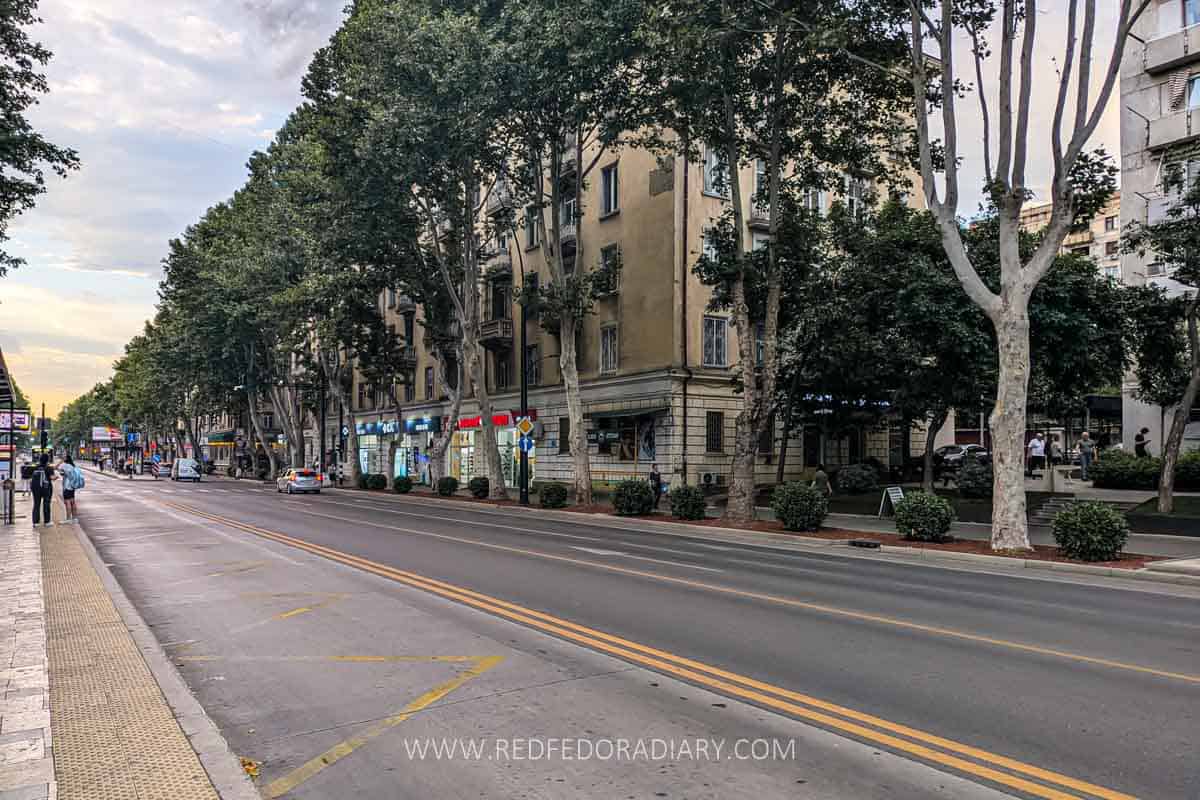
But there’s more to it than transport. The Didube neighborhood has a rich history, from prehistoric settlements and medieval royal estates to German colonists, Soviet-era buildings, and modern street art.
Didube isn’t like the Old Town or Rustaveli Avenue—it doesn’t have many postcard-perfect landmarks. That’s probably why it doesn’t show up in many blog posts and why many visitors skip it. But that’s exactly what makes it interesting, and it’s why I wanted to write about it.
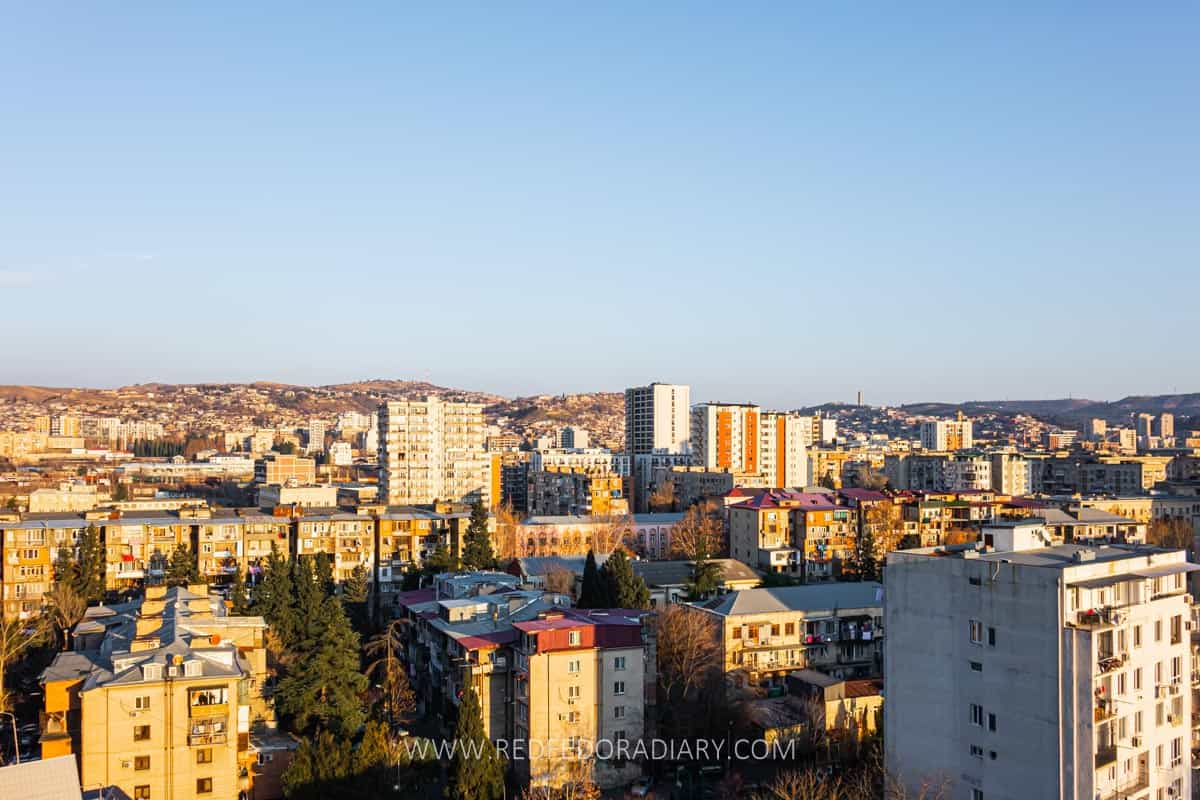
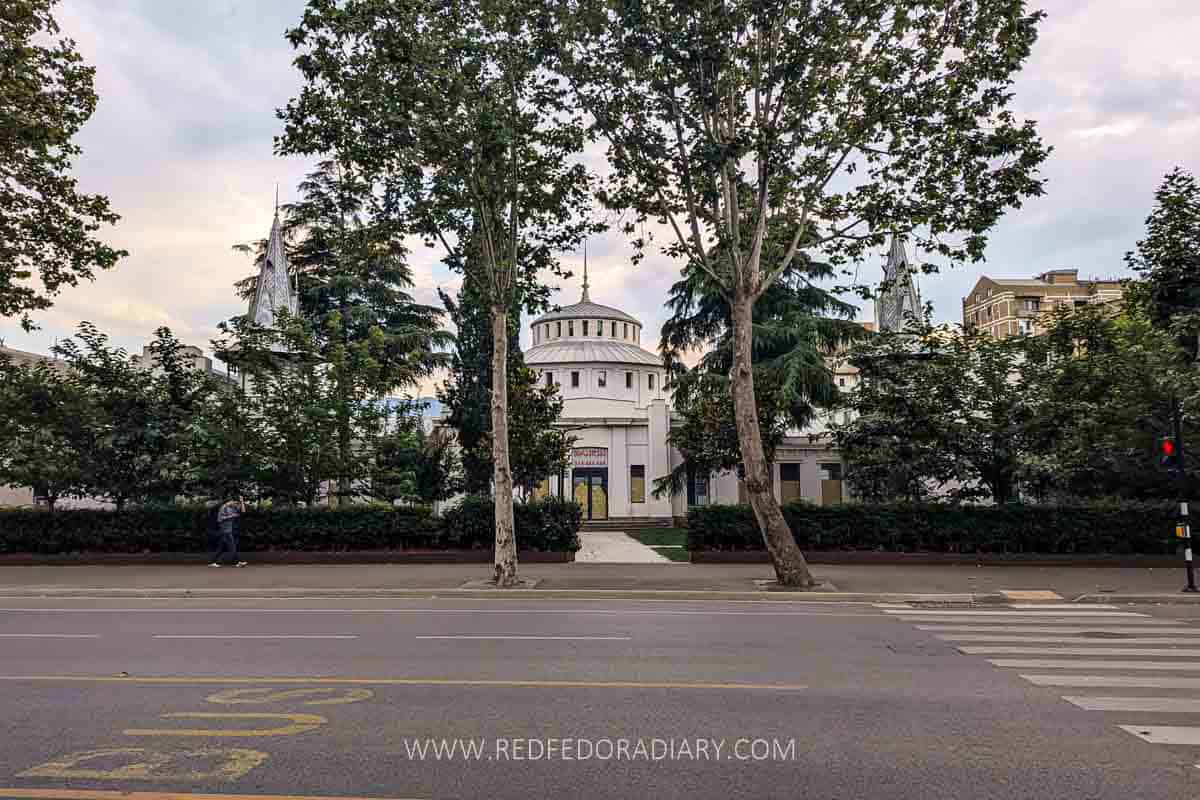
Here you’ll find a not-so-typical museum, Soviet-era buildings with mosaics and memorabilia, a historic cemetery, a canteen serving hearty home-cooked meals, cafés, and the park where, according to local legend, Pirosmani first saw the French actress Margarita, who later inspired one of his most famous paintings. It’s a side of Tbilisi that rarely makes it onto the typical tourist itinerary.
If you want to see a different side of Tbilisi beyond the main sights, I think Didube is worth checking out.
Disclaimer: Some of the links in this post are affiliate links, which means I may earn a small commission if you buy something through them—at no extra cost to you. It helps support my blog and lets me share real, first-hand travel tips. Learn more
A brief history of Didube
Long before Didube became Tbilisi’s busiest transport hub, this flat stretch of land along the left bank of the Mtkvari River had already played an important role in the area’s history. Archaeological excavations have uncovered traces of settlements dating back to the end of the Eneolithic period and the beginning of the Early Bronze Age, making it one of the oldest continuously inhabited areas around present-day Tbilisi.
The neighborhood’s name comes from the Georgian words didi dube, meaning “large plain” or “broad lowland.” Before that, medieval chronicles referred to the area as “Horse’s Foot.”
By the 12th century, Didube had become part of the royal domain. Historical sources describe it as the summer residence of Georgian kings, and it was here that Queen Tamar married David Soslan in 1189. Although the exact location of the royal palace remains unknown today, some historians believe it may have stood near the present-day Dinamo Arena.
Like much of Tbilisi, Didube changed dramatically over the centuries. After periods of decline, it was repopulated in the 17th century and became an agricultural village supplying fresh produce to the growing city. In the early 19th century, German settlers established the colony of Alexanderdorf in Didube, while another German settlement grew in New Tiflis, which is now Chughureti.
Perhaps the biggest transformation came in 1872, when the Tbilisi–Poti railway cut through Didube, dividing the area into what became the neighborhoods of Didube and Nadzaladevi and laying the foundations for the modern district.
Over the following decades, the arrival of the railway, industrial development, markets, and, later, the opening of the Didube metro station as part of Tbilisi’s first metro line in 1966 turned the neighborhood into one of the city’s most important transport and industrial centers.

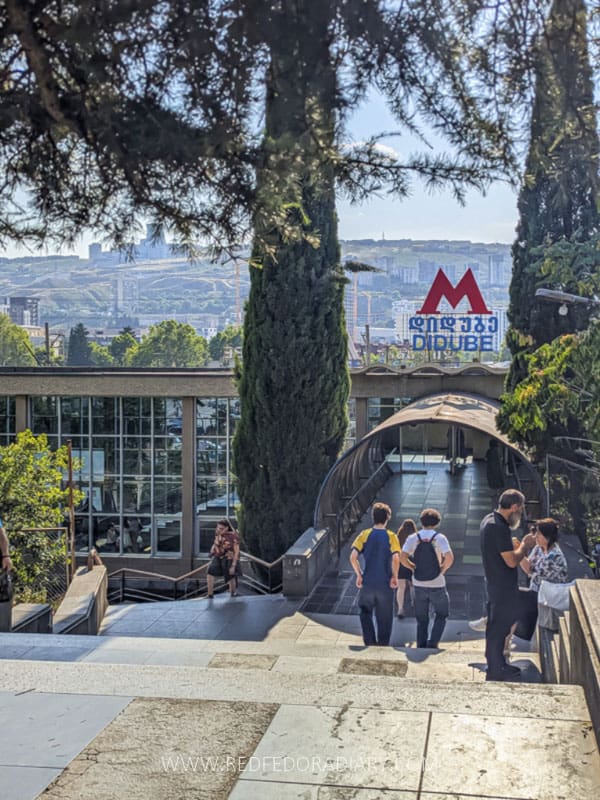
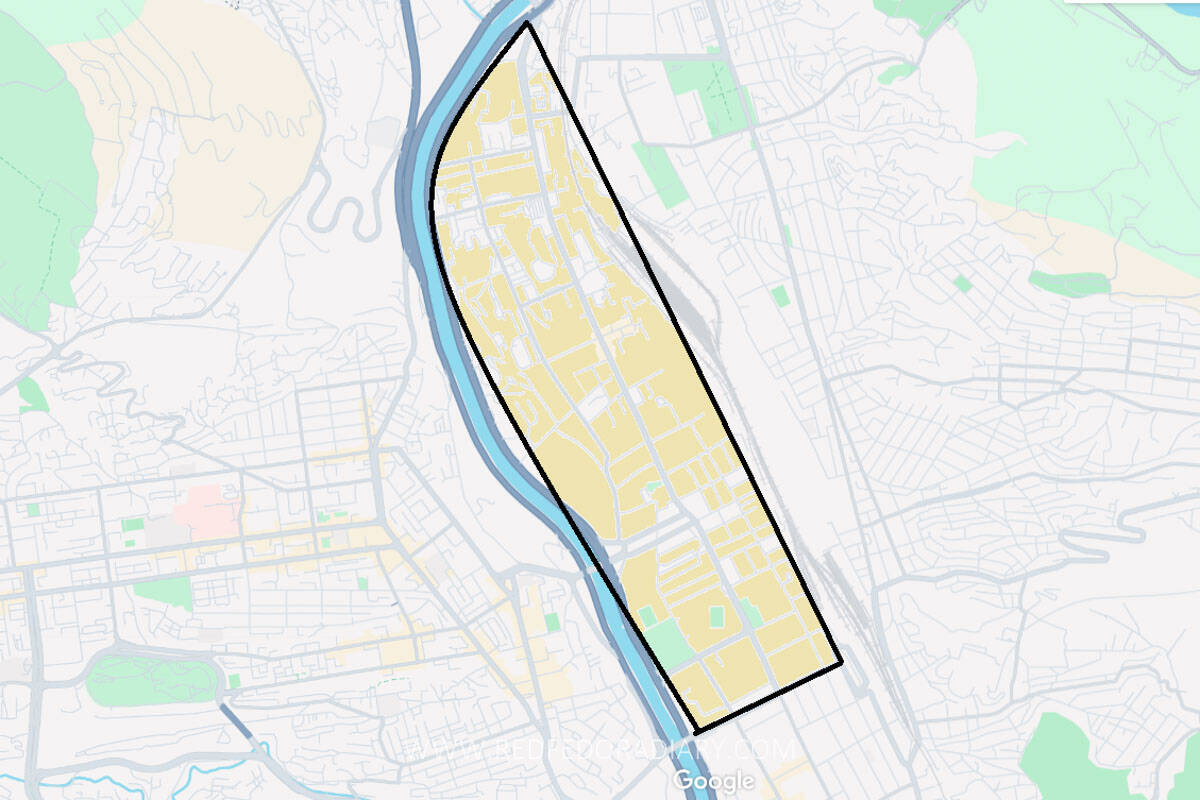
Today, Didube stretches roughly from Tamar Mepe Avenue to Station Square, following the railway as far as Didube Railway Station before looping back along the Mtkvari River.
Administratively, the neighborhood forms part of the Didube District, which also includes Dighmis Masivi. Between 2000 and 2013, Didube and Chughureti were merged into a single administrative district before being separated once again.
Plan Your Tbilisi Trip Like A Pro
💬 Your Trip, Your Way – Crafted by a Local
🏥 Travel Insurance is Now Mandatory in Georgia
🚗 Book Your Transfers Before You Land
🛜 Stay Connected from the Moment You Arrive
Things to do in Didube
Explore Mushtaidi Park and see the world’s first Children’s Railway
If there’s one place you shouldn’t skip in Didube, it’s Mushtaidi Park. Established in the 1830s, it is one of Tbilisi’s oldest public parks and has been a favorite gathering place for generations of locals.
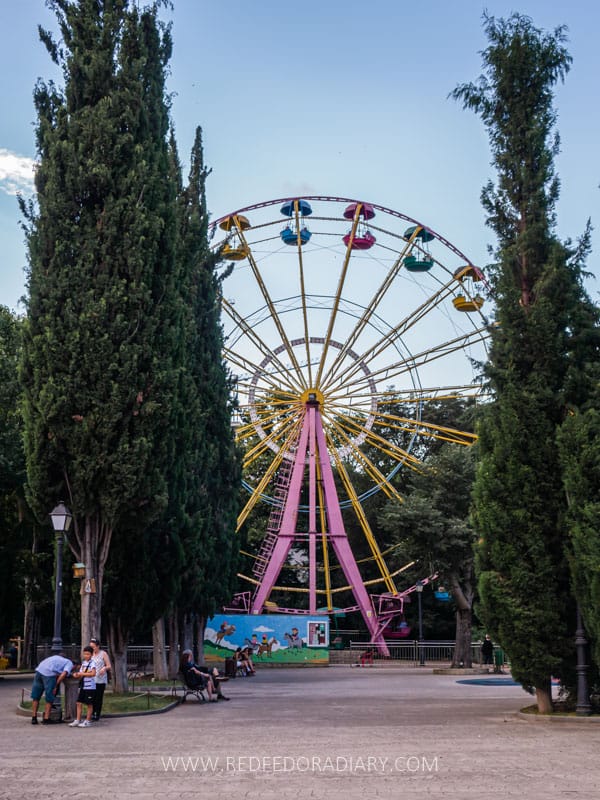
The park owes its name to Mir-Fatah-Agha, a Persian Shia religious leader, a Mujtahid, who was exiled to Tbilisi after the Russo-Persian War. The Russian authorities granted him land on the banks of the Mtkvari, where he established a theological school and created an extensive garden complete with an irrigation canal that still supplies water to the park today. According to local legend, he chose to settle in Tbilisi because of his Georgian wife, who was later buried here.
Over the following decades, the garden passed through several owners. During the late 19th century, it bordered the German colony of Alexanderdorf, whose orchards and elegant European-style residences gave this part of Tbilisi a distinctly different character.
Unlike the Ortachala Gardens, which were popular with a different crowd, Mushtaidi became a fashionable meeting place for residents who embraced European culture and leisure. The park hosted concerts, theatrical performances, agricultural exhibitions, and receptions for distinguished guests, and even Tbilisi’s first hot-air balloon launch in the South Caucasus in 1882 by a French aeronaut.
In 1887, renowned naturalist Nikoloz Shavrov established the Caucasus Silkworm Breeding Station inside the park. The institute later evolved into today’s Georgian State Silk Museum, one of the world’s oldest of its kind, which still stands just a couple of minutes’ walk from the park entrance (more on this below).
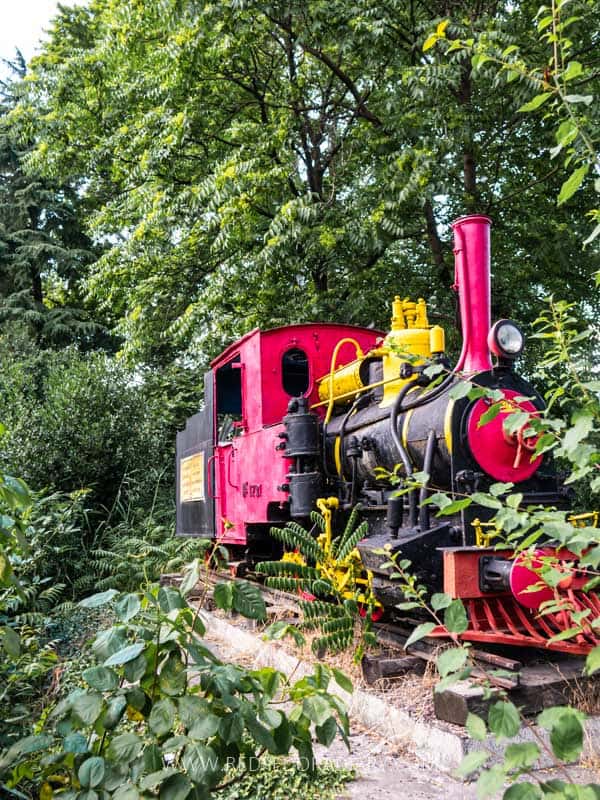
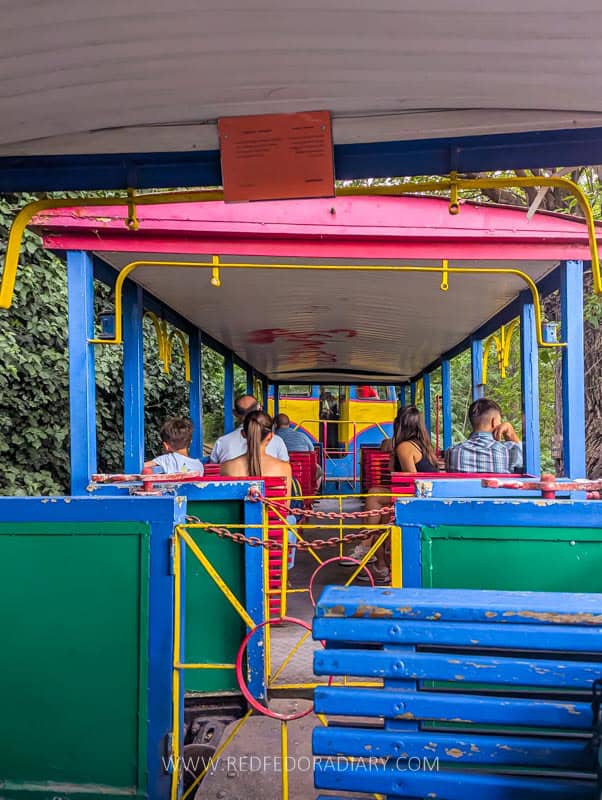
Another important chapter in Mushtaidi’s history began in 1935 with the opening of the world’s first Children’s Railway. It changed considerably over the decades, but it still operates today.
My mom used to bring me here often when I was a kid, and riding the little train around the park was always my favorite part of the visit. The original 1935 steam locomotive has been preserved and is now displayed near the park’s entrance, where you can still see it up close.
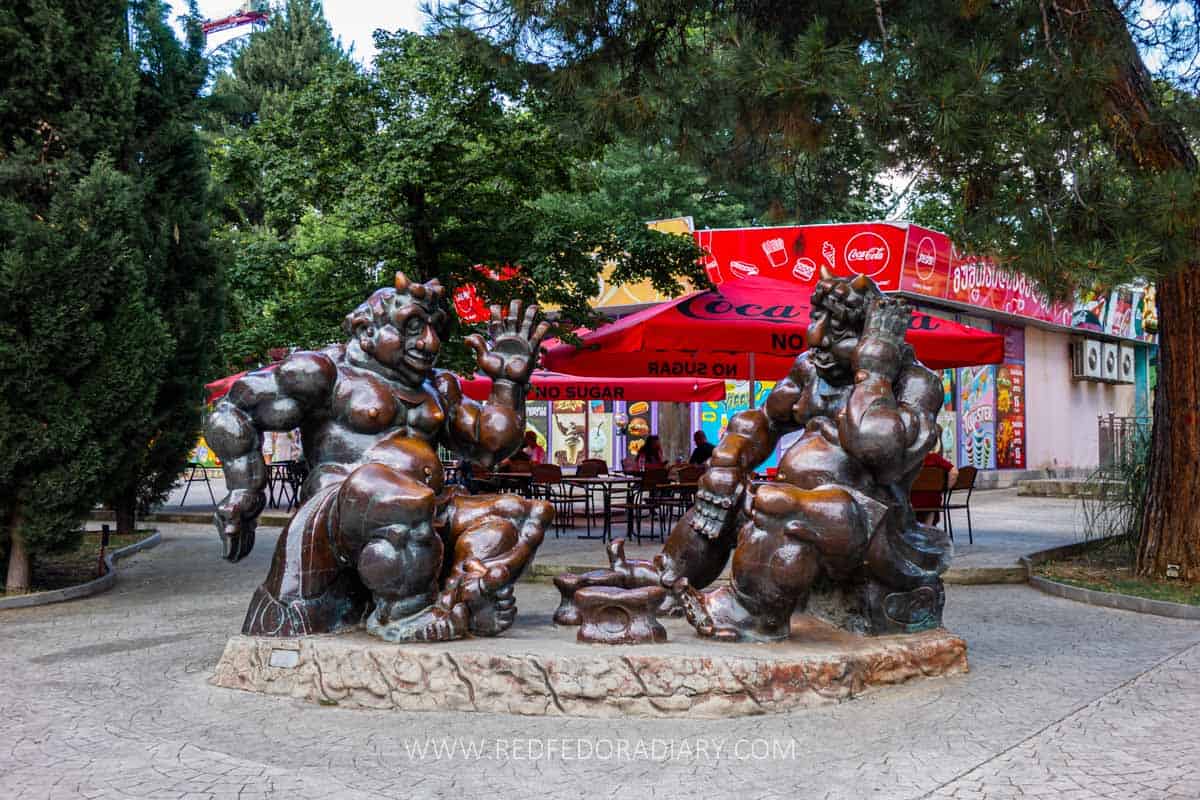
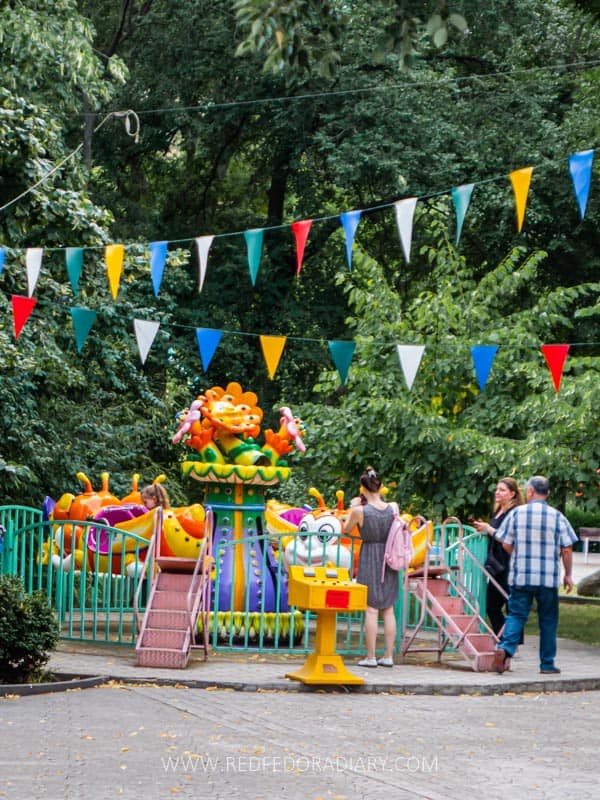
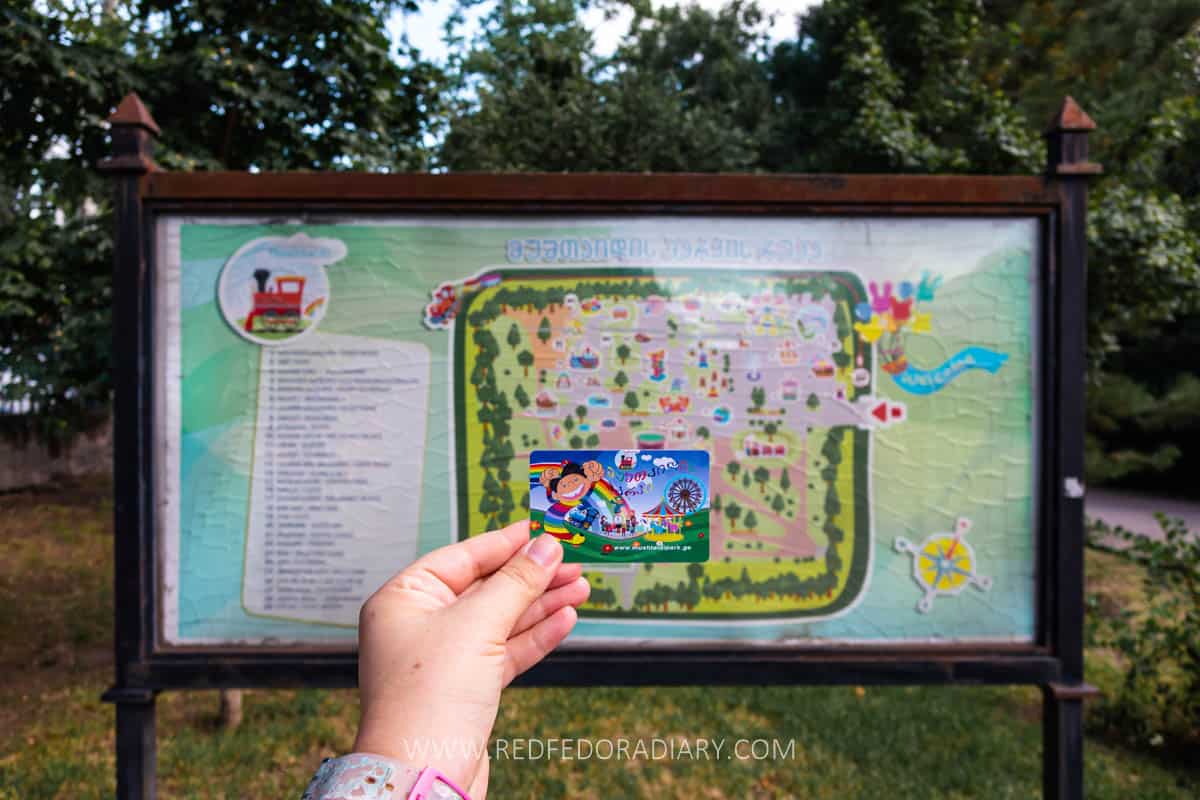
Today, Mushtaidi remains a popular family destination, with rides and attractions for different age groups. The park itself is free to enter, but you’ll need to purchase a rechargeable card (1 GEL) to access the rides, which typically cost between 2 and 5 GEL each.
One of the park’s newest additions is Dino Park, an interactive dinosaur-themed attraction with its own admission fee. Entry costs 15 GEL for children aged 3–12 and 20 GEL for visitors aged 12 and above; all indoor rides and attractions are included in the ticket price.
Find Mushtaidi’s former Café Chantant
One of the oldest surviving structures in Mushtaidi Park is the former café chantant, built in the late 19th century when the park was one of Tbilisi’s most fashionable gathering places. A café chantant was a type of entertainment venue where visitors could enjoy food, drinks, and live musical performances, similar to the popular establishments that first appeared in France during the mid-19th century.
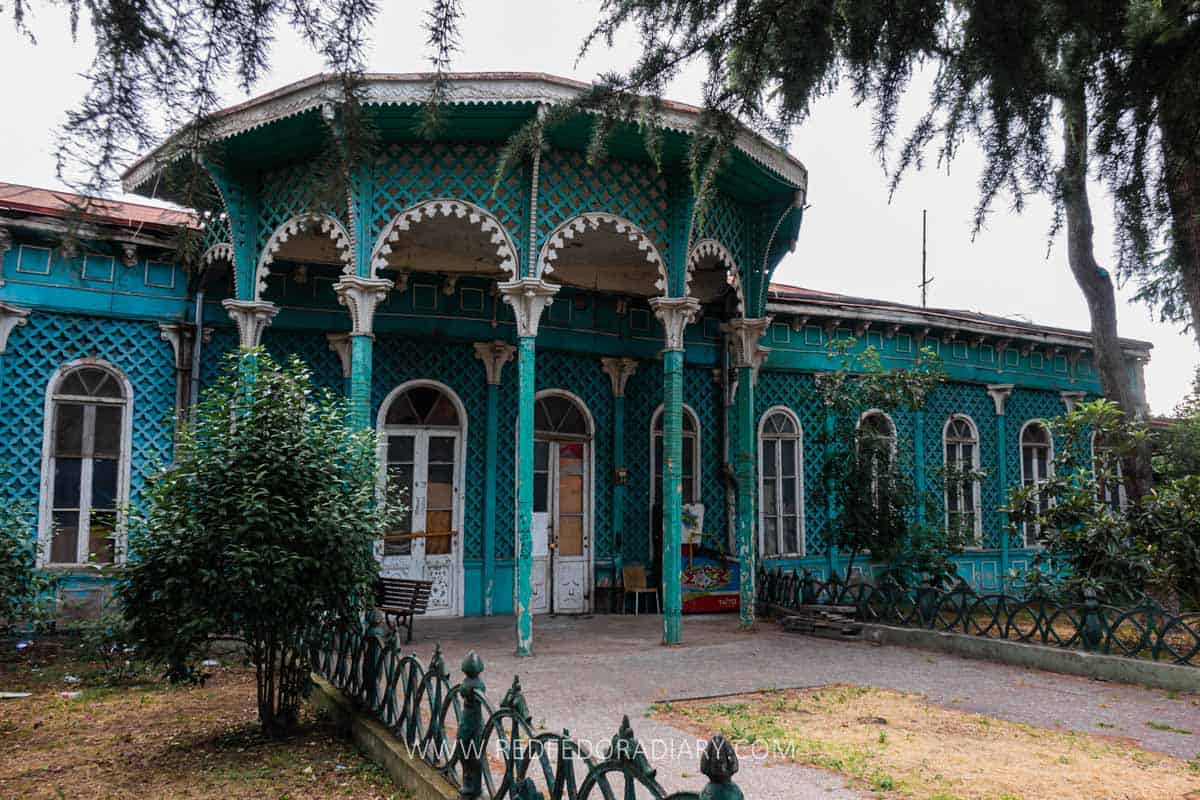
According to local legend, it was on the stage of this café-chantant that the self-taught Georgian painter Niko Pirosmani first saw the French actress and singer Marguerite de Sèvres. Their brief encounter later inspired one of the most famous stories in Georgian art history, in which Pirosmani is said to have covered the street outside her hotel with red roses and inspired him to create the world-famous painting Margarit (watch a video recreation of the story).
Although the building is in poor structural condition and cannot be entered, it’s still worth stopping by to admire its beautifully preserved wooden façade. Its decorative carvings, elegant proportions, and original details make it one of the few surviving examples of this type of late 19th-century entertainment venue in Georgia.
See the former Caucasian Crafts Committee Building
Standing next to the former café-chantant is another overlooked historic building—the former headquarters of the Caucasian Crafts Committee, now home to the Mushtaidi Park administration.
Built in the early 20th century, the committee was established to document, preserve, and promote traditional crafts from across the Caucasus.
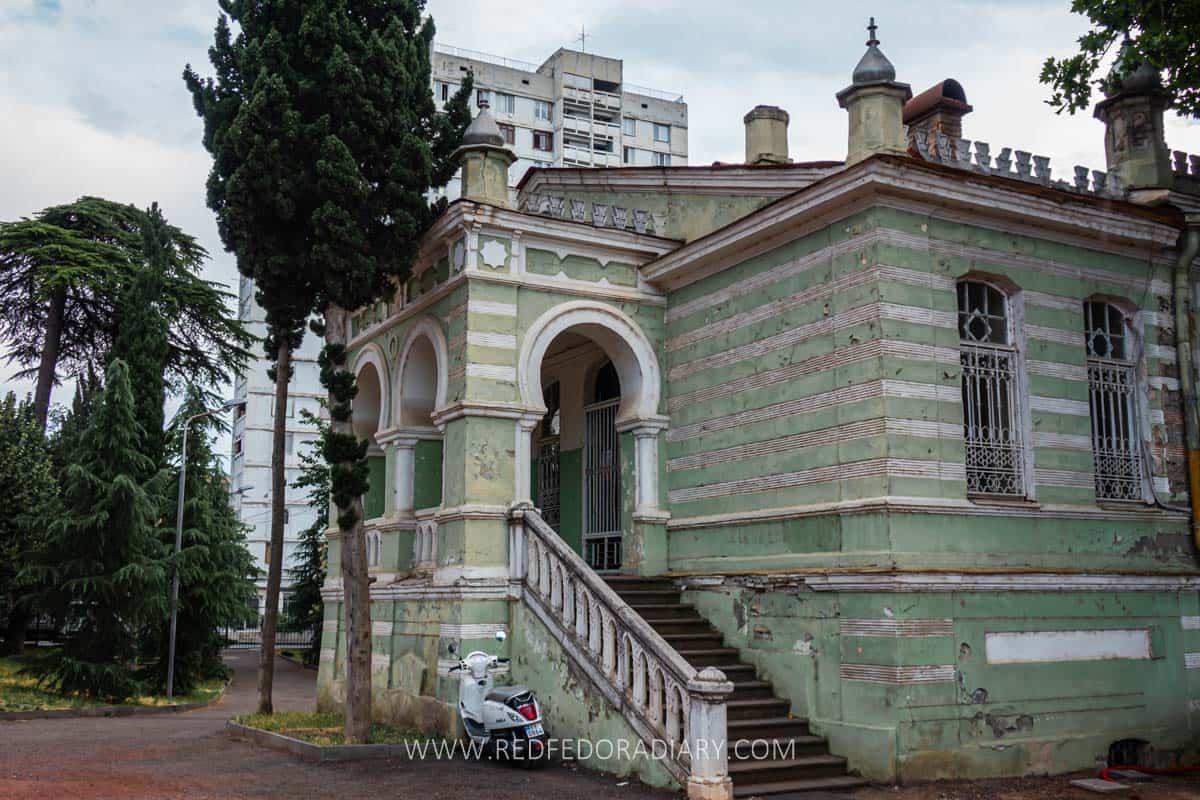
Its members organized research expeditions, collected examples of folk and decorative arts, and helped local artisans improve their techniques while protecting traditional craftsmanship from the growing influx of mass-produced goods.
The committee also represented the region’s handicrafts at international exhibitions and played an important role in showcasing Caucasian craftsmanship abroad.
The committee later established the Museum of Folk and Applied Arts inside this very building, which opened in 1913. Although the museum relocated in 1932 and the building has served administrative purposes ever since, it remains one of the most distinctive buildings, with its façade, grand entrance portico, and subtle Oriental Revival details, all of which have survived remarkably well despite the changes.
Best Tbilisi Tours & Day Trips – Handpicked by Local
Watch a performance at the Movement Theatre
Hidden inside Mushtaidi Park, the Movement Theatre is one of the most unusual performing arts venues in Tbilisi. Founded by Georgian choreographer and director Kakha Bakuradze in 2001, it blends contemporary dance with physical theatre, pantomime, acrobatics, ballet, martial arts, circus techniques, and live music to create performances unlike anything you’ll find elsewhere in the city.
Before finding a permanent home, the troupe spent years performing on the streets of Tbilisi and rehearsing in temporary spaces. The distinctive theatre building you see today was largely constructed by the company itself over three years before opening in 2013.
The theatre regularly hosts original productions alongside jazz concerts, tango evenings, live music, illusion shows, and other cultural events. If your visit coincides with a performance, it’s well worth checking the schedule and experiencing one of Tbilisi’s most distinctive theatres. Tickets are usually available at TKT.ge
Admire the former Silk Workers’ Residence
Next to the entrance of Mushtaidi Park stands one of Didube’s most overlooked historic buildings. Built in 1891 by Polish architect Alexander Szymkiewicz, it originally formed part of the former silk complex, serving as both a residence and workshop for workers employed in the nearby mulberry plantation and silk industry.
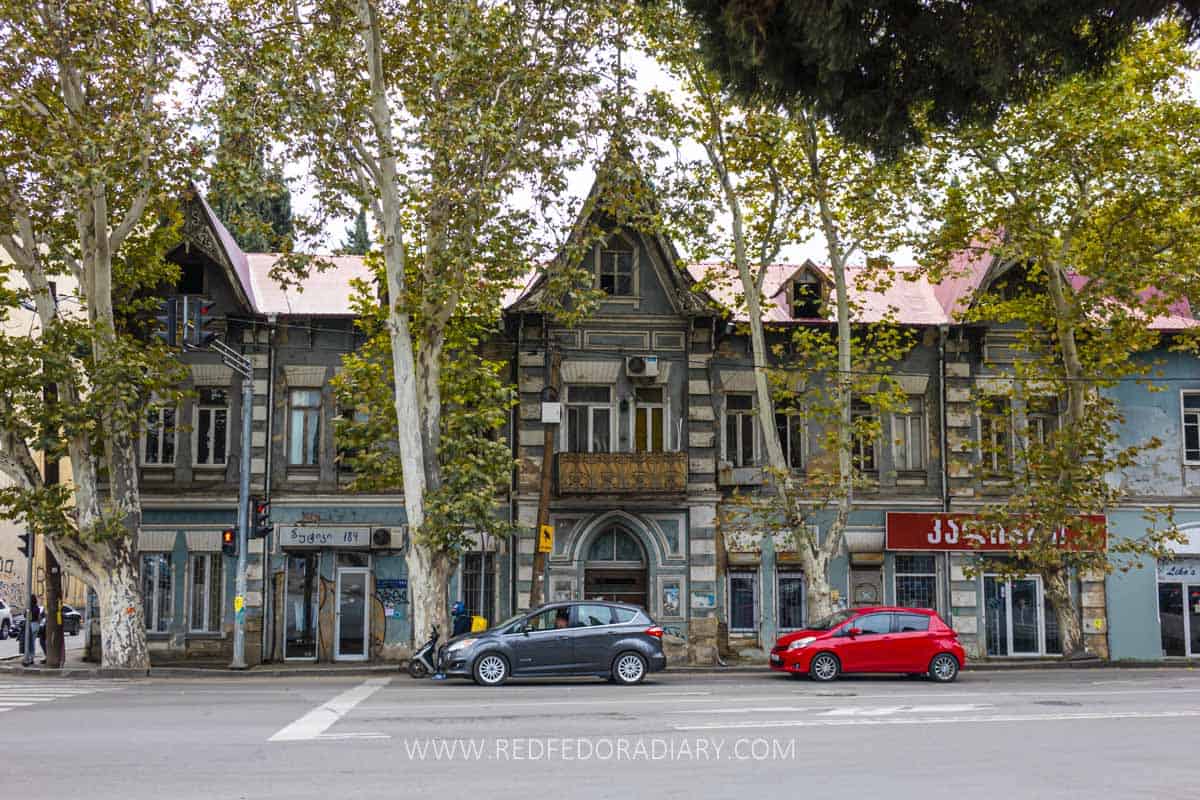
The two-story building is hard to miss thanks to its now faded blue façade with contrasting white decorative details. Designed in an eclectic style with Neo-Gothic influences, it features pointed gables, elegant arched windows, and a distinctive central spire that sets it apart from the surrounding architecture.
The hidden inner courtyard still preserves the traditional open wooden balconies typical of old Tbilisi homes.
Learn about Georgia’s centuries-old silk production
Just a two-minute walk from Mushtaidi Park, the Georgian State Silk Museum is one of Tbilisi’s most unusual museums and one that I think deserves far more attention than it gets. Whether you’re interested in architecture, industrial history, or simply enjoy quirky museums, it’s well worth adding to your Didube itinerary.
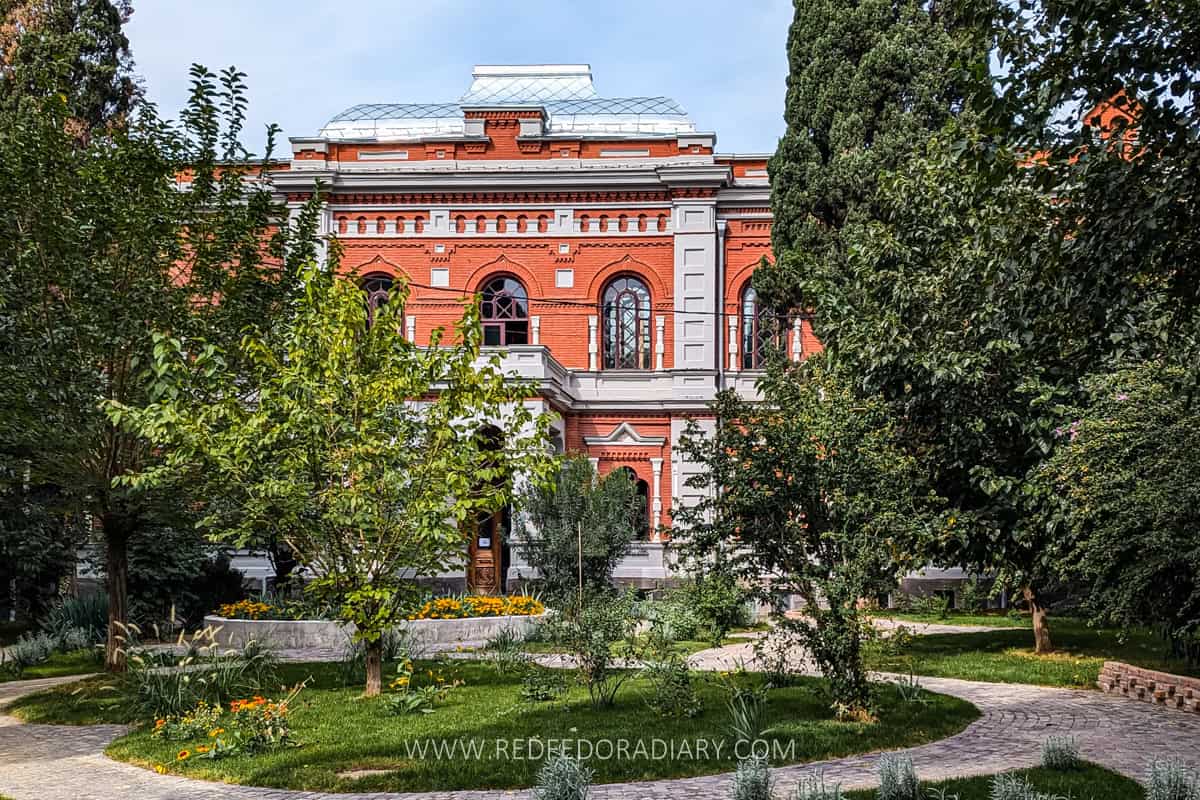
The museum occupies the former Caucasus Silk Farming Station, established in 1887 to support Georgia’s growing silk industry. The purpose-built museum building, completed in 1891, was designed by Polish architect Aleksander Szymkiewicz, whose work can also be seen on several other landmark buildings around Tbilisi.
Following a four-year restoration, the museum reopened in 2024. Inside, you’ll learn about the entire silk-making process, from silkworms and mulberry cultivation to textile production.
The museum houses one of the world’s oldest silk collections, including thousands of silk cocoons from around the globe, historic farming tools, vintage packaging, educational posters, and a fascinating library of rare books in multiple languages.
See Georgia’s largest stadium
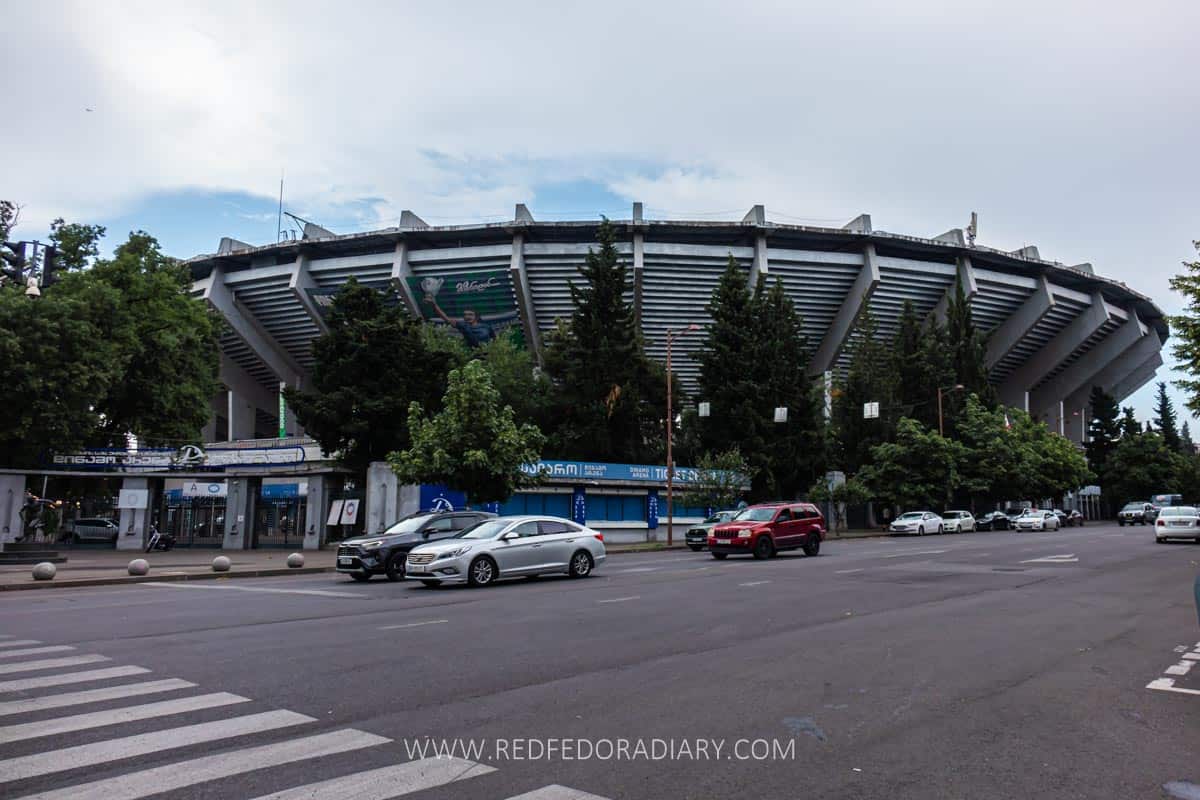
Next to the State Silk Museum stands Dinamo Arena, the largest stadium in Georgia and one of the country’s most recognizable sports landmarks. Although you can’t normally visit the stadium unless you’re attending a football or rugby match, it’s still worth stopping to appreciate its striking late Soviet architecture.
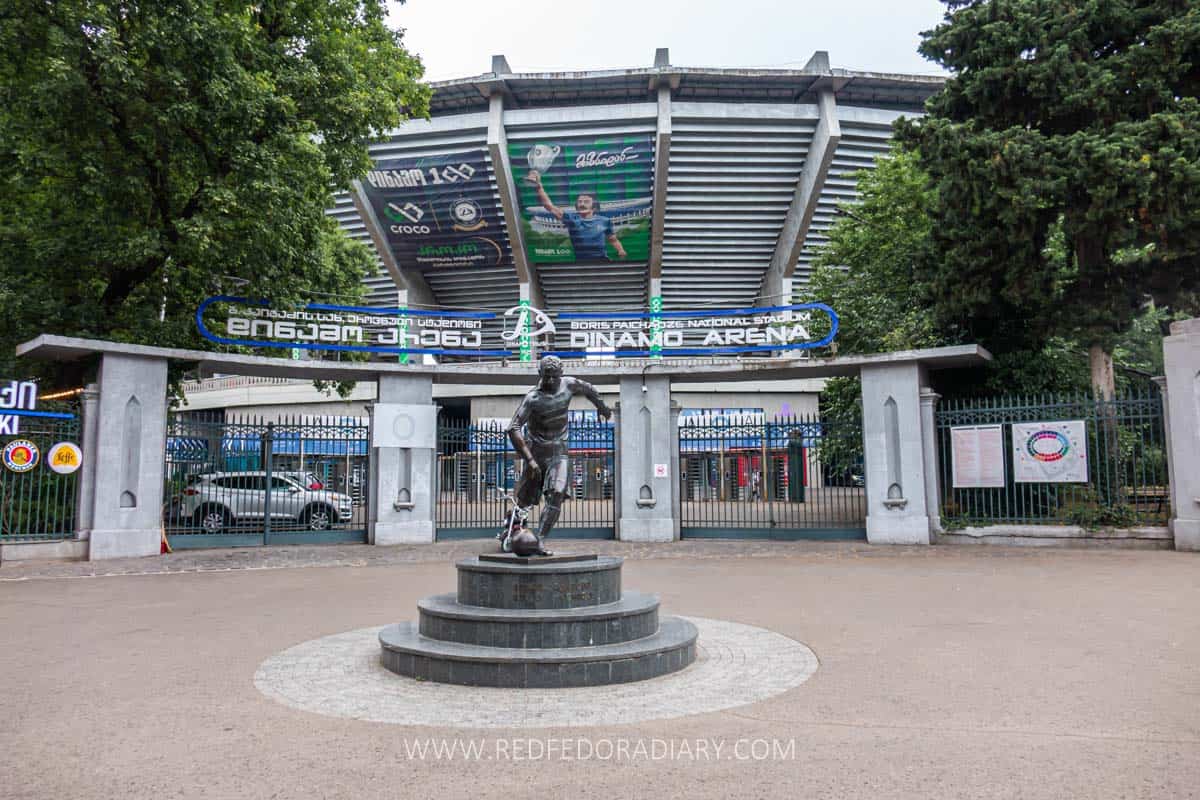
The current stadium opened in 1976, replacing an earlier stadium built on the same site in 1936. Designed by Georgian architects Archil and Gia Kurdianis, it originally accommodated more than 74,000 spectators, making it one of the largest stadiums in the Soviet Union.
Following a major renovation in 2006, it was converted into an all-seater stadium with a capacity of just over 54,000, which it retains today.
Dinamo Arena is the home ground of FC Dinamo Tbilisi, Georgia’s most successful football club, as well as the Georgian national football and rugby union teams.
Founded in 1936, FC Dinamo Tbilisi enjoyed enormous success during the Soviet era, winning the Soviet championship, multiple domestic cups, and, most famously, the 1981 UEFA Cup Winners’ Cup—the only major European trophy ever won by a Georgian club.
Over the decades, the club has also produced many of Georgia’s greatest footballers, including Boris Paichadze, David Kipiani, Khvicha Kvaratskhelia, and Giorgi Mamardashvili.
Even if you’re not a football fan, the stadium is an interesting stop because of its engineering and historical significance. The sweeping cantilevered roof and monumental concrete structure are characteristic examples of late Soviet sports architecture.
If you’re a Dinamo supporter—or simply looking for a unique souvenir for a football fan—you’ll also find an official FC Dinamo Tbilisi store here.
It’s worth taking a short walk around the venue, as several openings beneath the stands offer glimpses inside the seating bowl, allowing you to appreciate its scale without a ticket.
The complex is also home to the world-famous Bassiani nightclub, which I cover in a bit more detail below.
Browse “Tseretlis Meoredebi”
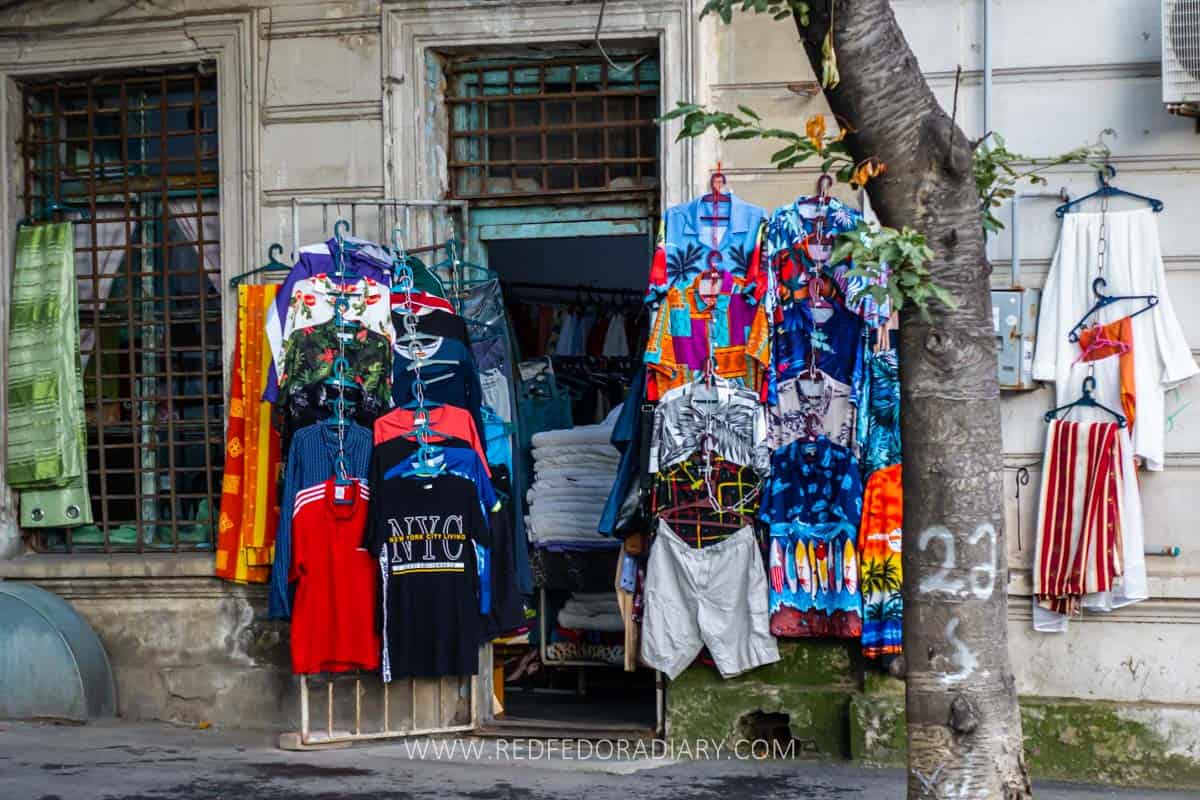
If you enjoy hunting for bargains, make a stop at Tseretlis Meoredebi, a row of second-hand shops opposite Dinamo Arena. These local stores have long been a favorite among locals looking for quality outdoor clothing and sports gear without paying full retail prices.
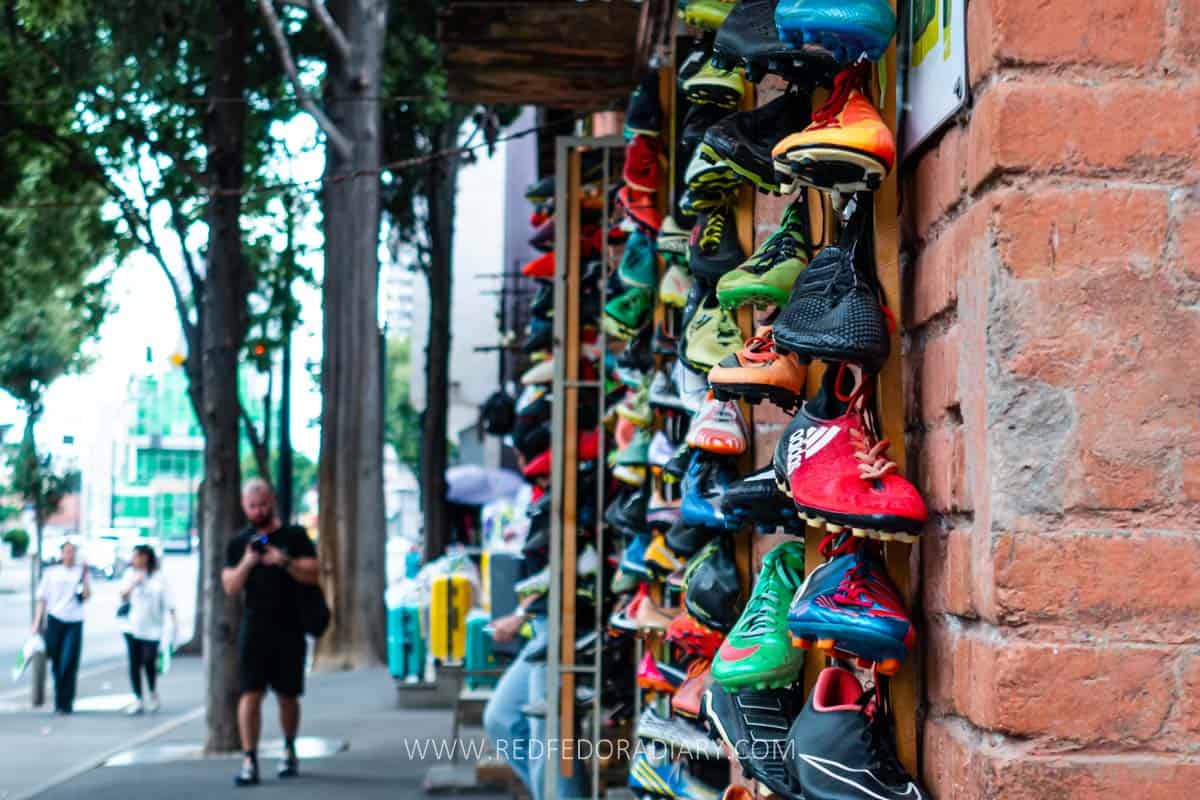
You’ll find everything from hiking boots and waterproof jackets to camping equipment, ski wear, backpacks, suitcases, and everyday clothes and sportswear.
Many of the shops stock well-known brands such as The North Face, Columbia, Salomon, HOKA, and others. Some items are lightly used, while others are brand new with the original tags still attached.
Over the years, Tseretlis Meoredebi has become increasingly popular, and prices have risen accordingly. Even so, you can still pick up quality gear for a fraction of what you’d pay in a regular outdoor store. Since most items come from older collections, don’t expect the latest models, but that’s also part of the fun—you never know what unique piece you’ll come across.
If you’re planning to hike in Georgia or simply need an extra layer before heading to the mountains, this is one of the best places in Tbilisi to browse before your trip.
Continue towards Tsereteli Metro Station, and you’ll come across another row of second-hand shops, this time specializing in everyday clothing rather than outdoor gear.
Take a look at the former Mantashev Stables
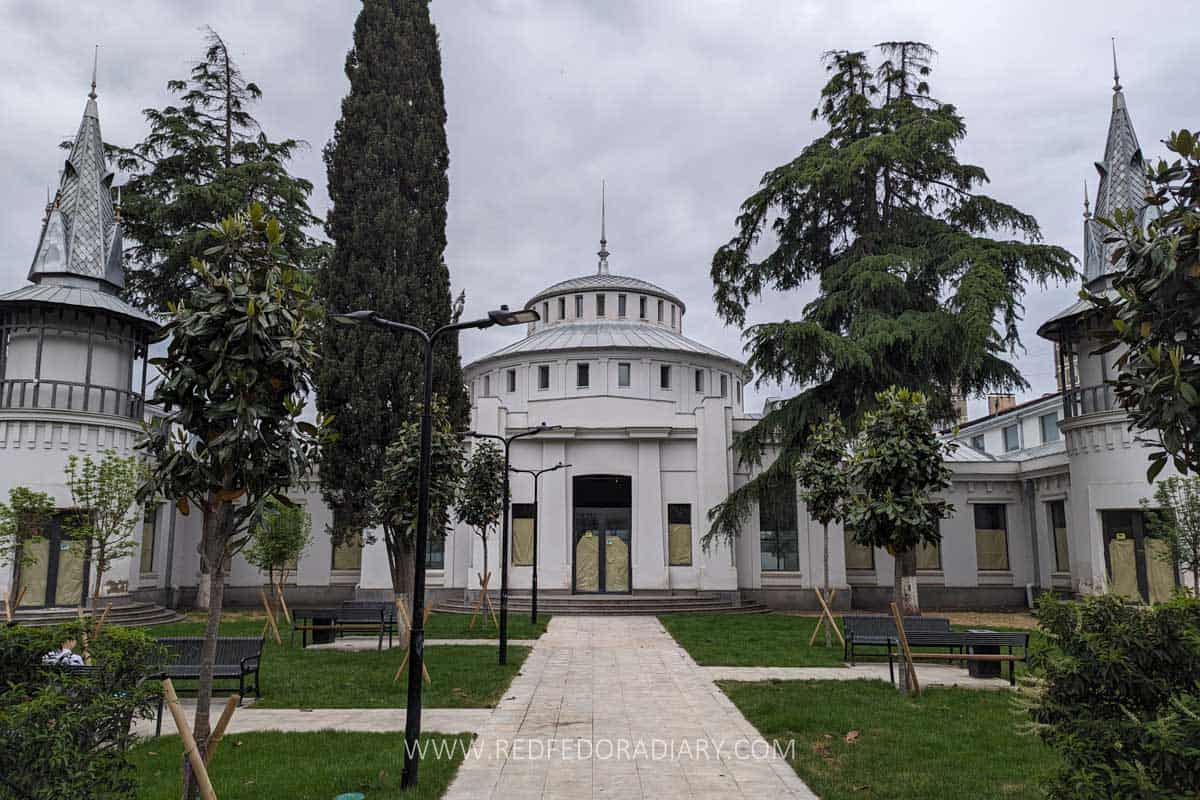
One of Didube’s lesser-known architectural landmarks is the former Mantashev Stables on Tsereteli Avenue. Built in 1909 for the Armenian oil magnate and philanthropist Alexander Mantashev, the Art Nouveau building was designed by architect N. Obolensky and originally served as stables for the nearby Didube Hippodrome.
The neighborhood’s vast open plains hosted horse races and military parades throughout the 19th century, with Emperor Nicholas I attending a celebration in 1837. The first official horse races were held here in 1848, and the hippodrome later became one of Tbilisi’s most important sporting venues.
It even witnessed one of the city’s earliest aviation milestones, when Russian pilot Sergey Utochkin took off from here in 1910, flew over Tbilisi, and landed back at the hippodrome.
Although this building has been carefully renovated in recent years, it has yet to find a new purpose.
Wander among the beautiful grave sculptures of Didube Pantheon
Tucked behind the Church of the Mother of God on Tsereteli Avenue, the Didube Pantheon is one of the city’s most important cemeteries and a peaceful place to explore if you’re interested in alternative Tbilisi sights.
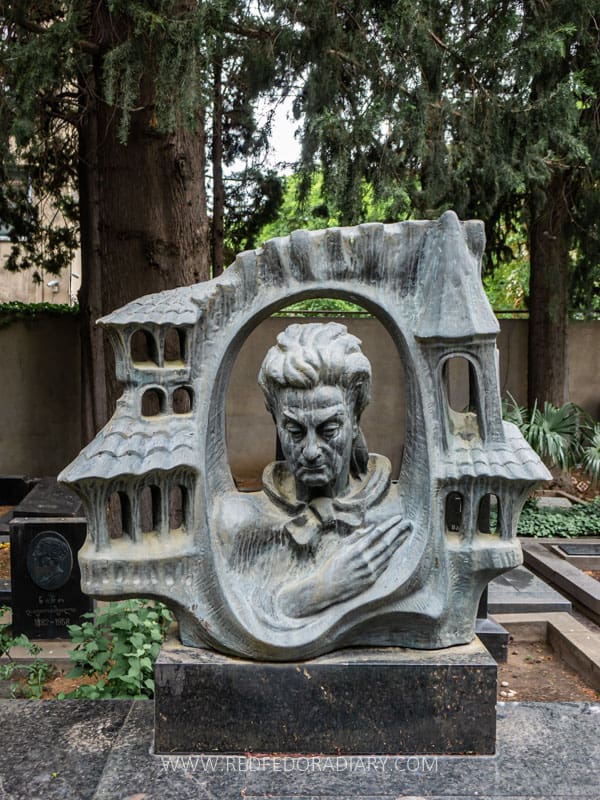
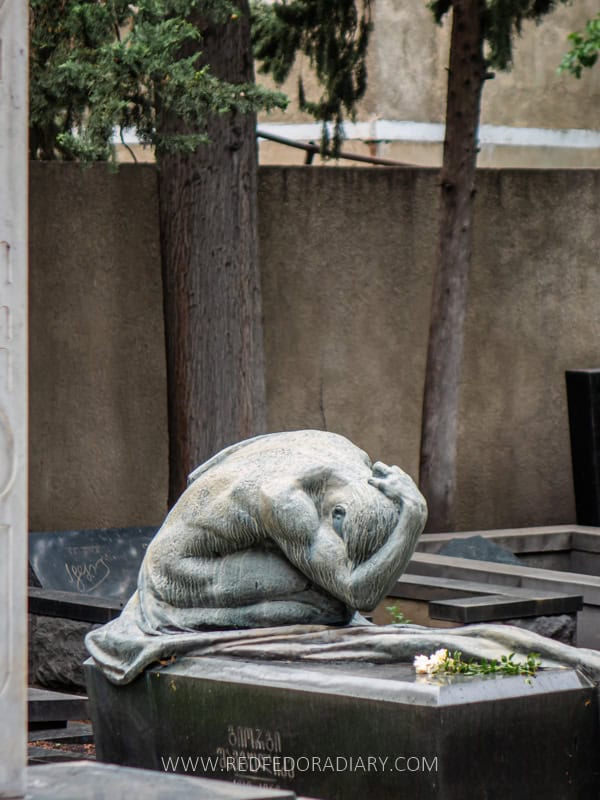
Although a cemetery existed here long before, the site began its transformation into a national pantheon in 1893, when the remains of the celebrated Georgian poet Nikoloz Baratashvili were reburied beside the church after being transferred from Ganja, Azerbaijan.
The same year, the death of renowned writer Alexander Kazbegi sparked public discussions about creating a dedicated resting place for Georgia’s most distinguished writers, artists, scientists, and public figures. Those efforts eventually led to the formal establishment of the Didube Pantheon in the early 20th century.
During the Soviet period, the city authorities decided to abolish the pantheon and relocate many of the graves. The decision triggered strong opposition from some of Georgia’s leading intellectuals, ultimately forcing the authorities to reverse their plans.
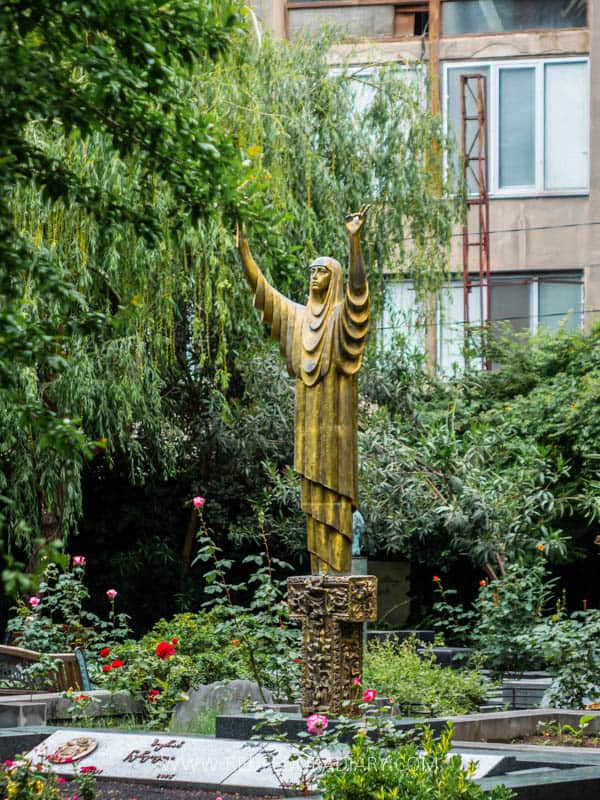
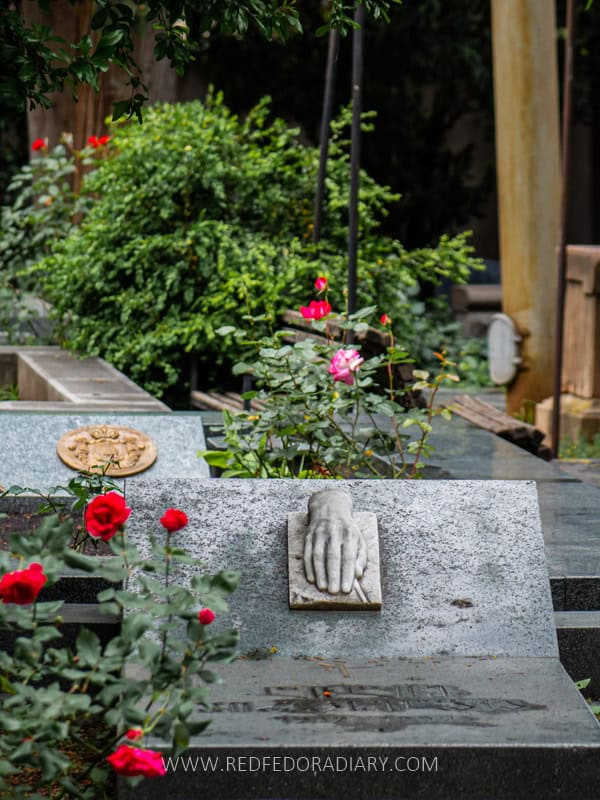
Today, more than 300 prominent Georgians are buried here. As you wander through the tree-lined grounds, you’ll come across the graves of Paolo Iashvili, Lado Asatiani, Elene Akhvlediani (my favorite Georgian painter), Zurab Tsereteli (the author of many monumental sculptures across Georgia, including the Chronicles of Georgia), Jumber Lezhava, the Georgian endurance athlete, world traveler, and Guinness World Records holder, and many other influential figures who shaped the country’s cultural and intellectual life.
Even if you’re not familiar with the people buried here, the pantheon is worth visiting for its remarkable grave monuments and sculptural decorations. Many are true works of art, unlike anything you’ll find in a typical Georgian cemetery, making this one of the most unique things to do in Didube.
Explore Expo Georgia’s Soviet-era architecture
Expo Georgia is one of Tbilisi’s most interesting examples of Soviet modernist architecture. Originally built in the 1960s as the Exhibition of the Achievements of the Georgian Economy (VDNKH), the complex showcased the republic’s industrial, agricultural, and technological accomplishments during the Soviet period.

Designed by a team of leading Georgian architects, the 15-hectare exhibition park combines landscaped gardens with a collection of striking pavilions, each featuring a different architectural style.
As you wander through the grounds, you’ll notice extensive concrete roofs, expansive glass façades, a decorative pond, subtropical greenery, and several well-preserved Soviet-era mosaics that are easy to miss if you don’t know where to look.


Unlike many former Soviet exhibition centers, Expo Georgia continues to serve its original purpose. Throughout the year, it hosts conferences, trade fairs, cultural events, and other festivals, both large and small.
Even if there’s nothing on during your visit, I still recommend taking a stroll around the grounds. It’s a peaceful place away from the city’s busiest streets and one of the best spots in Tbilisi to see how modernist architecture has been integrated into public green spaces.
There’s a cafe called Terrace on the ground if you need to take a break from all the wandering.
Hunt for Soviet-era mosaics
If you’ve read my blog before, you’ll know I have a bit of an obsession with Soviet-era mosaics. Unsurprisingly, Didube has a few worth seeking out, although most are hidden in plain sight and easy to miss unless you know the exact locations.

Scattered around the neighborhood, you’ll find colorful mosaics decorating former public buildings, sports facilities, and other Soviet-era structures. They offer a fascinating glimpse into the artistic side of the Soviet period and make a fun addition to your walk around Didube.
Rather than listing them all here, check out my dedicated guide featuring every surviving mosaic and other Soviet-era memorabilia in Tbilisi, complete with exact locations. You might even find yourself planning another mosaic hunt in a different neighborhood.
Discover Didube’s street art
Compared to neighborhoods like Varketili, Vake, Sololaki, or Chughureti, Didube isn’t known for its street art. Even so, there are a handful of murals and smaller works worth scouting out as you explore the neighborhood.

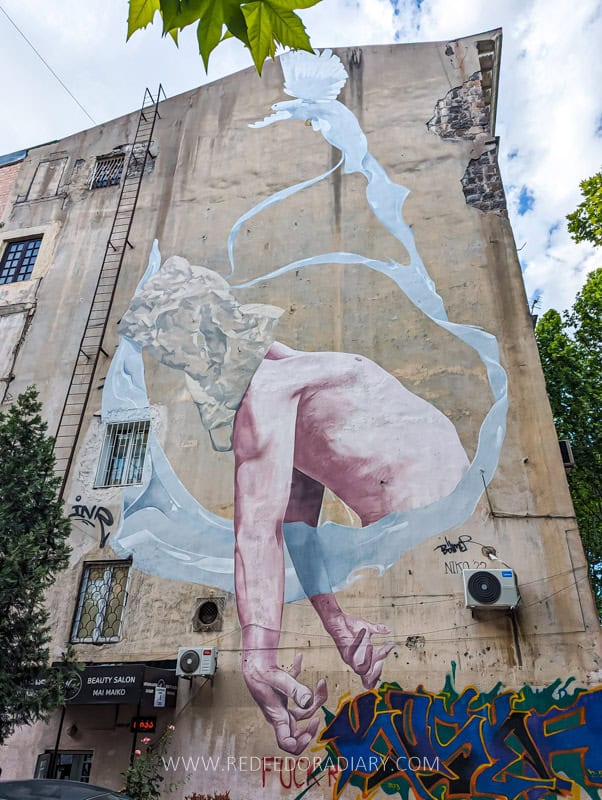
If you’re interested in seeing more, I’ve put together a dedicated guide to Tbilisi’s street art, complete with exact locations and an interactive map.
It features more than 70 murals across the city, including those in Didube, and might just inspire you to explore a few more neighborhoods to discover Tbilisi’s ever-growing urban art scene.
Taste bread made from Georgia’s endemic wheat varieties
If you’re curious about Georgian bread beyond the classic shotis/tonis puri, stop by Natela’s Bread, a small artisan bakery specializing in loaves made from endemic Georgian wheat varieties.
Using natural sourdough fermentation, the bakery produces bread from heritage grains such as Tsiteli Doli, Dika, whole wheat, rye, and other traditional varieties that have been cultivated for centuries.
Georgia’s wheat-growing tradition is so significant that it was added to UNESCO’s Representative List of the Intangible Cultural Heritage of Humanity in 2025. More recently, archaeologists also confirmed that domesticated bread wheat existed in Georgia around 8,000 years ago.
Together with our well-known winemaking history, this further confirms Georgia as one of the world’s oldest centers of agriculture.
Have lunch at Coca-Cola Diner
If you’re looking for an authentic local lunch, head to Coca-Cola Diner. This no-frills canteen has been serving hearty Georgian home-style meals for more than 30 years and remains one of the neighborhood’s best places for a filling lunch at affordable prices.
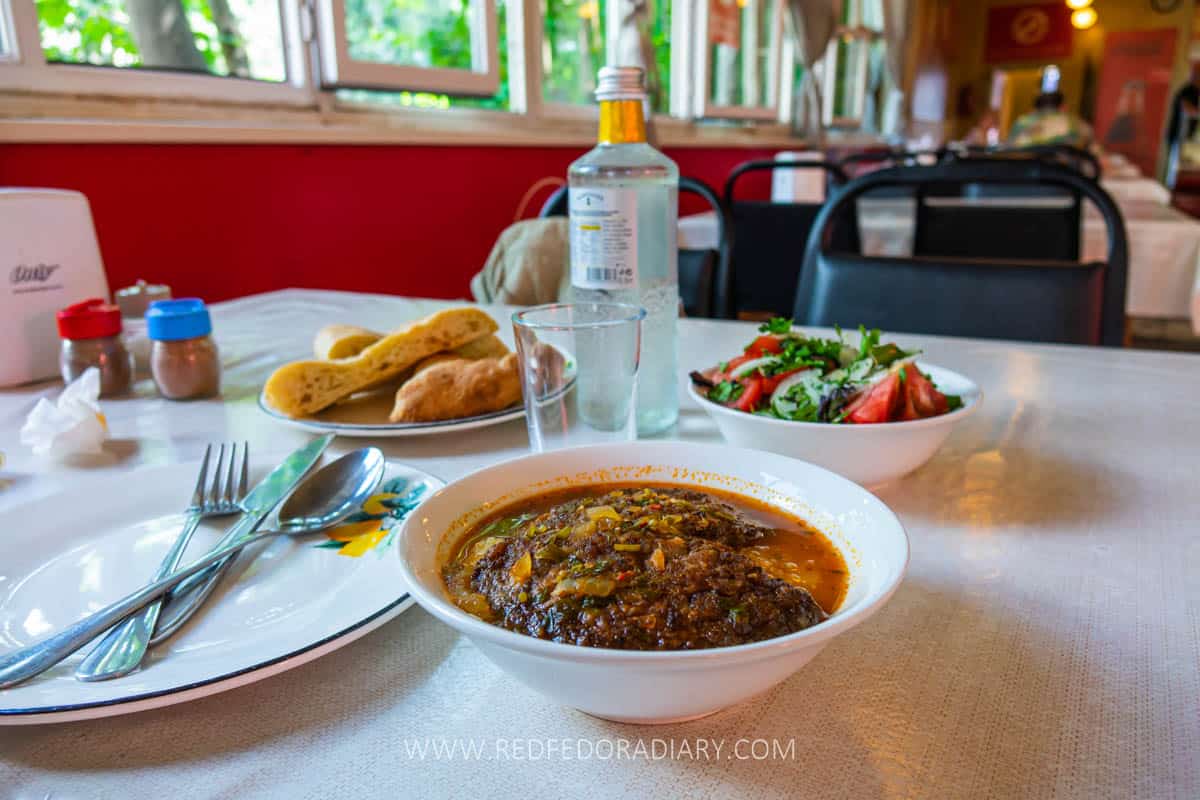
Originally, it operated as the staff canteen for the Coca-Cola factory next door. As its reputation grew, the diner eventually opened its doors to the public and quickly became a favorite among locals.
The factory has relocated outside Tbilisi, while the former site is now home to an event venue and Theater 42, but the diner continues to serve the same comforting food it has for decades.
The menu features many Georgian classics, including kharcho, chaqapuli, kupati, kababi, mtsvadi, ojakhuri, mashed potatoes with cutlets, and a selection of salads and appetizers displayed inside a Soviet-era “refrigerated counter”.
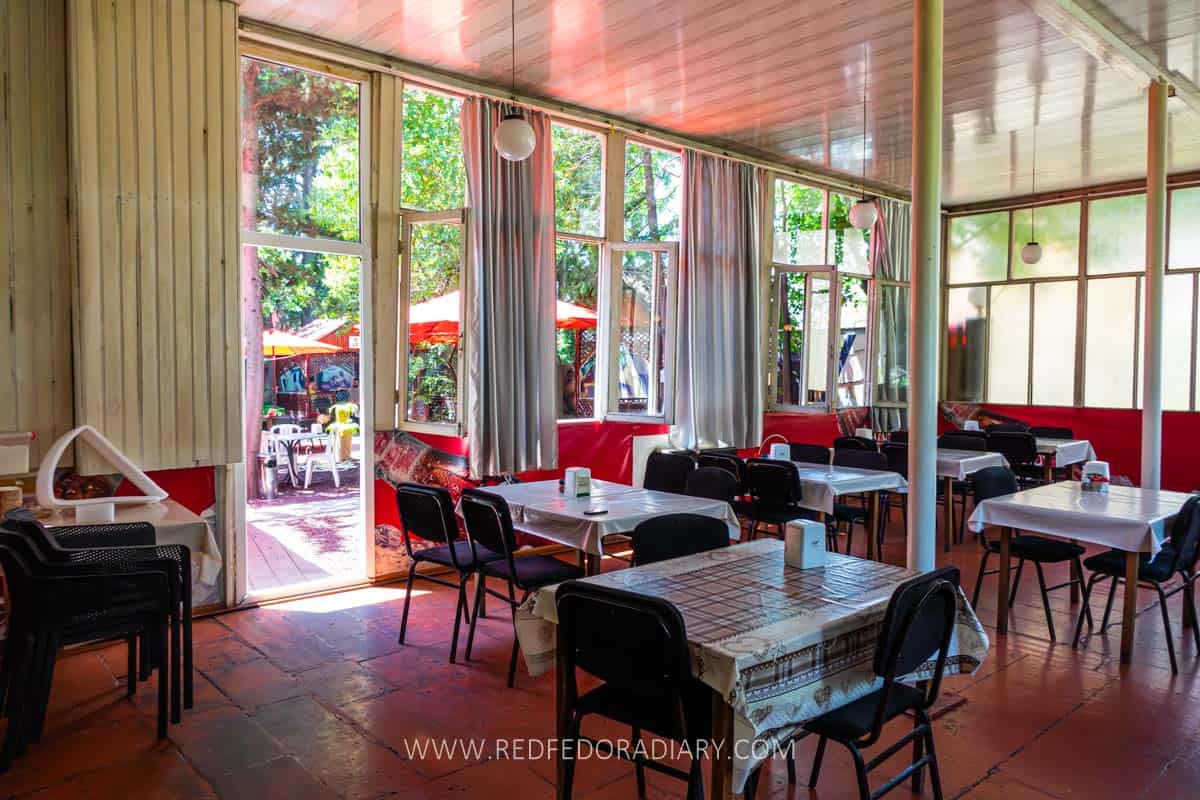
Don’t expect a modern café or an English menu—this is a proper local eatery where the menu is handwritten in Georgian on a chalkboard above the counter. Some dish names are even abbreviated, which means Google Lens or Google Translate won’t always recognize them correctly.
If you don’t read Georgian, it’s worth familiarizing yourself with a few traditional dishes beforehand, or simply saving their Georgian names on your phone to show the staff when ordering.
Shop for Turkish specialties at Tursa Supermarket
If you’re staying in Tbilisi for a little longer or enjoy cooking, Tursa is my go-to supermarket for recreating my favorite Turkish dishes or for specialty products that can be difficult to find elsewhere in the city.
The shelves are stocked with everything from tahini and pekmez (mulberry molasses) to Turkish cheeses, olives sold both loose and packaged, olive oils, teas, grains, phyllo pastry, Turkish delight, and a wide range of dairy products.
I also find their prices for frozen vegetables, pastries, canned tomatoes, pickles, rice vinegar, pomegranate molasses, and soy sauce to be very reasonable.
Look over abandoned train graveyard
While technically sitting on the border between Didube and Nadzaladevi, this unusual spot is only a short walk from Expo Georgia and is worth a quick detour if you enjoy industrial photography or abandoned places.
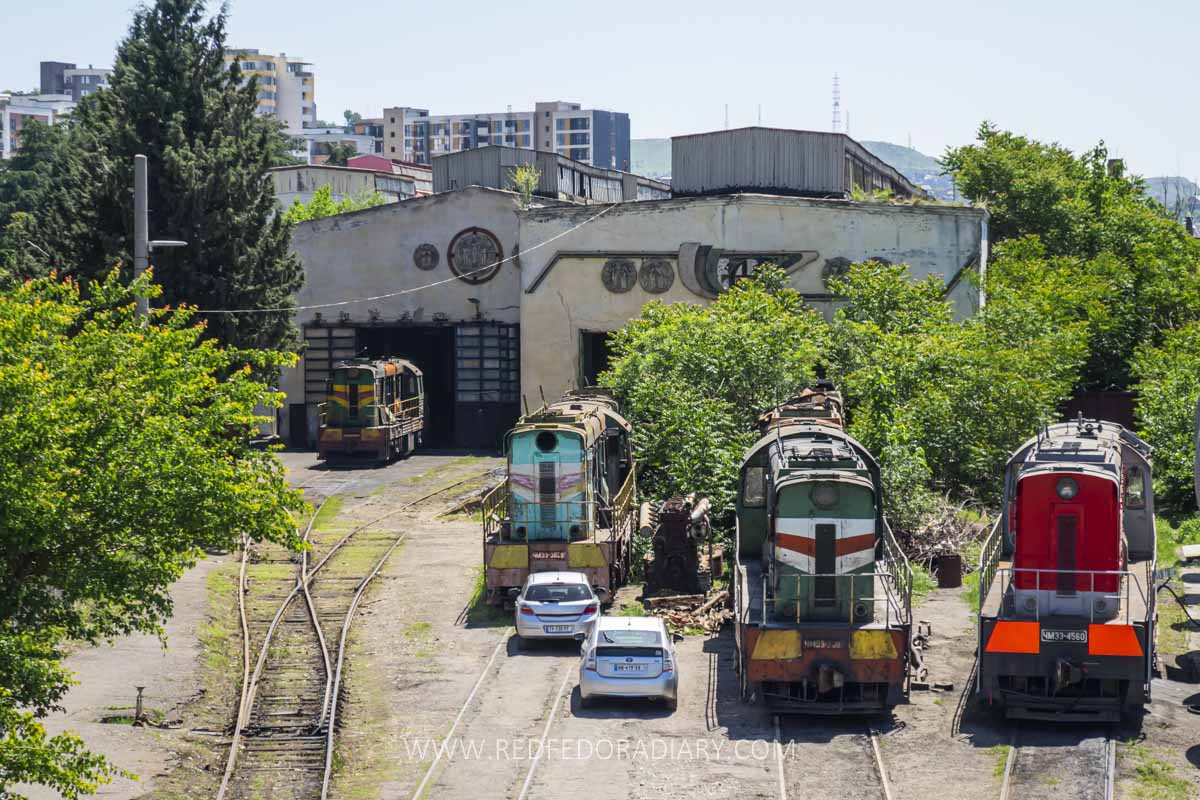
Once home to rows of retired railway carriages, it quietly became one of Tbilisi’s more unusual photography spots a few years ago. Although most of the old trains have since been removed, a handful of carriages still remain.
Another detail worth looking out for is the large Soviet-era bas-relief at the entrance to the railway depot. While it has nothing to do with trains, it’s another interesting piece of Soviet public art hidden in plain sight.
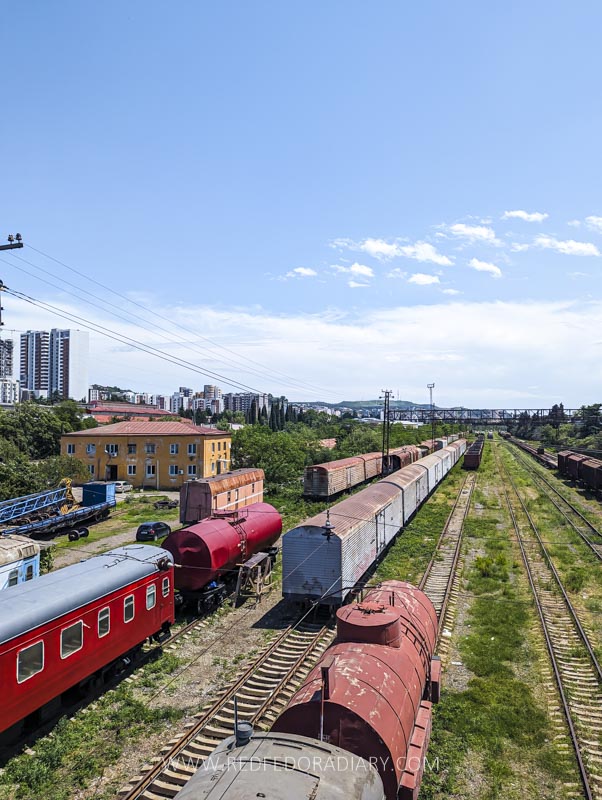
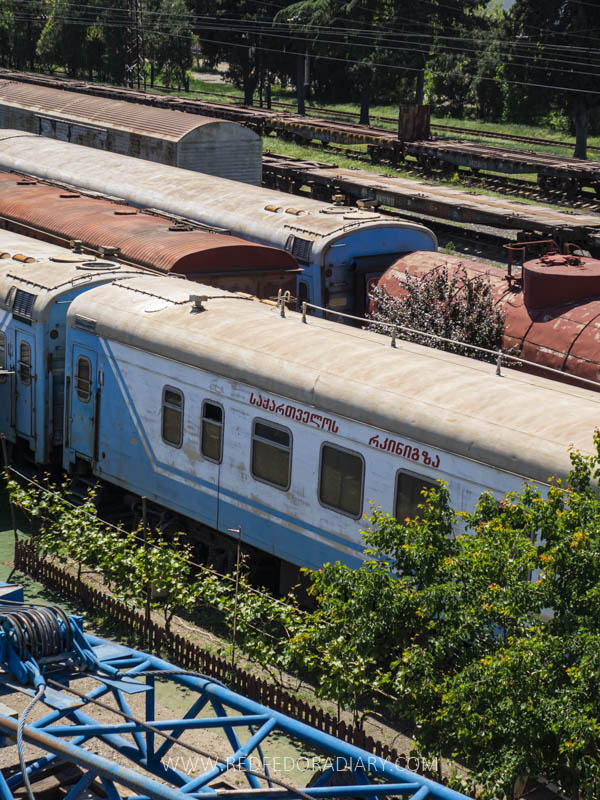
The depot and train tracks belong to Georgian Railways, so it’s private property, so no trespassing.
Instead, head to the pedestrian bridge connecting Gotsiridze Metro Station with Tsereteli Avenue (marketed as M/S Gotsiridze Pedestrian Bridge on Google Maps) to get the best view of the remaining railway carriages and the bas-relief without alarming the security guard.
Shop for local produce at Dezerter Bazaar
Just a short walk from both Station Square and Dinamo Arena, Dezerter Bazaar is the largest and most popular produce market in Tbilisi, as well as the neighborhood’s busiest shopping hub. If you only have time to visit one market during your stay, this is the one I’d recommend.
The market gets its unusual name from the 1920s, when soldiers deserting the war gathered in the area to sell their weapons. There’s no trace of that history today.
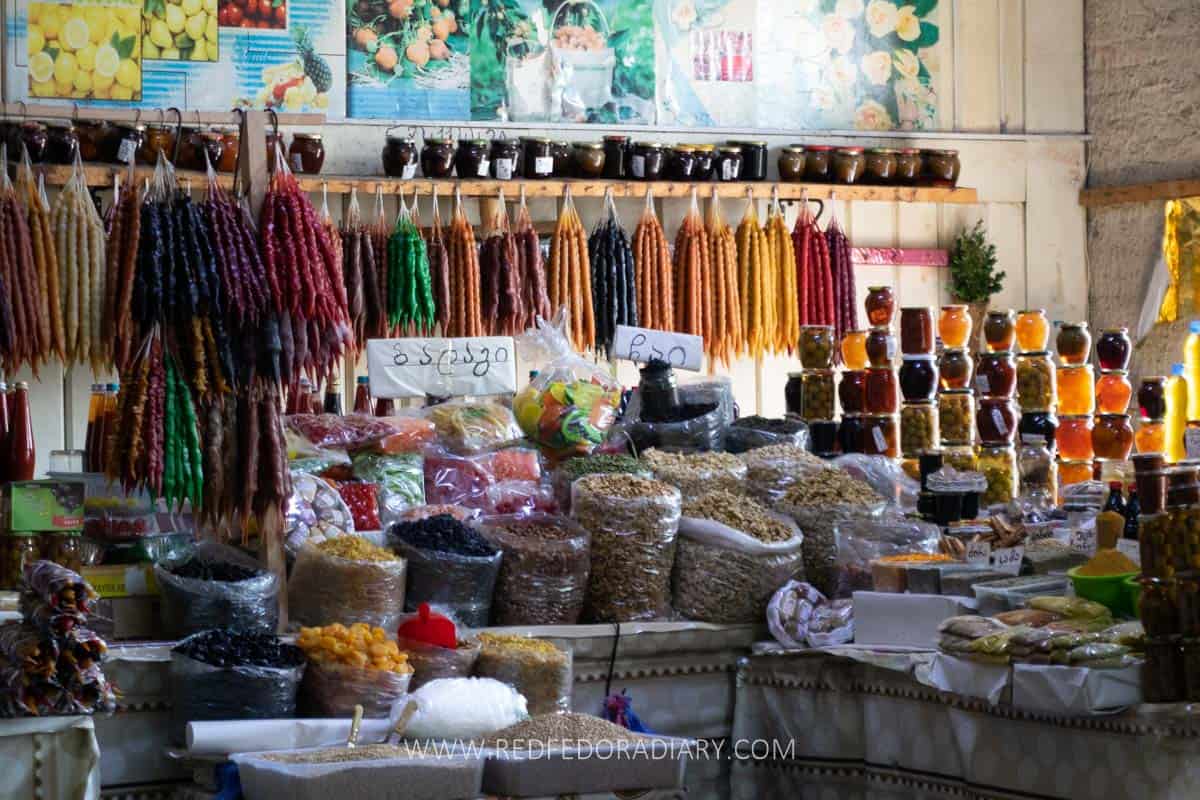
Instead, you’ll find rows of stalls piled high with seasonal fruit and vegetables, fragrant herbs, spices, cheeses, cured meats, churchkhela, homemade preserves, and locally produced wine sold in the traditional Georgian way—often in repurposed plastic bottles.
Much of the produce comes directly from farmers in western Georgia, giving the market an impressive selection year-round. Inside the covered market hall and along the surrounding streets, you’ll also come across specialty shops selling dried fruit, nuts, spices, tea, and products imported from countries such as India and Iran.
Because of its central location and popularity with both locals and visitors, prices can be slightly higher than at smaller neighborhood markets, but they’re still very reasonable. Even if you’re not planning to buy anything, Dezerter Bazaar is one of the best places to experience local life and discover the produce that defines Georgian cuisine.
Browse for gold and minankari jewelry
Hidden inside the ground floor of Tbilisi Central Railway Station, the Gold Market is one of the city’s largest hubs for buying, selling, and repairing jewelry.
The market is a far cry from a modern jewelry boutique. Instead, you’ll find long rows of small stalls, glass display cases, and dozens of independent vendors selling everything from simple gold chains and wedding bands to traditional minankari (Georgian cloisonné enamel), bracelets, earrings, and custom-made pieces.

Most jewelry is sold by weight, so prices change with the daily gold rate. If you’re planning to buy something, don’t settle on the first stall you see. Walk around, compare prices, and ask a few different vendors for the same item—you’ll often find noticeable differences.
Like many places around Station Square, the Gold Market offers a glimpse into everyday Tbilisi, where locals come not only to shop, but also to repair family heirlooms, commission custom pieces, and trade gold, so it’s worth stepping inside for a few minutes even if you’re not in the market for jewelry.
Have dinner at Tbilisi’s only Portuguese restaurant & wine bar
If you’re looking for something a little different after a day of exploring Didube, head to Obrigado Tasco, currently the only Portuguese restaurant and wine bar in Tbilisi.
The menu is small, focusing on traditional Portuguese dishes. You’ll find specialties such as a Porto-style pork sandwich, Portuguese octopus salad, Azorean beef stew with saffron rice, creamy shrimp rice, and the country’s famous pastel de nata custard tart, alongside a handful of appetizers.
To complete the experience, Obrigado also serves a curated selection of Portuguese wines, available by the glass or bottle.
Dance until dawn at one of the world’s most famous techno clubs
Hidden beneath Dinamo Arena in a former Soviet swimming pool, Bassiani has grown from a local underground venue into one of the world’s most influential techno clubs.
Since opening in 2014, it has earned an international reputation for its carefully curated lineups, uncompromising music policy, and distinctive industrial setting, regularly attracting DJs and clubbers from around the globe.
The club hosts both internationally renowned artists and some of Georgia’s best electronic music producers, making it a key part of Tbilisi’s contemporary cultural scene. Alongside the main dance floor, Bassiani also operates Horoom, a smaller space known for its LGBTQ+ nights and more intimate events.
If you’re planning to visit, keep in mind that Bassiani has a strict door policy (requiring prior verification), and that photography is not allowed inside. It’s worth checking the event schedule in advance, as parties don’t take place every night.
Even if techno isn’t your thing, Bassiani has played a significant role in putting Tbilisi on the cultural map and is widely considered one of the city’s most iconic nightlife venues.
Didube Bus Station (practical guide)
For many travelers, Didube Bus Station is their very first introduction to the neighborhood—and often their first experience of public transport in Georgia. Located directly next to Didube Metro Station, it is one of Tbilisi’s main intercity transport hubs, serving destinations across western, northern, and central Georgia.
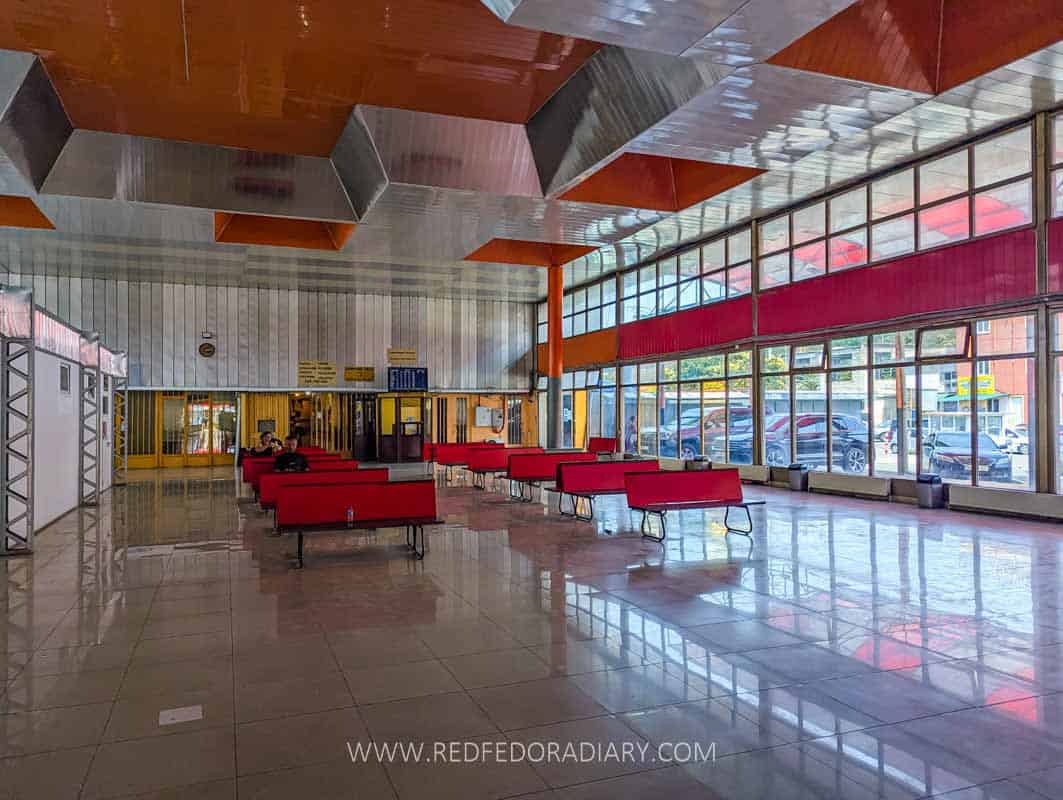
Whether you’re heading to Georgia’s popular destinations or smaller towns and villages, chances are you’ll pass through Didube at some point during your trip. While the station can look a little chaotic at first, it actually gets easier once you get the hang of how it works.
Below, I’ve answered the most common questions about using Didube Bus Station, from buying tickets and finding the correct marshrutka to navigating the station and knowing what facilities are available nearby.
Where can you travel from Didube Bus Station?
Didube is one of Tbilisi’s main intercity transport hubs, serving much of western, central, and northern Georgia. From here, you can catch marshrutkas (minibusses), shared taxis, and coaches to destinations including Mtskheta, Kazbegi (Stepantsminda), Gori, Kutaisi, Borjomi, Batumi, Zugdidi, and many other towns and villages.
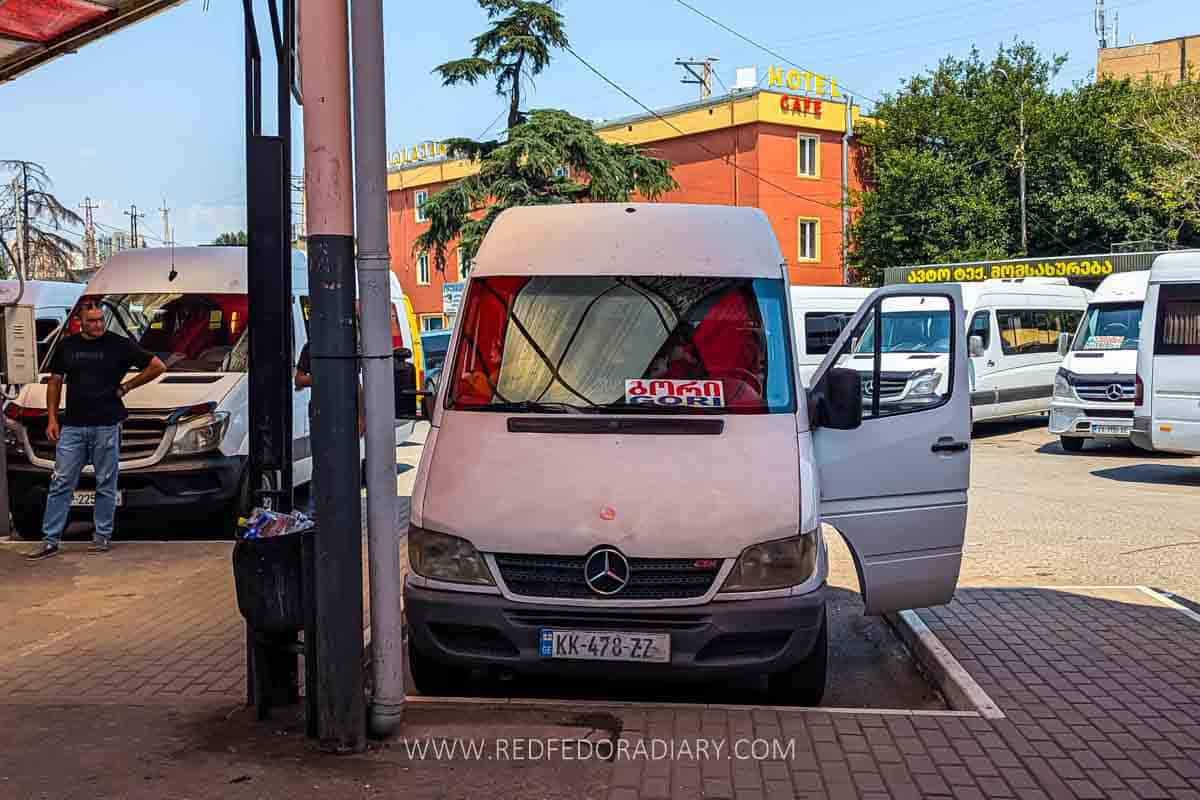
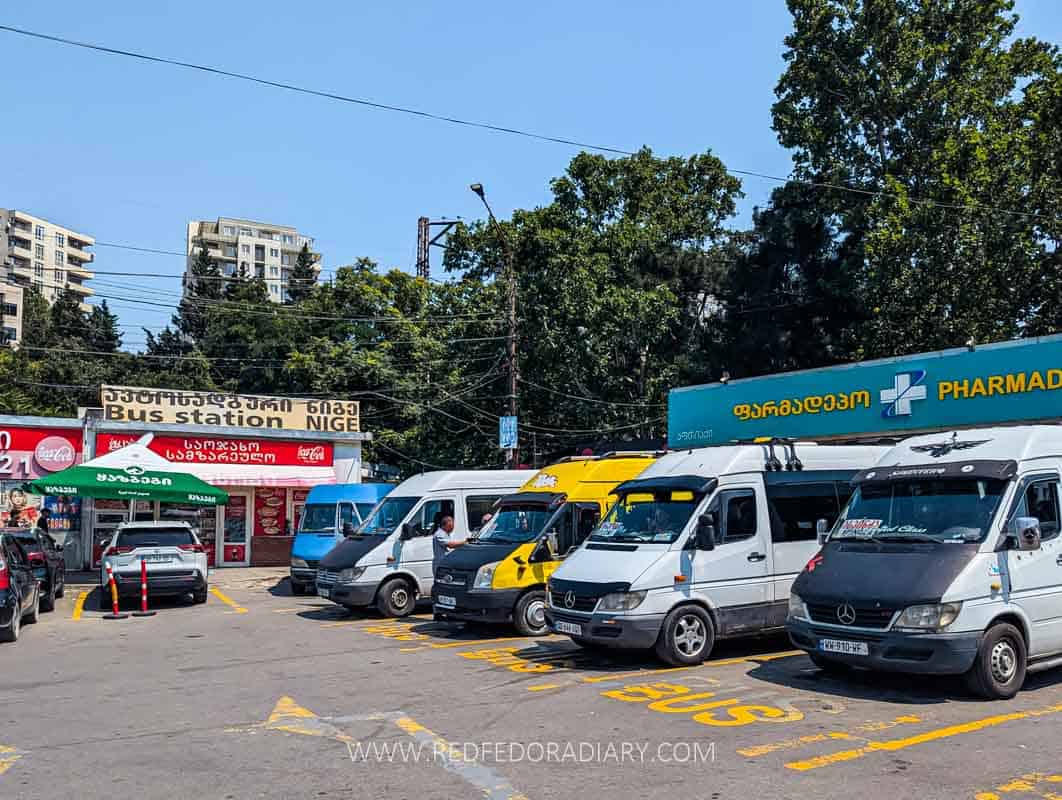
Unlike a conventional bus terminal, Didube is divided into several smaller stations and operators, each serving different routes. Among the best-known are Didube Bus Station, Bus Station Nige and Didube Okriba, while many destinations have their own dedicated departure areas.
Don’t worry if it seems confusing at first—there are signs throughout the station, and drivers or ticket sellers are usually happy to point you in the right direction.
Destinations that don’t depart from Didube
Despite being Tbilisi’s busiest transport hub, not every destination departs from Didube.
Services to the Kakheti wine region, including Telavi, Sighnaghi, Gurjaani, Dedoplistskaro, Lagodekhi, and Alvani, generally leave from Ortachala, Samgori, or Isani.
Marshrutkas to Mestia depart from Samgori (Navtlughi) Bus Station. If you’re traveling to Tusheti, you’ll first need to reach Telavi or Alvani, where shared 4WD vehicles continue into the mountains.
Services to Bolnisi, Marneuli, Tsalka, and Dashbashi and Birtvisi canyons, generally depart from the Samgori (Navtliughi) Bus Station.
International buses and minibusses to Armenia, Azerbaijan (when operating), and Turkey depart from Ortachala Bus Station.
How to buy tickets
The ticketing process depends on your destination and the company operating the route. Some services have dedicated ticket offices where you purchase your ticket before boarding, while others still collect payment directly on the marshrutka once everyone is seated.
Since several operators often serve the same destination, departure times, vehicle quality, and fares can vary slightly. It’s worth walking around and comparing options before deciding which service to take.
Facilities at Didube Bus Station
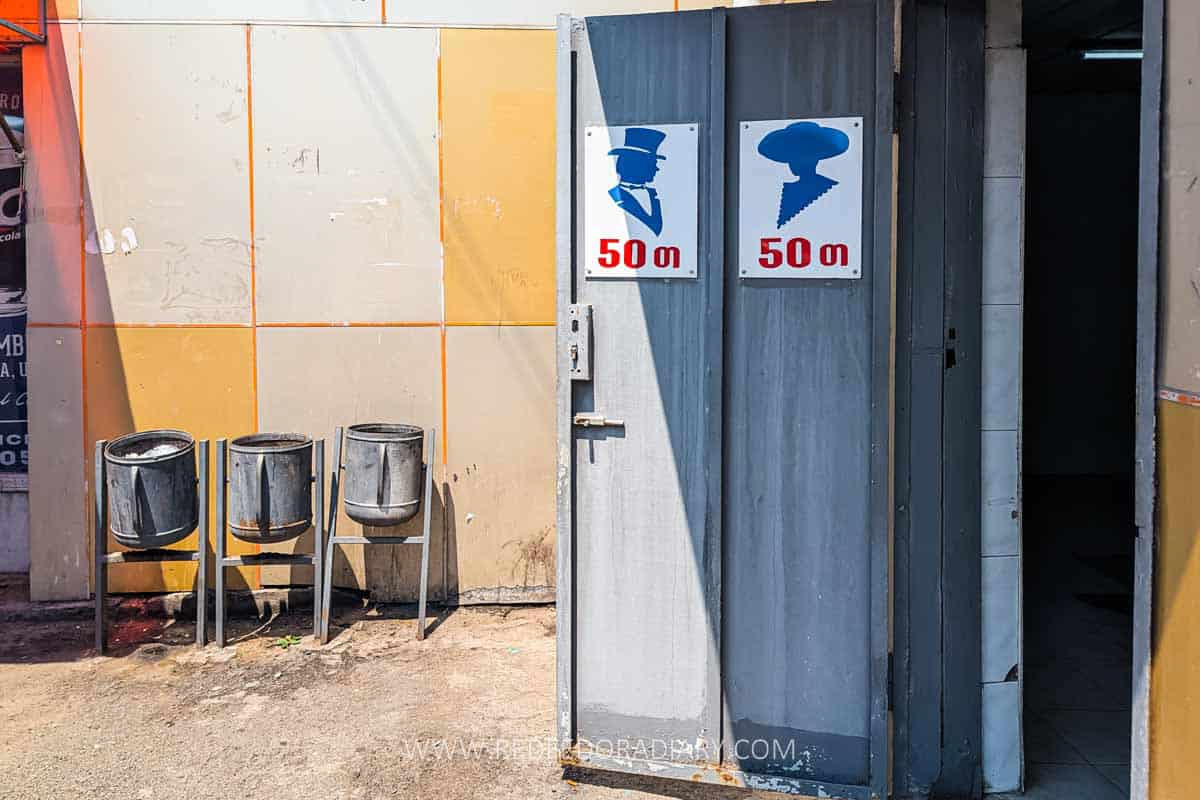
Didube has everything you need for a short wait before your journey. You’ll find public toilets (bring some coins, as they’re usually paid), ATMs, pharmacies, luggage storage at the Didube Bus Station building, convenience stores, bakeries, coffee kiosks, and fruit stalls throughout the station.
If you’re traveling for several hours, I recommend bringing snacks or sandwiches. For hygiene reasons, I have never bought pastries from bakeries here. I usually get my coffee at Luis Coffee right when you exit the Didube Metro tunnel.
While longer routes often include a short 20-30 minute stop, this isn’t guaranteed, and the quality of roadside shops and canteens varies.
Helpful tips before you travel
Transport in Georgia is constantly evolving. Timetables change, fares are updated, and some seasonal routes may not operate during winter.
If you’re traveling somewhere remote or only a few marshrutkas run each day, it’s always worth confirming the latest schedule locally. If you’re staying at a hotel or guesthouse, your host can often call the station to check departure times for you, or come a day early to scout options.
Marshrutkas are also flexible when it comes to drop-off points. If your accommodation is along the route, tell the driver where you’d like to get off before the journey begins—they’ll usually stop for you without any extra charge.
I also advise avoiding marshrutka travel after dark whenever possible, especially on mountain roads. Daytime journeys are generally more comfortable, safer, and offer far better scenery along the way.
Where to stay in Didube
Hotel Toma’s House (9.3⭐): Hotel Toma’s House is one of the best-rated places to stay in Didube and a great choice if you’re looking for a quiet, affordable base away from the busy city center. Located within walking distance of Dinamo Arena, the Georgian State Silk Museum, and Tsereteli Metro Station, it also provides easy access to Didube Bus Station for onward travel around Georgia.
Holiday Rooms (9.7⭐): Holiday Rooms is one of the highest-rated accommodations in Didube, making it an excellent choice if you’re after a quiet stay with easy access to the metro. Located close to Tsereteli Metro Station, it offers air-conditioned rooms, a shared kitchen, free Wi-Fi, and a peaceful garden. Guests consistently praise the exceptionally friendly host, spotless rooms, and convenient location for reaching both the city center and Didube’s attractions, while supermarkets and cafés are just a short walk away.
Sky by the River (9.4⭐): Located just a few minutes from Tsereteli Metro Station, Sky by the River is a modern 4-star hotel offering spacious rooms, many with balconies, kitchenettes, and river views. It’s a great option if you prefer apartment-style accommodation while staying close to Didube’s main attractions. Guests compliment the cleanliness, comfortable rooms, helpful staff, and free private parking.
Panorama City View Apartment N57 (9.5⭐): Ideal for couples or longer stays, Panorama City View Apartment N57 offers a modern one-bedroom apartment with a fully equipped kitchen, private balcony, and terrace overlooking the city. Located near Expo Georgia and within walking distance of Didube Metro Station, it provides easy access to both the neighborhood and central Tbilisi. Guests recommend it for its cleanliness, spacious layout, and panoramic views.
City Center Apartment (9.5⭐): City Center Apartment is a great choice if you’re looking for a spacious self-catering stay in Didube. Located within walking distance of Tsereteli Metro Station and Dinamo Arena, it offers a fully equipped kitchen, air conditioning, free Wi-Fi, and a private balcony. Guests particularly appreciate the spotless interior, comfortable bed, and responsive host.