
39 Tbilisi Travel Tips from a Local: What You Need to Know
Tbilisi often surprises first-time visitors — not because the city is difficult, but because it doesn’t always work the way people assume it does. From choosing the right season to understanding how people move around, eat, and interact, these helpful Tbilisi travel tips will shape your experience far more than ticking off landmarks.
Written from a local perspective, many of these questions come up repeatedly in conversations with travelers who book my itinerary-planning services.
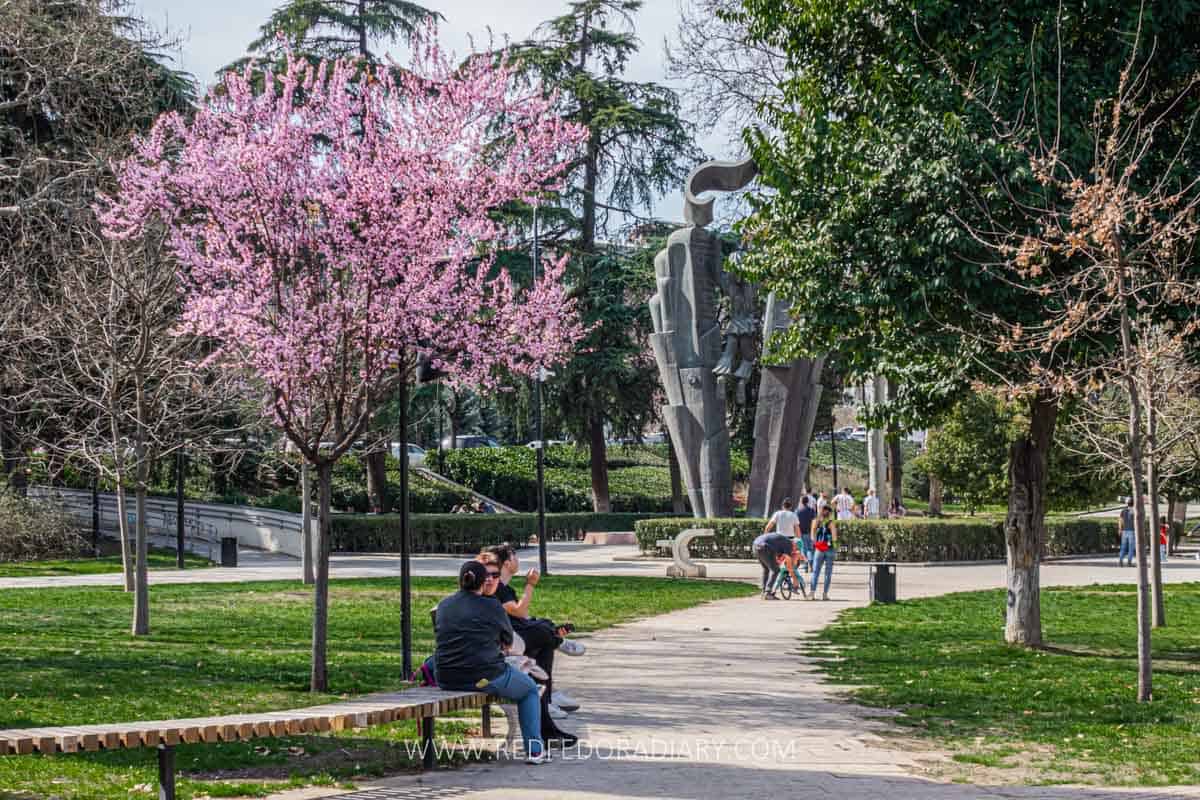
I also see the same confusion and avoidable issues appear again and again in travel forums, which is exactly why I decided to write this article — to help you arrive better prepared, set realistic expectations, and feel more at ease from the start.
Tbilisi is welcoming, layered, and full of character, and understanding a few local realities makes exploring the capital far more enjoyable.


If your plans go beyond the city and you’re traveling around the country, I also have a dedicated guide with practical travel tips for visiting Georgia, covering what to know before moving between regions.
Disclaimer: Some of the links in this post are affiliate links, which means I may earn a small commission if you buy something through them—at no extra cost to you. It helps support my blog and lets me share real, first-hand travel tips. Learn more
What’s new in Tbilisi and Georgia in 2026 (important to know before you arrive)
If you’re planning your first or a return trip this year, a few updates are worth knowing in advance.
None of these should discourage you from visiting, but being aware of them helps you plan with fewer surprises.
Travel insurance for Georgia is now mandatory
As of 2026, travel insurance is mandatory for visitors entering Georgia, including those arriving visa-free.
Your insurance must be valid for the entire duration of your stay and meet the required coverage limits, so this needs to be arranged before you travel. There is no option to purchase the required insurance on arrival at the airport.
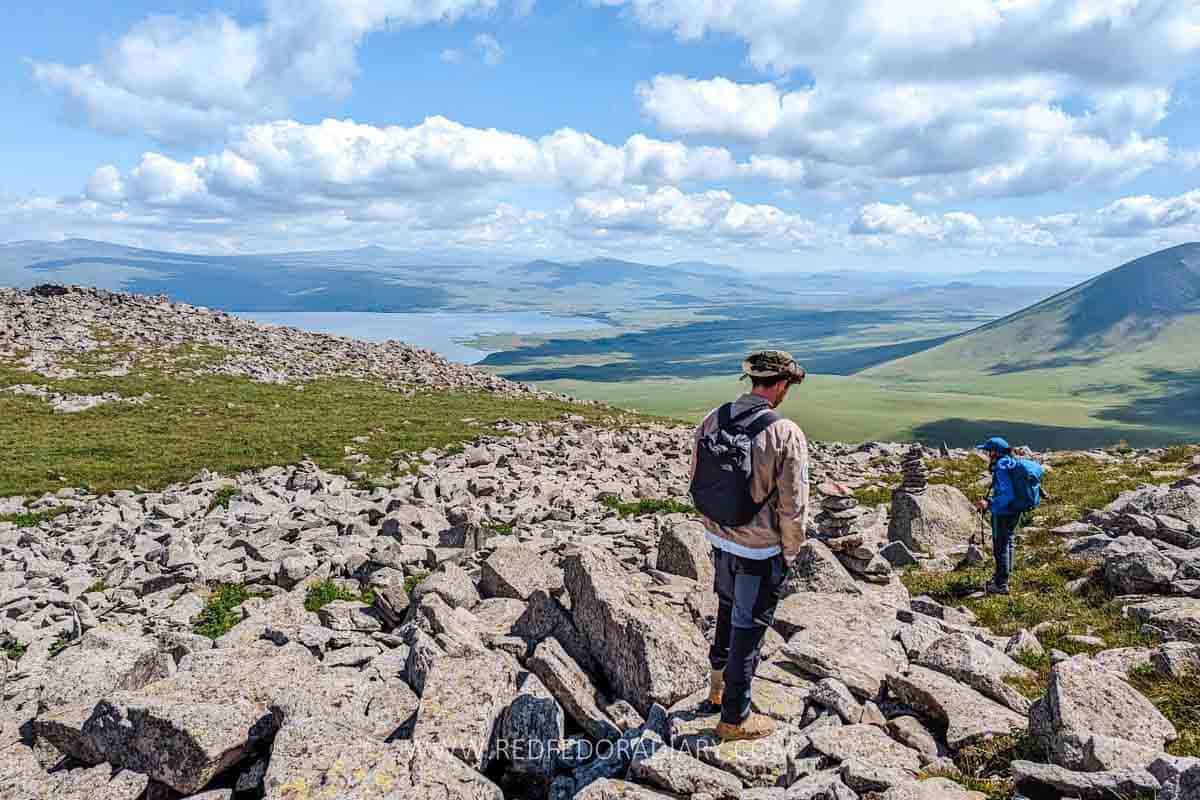
If you’re visiting Tbilisi as part of a longer trip around the country, this rule applies regardless of where you stay or how long you plan to remain in the capital.
For a full breakdown of coverage requirements, real-life entry scenarios, and common questions travelers have, I’ve put together a separate, detailed guide on travel insurance for Georgia, which is worth reading before finalizing your plans.
But, as a quick piece of advice for longer or flexible trips, I usually recommend SafetyWing’s Nomad Insurance, especially if you don’t have fixed dates. I’ve used it myself multiple times abroad because it’s subscription-based, easy to set up, and renews automatically while you travel.
It also covers emergency medical treatment, hospital stays, and medical evacuation, which is exactly what you need to meet entry requirements.
👉 Check SafetyWing’s Nomad Insurance policy and choose a plan that works best for you.
Peaceful protests in Tbilisi are ongoing: what you should know
Peaceful protests have been part of daily life in Tbilisi for over a year now. They were sparked in November 2024, when the current government announced that talks and negotiations with the EU would be paused until 2028.

Since then, people have continued to gather to express their views, even as protest rules have become stricter and crackdowns more frequent, sometimes resulting in short-term detentions.
The first weeks of the protests in late 2024 were intense and widely covered by international media, which understandably raised concerns among travelers.
During that period, I received daily messages from followers and strangers asking whether it was safe to visit. Despite the headlines then — and now — Tbilisi has remained safe to visit, and everyday life has continued as usual for both locals and tourists.
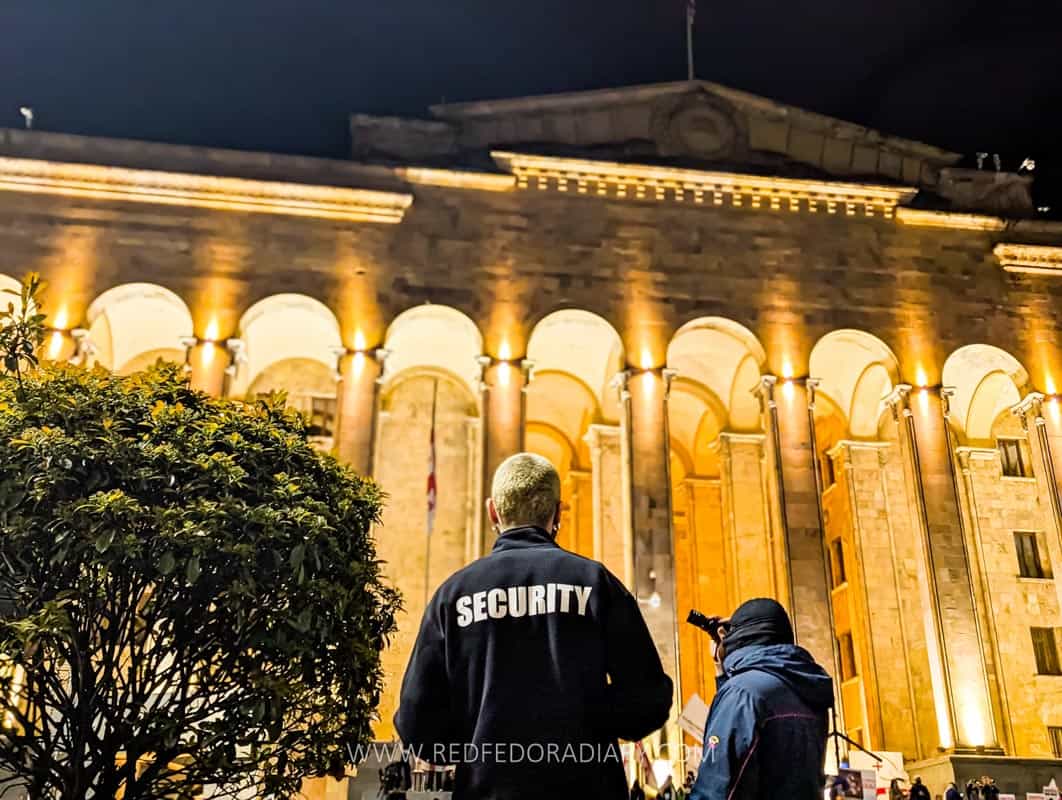
What you should know is that these protests are highly localized and predictable. Most evenings, people gather in front of Parliament on Rustaveli Avenue, while the rest of the city functions normally.
Cafés stay open, public transport runs, and daytime sightseeing is unaffected. If needed, it’s easy to avoid the area by taking parallel streets or adjusting plans slightly in the evening.
Plan Your Tbilisi Trip Like A Pro
💬 Your Trip, Your Way – Crafted by a Local
🏥 Travel Insurance is Now Mandatory in Georgia
🚗 Book Your Transfers Before You Land
🛜 Stay Connected from the Moment You Arrive
Tbilisi travel tips for planning
Choose the right season for your trip
Choosing the right time is about aligning your expectations with how the city actually operates throughout the year.
Summer brings long days but also intense heat that can make walking through some neighborhoods tiring, while winter is quieter, greyer, and better suited to slower travel. Spring and autumn tend to offer the best balance with mild temperatures and more energy for exploring.
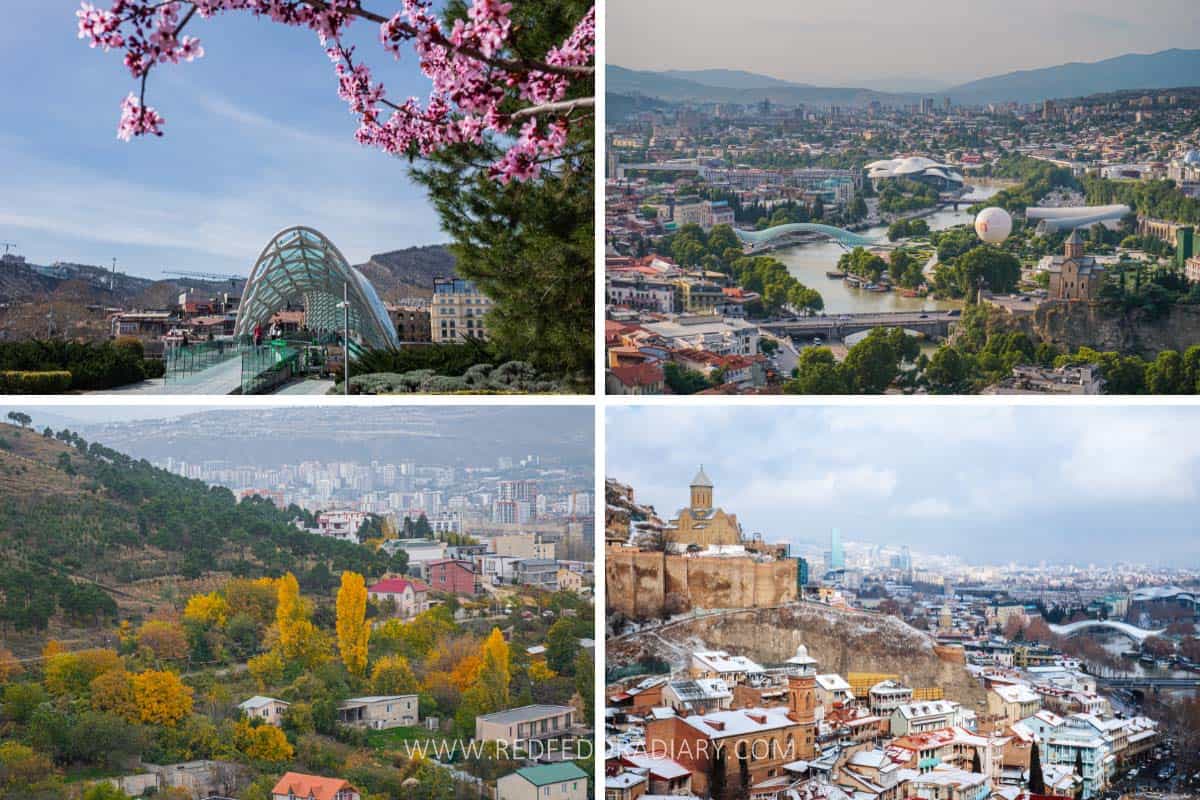
If you’re unsure when to come, I’ve broken this down in detail in my guide to the best time to visit Tbilisi, including what each season and month feel like on the ground and what’s on the social calendar.
And if you already know which season you’re visiting and just want ideas on what to do during that time, here are shortcut guides:
- Spring in Tbilisi — festivals, blooming parks, mild weather walks, and seasonal food.
- Summer in Tbilisi — how to handle the heat, weather-appropriate activities, and cooler escapes.
- Autumn in Tbilisi — wine season, beautiful foliage, and cultural events.
- Winter in Tbilisi — festive lights and Christmas markets, indoor experiences, and cozy cafés.
Check public holidays before finalizing your trip.
Georgia has a number of public holidays throughout the year, and they can slightly change the rhythm of travel. Banks, government offices, museums, and some smaller businesses may close, while popular sites and restaurants can become busier as locals head out to celebrate.
Transport between cities can also fill up faster during long holiday weekends — especially train tickets to Batumi or Kutaisi.
At the same time, arriving during a celebration can be one of the most memorable parts of a trip. Independence Day on May 26, the autumn Tbilisoba festival, Orthodox Easter celebrations in spring, and the Alilo Christmas procession in January are all moments when the city feels especially lively.
Where you stay matters more than you think
Choosing the right neighborhood can have a bigger impact on your trip than the hotel itself. Hills, walking distances, access to public transport, and how lively or quiet an area feels are all aspects to consider when selecting your hotel or Airbnb apartment.
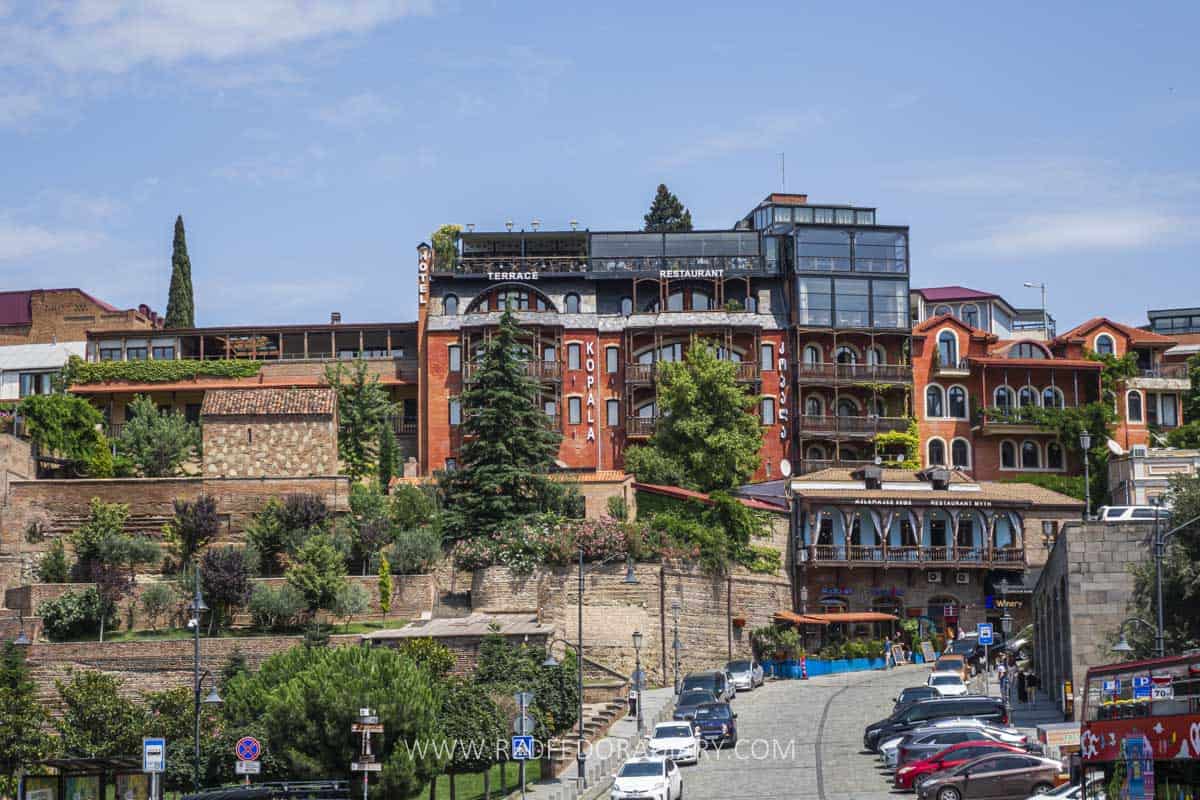
Staying too far from central areas or in neighborhoods that look close on a map can mean longer uphill walks, more reliance on transport and/or taxis, and less flexibility in the evenings. On the other hand, well-located areas make it easier to mix sightseeing with cafés, bars, restaurants, and markets.
Don’t treat it as a one-day stop
Many travelers try to squeeze Tbilisi into a single day, often as a stop between regions, part of a fast-paced itinerary, or as a final stop after ski resorts or hiking trips.
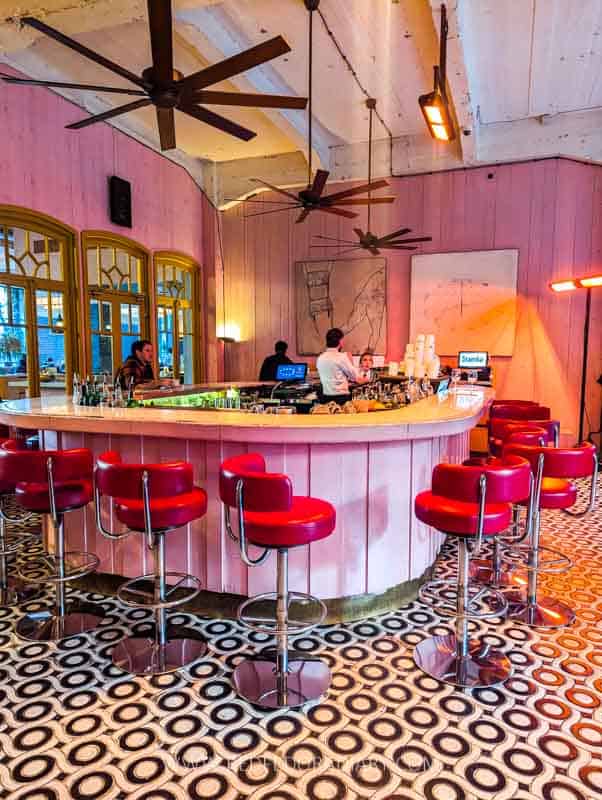

While the city might look compact, it doesn’t reveal itself well when rushed. Streets, neighborhoods, and everyday places make far more sense once you give yourself time to settle into the city’s rhythm.
Beyond the well-known landmarks in the Old Town, areas like Rustaveli Avenue, cozy cafés, and everyday markets are just as much part of the experience.
My full Tbilisi travel guide brings all of this together, with a practical overview of the city’s main sights—from historic landmarks to Soviet-era details and modern structures.


Spending at least three to four full days in Tbilisi also opens the door to experiences that don’t fit neatly into a tight or typical sightseeing schedule. Joining one of the city’s alternative tours is a great way to learn about local history, architecture, and daily life beyond the usual routes.
Don’t forget to check what’s happening in the city in this festival guide or browse some of my favorite local markets for unusual experiences.
Use the city as a base for day trips around Georgia
Although Tbilisi sits on the eastern side of the country, it still works surprisingly well as a base for exploring nearby destinations, depending on where you want to go in Georgia.
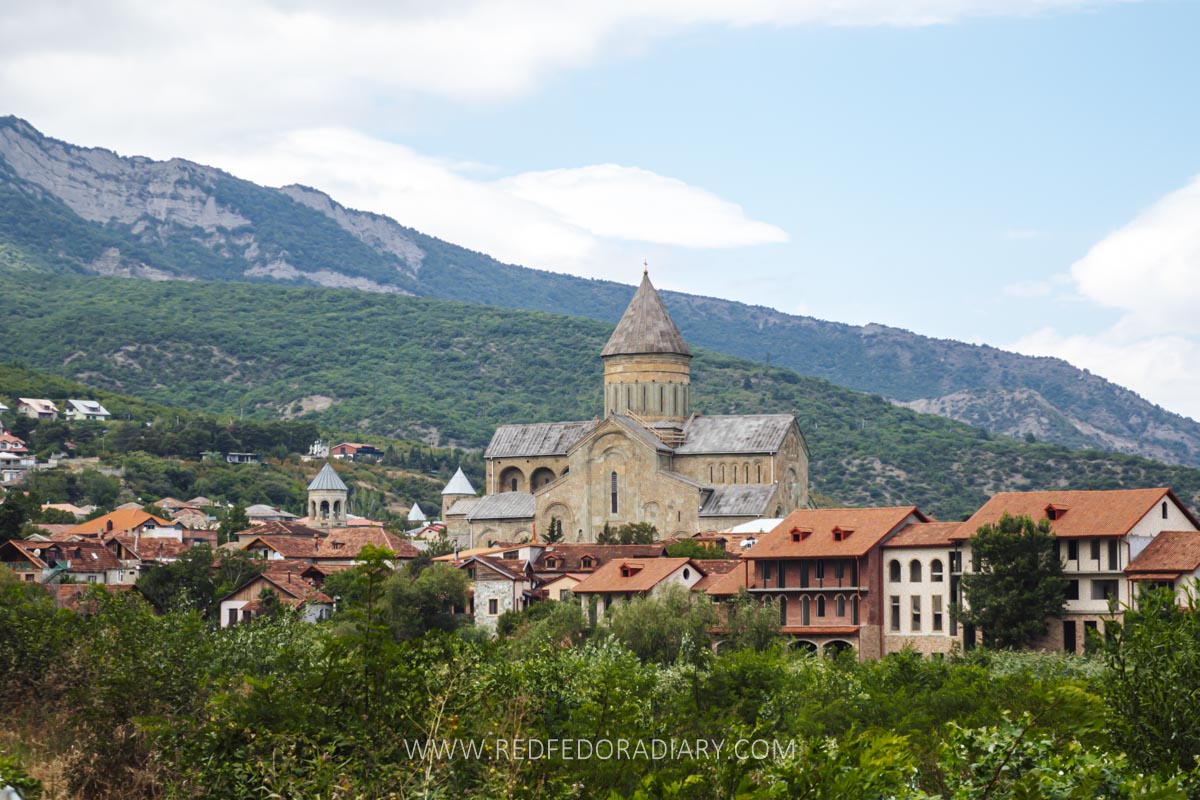
Staying put in the capital and planning a few well-chosen outings often makes more sense than moving accommodation every night — especially on a shorter trip.
You can easily plan your own day trip by renting a car, which gives you flexibility and control over your schedule. I usually recommend LocalRent for its affordability and consistently good service.

If driving isn’t appealing, you can book organized tours (GetYourGuide or Viator) or a private transfer through GoTrip. Think of it as a reasonably priced long-haul taxi. When planning your route on their website, you can add unlimited stops without surcharging the final price of the transfer.
Some of the most popular day trips from Tbilisi include Kazbegi, Mtskheta, the Rainbow Mountains, Gori, and Uplistsikhe.
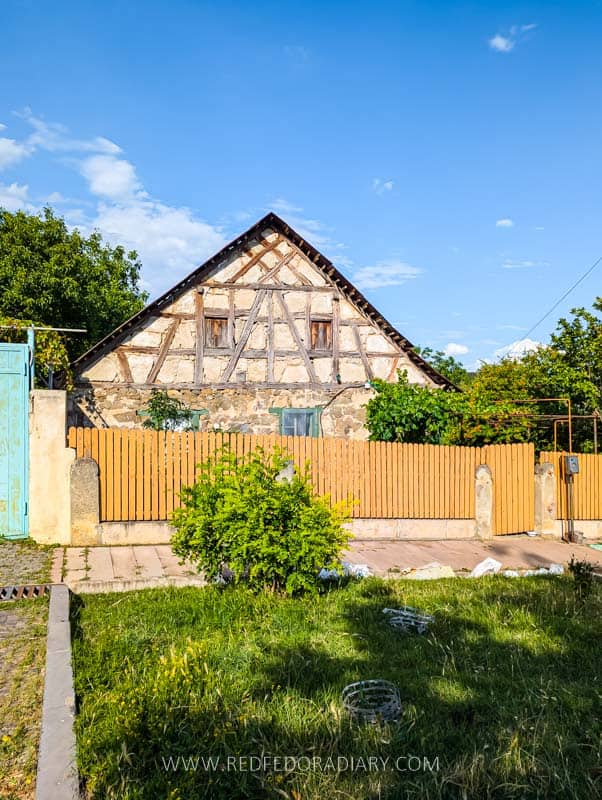
For something less obvious, places like Bolnisi offer an alternative perspective on the country’s lesser-known history of German settlers and important archaeological discoveries that reshaped human migration outside of Africa.


Nature and hiking lovers don’t even need to go far. The hills around Tbilisi are easy to explore without special gear, making them ideal for half-day escapes.
Trails like one from Kojori Fortress to Asureti provide a quiet break from the city, while routes from Kojori toward Mtatsminda Park and the Mtatsminda neighborhood are even more accessible and ideal for casual walks. Mtatsminda Park to Turtle Lake (Kus Tba) is another one of my favorite easy hikes.
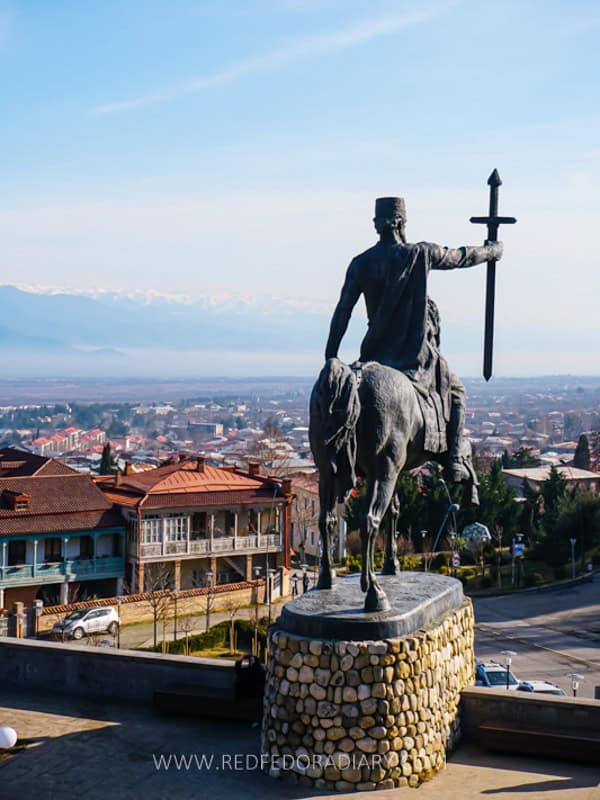
If wine is part of why you’re here — whether you’re already interested or simply curious to learn — Tbilisi’s proximity to Kakheti makes it another easy day trip option. Towns like Sighnaghi and Telavi both have wineries either in town or just outside, which works well if you don’t want to spend a full day on the road.
For a more immersive experience, I usually recommend joining my friends and partners at Eat This! Tours. I’ve personally taken their Sighnaghi wine tour and even wrote a full review of the experience. If you decide to book, you can use the code RFD5 for a small discount.
Budget realistically
One of the easiest misconceptions is the assumption that it works like a cheap European city, where everything feels affordable by default. Depending on where you’re coming from, Tbilisi and Georgia can still feel very affordable, especially when it comes to food, local transport, and everyday expenses.
That said, prices have gone up noticeably over the past few years, affecting locals and expats alike. Travelers returning after a long break often comment on how much costs have changed in contrast to their previous visits.
Accommodation in central areas, good cafés and restaurants, and guided experiences are no longer “bargain cheap,” especially compared to a few years ago. It’s worth noting that some museums and attractions charge foreigners different prices, including the Rustaveli-Mtatsminda Cable Car.
To give you a rough idea: hotels in Tbilisi range widely by location and season, from 12 to 170 USD for a bed in a good hostel (think Fabrika Hostel) to a luxury hotel.
A meal for two at a mid-range restaurant costs 20-35 USD; groceries remain more or less affordable, and museum entrance fees usually range from 1.86 to 15 USD, depending on the venue.
Taxi prices can vary by distance and time of day. Within the city center, expect to pay around 1.50 to 4.50 USD on average. Organized tours can range significantly in price depending on what’s included.
If you’re visiting on a tighter budget, the good news is that there are plenty of free things to do in Tbilisi — from walking through different neighborhoods to exploring courtyards, parks, and viewpoints.
That often means you can spend most of your money where it actually adds value: experiences, day trips, and enjoying Georgian food.
Best Tbilisi Tours & Day Trips – Handpicked by Local
Pack appropriately for the seasons and city walking
When creating your packing list for Tbilisi, think of it as being ready for various weather conditions.

Temperatures can change noticeably throughout the day, and the city’s hills, uneven sidewalks, and cobblestone-heavy neighborhoods make comfortable footwear more important than people expect. What works for a flat, compact city often falls short here.
Seasonal differences matter too. Summer heat calls for breathable clothing, while spring and autumn are all about layers that you can easily take on and off as you move around.


Winter doesn’t require heavy Arctic gear, but winter-appropriate shoes/boots and warm layers make a big difference when the city feels damp and grey.
I’ve put together a detailed Tbilisi packing guide, covering seasonal essentials, footwear, and small necessary items that make your trip comfortable and relaxed.
Adjust to Tbilisi time
Life here runs at a slower, more flexible pace than many are used to. Days tend to start later, dinners stretch into the evening, and schedules aren’t always followed to the minute.

Many shops and small businesses open around 9:30–10:00 a.m., and sometimes even later. Cafés follow a similar rhythm, although there are a few coffee shops and breakfast spots that cater to early birds if you know where to look.
Timing in everyday life can also feel loose. Georgians themselves often joke about “Georgian time” — meaning that when something is said to happen after 3:00 p.m., it might realistically take place anytime between 3:00 and much later in the evening. Being late to meetings or casual plans is common and rarely taken personally.
Sundays are business as usual
If you’re used to traveling in parts of Europe where Sundays are quiet and many businesses close, Tbilisi works differently.
Shops, supermarkets, cafés, restaurants, and convenience stores usually stay open at normal hours, and people continue their routines much as on any other day. It’s common to see locals meeting friends, shopping, or spending time outside around the city.
The main exceptions are banks and government offices, which are typically closed. For visitors, though, Sundays rarely interrupt travel plans and can be just as lively as the rest of the week.
Plan a light first day
Most travelers arrive in Tbilisi very early in the morning, as many flights land before sunrise. This often means starting the day tired, whether you head straight to your accommodation to drop bags or have an early check-in and catch a few hours of sleep.

Arrival fatigue, time zone changes, and navigating a new city can make simple plans feel heavier. Therefore, don’t overpack the day with sightseeing, and remember that Tbilisi doesn’t like to be rushed into.
A lighter first day gives you space to adjust — take a short walk, find a nearby café, and get a feel for the area you’re staying in.
Arriving and getting around
Know how to get from the airport
Getting from Tbilisi International Airport to the city center has several options depending on your arrival time, budget, and comfort level. Most first-time visitors choose between ride-hailing apps like Bolt taxi or pre-arranged transfers.
Check out my ultimate guide on how to get from Tbilisi airport to the city center, where I cover every option step by step — including prices, travel times, and what makes the most sense for different situations.
Don’t rely only on walking, and use public transport when needed
I always say that the best way to explore Tbilisi is to get lost in its maze of streets. It is a walkable city, but only once you understand a few logistics. The capital is built on hills, with many neighborhoods sitting on moderate to steep slopes, and some areas are much larger than they appear on a map.
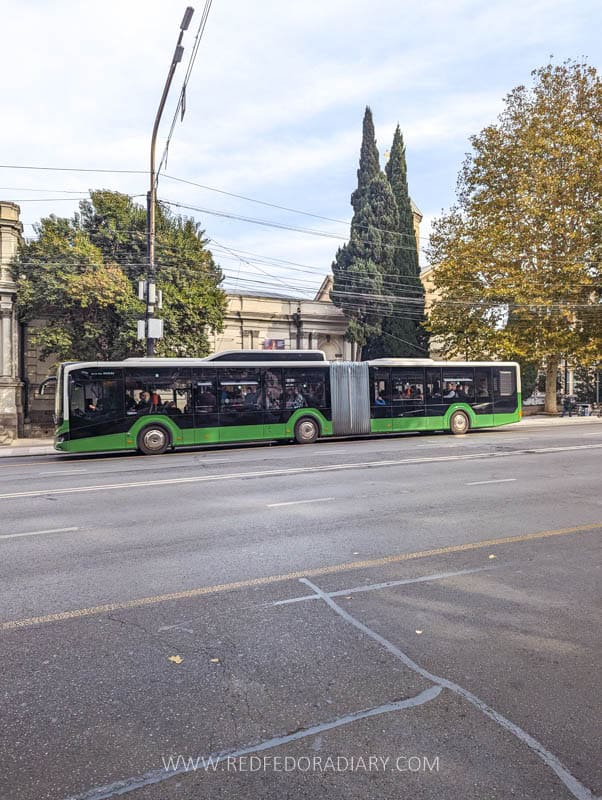

Mixing walking with public transport makes exploring the city much more comfortable. The metro, in particular, is one of the most efficient and fastest ways to move across the city. When taking buses or minibuses, traffic and timing can also affect trip times, depending on your destination.
Transport is very affordable compared to European capitals and even to some neighboring countries. Therefore, short metro rides or quick taxi trips can save time and energy, letting you focus on enjoying the places and landmarks.
Use underpasses and crossings — don’t jaywalk in Tbilisi
When crossing the street, remember that if there’s no zebra crossing nearby, it usually means there’s an underpass. Jaywalking isn’t treated casually here, though you might see locals doing it. Recently, a few videos surfaced on social media showing tourists being fined for crossing the road outside designated areas.
Another thing that surprises visitors is that cars don’t always stop immediately at zebra crossings. Take a moment to make eye contact and let them stop first before crossing.
Eating out
Try as much Georgian food as you can
Khinkali (dumpling) and khachapuri (cheese pie) are iconic for a reason, but limiting yourself to just a few well-known dishes means missing a big part of everyday food culture.

Georgian cuisine is as diverse as the country itself, with each region known for at least one distinctive dish — and often many more.
While no single restaurant will offer everything, there are certain traditional foods you really shouldn’t leave the country without trying. On top of that, a few dishes are seasonal, appearing on menus only at specific times of the year.
If you follow a plant-based diet, our cuisine includes plenty of naturally vegetarian and vegan dishes, so finding something to eat rarely feels limiting.


Desserts might look different from what you are used to, but there are a few traditional sweets that are worth trying, even if you don’t usually have a sweet tooth.
Browsing local markets is one of my favorite ways to understand how people actually eat wherever I travel, and this is just as true for the city. Fresh produce, cheeses, herbs, and whatever happens to be in season offer an honest look into local food culture.
Know the proper way to eat Khinkali (even if you bend the rules)
Khinkali dumplings are traditionally eaten with hands only — no knife and fork. You’re meant to hold the dumpling by the top knot (the thick doughy “knob”), take a small bite from the side, sip the hot broth inside, and then continue eating the rest.
The knob is usually left on the plate and not eaten. That’s the etiquette.

Now the honest part: even though I’m a local, I rarely eat khinkali fully with my hands. I find it messy, and the broth almost always spills on my fingers. Instead, I use a fork to pierce the knob and hold the dumpling steady while I bite and slurp.
What you shouldn’t do — at least not in front of Georgians— is cut khinkali open with a knife and fork. Many locals will quietly (or not so quietly) judge that move.

The only exception where cutting is somewhat acceptable is vegetarian khinkali, since they usually don’t contain much broth and are less likely to spill.
If you want to know where locals go for khinkali, I have a separate, regularly updated article listing the best spots in Tbilisi.
Expect slower service
One of those Tbilisi travel tips that’s helpful to know early on is that dining here doesn’t come with the kind of attentive, smile-forward service many are used to.
Instead, meals follow a slower, more relaxed rhythm. Tables aren’t turned over quickly, staff usually won’t check in unless you ask, and service can feel minimal rather than proactive.
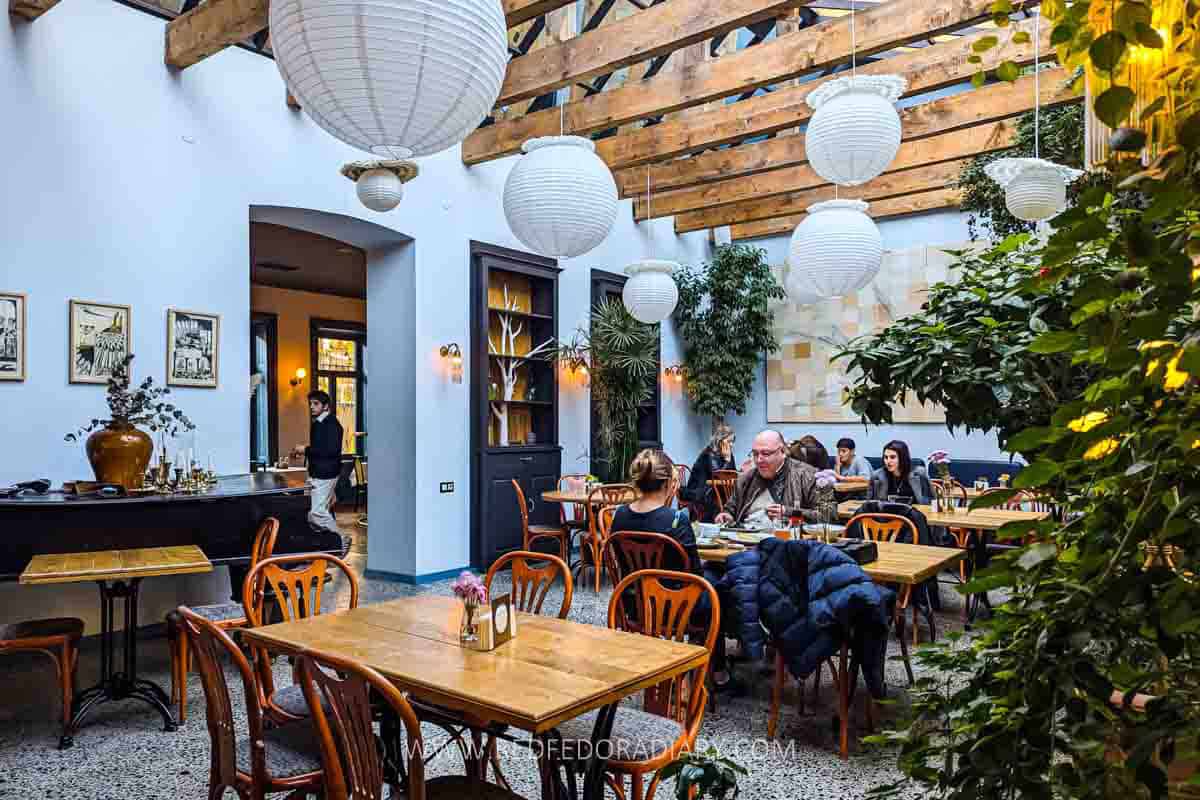
Some visitors interpret this as poor service (and sometimes it truly is), but in many cases it reflects the reality of low wages and long, demanding working hours in the hospitality industry, leading to a lack of care on the part of staff. So, if you need something, it’s perfectly normal to call a server over.
That said, it’s also important not to generalize — there are restaurants in Tbilisi that offer genuinely warm, professional, and high-standard service.
Tipping is optional, not mandatory
Tipping in Tbilisi — and in Georgia in general — is simple and low-pressure. It’s appreciated, but not mandatory, and it’s never expected in the way it is in some countries. If you’re happy with the service, rounding up the bill or leaving around 10% in restaurants and cafés is perfectly fine.
You’ll often notice an extra 10% service charge added to the bill. This usually does not go directly to staff and is meant to cover basic amenities like napkins, salt and pepper, and similar costs.
You’ll also see that menus are now required by law to state that prices include 18% VAT, so what you see listed should already reflect the final cost.
In bakeries, hotels, and taxis, tipping is usually minimal or skipped altogether. There’s no social obligation to tip for every interaction.
That said, considering the generally low salaries in the service industry, tipping for genuinely good service is always appreciated. And if you don’t tip, don’t worry — it won’t be taken personally.
Understand how a Georgian Supra works
If you’re lucky, during your time in the country, you might be invited to a Georgian family gathering. If that happens, you’ll most likely be welcomed with a supra — a traditional Georgian feast that is far more structured than it may first appear.

A supra isn’t just a table full of food. It has its own rhythm, hierarchy, and etiquette. There’s a tamada (toastmaster) who leads the evening with a series of toasts, and you’re expected to follow along rather than clink glasses randomly.
Dishes arrive in waves, wine flows generously, and conversations shift between heartfelt, philosophical, and celebratory — sometimes all within minutes.

If you’ve never experienced one before, it can feel overwhelming in the best possible way. I’ve written a separate guide on how to survive a Georgian supra, breaking down the structure, the unspoken rules, and what to expect so you don’t feel lost at the table.
Best Hotels in Tbilisi – Where to Stay
Not sure which area suits you best? 📍 Check out my Where to Stay in Tbilisi guide for the top neighborhoods and hotel picks by budget before booking. Here are my quick picks for the best places to stay right now.
Handling money and payments
Cards are common, but cash is still useful
Georgia has its own currency, the Georgian lari (GEL), written ₾. You’ll see both banknotes and coins in everyday use.
Cards are widely accepted, especially in restaurants, cafés, museums, bars, supermarkets, hotels, and even on public transport. That said, having some cash on hand is still useful for small bakeries, local markets, neighborhood shops, and taxis — especially if you don’t want to link your card to a ride-hailing app.
Even though I rarely carry much cash, it’s a good idea to keep some as a backup in case a card payment doesn’t go through.
Exchange money carefully
There are plenty of exchange booths around the city, but rates can vary, and some places may charge a commission. Always check the rate first and ask whether there’s a commission before exchanging money.
Two reliable options are exchange offices at Rico Credit branches and the exchange booth on 6 Pushkin Street, near Freedom Square. Exchanging money at banks often gives a worse rate than at dedicated exchange offices.
ATMs are widely available throughout the city, with TBC Bank and Bank of Georgia being the two most prominent. Other banks sometimes offer lower fees or higher withdrawal limits.
If you use a Wise card, withdrawals from Bank of Georgia ATMs usually come with lower fees than those from TBC Bank.
Most ATMs in Georgia dispense GEL and USD, with some also dispensing EUR. Available currencies are always shown on the machine with a clear symbol sticker, so it’s easy to check before placing your card.
Culture, language, and everyday interactions
Don’t misread directness
Understanding everyday interactions helps avoid small misunderstandings. Communication with Georgians can feel very direct. Locals often get straight to the point, skip small talk, or keep conversations brief — especially in shops and everyday situations.
When speaking English, many people translate sentences directly from Georgian, which can sound blunt or even rude to an English speaker, even though it isn’t meant that way.
For example, instead of “How may I help you?”, you might hear “What do you want/wish?” — a phrasing that sounds harsh in English but is completely neutral in Georgian.
The same directness often shows up in personal conversations. When getting to know someone, or even during casual chats with strangers, it’s common to be asked very personal questions.
This isn’t meant to be rude; it’s usually simple curiosity, as personal boundaries tend to be looser than you might be used to.
One of the most useful Tbilisi travel tips is not to read too much into tone or facial expressions. Warmth and friendliness often come through actions rather than words.
Don’t skip the sulfur baths
Visiting the sulfur baths is more of a cultural and social experience that has been part of life for centuries. While they’re more tourist-oriented today than they once were, locals still go occasionally, treating it as a spa and wellness ritual.

I especially love going on crisp autumn mornings or winter evenings, when you come out warm to the core, refreshed from head to toe, and full of energy despite the cold air outside.
The historic Abanotubani area in the Old Town is home to sulfur baths, offering both private and public bathing areas. Most locals prefer to book a private room, gather a few friends, and split the cost.
For solo travelers, private rooms can feel a bit pricey—usually starting at around 100 GEL—but the experience is still worth considering at least once.


Remember to order a kisa massage — a traditional exfoliating scrub that removes dead skin and leaves it feeling incredibly soft, smooth, and fully refreshed.
If you’re choosing a private bath, reliable options include Chreli Abano, also known as Orbeliani Baths (often mistaken for a mosque, though it isn’t), and Gulo’s. Public baths are also available, though I haven’t tried myself yet.
English is common — but not everywhere
English is fairly common, especially among younger people and in places that regularly deal with visitors, such as hotels, restaurants, and cafés.
In fact, knowing English is a requirement for many jobs in the country. Outside of work, however, some locals may feel shy about speaking English, even if they understand you perfectly.
In smaller shops, local markets, or taxis, English may be spoken very little or not at all. Simple gestures, a few basic words, or using a translation app usually solve the situation quickly — and most people are willing to help, even when language is a barrier.

Learn these Georgian words
If I were to give just one Tbilisi travel tip, this would be it: learn a few basic words in Georgian. Even a small effort goes a long way and instantly changes how interactions feel.
These three words are especially useful and come up in everyday situations:
- Gamarjoba — hello
- Madloba — thank you
- Gaumarjos — cheers (trust me, you’ll need to know this)
You don’t need perfect pronunciation or full sentences. Using even one of these words often brings an immediate smile and a warmer response. Locals genuinely appreciate the effort, and it can turn a quick interaction into a friendly exchange.
Don’t rely only on Google Translate
Google Translate is useful, but it doesn’t always get Georgian right, as the language has its own structure and expressions that don’t translate smoothly.
Direct translations can sound confusing, and written Georgian, in particular, doesn’t always convert accurately. It works best as a support tool rather than your primary means of communication.
Dress appropriately in religious spaces
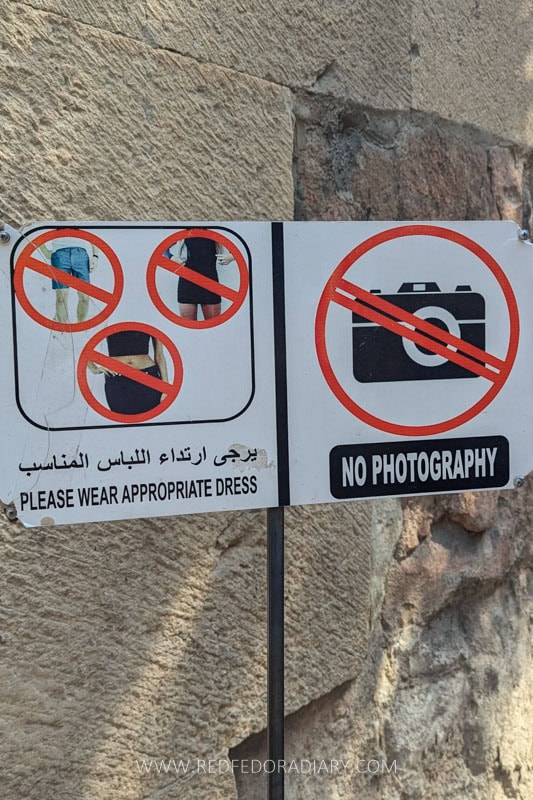
Churches and monasteries are active places of worship, so the dress code is taken seriously. Shoulders and knees should be covered, and women are often expected to cover their heads, especially in more traditional churches. Some places provide scarves and wrap-around skirts at the entrance, but it’s best not to rely on that.

Safety and practical Tbilisi travel tips
Tbilisi is safe, but still be cautious
Tbilisi, like the rest of the country, is generally a very safe city, and violent crime is rare. You’ll feel comfortable walking around during the day and night, not only in central areas but also a bit outside. That said, I’d still suggest practicing basic awareness.
Use common sense: keep an eye on your belongings in crowded and touristy places, avoid poorly lit streets late at night, and be mindful when using taxis or withdrawing/exchanging cash.
Don’t be afraid of stray dogs
Stray dogs and cats are a common sight here. While there are no official statistics, local estimates suggest that there may be around 30,000 stray dogs in the city alone, with the number being much higher across the rest of the country.


Most street dogs in Tbilisi are vaccinated, tagged, and used to people. They’re generally calm, often sleeping through the day or quietly sharing public spaces without bothering anyone.
Many locals actively care for them, and in central areas, they’re usually well-fed. Unfortunately, this reality changes once you leave the capital, where animals are less protected, might be aggressive, and support is more limited or nonexistent.
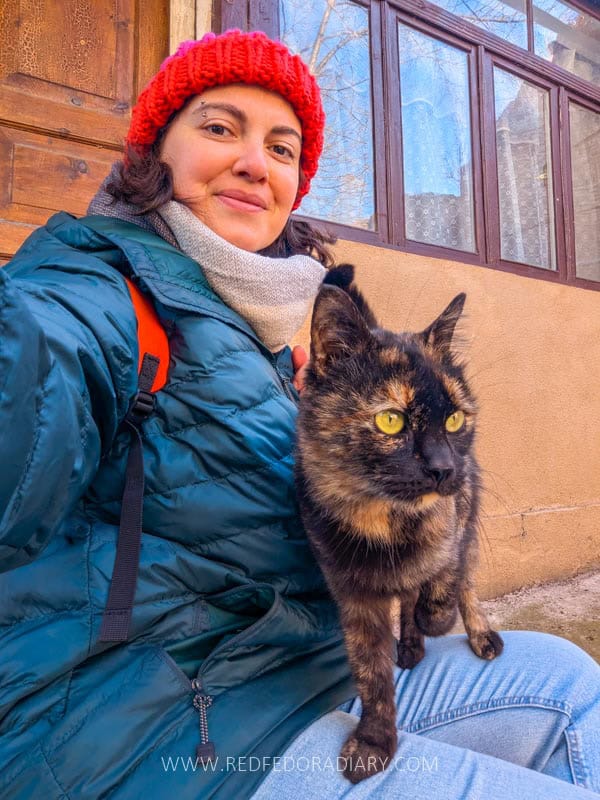
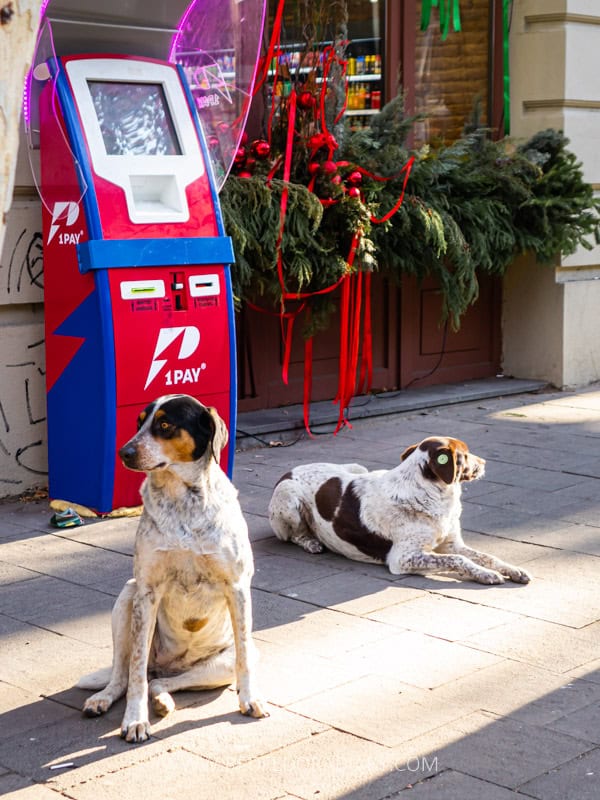
Because they’re rarely hostile here, there’s usually no need to worry. You can pet them if you want, but use common sense and approach them calmly. If you think an animal might be hungry, buying food is easy — even at small grocery shops like SPAR or Nikora, you’ll usually find basic dog and cat food.
Be careful where you step
With so many stray dogs and many locals owning pets, Tbilisi streets can sometimes be full of dog poop. Unfortunately, not everyone picks up after their dogs, and it’s something you’ll notice fairly quickly once you start walking around different areas.
It’s not uncommon to see people walking their dogs and leaving things behind — for reasons I still don’t fully understand. As a local, I’ve seen it countless times, and while it’s frustrating, it’s simply part of the city’s everyday reality.
We don’t change to daylight saving time
If you’re coming in spring or autumn, know that Georgia no longer switches to daylight saving time. The clock stays the same year-round, which can affect flight times, meeting schedules, and coordination with people back home.
It’s a small detail, but one of those travel tips for Tbilisi that helps avoid confusion when checking arrival times, booking transport, or planning calls across time zones.
Avoid random street “tours”
In central Tbilisi, you may come across people offering tours of the city or of Georgia. While these offers can sound tempting, they’re often not proper tours in the usual sense.
In many cases, the people standing next to cars with banners for popular sights are simply drivers, not professional guides.
These trips usually involve basic transport with a few general comments rather than in-depth explanations, and prices are often higher than what you’d pay for a properly organized experience.
If you’re looking for context, history, or a well-planned route, these on-the-spot offers rarely deliver that.
If you want to join an organized tour, one of the most practical Tbilisi travel tips I can give is to book in advance through reputable platforms or guides.
GetYourGuide and Viator are two platforms I regularly use when traveling abroad — and also when booking tours in Tbilisi and around Georgia. This way, you know exactly what you’re paying for, you can read reviews, and understand what’s included before committing.
If you’re more interested in experiences that go beyond the usual routes, I also have a separate post on alternative tours in Tbilisi, focusing on lesser-known walks and themes that often stay off the typical tourist radar.
Be aware of the bar scam
Although Tbilisi is generally a very safe city, there is one scam travelers should be aware of, particularly around nightlife areas.
It usually starts when a stranger — sometimes someone you met on a dating app or social media — suggests meeting for drinks at a specific bar. Once there, you may be presented with an extremely inflated bill or pressured into paying for overpriced drinks.
To bypass this situation, choose the venue yourself rather than following someone else’s suggestion. Avoid places with no online presence or reviews, as most legitimate bars in Tbilisi appear on Google Maps and have at least some visitor feedback.
Choose between eSIMs and local SIM cards wisely
These days, most people don’t travel without mobile internet for navigation, ride apps, finding last-minute spots, staying in touch, and sharing their trip as they go.
If you’re coming for a short trip, an eSIM is usually the easiest option. It works right away, requires no office visits, and saves time on arrival. I have a separate post where I break down the best eSIMs in general, all of which I’ve personally tested in Tbilisi and in several other parts of the country.
For longer stays, a local SIM card is far more affordable and practical. I usually recommend Magti because it has nationwide coverage and better value for unlimited data than international eSIMs.
If you’re staying only in Tbilisi and still want a local SIM, Silknet works just fine too — prices are similar, though coverage and speeds can vary slightly outside the capital.
You can drink tap water
Tap water in Georgia is drinkable, and locals use it daily. That said, I always suggest taking it slow during your first day or two. Buying bottled water at the beginning gives your stomach time to adjust — I’ve heard from a few travelers who had mild stomach issues after switching immediately.
It’s also worth knowing that Tbilisi’s water doesn’t taste great to everyone. The water is quite hard and contains chlorine, even though it’s filtered at the reservoir before reaching homes.
In some parts of the city, older pipe systems can add a slightly metallic taste. Because of this harshness, some visitors also notice that it dries out skin and hair more than they’re used to.
Opening hours can be flexible
Don’t rely too heavily on opening hours listed on Google Maps. Many businesses don’t keep them updated and often focus more on their social media presence instead. As a result, listed hours aren’t always accurate.
For the most up-to-date information, check a venue’s official Instagram or Facebook pages. Depending on the place and its management, messaging them directly is often the quickest way to confirm opening times — especially if calling isn’t an option.
Don’t assume public toilets are easy to find
This is one of the more practical issues I run into, even as a local — and it’s something travelers mention often too. Public toilets are not always obvious or easy to spot if you don’t already know where to look.
I’ve developed a few reliable workarounds depending on where I am. Near Freedom Square, the easiest option is Galleria Mall. Toilets are available on all levels, but you’ll need to tap a credit or debit card to enter; the fee is 1 GEL.
Around Rustaveli Metro, McDonald’s is a dependable free option — I usually grab a coffee or ice cream afterward out of courtesy.
There’s also a free public toilet behind Kashveti Church, at the end of 9 April Garden. In the Old Town area, you’ll find a public toilet under the Narikala Cable Car station on the Rike Park side.
If I’m around Baratashvili Street or Orbeliani Square, another reliable option is Bazari Orbeliani, where the restroom costs 1 GEL and is paid by card.
As a general rule, searching for “WC” on Google Maps usually returns a few nearby options. Some public toilets charge 0.50–1 GEL and are typically cash-only, so keeping small change on hand helps.
Enter courtyards and hallways respectfully
One of Tbilisi’s quiet charms is its courtyards — often called Italian courtyards — with carved wooden balconies and, sometimes, crumbling hallways that reflect the city’s late 19th–early 20th-century architectural golden era.

As a local, I’m often asked about the etiquette for entering these spaces: are they public or private?
There’s no clear-cut answer, but the simplest way to think about it is this: these are residential spaces, not museums. As long as you’re respectful, keep noise down, and don’t wander into clearly private areas, entering a courtyard to look around is usually fine.
Most residents are used to curious visitors, and it’s rare to be confronted or asked to leave — especially if you’re discreet.
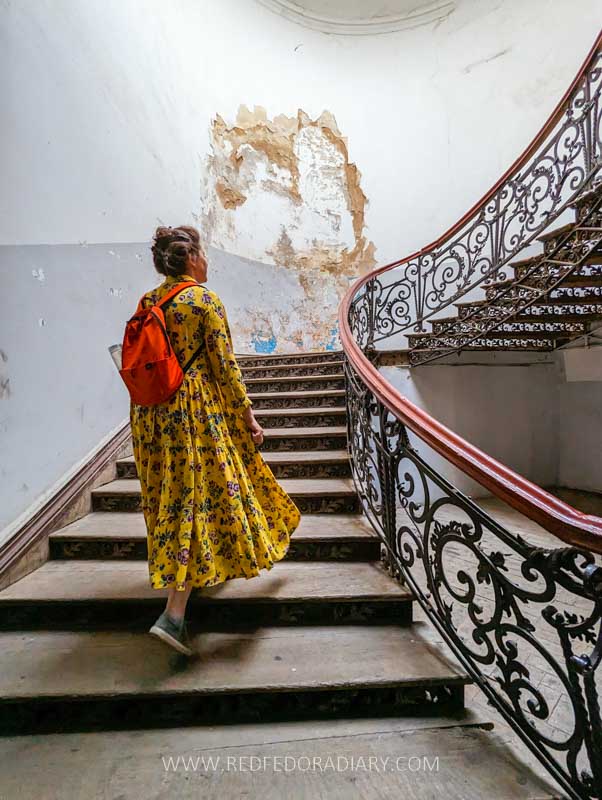
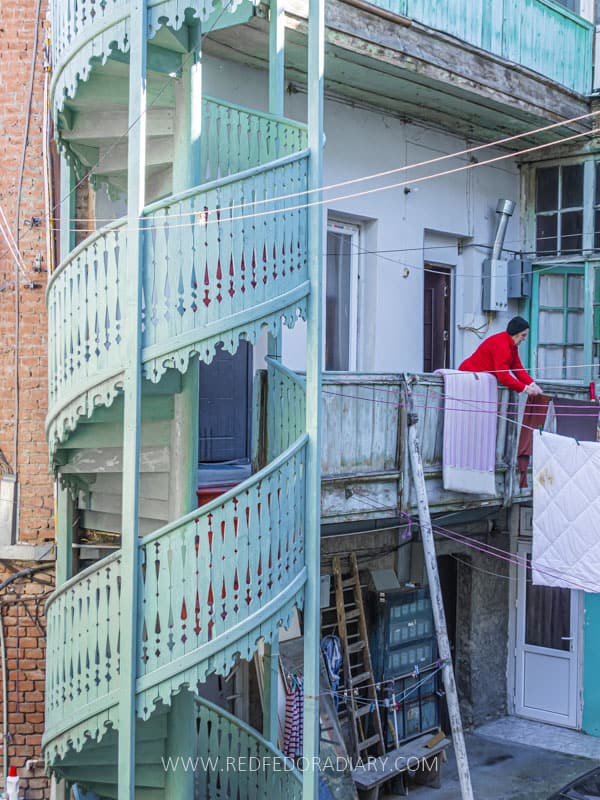
The same applies to hallways. If a door is open and you notice a beautiful entryway, it’s generally acceptable to step inside briefly, take a quiet look, and move on. Avoid lingering, keep voices low, and be mindful that people live there.
If you’re photographing courtyards — or people within them — try to read the room. Some residents are happy to chat or don’t mind being photographed; others value their privacy.